


How to choose where to start
Aranv’s software and AI guides give decision makers at American small and midsize firms plain answers before they buy: what AI agents, RAG and MCP are, how to compare common options, what drives project cost and which rules apply to AI.
If you are still learning the vocabulary, begin with the concept guides. What is agentic AI covers software that plans and acts over several steps, the RAG guide covers answers grounded in your own documents, and the Model Context Protocol guide shows how AI tools reach business systems.
If you know the problem and are choosing an approach, use the comparisons. AI agent vs chatbot sorts out what a support or sales task needs, RAG vs fine-tuning covers how a model learns about your business, and build vs buy AI weighs custom work against a subscription. Choosing a language model lists the tests that matter more than leaderboards.
How to use the guides
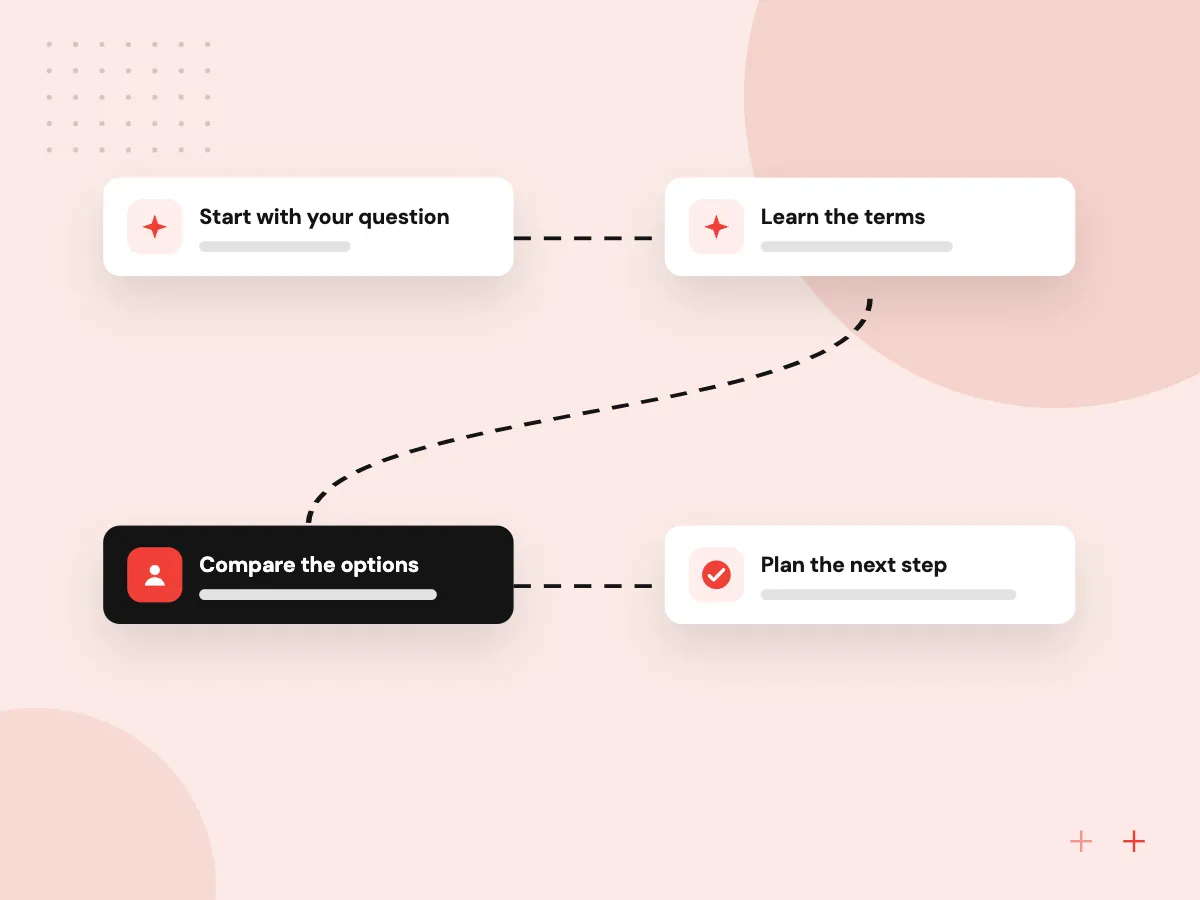
From a question to a decision
- 01 Start with your question Pick the guide that matches the decision in front of you this quarter.
- 02 Learn the terms Concept guides explain agents, RAG and MCP with examples from ordinary business work.
- 03 Compare the options Comparison guides show when each choice fits, with tradeoffs on both sides.
- 04 Plan the next step Checklists and roadmaps turn the answer into a scope you can take to vendors.
Guides are general information; your own systems, data and rules settle the final answer.
What the guides cover
The library is grouped into four kinds of guide, so you can go straight to the one that fits your question.
AI concepts explained
Short explanations of agentic AI, retrieval-augmented generation and the Model Context Protocol, each with examples from finance, sales and service teams.
Side-by-side comparisons
AI agent vs chatbot, RAG vs fine-tuning, Shopify vs WooCommerce and more, each showing when one option suits a business better than the other.
Cost and planning guides
What drives the cost of custom software, chatbots and online stores, and how a discovery phase, MVP or roadmap turns an idea into a plan.
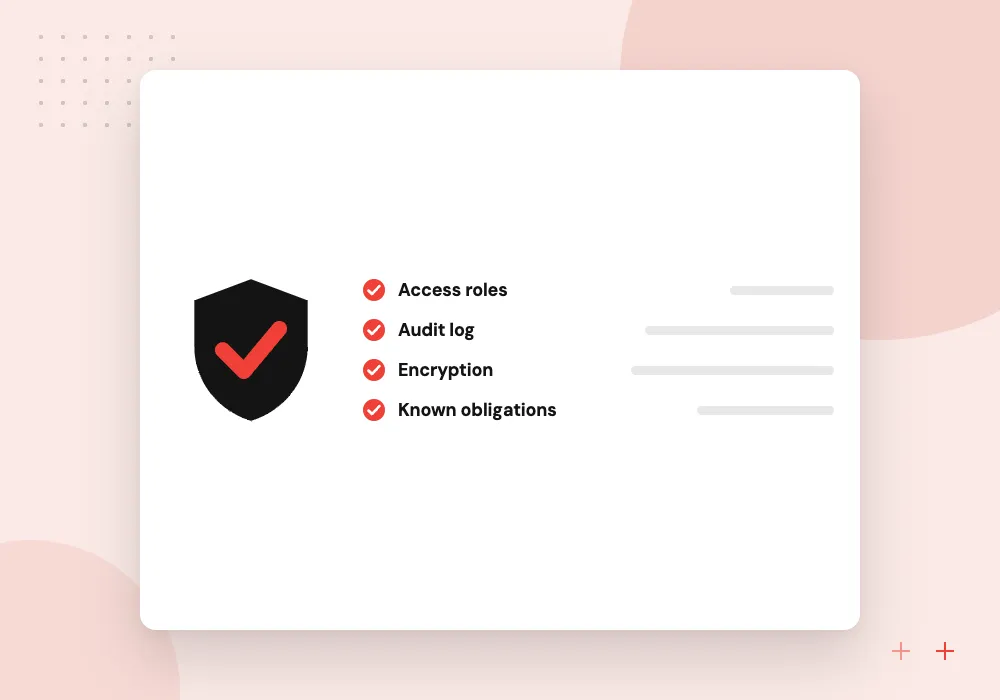
Rules and risk
Plain summaries of HIPAA, the EU AI Act, the Colorado AI Act and the NIST AI framework, with what each one means for a project plan.
Where AI fits in a buying decision
Most software decisions now carry an AI question: should the new system read documents, answer customers or draft replies? The guides treat AI as one option among several and say plainly when a rules-based workflow, a better report or a packaged tool would do the job instead.
What we do
- When a chatbot is enough
- When an agent needs tools
- When search beats training
- When a fixed rule beats a model
- What to ask about data use
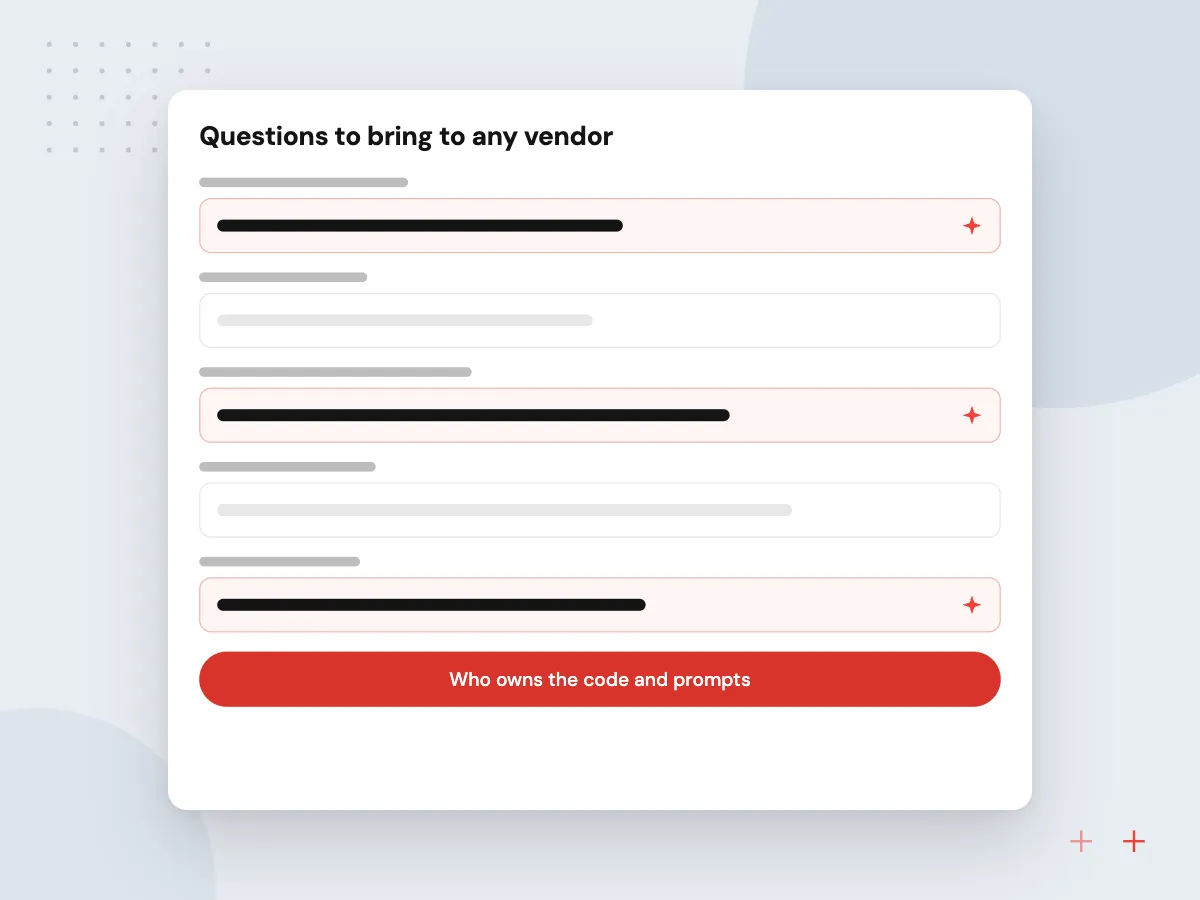
Questions to bring to any vendor
Each guide ends with questions you can put to any development partner, ours included. The answers show whether a vendor has thought about your data, your staff and the system after launch, not only about the demo.
What we do
- Who owns the code and prompts
- How answer quality is tested
- Where data is processed and stored
- Who approves risky actions
- What support looks like after launch

How we approach a project
If a decision is close, the planning guides help: choosing an AI development company, building an AI roadmap and what custom software costs depend on. Teams handling health records should also read HIPAA and AI, and anyone writing an AI policy can start from the NIST AI RMF guide.
None of the guides is legal or financial advice. When the answer depends on your own systems, work through the AI project readiness checklist, then talk it over with our AI consulting team in a 30-minute call you can book on the contact page.
How we work
- Direct answers first, detail after
- Fair to every option compared
- Written for owners, not engineers
Our Process
-

Write down the decision
Note the choice you face, the team it affects and the date you need an answer by.
-

Read the matching guide
Mark the points that apply to your business and the questions they raise about your data and systems.
-

Collect your own examples
Gather a handful of real documents, tickets or emails, so vendors answer against your work instead of a demo.
-

Ask every vendor the same questions
Use the guide’s questions in each call and compare the written answers side by side.
How Aranv helps you decide
Answers from the build team
Engineers who scope and build AI systems review the guides, so the advice reflects what tends to go wrong in real projects, not only what reads well.
Honest about simpler options
If a spreadsheet change, a packaged tool or plain search solves the problem, we say so in the first conversation, before any estimate is written.
Your data, your decision
We explain where data would be stored and processed under each option, so your team can weigh privacy and vendor terms before choosing.
A written scope at the end
When a guide leads to a project, discovery turns the decision into a written scope with phases, owners and the checks each part needs.
Guides
AI Agent vs Chatbot
AI agent vs chatbot: a chatbot answers questions, an AI agent completes tasks in your systems. See the differences, the risks and how to choose for your team.
RAG vs Fine-Tuning
RAG vs fine-tuning for business: when to ground answers in your documents, when to fine-tune an LLM for format or tone, and when to combine the two.
Build vs Buy AI
Build vs buy AI for small and midsize firms: when an off-the-shelf AI tool is enough, when custom AI pays off, and how to combine the two without lock-in.
What Is the Model Context Protocol (MCP)?
What is Model Context Protocol? MCP explained for business: how AI apps connect to your tools and data through MCP servers, and what to check for security.
What Is Agentic AI?
What is agentic AI? A plain explanation of AI that plans and acts over several steps, where agentic workflows fit in a business and the controls they need.
What Is Retrieval-Augmented Generation (RAG)?
What is RAG? Retrieval-augmented generation explained: how a model looks up your documents before it answers, where it helps and what keeps it accurate.
How to Choose an LLM for Your Business
How to choose an LLM for business: compare models on your own tasks, data terms, hosting, speed and running cost per request, not on public leaderboards.
AI Agent Examples for Business
AI agent examples for business teams: practical agents for support, sales, finance and operations, with the tools each one uses and where staff approve.
Chatbot vs Live Chat
Chatbot vs live chat for customer service: what an AI chatbot handles well, where human agents do better, and how a hybrid with a clean handoff works.
How to Choose an AI Development Company
How to choose an AI development company: check how a firm tests, who owns the code, what it builds first and how it treats your data before you sign.
AI Implementation Roadmap
An AI implementation roadmap in four stages: choose one task, prepare its data, pilot with staff review, then scale on evidence. Written for SMB owners.
AI for Small Business: A Practical Guide
AI for small business, explained plainly: where built-in AI tools help, when custom work pays off, and first ideas for owners running lean teams.
How to Prepare Your Data for AI
How to prepare data for AI: find the sources one task needs, set access rules, remove stale and duplicate records, label real examples and keep it current.
How to Measure AI ROI
How to measure AI ROI: record a baseline, count full costs including review time, track time saved, errors and revenue effects, and compare at checkpoints.
AI Acceptable Use Policy Guide
An AI acceptable use policy guide for SMBs: approved tools, data staff must keep out, review of AI output, disclosure, ownership and keeping it current.
Writing Requirements for an AI Project
How to write AI project requirements: the task, inputs, systems, accuracy targets, review steps and limits, in a short document vendors can quote on.
AI Agent Security Checklist
An AI agent security checklist: least-privilege access, prompt injection defenses, approval for risky actions, output checks, logging and pre-launch tests.
Questions to Ask an AI Vendor
Questions to ask an AI vendor about data use, model providers, accuracy testing, security, pricing changes, support and exit, before you sign anything.
AI Chatbot Development Cost
AI chatbot development cost depends on content, channels, integrations, handoff and message volume. See what drives it, how we estimate and how to spend less.
HIPAA and AI: What to Plan For
What HIPAA compliant AI really takes: business associate agreements, minimum necessary data, a risk analysis that covers the AI, and staff review.
The EU AI Act for US Companies
The EU AI Act for US companies: when it applies outside Europe, provider and deployer duties, risk tiers, fines and the dates that matter in 2026 to 2028.
The Colorado AI Act
The Colorado AI Act after 2026: how SB 26-189 replaced SB 24-205, which automated decisions it covers, and what developers and deployers must do.
NIST AI Risk Management Framework Guide
A practical NIST AI Risk Management Framework guide: the Govern, Map, Measure and Manage functions, the generative AI profile and a first step for SMBs.
How to Write a Software Development RFP
How to write a software development RFP that vendors can answer well: what to include, a template outline, AI requirements and how to score proposals.
What Happens in a Software Discovery Phase
What happens in a software discovery phase: the discovery workshop, user interviews, process mapping, prototypes and the scope and estimate it produces.
How to Build an MVP
How to build an MVP step by step: choose one user and problem, cut scope to the core path, pick a platform, launch small and measure what users do.
Legacy System Modernization Strategy
Build a legacy system modernization strategy: assess each module, choose to rehost, refactor, rebuild, replace or retire, and migrate in safe stages.
Custom Software Development Cost
What drives custom software development cost, how a reliable estimate is built, ways to reduce cost, and what a discovery phase gives you before the build.
In-House vs Outsourced Software Development
In-house vs outsourced software development compared fairly: full cost, speed, skills, control and the hybrid models that suit most growing firms.
eCommerce Website Cost
eCommerce website cost explained without guesswork: platform, design, catalog, integrations and upkeep, how estimates are built and how to spend less.
Shopify vs WooCommerce
Shopify vs WooCommerce compared fairly: hosting, upkeep, code control, catalog limits, B2B and AI features, plus a simple way to choose for your store.
Odoo vs NetSuite
Odoo vs NetSuite compared for small and midsize firms: hosting, licensing, finance depth, customization, upgrades and AI, plus a fair way to choose.
Native vs Cross-Platform App Development
Native vs cross-platform app development compared: device access, performance, upkeep, hybrid apps, store rules and AI features, with a clear way to choose.
Flutter vs React Native
Flutter vs React Native compared for business apps: language, rendering, packages, performance, hiring and AI features, plus steps to pick one for your team.
Fixed Price vs Time and Materials
Fixed price vs time and materials for software projects: how each contract model handles risk, change and billing, hybrid options and how to choose one.
Dedicated Team vs Freelancers
Dedicated development team vs freelancers: management time, continuity, quality, IP and AI tool rules compared, plus when staff augmentation fits better.
App Store Submission Checklist
An app store submission checklist for iOS and Google Play: accounts, privacy forms, reviewer access, testing rules and listing assets for a smoother review.
Website Migration SEO Checklist
A website migration SEO checklist for redesigns, new domains and replatforming: URL maps, 301 redirects, staging tests, launch checks and monitoring.
Odoo Implementation Steps
Odoo implementation steps from scoping to go-live: process mapping, setup, data import, testing, training and a go-live checklist for small and midsize firms.
Power BI vs Tableau
Power BI vs Tableau compared for business teams: ecosystem, authoring, data modeling, hosting, sharing and AI features, with a fair way to choose.
ERP for Small Business: How to Choose
ERP for small business explained: when you need one, how Odoo, NetSuite and Business Central compare, what implementation involves and where AI helps.
What Is an AI Agent?
What is an AI agent? A plain definition, how AI agents work through a model, tools and limits, how they differ from chatbots, and where they fit.
React vs React Native
React vs React Native compared: what the two share, how rendering, styling, navigation and app store delivery differ, and when a business needs both.
Angular vs React
Angular vs React compared fairly: structure, learning curve, performance, TypeScript, testing, support policy, hiring, AngularJS migration and AI features.
Mobile App Development Process
The mobile app development process, stage by stage: what your business decides and receives from discovery and design to testing, store launch and updates.
Let’s talk about your next step.
Tell us about your workflow, current tools and goals.
Questions about these guides
-
What are the Aranv guides for?
They explain the questions owners and managers raise before an AI or software project, in plain terms and without a sales pitch. Each guide is general information for planning, not advice for your specific case, and facts about standards, laws and vendor products link to the official source.
-
Do the guides recommend specific vendors or products?
They explain categories and tradeoffs rather than ranking vendors. When a product is named, such as a model provider or an eCommerce platform, it is there to show how that type of tool works. The right product depends on your systems, data rules and budget.
-
Is the compliance information legal advice?
No. The regulation guides summarize official texts such as HIPAA rules and state AI laws, with dates given as the source states them, but they are general information. Confirm how a rule applies to your business with your attorney or compliance lead before a project starts.
-
Where should a small business start with AI?
With one repeated task that costs staff time every week and has clear right and wrong answers, such as sorting supplier invoices or answering order-status questions. The readiness checklist and the AI use cases section help you pick one, and the concept guides explain which approach fits it.
-
How current is the information in the guides?
Standards, laws and products change after a guide is published. Each sourced fact gives its date and links to the official page, so check the current text before you rely on it, and tell us through the contact page if something looks out of date.

Let’s talk about your next step
Contact Aranv to discuss your workflow, current tools, and goals. Meet with our team or send an inquiry.
Book a meeting with our team
Choose an available date and time for a 30-minute conversation about your project.
Tell us about your project
Share a few details so we can discuss a useful next step.
Prefer email? sales@aranv.com