


What every engagement includes
Aranv offers three software development engagement models for small and midsize businesses: a fixed scope agreed after discovery, time and materials, or a dedicated team. This page explains how each one is planned and billed, how a project runs from week to week, and what you receive at handover.
Fixed price vs time and materials. The choice comes down to certainty. When screens, integrations and business rules can be written down in advance, a fixed scope gives you a known budget. When the product will change as users react to it, time and materials avoids rewriting the contract every few weeks. A dedicated development team suits a long roadmap.
The software project process. Discovery comes first, covering user interviews, connected systems and risks. New products often begin as an MVP, and rebuilds of older systems follow the same path through legacy application modernization.
How a project runs with us
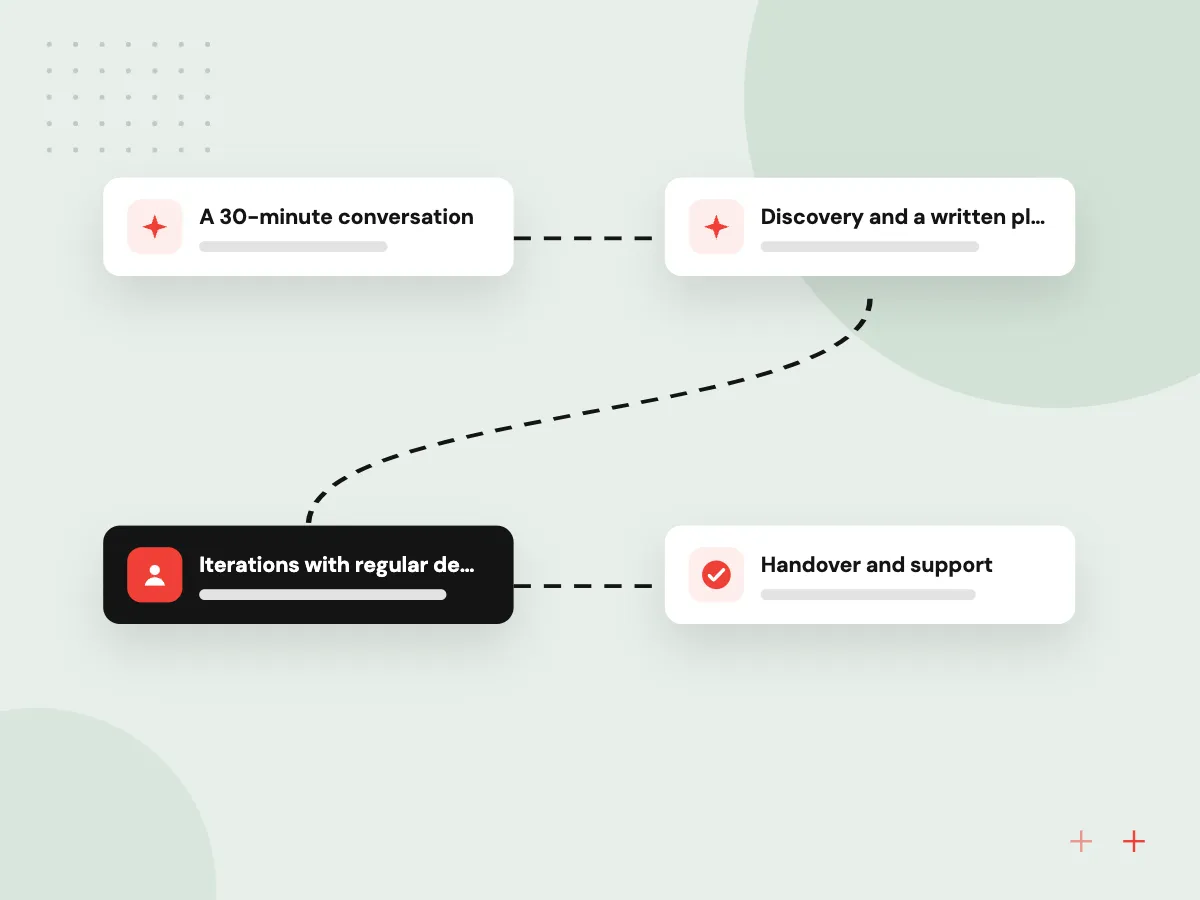
From first call to handover
- 01 A 30-minute conversation You describe the problem; we ask about users, systems, deadlines and budget limits.
- 02 Discovery and a written plan Workshops produce a scope, a delivery plan and an estimate you can compare.
- 03 Iterations with regular demos Working software is shown at each demo and priorities are reviewed together.
- 04 Handover and support Code, documents and access move to your accounts, with support if wanted.
The model can change between phases, for example a fixed first release followed by a dedicated team.
Three engagement models, and when each fits
The right model depends on how settled your requirements are and how long the work will last.
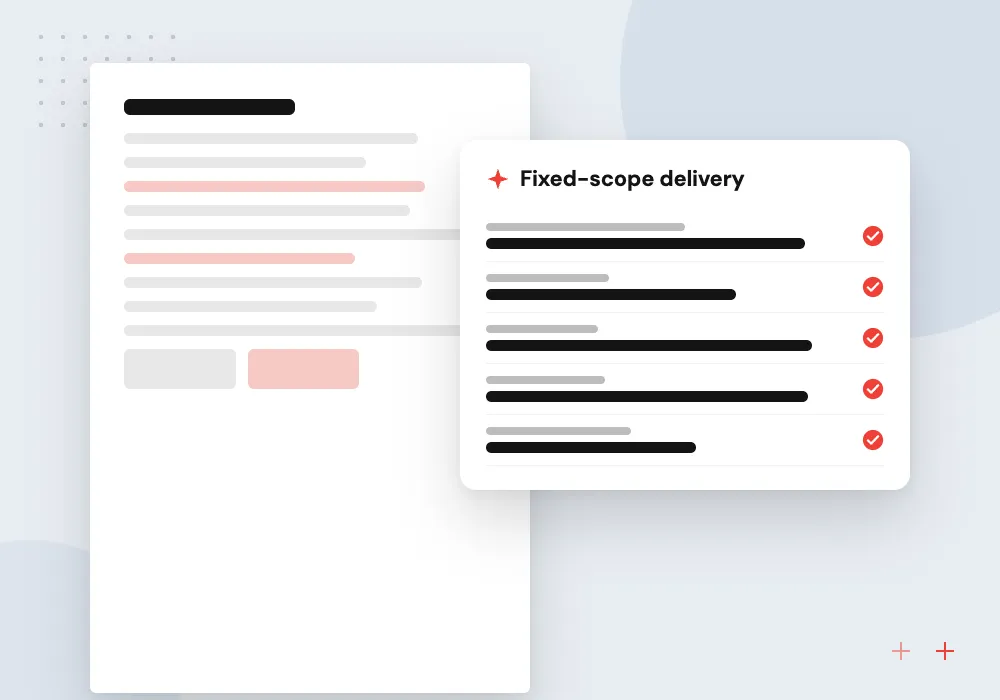
Fixed scope after discovery
Features, plan and price agreed in writing once discovery ends. Anything new goes through a short change request.
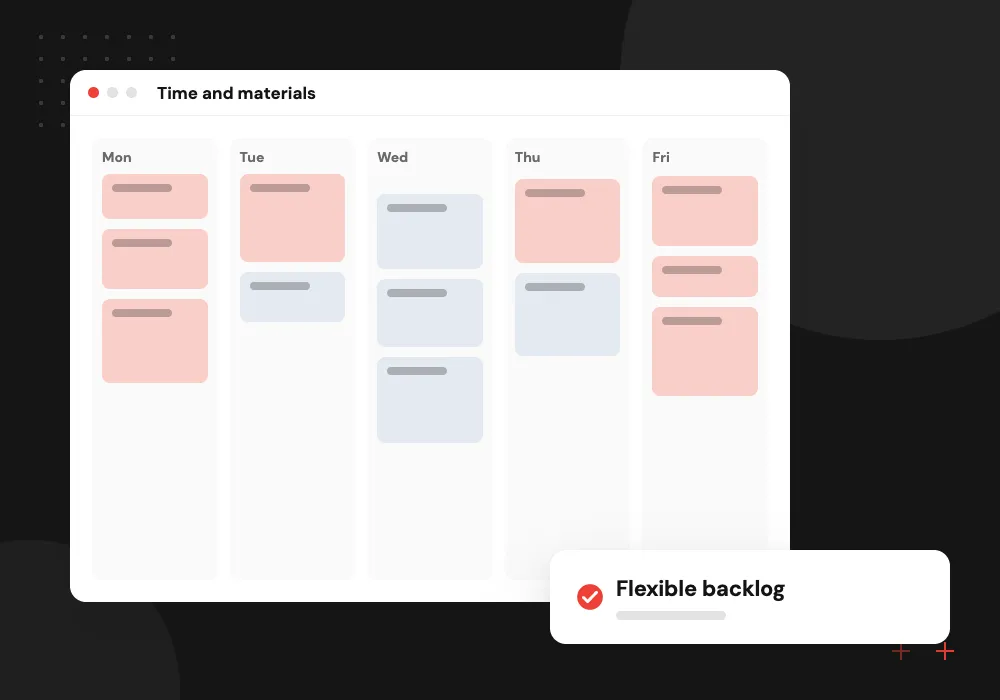
Time and materials
You pay for hours worked within a monthly budget you set, and priorities can change between iterations.
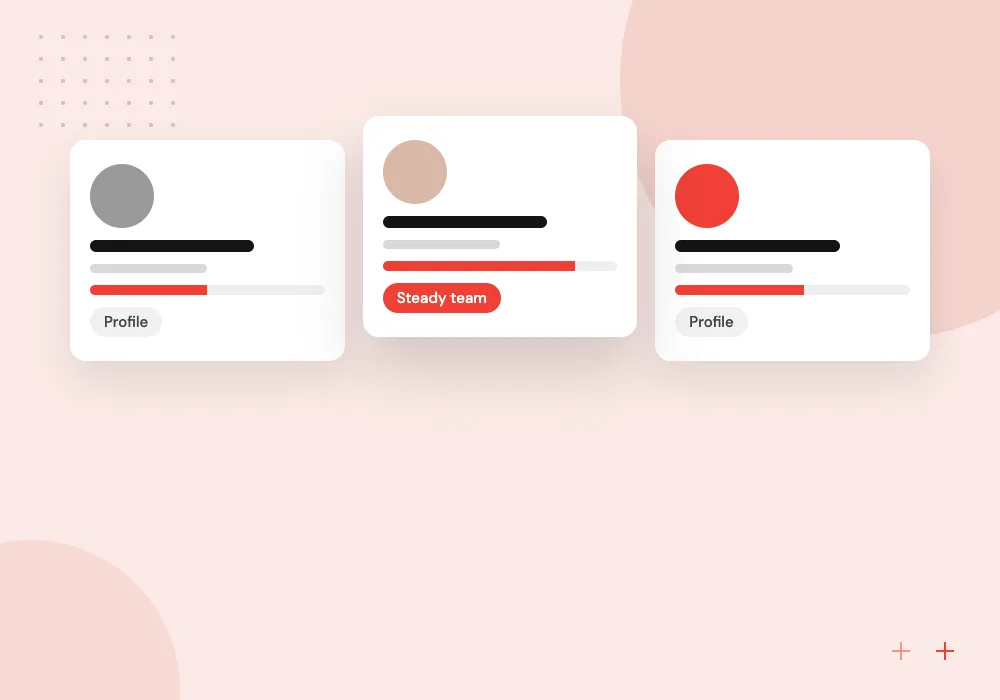
Dedicated team
Developers, a tester and a project lead stay on your product and take priorities from your product owner.
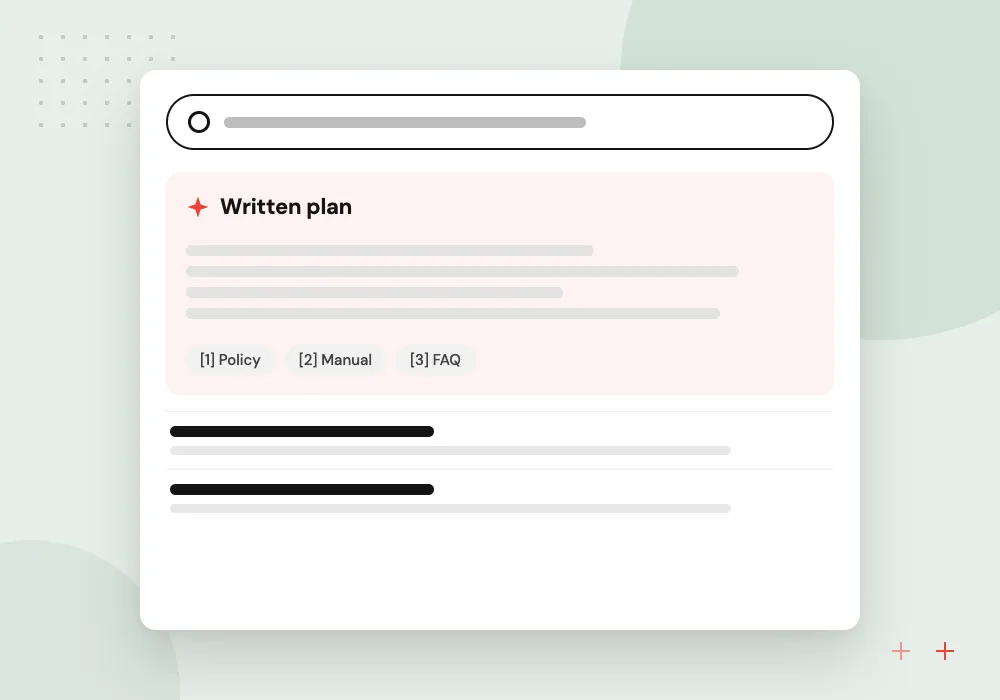
Discovery on its own
A short first phase that maps users, systems and risks, ending in a written scope and estimate.
Discovery bought as its own phase
Discovery can be booked with no commitment to the build. It runs as a short fixed engagement and ends with documents your company keeps, which you can take to any vendor or use to plan an internal project.
What we do
- User flow diagrams
- Wireframes of the main screens
- Integration and data map
- Risk list with options
- Phased estimate with assumptions
- Recommended engagement model
How AI work fits these models
An AI feature carries more unknowns than a form or a report, because accuracy depends on your data. We usually run an AI proof of concept on time and materials, score it against your own examples, and fix the scope of the full build only once accuracy and running cost are known.
What we do
- Proof of concept on sample data
- Accuracy scored on your examples
- Running cost per request measured
- Go or stop decision in writing
- Fixed scope for the full build

How we approach a project
Communication. A named project lead is your main contact, with a shared chat channel for quick questions and a written weekly update on work finished, work planned and budget used. Decisions are recorded in the task tracker.
Demos and testing. Each iteration ends with a demo of working software on a staging site, not slides. Your team tries it, logs issues in the tracker and agrees the next priorities with us. QA and software testing runs alongside development, so problems surface before a release reaches users.
Handover. You receive the source code in a repository your company owns, deployment scripts, environment settings, admin credentials in your password manager, and notes for developers and administrators. Ownership terms are on our Security, NDA and IP page, and later help comes through software maintenance and support.
How we work
- A written scope before any build
- Working software shown often
- Your code in your accounts
Our Process
-

Intro call
We check fit and pick the engagement model that suits the work.
-

Discovery
User interviews, a system access review and wireframes for the main flows.
-

Build and demo
Short iterations, each closing with a staging demo and planning for the next one.
-

Launch and handover
Release, a period of close monitoring, then transfer of code, documents and access.
Why work with Aranv
Estimates you can compare
Each estimate is split by feature and phase, with its assumptions listed, so you can compare it line by line with other quotes or trim scope to fit a budget.
Accounts in your name early
Repositories, cloud hosting and app store accounts are created under your company at the start, so handover is a checklist rather than a migration.
Acceptance criteria become tests
The acceptance criteria agreed in discovery turn into the test cases each demo is checked against, so done means the same thing to both sides.
People who stay on
Where possible, the developers who join discovery stay through the build and support, so the reasons behind each decision travel with the project.
Let’s talk about your next step.
Tell us about your workflow, current tools and goals.
Engagement model FAQs
-
Fixed price vs time and materials: which is better?
Fixed price suits work you can describe fully before it starts, such as a defined integration or a rebuild of known screens. Time and materials suits products that will change as users give feedback. Many clients combine them: a fixed first release, then a monthly budget for improvements.
-
Can we start without a detailed specification?
Yes. Most clients arrive with a problem and a few examples. Discovery turns that into user flows, integrations and acceptance criteria, which is what a fixed estimate needs.
-
What happens if requirements change during a fixed-scope project?
We write up the change with its effect on cost and schedule, and you approve or decline it before work starts. Swapping one feature for another of similar size often leaves the budget unchanged.
-
How often will we see progress?
At every iteration demo, plus the weekly update. You can also open the staging site and task tracker at any time between demos.
-
What do you need from us during the project?
A product owner who can answer questions and make decisions quickly, access to the systems we integrate with, sample data, and a few staff to try each demo. Naming the product owner early keeps the plan on track.
-
Can we switch engagement models later?
Yes. A common path is discovery, a fixed-scope first release, then a dedicated team or monthly time and materials for the roadmap. Each switch gets its own statement of work, so terms stay clear.

Let’s talk about your next step
Contact Aranv to discuss your workflow, current tools, and goals. Meet with our team or send an inquiry.
Book a meeting with our team
Choose an available date and time for a 30-minute conversation about your project.
Tell us about your project
Share a few details so we can discuss a useful next step.
Prefer email? sales@aranv.com