


What Rails development includes
Aranv is a Ruby on Rails development company that builds and upgrades Rails applications for small and midsize businesses: SaaS products, marketplaces, customer portals and internal systems, with solid test coverage and support for the years after launch.
Ruby on Rails is a full-stack framework for the Ruby language. It ships with tools for the database, email, file storage, background jobs, real-time updates and testing, so a team spends its time on your business rules instead of wiring libraries together. Rails 8, released on November 7, 2024, added an authentication generator and Kamal 2 for deploying to your own servers.
For new builds, the scope covers data modeling, screens built with Hotwire or a separate React front end, APIs for mobile apps, background jobs, payments, admin tools, automated tests and deployment. We keep controllers thin, move business rules into plain Ruby objects and write tests alongside each feature.
What Rails gives a project from day one
Conventions that keep a codebase readable
- 01 Models and migrations Active Record maps tables to Ruby classes, and migrations record every schema change.
- 02 Pages with Hotwire Turbo and Stimulus update pages quickly without a separate JavaScript app.
- 03 Jobs and emails Background jobs send email, sync data and build reports outside web requests.
- 04 Tests and deployment Built-in testing tools and container deploys keep releases predictable.
Since Rails 8, jobs, caching and WebSockets can run on the database, so many apps no longer need a separate Redis server.
What we build and fix with Rails
Rails is a strong fit for database-backed products where business rules change often and a small team has to move quickly.
SaaS products
Multi-tenant apps with subscriptions, roles, billing and admin tools, built on standard Rails conventions.
Marketplaces and booking
Listings, search, scheduling and payments between buyers and sellers or between clients and providers.
Rails upgrades
Older Rails apps moved to a supported release in steps, with tests added before each jump.
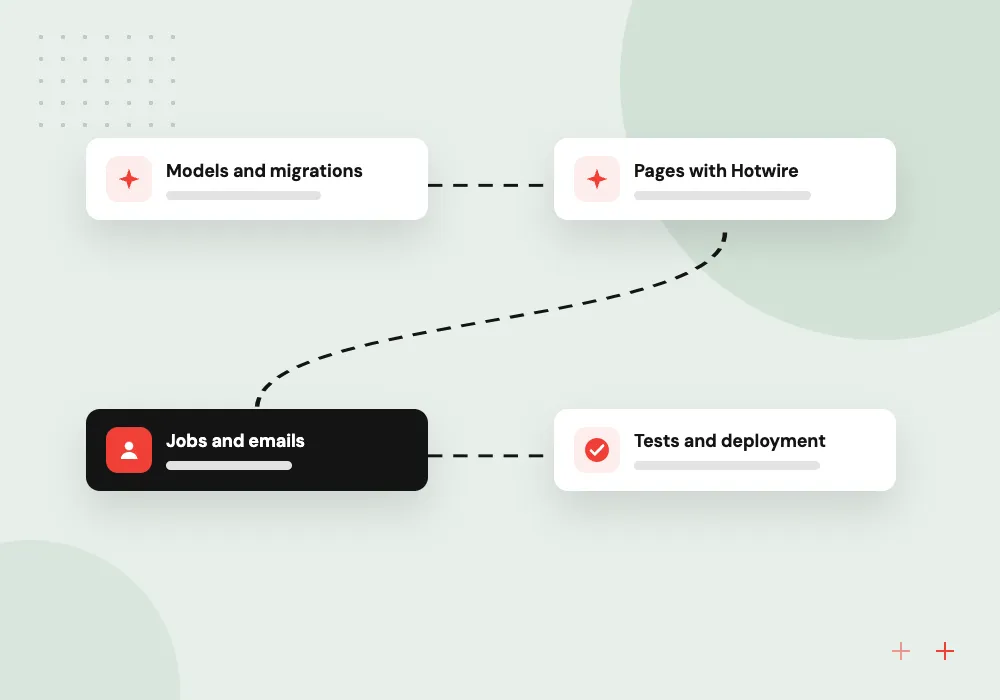
Internal operations systems
Order, quote and approval workflows that replace shared spreadsheets, paper forms and long email threads.
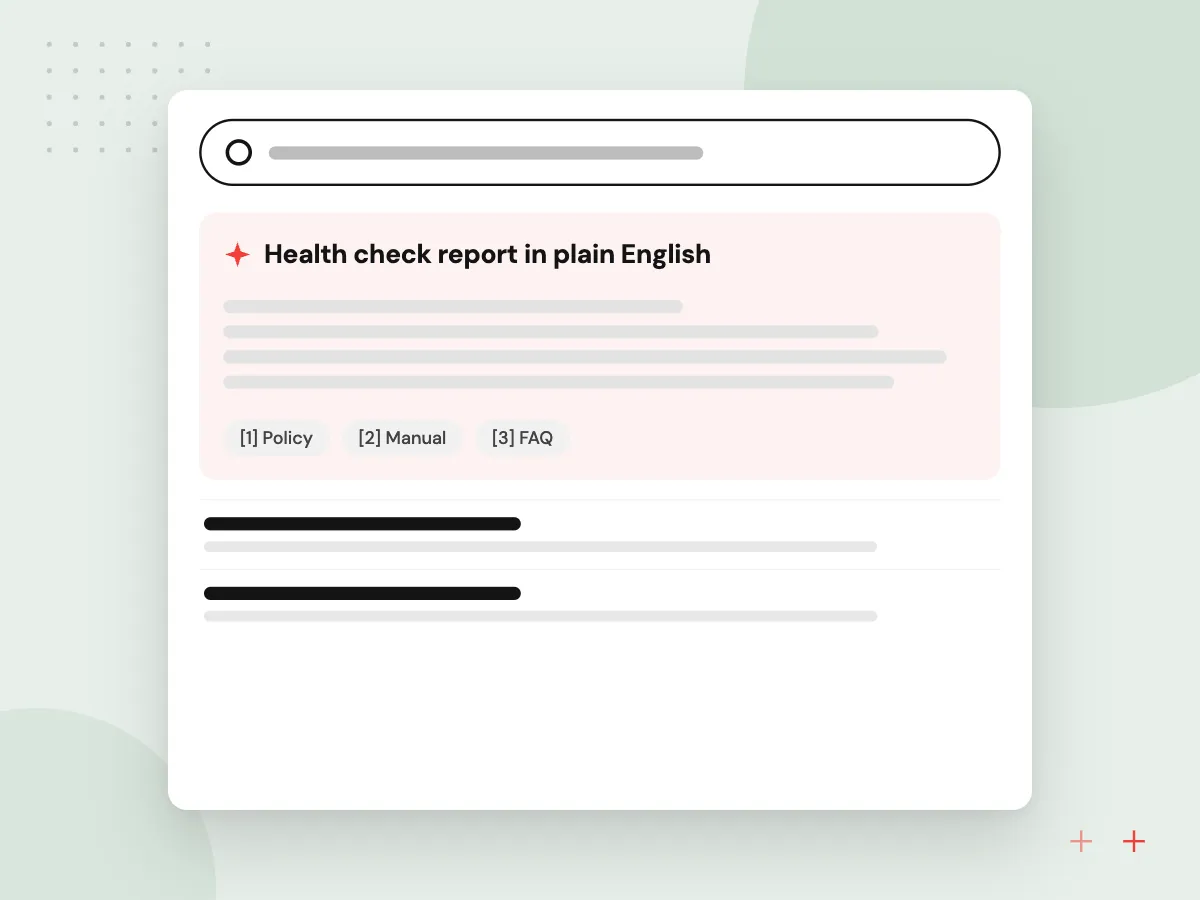
Taking over an inherited Rails app
When the original developer has moved on, the first job is finding out what you actually have. We review versions, gems, tests, error logs and the deploy process, fix urgent security issues, and write down how the app works so changes become safe again.
What we do
- Health check report in plain English
- Gem audit with a replacement plan
- Urgent security fixes first
- Tests added around key flows
- Deploy steps documented and scripted
AI features in a Rails app
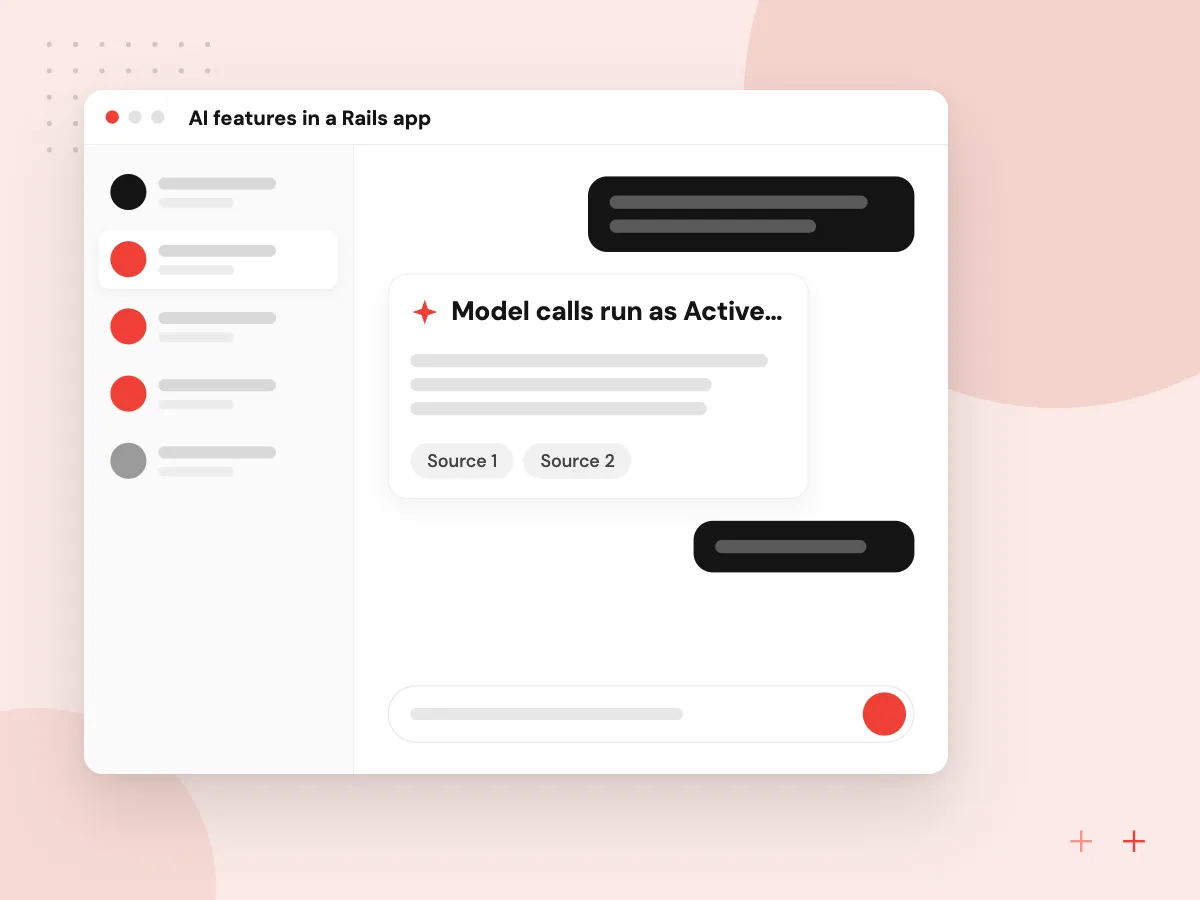
Rails handles AI features well when the slow parts run in the background. We call model APIs from background jobs so pages stay quick, stream replies to the screen with Turbo Streams, and store embeddings in PostgreSQL with the pgvector extension to search your own records.
What we do
- Model calls run as Active Job tasks
- Replies streamed with Turbo Streams
- Record search with pgvector
- Prompts and outputs logged per user
- Usage limits by account or plan

How we approach a project
Rails upgrades. Under the official Rails maintenance policy, each minor release series gets security fixes for two years. The policy lists November 7, 2026 as the security end date for the 8.0 series and October 10, 2027 for 8.1; earlier series no longer get security releases. We upgrade one minor version at a time, clear deprecation warnings at each step and keep the app deployable throughout.
Rails often runs alongside other systems. See API integration for links to CRMs and payment providers, legacy application modernization for older apps that need more than an upgrade, and software maintenance and support for ongoing care. Other stacks we work with are on the technologies page.
How we work
- Convention over custom plumbing
- Tests before every upgrade
- Small, frequent releases
Our Process
-

Codebase health check
For existing apps we record Ruby and Rails versions, risky gems, test coverage and slow queries before quoting.
-

Plan versions and features together
New features and upgrade steps go into one schedule, so the product never pauses for months.
-

Ship behind feature flags
Changes reach production in small pieces behind flags, with continuous integration running the full test suite.
-

Patch and stay supported
After launch we apply Rails and gem security releases and keep the app on a supported series.
Why Aranv for Rails work
Rails conventions, kept
We follow the framework’s defaults wherever they fit, so any Rails developer you hire later can find their way around the code.
Tests that guard each change
Every feature comes with model and system tests, and nothing merges into the main branch until the whole suite passes.
Security releases applied promptly
We watch Rails and gem advisories, apply patches soon after they are published and confirm the app still behaves as before.
Plain notes on how it runs
Setup, deployment and background jobs are documented in the repository, so knowledge of the app does not sit with one person.
Planning Ruby on Rails Development Services?
Book a 30-minute conversation with the team that would build it.
Ruby on Rails FAQs
-
Is Ruby on Rails still a good choice for a new app?
Yes, for database-backed web products such as SaaS tools, marketplaces and portals. Rails is actively maintained, the core team aims to ship a feature release every six months, and its conventions let a small team build and change features quickly.
-
How long does a Rails upgrade take?
That depends on how far behind the app is, how many gems need replacing and how much test coverage exists. A single minor-version step on a well-tested app is short; climbing several major versions on an app without tests takes much longer. We size it after a health check.
-
Can you take over a Rails app from another developer?
Yes. We start with a health check of versions, gems, tests, error logs and deployment, fix urgent security issues first, then agree a plan for the rest.
-
Should we use Hotwire or React with Rails?
Hotwire keeps everything inside Rails and suits most admin tools, portals and SaaS screens. A React front end makes sense for highly interactive interfaces or when a mobile app shares the same API. Both can live in one product.
-
What affects the cost of Ruby on Rails services?
The number of user roles and screens, integrations, billing rules, data migration from older systems and the condition of any existing code. A discovery phase or health check turns these into an itemized estimate.
-
What does a Ruby on Rails development company need from us?
For an existing app: access to the repository, hosting and error logs, plus someone on your side who can answer questions quickly and sign off each release. For a new app: your goals, your users and any designs you already have.

Let’s talk about your next step
Contact Aranv to discuss your workflow, current tools, and goals. Meet with our team or send an inquiry.
Book a meeting with our team
Choose an available date and time for a 30-minute conversation about your project.
Tell us about your project
Share a few details so we can discuss a useful next step.
Prefer email? sales@aranv.com