


What solar software development includes
Aranv provides solar software development for installers, EPC contractors and energy service companies: a solar CRM that follows each project from lead to permission to operate, field apps for site surveys and installs, AI that reads utility bills, and service tools fed by inverter monitoring data.
The center of most solar businesses is the project pipeline. A general sales CRM stops at the signed contract, but solar work continues through engineering, permitting, utility interconnection, installation and inspection. We build or extend a CRM so these stages, their documents and their owners live on one record; see custom CRM development.
Field work needs its own tools. Surveyors and crews need checklists, photo capture and signatures that sync once they are back in range, which our mobile app development team plans for. Stock of panels, inverters, batteries and racking can run in Odoo, reserved against each job.
How a residential solar job moves through the pipeline
Lead to permission to operate
- 01 Lead and utility bill AI reads the bill for usage and rate plan, so system sizing starts from real data.
- 02 Survey and proposal Roof photos and measurements from the site survey feed the design and a signed proposal.
- 03 Permit and interconnection Each application, utility reply and inspection date is tracked against the job.
- 04 Install and handover Crews close out on mobile, and monitoring links the system to the customer record.
Every stage has an owner and a due date, so stalled jobs surface before customers call.
Energy software development we take on
Solar and energy companies juggle sales, engineering, permits, utilities and field crews. Every handoff between them is a chance for delay.
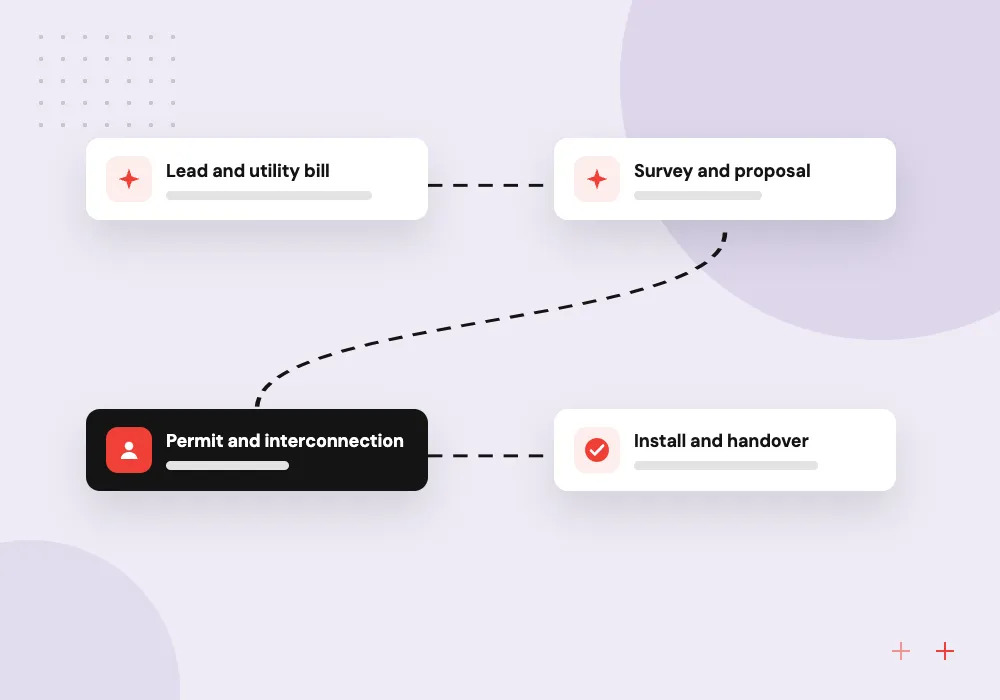
Solar CRM
Leads, proposals, contracts, permits, interconnection and install dates in one pipeline built around solar stages.
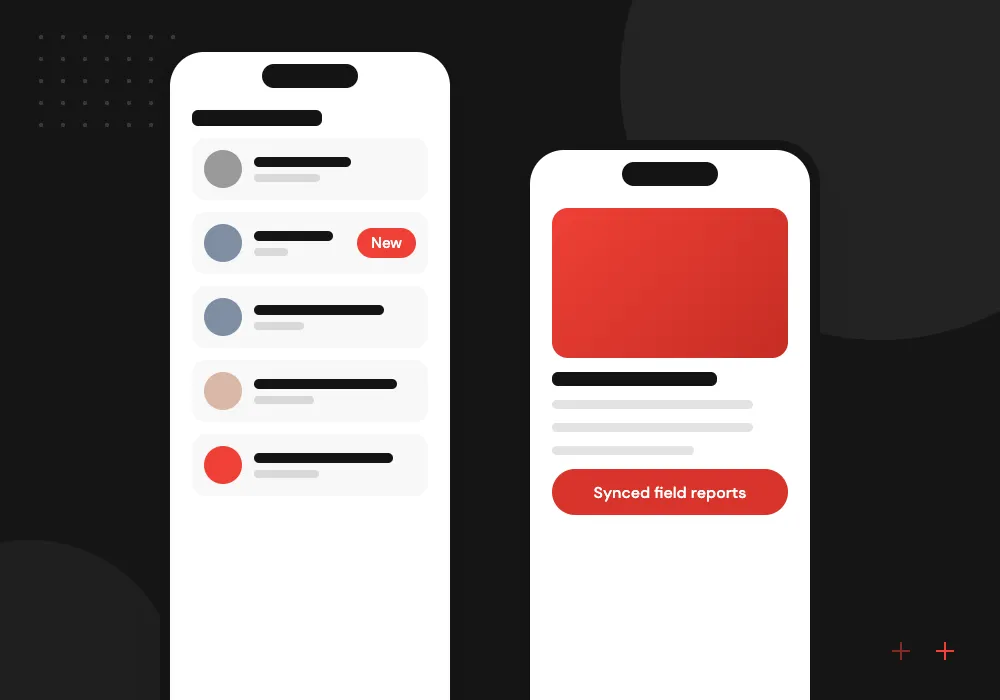
Surveyor and installer apps
Mobile checklists, photos and customer signatures that keep working without signal on a roof or rural site.
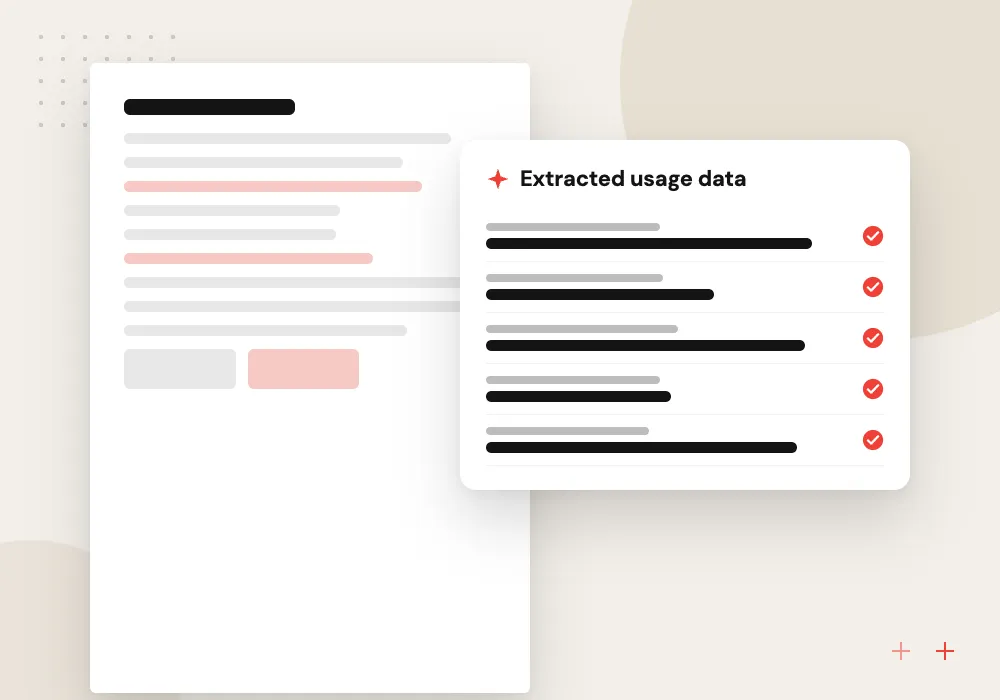
Utility bill and permit AI
AI reads utility bills, permit comments and interconnection letters, then updates the job and sets the next task.
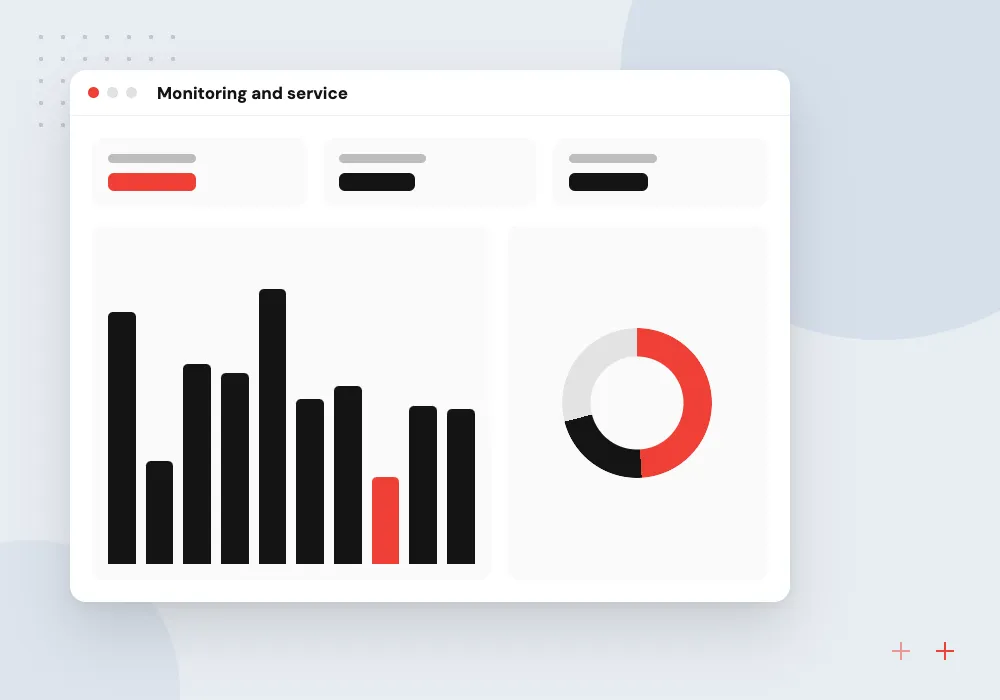
Monitoring and service
Inverter and battery monitoring data turned into service tickets when production drops below the expected level.
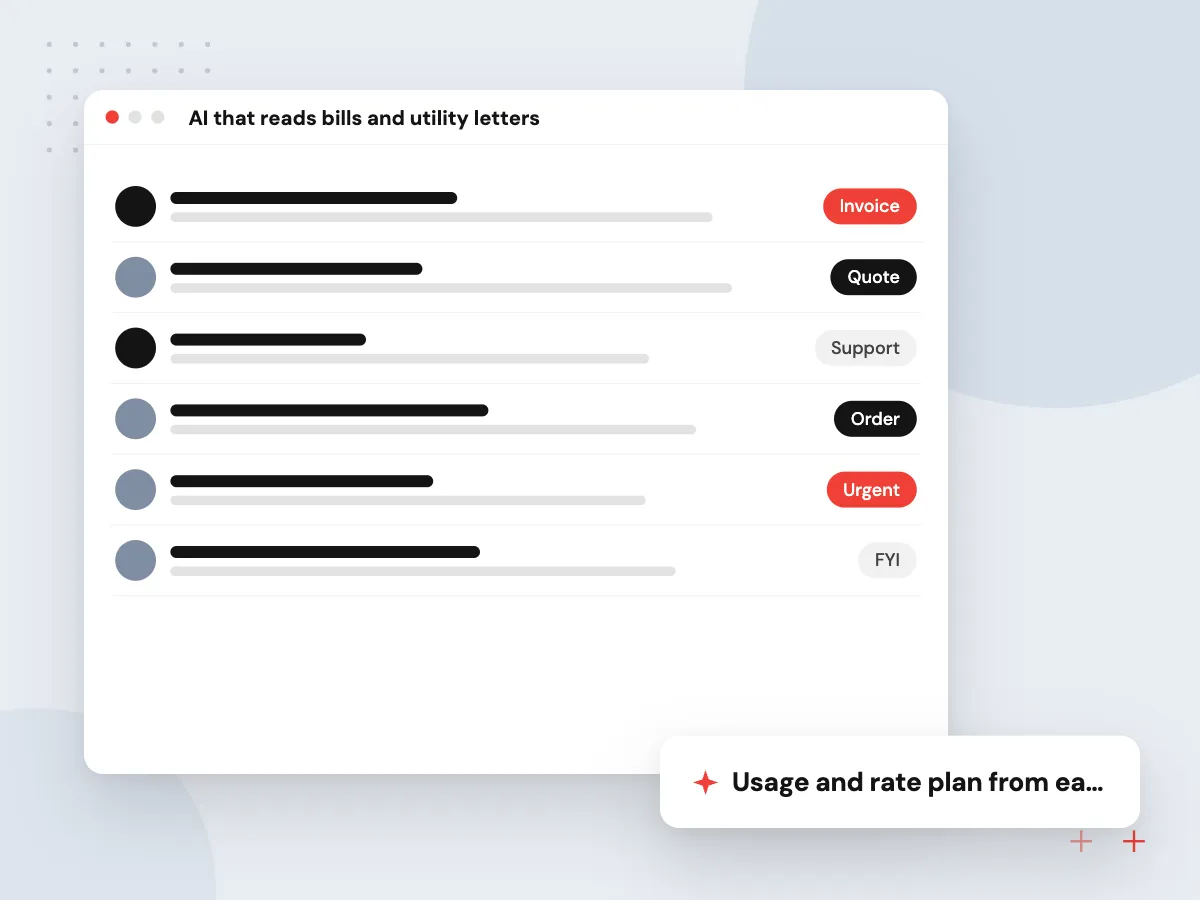
AI that reads bills and utility letters
Utility bills arrive as PDFs, scans and phone photos in many layouts. An AI step pulls the usage history, rate plan and account number into the lead record, and reads permit comments or interconnection letters to move the job to its next stage. Values the model is unsure of go to a coordinator to confirm.
What we do
- Usage and rate plan from each bill
- Permit comments matched to the job
- Interconnection letters read and filed
- Next task set from each reply
- Coordinator check on uncertain values
Permit and interconnection tracking
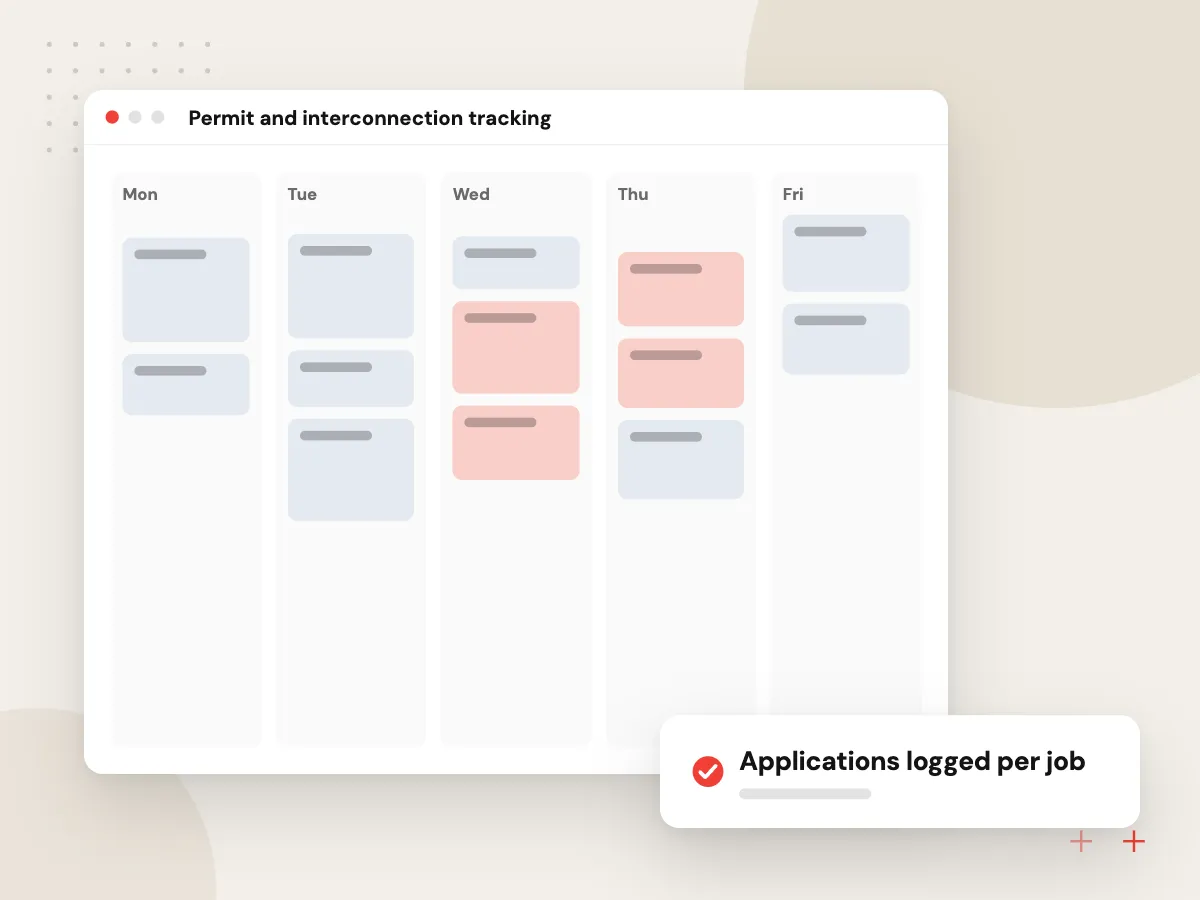
Every jurisdiction and utility has its own forms, fees and waiting times. We build a tracker that holds each application, its submission date, the reply, any corrections requested and the inspection booking, and shows coordinators which jobs have waited longest at each step.
What we do
- Applications logged per job
- Correction requests with due dates
- Inspection booking and results
- Wait time per stage and utility
- Alerts for jobs past their target
How we approach a project
AI takes on the paperwork through AI document processing, and an AI voice agent can return calls from new leads, ask qualifying questions and book a consultation.
Volume keeps rising. The US Energy Information Administration’s February 2026 analysis of planned 2026 capacity additions puts solar ahead of every other source, which means more permits, inspections and service visits for the companies that build and maintain these systems.
Energy software development beyond solar follows the same pattern: battery storage, EV charger and energy audit firms all run site visits, documents and utility steps.
How we work
- Track every project stage
- Read each document only once
- Field apps that work offline
Our Process
-

Map pipeline stages
We list every stage from lead to permission to operate, with its owner and typical duration.
-

Collect document samples
Utility bills, permit sets, interconnection forms and inspection reports are gathered and sorted by type.
-

Build the pipeline and apps
The CRM, field app and integrations are built together and tested on recent jobs.
-

Go live by territory
One region or crew starts first, then the rest follow once data entry and handoffs settle.
Why Aranv for solar companies
Built for after the signature
We design the pipeline for the months between contract and permission to operate, where solar jobs actually wait, not only for the sales funnel before it.
Field apps tested without signal
Survey and install apps are tested with phones in airplane mode, so photos, measurements and signatures survive a roof or rural site with no coverage.
Each document captured once
A bill, permit or letter is read once and its data reaches every stage that needs it, so coordinators stop retyping the same account details.
Set up per territory
Utilities and permitting offices differ, so checklists, forms and wait-time targets are configured per territory and can be added as you expand into new ones.
Planning Solar Software Development?
Book a 30-minute conversation with the team that would build it.
Solar software FAQs
-
What should a solar CRM include?
Beyond leads and deals, it should track site surveys, design and proposal versions, financing, contracts, permits, interconnection applications, install scheduling, inspections and permission to operate, with documents and owners attached to each stage. Reports on time spent per stage show where jobs stall.
-
Can software read utility bills automatically?
Yes. AI document processing can read bills from different utilities, including scanned and photographed copies, and pull monthly usage, rate plan and account details. Fields with low confidence go to a person to confirm, so sizing and proposals do not rest on unchecked numbers.
-
Can you connect inverter monitoring data to our system?
Usually. Many inverter makers offer monitoring APIs to installers, normally after account approval. We pull production data into your CRM or service tool and open a ticket when a system underperforms or goes offline.
-
Should we customize an off-the-shelf solar platform or build our own?
Start with an existing platform if its stages match how you sell and install. Custom software or a custom CRM pays off when you run commercial projects, work across many utility territories, or need tight links to your own finance, inventory and service tools.
-
Does this work for battery storage and EV charger installers?
Yes. Storage and charger jobs follow a similar path of site assessment, quote, permit, utility approval where needed, installation and inspection, so the same pipeline, field app and document tools apply with different checklists.
-
How do we begin?
Use the Contact page to set up a 30-minute conversation. Bring a recent project timeline and the stages where jobs tend to wait, and we will suggest which part of the pipeline to fix first.

Let’s talk about your next step
Contact Aranv to discuss your workflow, current tools, and goals. Meet with our team or send an inquiry.
Book a meeting with our team
Choose an available date and time for a 30-minute conversation about your project.
Tell us about your project
Share a few details so we can discuss a useful next step.
Prefer email? sales@aranv.com