


What legal software development includes
Aranv offers legal software development for law firms, accounting practices, consultancies and compliance teams: client intake and conflict checks, document assembly, contract review AI, search across past work and compliance software, built so that a qualified person reviews every output before a client sees it.
Most firms already have a practice management or time and billing system and a document store. We build around them: intake forms that write into the practice system, templates that pull matter data, and search across documents the firm already holds. Firms that outgrow their client database can move to custom CRM development.
Knowledge search is often the first AI project. Using retrieval-augmented generation, an assistant answers questions from your precedents, policies and past advice, cites the documents it used and respects matter-level permissions. Contract review and intake rely on AI document processing to pull parties, dates and obligations into structured fields.
How AI assists a contract review
From upload to reviewed markup
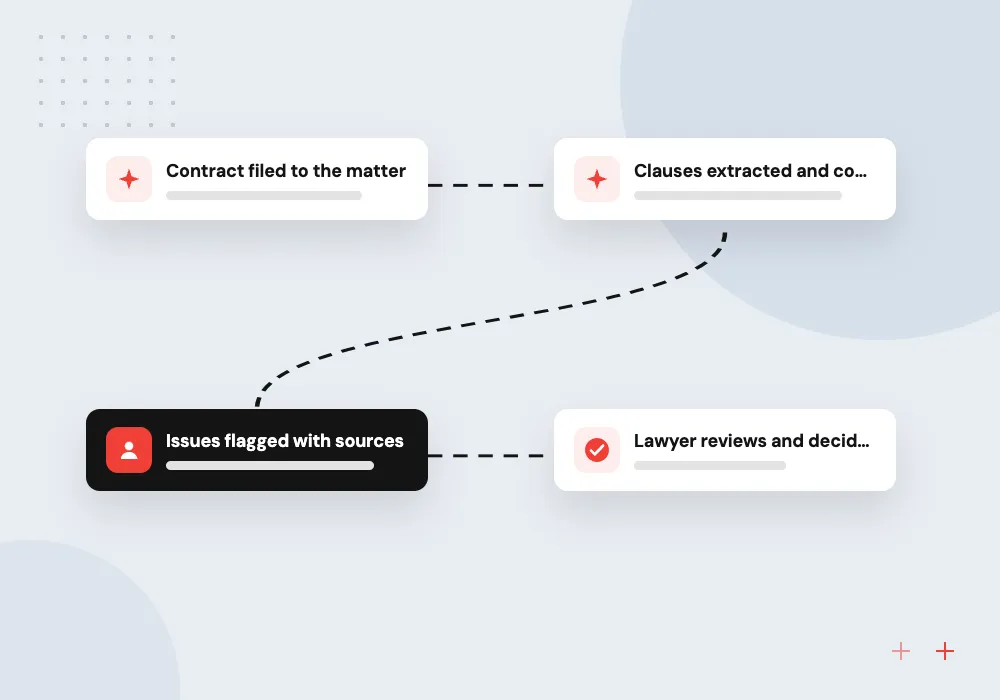
- 01 Contract filed to the matter The file is stored against the client and matter, with access limited to that team.
- 02 Clauses extracted and compared AI finds key clauses and compares them with your firm’s playbook positions.
- 03 Issues flagged with sources Each flag links to the clause text and the playbook rule it departs from.
- 04 Lawyer reviews and decides A lawyer accepts, edits or rejects each suggestion before anything is sent.
The playbook stays yours: preferred positions, fallbacks and clauses that always go to a partner.
AI for law firms and professional teams
Professional firms sell expertise, yet much of the day goes to intake, formatting and searching old files. These projects give that time back.
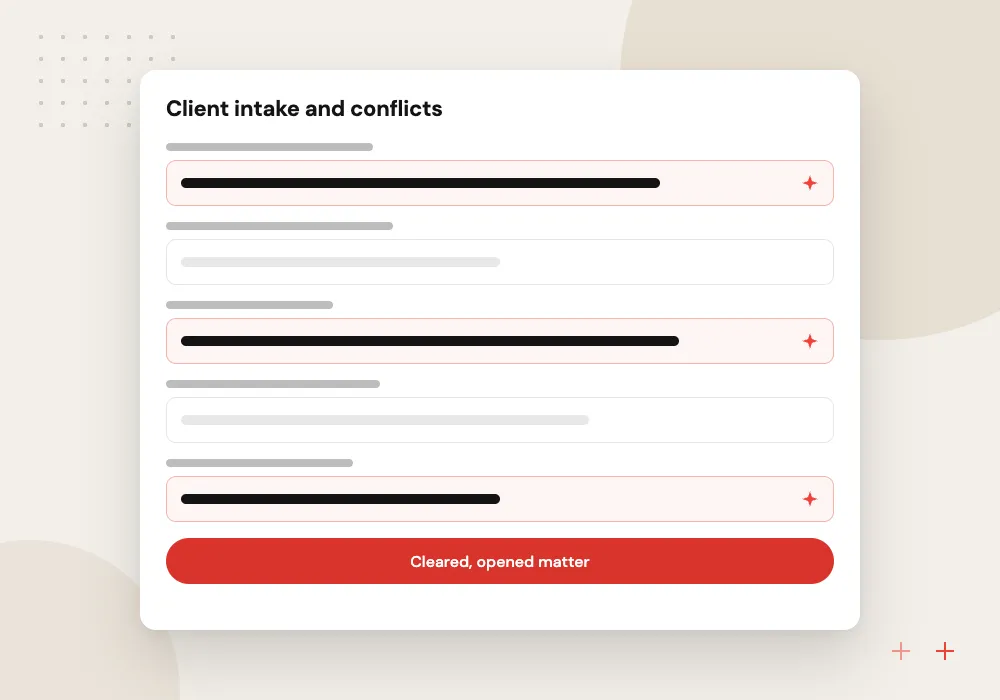
Client intake and conflicts
Online intake that collects matter details, runs a conflict search and opens the matter once it is cleared.
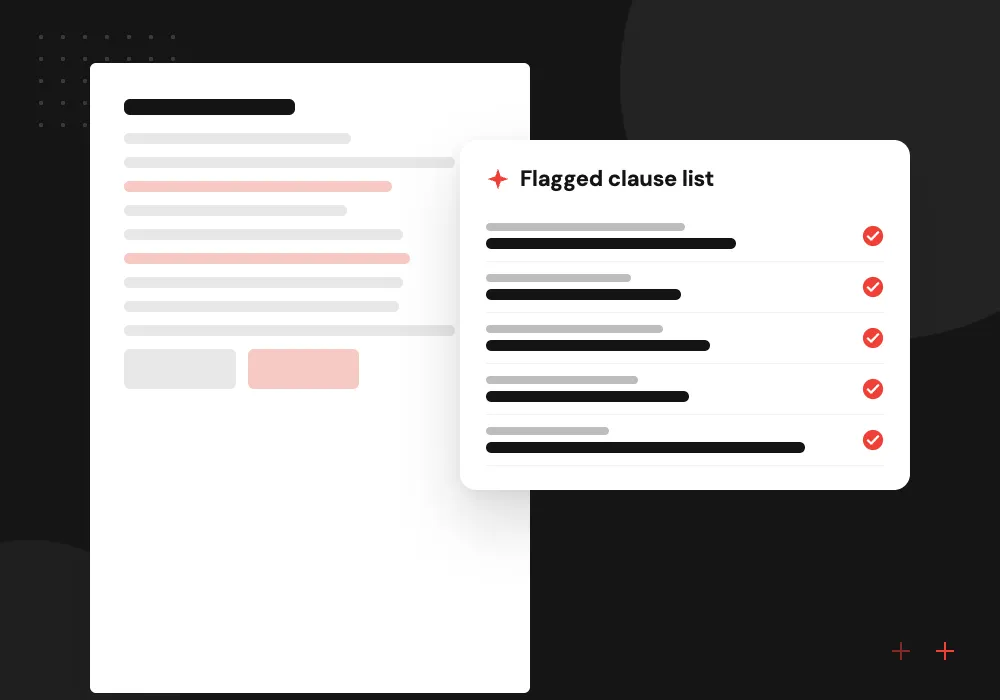
Contract review AI
Clause extraction, playbook comparison and suggested redlines on incoming NDAs, leases and supplier agreements.
Document assembly
Engagement letters, proposals and standard agreements generated from approved templates and existing matter data.
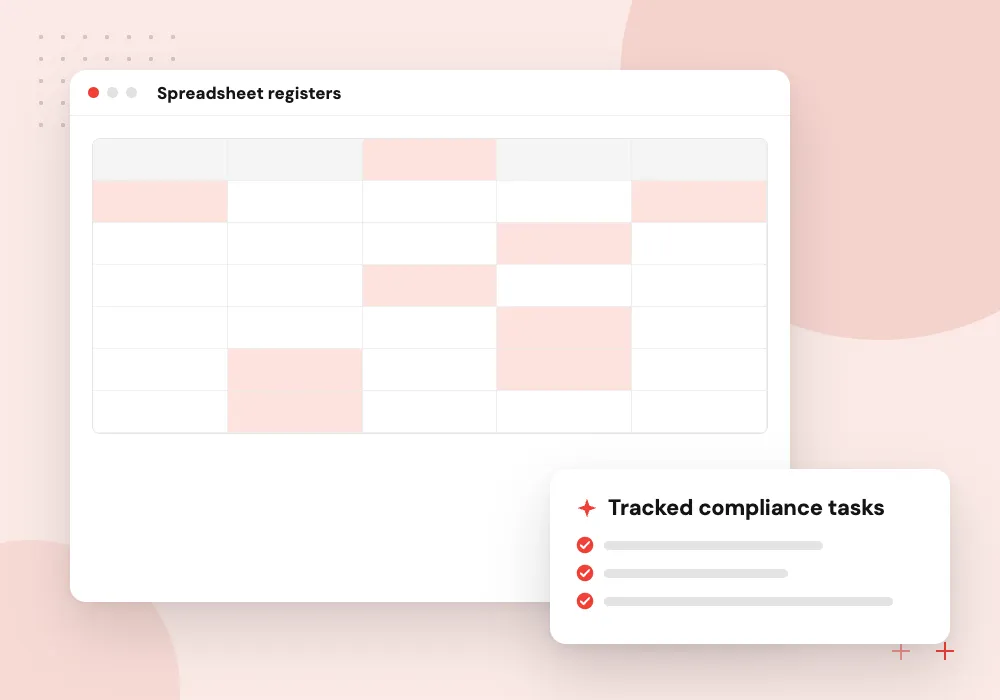
Compliance software
Consent records, data requests, policies and risk assessments managed in one system with owners and deadlines.
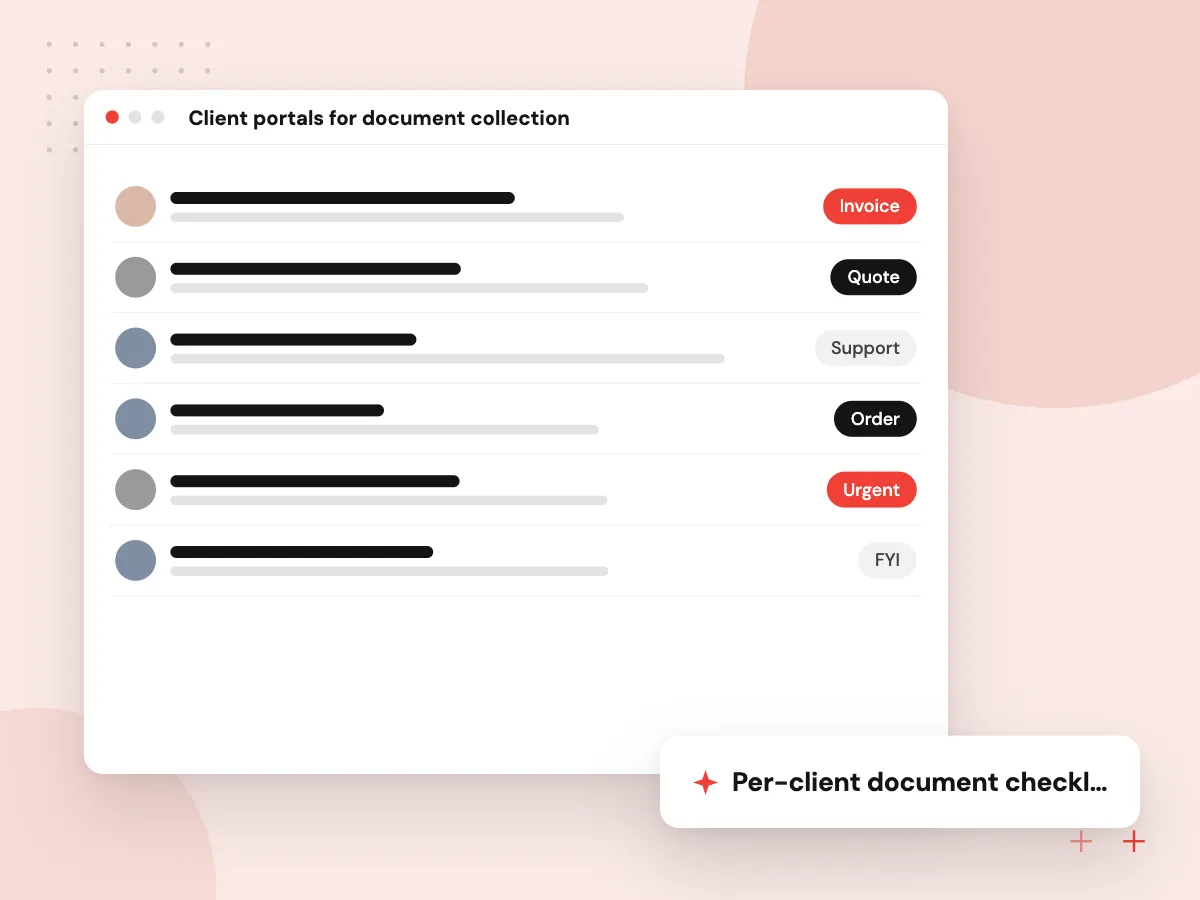
Client portals for document collection
Accounting practices and consultancies often chase clients by email for statements, signed forms and receipts. We build a portal where each client sees a checklist of what is still missing, uploads files to the right engagement and signs letters online.
What we do
- Per-client document checklists
- Secure upload filed to the engagement
- E-signature for engagement letters
- Reminders for missing items
- Staff view of outstanding requests
Review steps and data rules for AI
Before an AI tool reads client files, we write down which matters it may open, which model provider processes the text and what gets logged. Each output goes to a named reviewer, and their corrections become test cases for the next release.
What we do
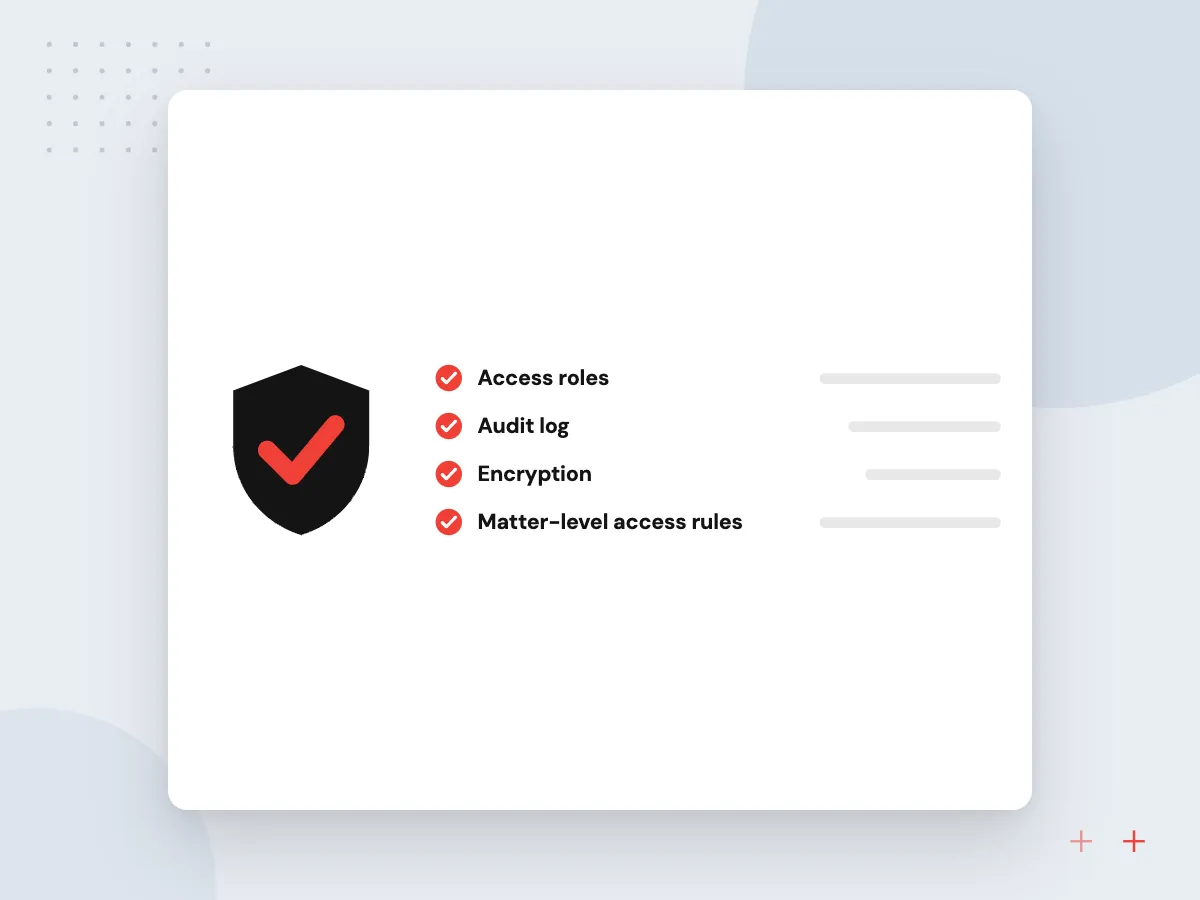
- Matter-level access rules
- Provider terms that exclude training
- Reviewer queue for AI outputs
- Audit log of questions and sources
- Test set built from closed matters

How we approach a project
Our wider team has delivered two projects close to this document and compliance work; both are on our case studies page. Project 04 is a UK privacy compliance SaaS covering consent records, data subject requests, data mapping, breach management and impact assessments under GDPR. Project 01 is an enterprise AI assistant that searches documents, works with the CRM and drafts proposals from branded Word templates.
Confidentiality shapes every design decision. We choose model providers whose business terms exclude training on your data, keep client documents in your own cloud tenancy where possible, and log who asked what. Our AI governance consulting helps firms write an internal AI use policy that reflects their professional conduct duties.
Our security, NDA and IP page explains what our contracts and nondisclosure agreements cover for projects that handle privileged material.
How we work
- A professional signs off every output
- Client confidentiality comes first
- Every answer cites its source
Our Process
-

Confidentiality and access rules
We agree who may see which matters and which documents may reach an AI model.
-

Gather templates and playbooks
Your best precedents, clause positions and checklists become the reference set the software follows.
-

Test on closed matters
We run the tool on past, closed files and compare its output with what your lawyers did.
-

Launch with a review loop
Users mark wrong or weak outputs, and we tune prompts, rules and templates each cycle.
Why firms work with Aranv
Built around your practice system
We connect to the practice management, billing and document tools you already pay for, rather than asking staff to move their work somewhere new.
Professionals make the decisions
Every draft, flag and answer goes to a qualified person for approval. The software prepares the work, and people send the advice.
A source behind every answer
Search and review tools cite the precedent or clause they relied on, so the reviewer can open the original document and check it.
Your playbook, written down once
Clause positions, fallbacks and escalation rules are captured from your partners and stored as editable rules, not buried in the code.
Planning Legal Software Development?
Book a 30-minute conversation with the team that would build it.
Legal software FAQs
-
Can AI review contracts accurately?
It is good at finding clauses, dates and obligations and comparing them with a playbook, and weaker at judging context or commercial risk. That is why contract review AI should flag and suggest while a lawyer decides. We measure accuracy on your own closed contracts before rollout.
-
Is client data safe with AI for law firms?
It can be, with the right setup: business model terms that exclude training on your data, encryption, matter-level permissions and audit logs. We document where every document goes, so your risk or ethics partner can review the design before any client data is used.
-
Should we buy legal software or have it built?
Buy for standard needs such as time recording, billing and e-signature. Build or extend when your workflow is specific, such as a particular intake process, a specialist practice area playbook or a client portal, or when your existing tools need to share data.
-
What does compliance software usually include?
Registers of the personal data you hold and why, consent records, a workflow for access and deletion requests, incident and breach logs, risk and impact assessments, and reminders for policy reviews. Exact scope depends on the regulations you work under, such as GDPR or US state privacy laws.
-
Do you build tools for accountants and consultants too?
Yes. Proposal and engagement letter generation, client portals for document collection, time and project tracking, and knowledge search across past reports follow the same patterns as legal work, with the same care for confidentiality.
-
What is the first step for a law firm?
Start with a 30-minute conversation, which you can request through the Contact page, covering your practice areas, current systems and the documents your team handles most. We then suggest one workflow to pilot on closed matters.

Let’s talk about your next step
Contact Aranv to discuss your workflow, current tools, and goals. Meet with our team or send an inquiry.
Book a meeting with our team
Choose an available date and time for a 30-minute conversation about your project.
Tell us about your project
Share a few details so we can discuss a useful next step.
Prefer email? sales@aranv.com