


What a Python project includes
Aranv is a Python development company for small and midsize businesses. We build web back ends in Django, APIs in FastAPI, data pipelines that move and clean your records, and AI services that connect language models to your own documents and systems.
Python has one of the largest developer communities of any language, which matters when you hire or hand the code to another team later. It also has mature libraries for data work, machine learning and connecting to almost any business system.
We choose the framework by job. Django suits full web applications with an admin area, user accounts and many database tables. FastAPI suits APIs and AI services where typed request models and async calls matter. Flask remains an option for very small services. Code is type-checked, formatted and tested, with dependencies pinned in a lockfile.
Where Python sits in your stack
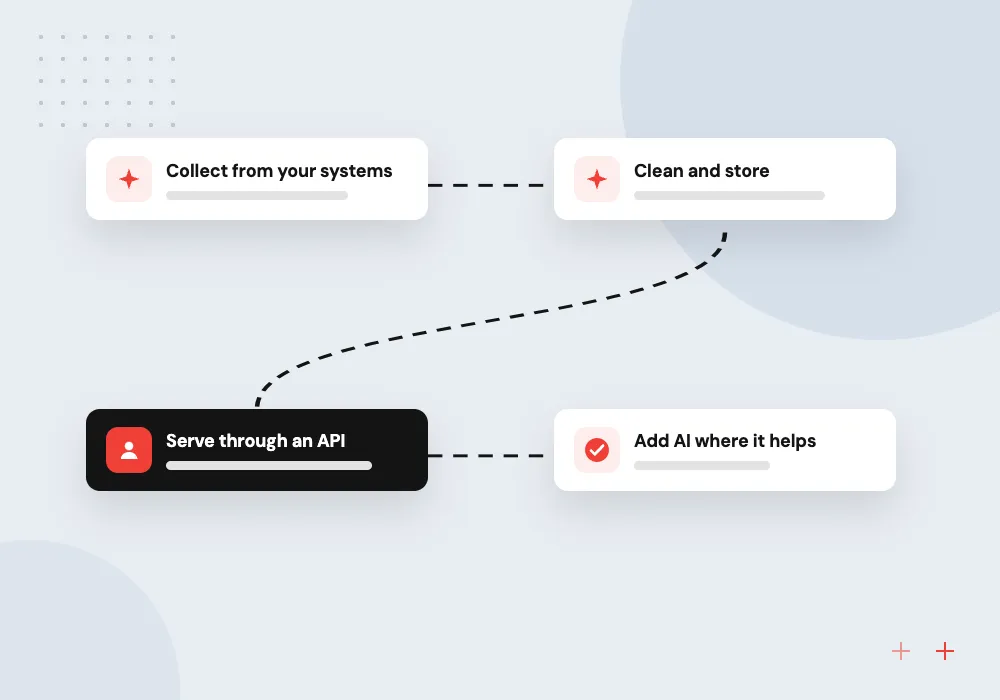
From raw data to a working service
- 01 Collect from your systems Scheduled jobs pull records from CRMs, ERPs, spreadsheets and SFTP drops.
- 02 Clean and store Validation rules fix formats and duplicates before data lands in your database.
- 03 Serve through an API Django or FastAPI endpoints give apps and partners controlled access.
- 04 Add AI where it helps Classification, extraction and search models run on the cleaned data.
Each step can be built on its own, so you can start with just one.
What we build with Python
Python is a strong choice when the work is data-heavy, involves AI models, or has to talk to many other systems.
Django web platforms
Customer portals, back offices and booking systems using Django’s built-in admin, accounts and ORM.
FastAPI development
Documented APIs for mobile apps, partners and internal tools, with OpenAPI docs generated from the code.
Data pipelines and reports
Nightly jobs that merge sales, inventory and finance data into one clean reporting database.
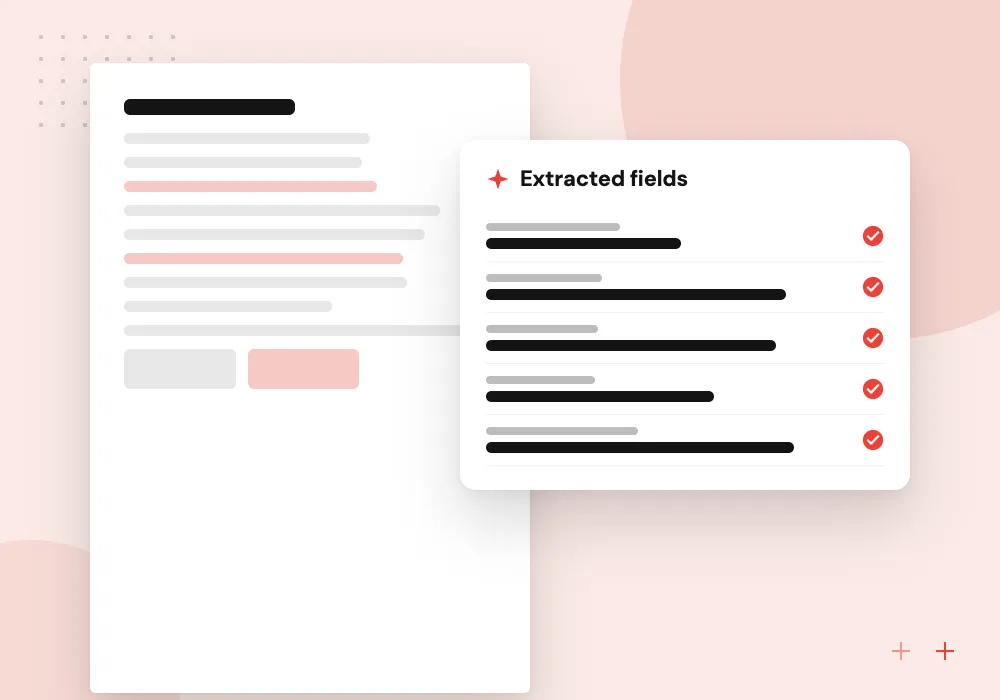
Python AI development
Document extraction, classification and retrieval services that call language models with your own data.
Python and Django version upgrades
Apps on Python 2 or an unsupported Django release miss security fixes and get harder to host. We add tests around current behavior, move through supported versions in planned steps, replace deprecated calls and update dependencies, keeping the app usable between steps.
What we do
- Tests added before any change
- Dependency audit and lockfile
- Stepwise Django version moves
- Deprecated code replaced
- Container image on a current Python
Evaluation sets for Python AI services
Before staff rely on an AI service, we build a set of real examples with known answers, such as invoices with checked totals or questions with approved replies. Every prompt or model change runs against that set, and a score below the agreed level stops the release.
What we do
- Labeled examples from your records
- Accuracy report per field or task
- Regression runs on every change
- Low-confidence results sent to staff
- Logs of inputs and outputs
How we approach a project
A typical scope covers data modeling, the API or web app, background jobs with Celery or another task queue, integrations, automated tests, Docker images and deployment to your cloud. For AI work we add evaluation sets so you can see how accurate a model is before staff depend on it; see machine learning development and RAG and knowledge search.
Older projects still on Python 2 or an unsupported Django release can be upgraded in stages, with tests added first so behavior does not change along the way.
Python back ends pair well with a React front end or a mobile app. If your team already runs JavaScript on the server, compare Node.js development; for a complete product build, see web application development and our full technology list.
How we work
- Typed, tested Python code
- The smallest framework that does the job
- Data checked before anyone relies on it
Our Process
-

Map data and systems
We list every source system, data owner, volume and refresh need, and flag where data quality is poor.
-

Design the API and schema
Endpoints, data models and error handling are agreed and documented before any code is written.
-

Build with tests and type checks
Every change runs unit tests, type checks and linting in the pipeline, and we demo working endpoints each week.
-

Deploy, monitor and tune
We ship in containers, add logging and alerts, and tune slow queries and jobs once real traffic arrives.
Why Aranv for Python work
Framework picked for the job
We match Django, FastAPI or a small service to the work in front of us, so you do not carry a heavy framework for one API.
Typed and tested throughout
Type hints, linting and unit tests run in the pipeline on each change, so a developer who joins later can follow and change the code safely.
Source data profiled early
We look at your source data before building on it and report gaps, duplicates and odd values, so problems show up in discovery, not after launch.
Runs in your cloud account
Containers, pipelines and secrets live in your own cloud account where possible, with run notes so your team can operate them.
Planning Python Development Services?
Book a 30-minute conversation with the team that would build it.
Python development FAQs
-
Should we use Django or FastAPI for our project?
Use Django when you need a full web application with an admin panel, accounts and many related tables. Use FastAPI for APIs, microservices and AI endpoints that need speed and typed inputs. Some products use both: Django for the back office and FastAPI for a public API.
-
Is Python fast enough for a production web app?
Yes, for nearly all business applications. Slowness usually comes from database queries or calls to outside services rather than the language itself. Caching, async I/O and background jobs handle heavy loads, and true hot spots can move to compiled libraries.
-
Can a Python development company help with AI if we have no data team?
Yes. We start with one task, such as pulling fields from invoices or answering staff questions from internal documents, prepare the data it needs and measure accuracy against real examples before rollout.
-
Can you upgrade an old Python or Django application?
Yes. We wrap the current behavior in tests first, then move to supported Python and Django versions in steps, replacing deprecated code as we go so the app stays usable throughout.
-
What drives the cost of Python development?
The number of integrations, data volume and quality, user-facing screens, AI components and hosting needs. We share an estimate after discovery, broken down by feature so you can trim scope where it makes sense.
-
Who owns the code and the data pipelines?
You do. The code lives in your repository, infrastructure runs in your cloud account where possible, and each pipeline comes with notes on how to run and change it.

Let’s talk about your next step
Contact Aranv to discuss your workflow, current tools, and goals. Meet with our team or send an inquiry.
Book a meeting with our team
Choose an available date and time for a 30-minute conversation about your project.
Tell us about your project
Share a few details so we can discuss a useful next step.
Prefer email? sales@aranv.com