


What TypeScript development services include
Aranv provides TypeScript development services for US businesses that build and run web products: full-stack web applications with one language from browser to server, step-by-step migration of JavaScript codebases to TypeScript, shared type packages, and AI features whose output is typed and validated.
TypeScript catches a whole class of mistakes at build time: misspelled properties, missing null checks, wrong argument types. It also makes editors far more helpful on large codebases. Types vanish at runtime, though, so data from users, APIs and AI models still needs validation, and we add it at those boundaries.
Full-stack TypeScript. One language across the stack lets a small team move between front end and back end. We often pair Next.js or React with a NestJS or plain Node.js API, a shared package for types and validation schemas, and a monorepo that builds and tests it all in one pipeline.
Migrating a JavaScript codebase
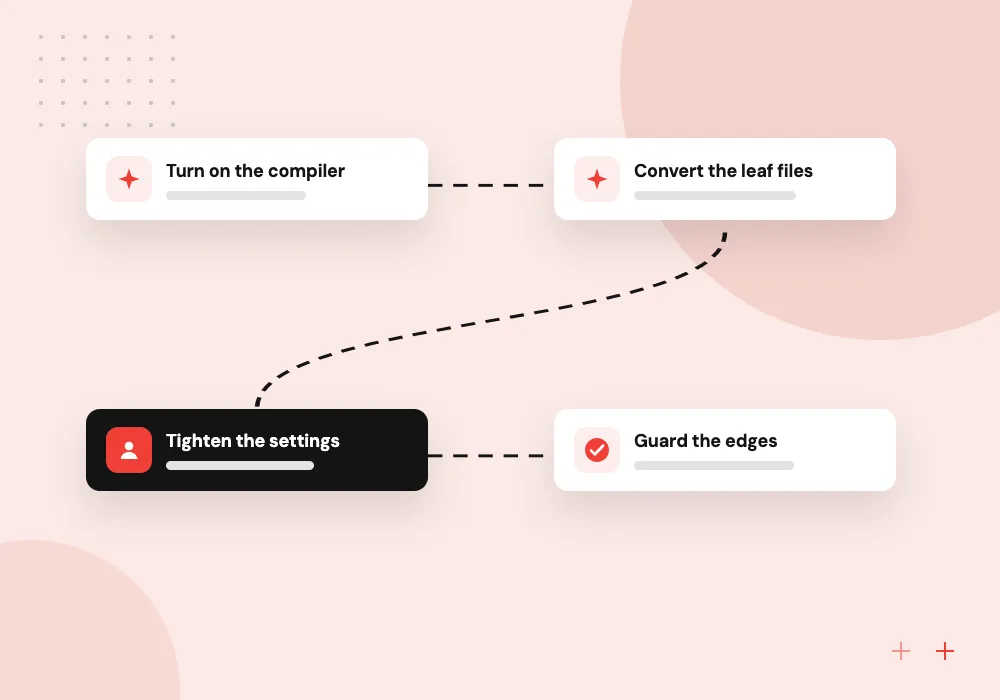
Types added one folder at a time
- 01 Turn on the compiler TypeScript checks the existing JavaScript files with loose settings.
- 02 Convert the leaf files Utilities and data models become .ts files with explicit types first.
- 03 Tighten the settings Strict compiler flags are switched on folder by folder.
- 04 Guard the edges API responses and form input get runtime checks matching their types.
Feature work carries on during the migration, because each step is small enough to review in one sitting.
What we build with TypeScript
TypeScript adds static types to JavaScript. Most of our TypeScript work is either a new full-stack product or a JavaScript app that has become risky to change.
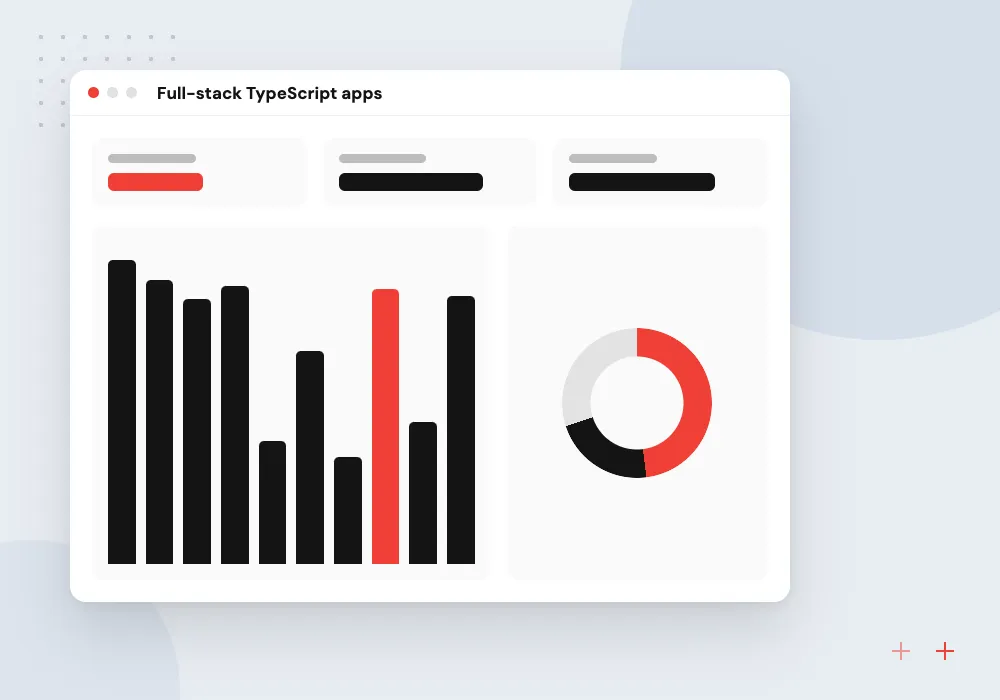
Full-stack TypeScript apps
React or Next.js front ends and Node.js or NestJS back ends sharing one set of types, so a renamed field shows up on both sides.
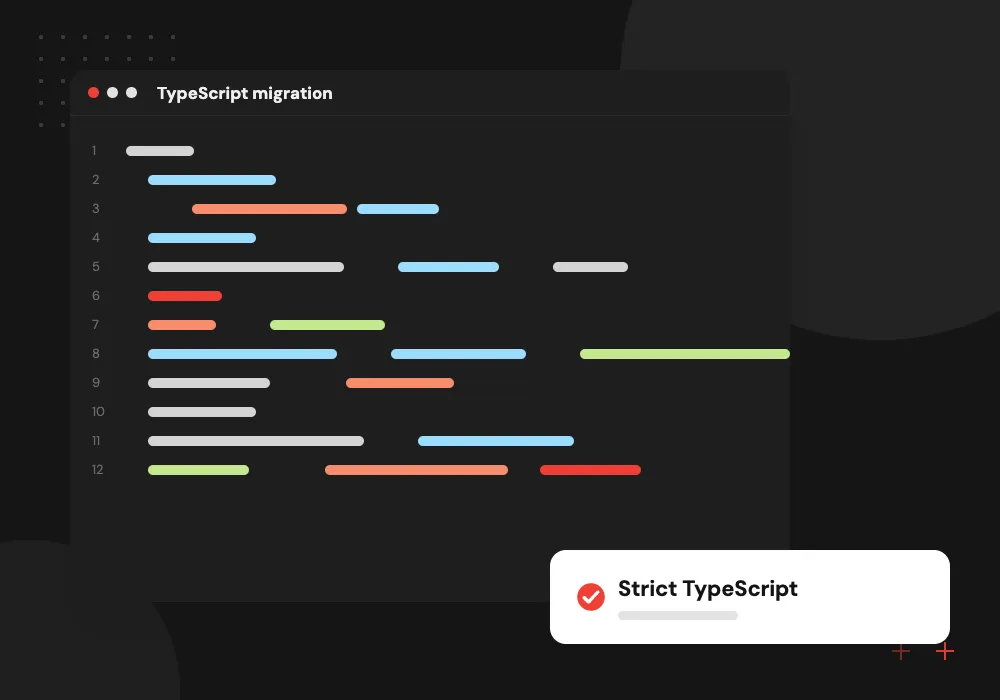
TypeScript migration
An existing JavaScript app moved to TypeScript in stages, with the compiler catching mistakes that used to reach users.
Typed API clients
Client code generated from OpenAPI or GraphQL schemas, so front-end calls match what the server really accepts.
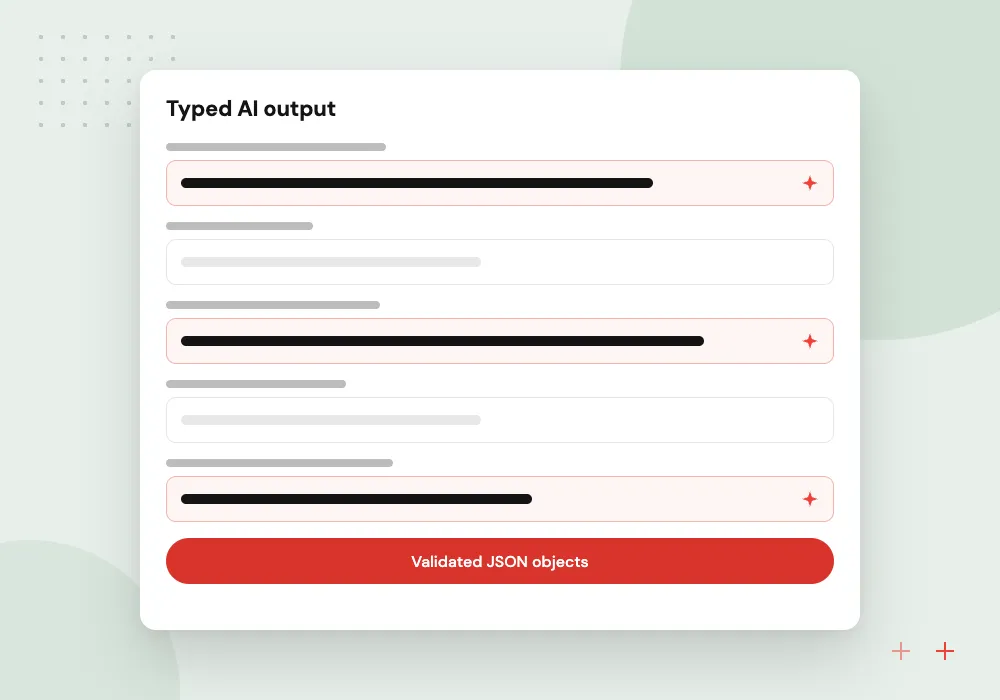
Typed AI output
Model replies parsed with Zod schemas, so a missing or malformed field is caught before it reaches a screen or database.
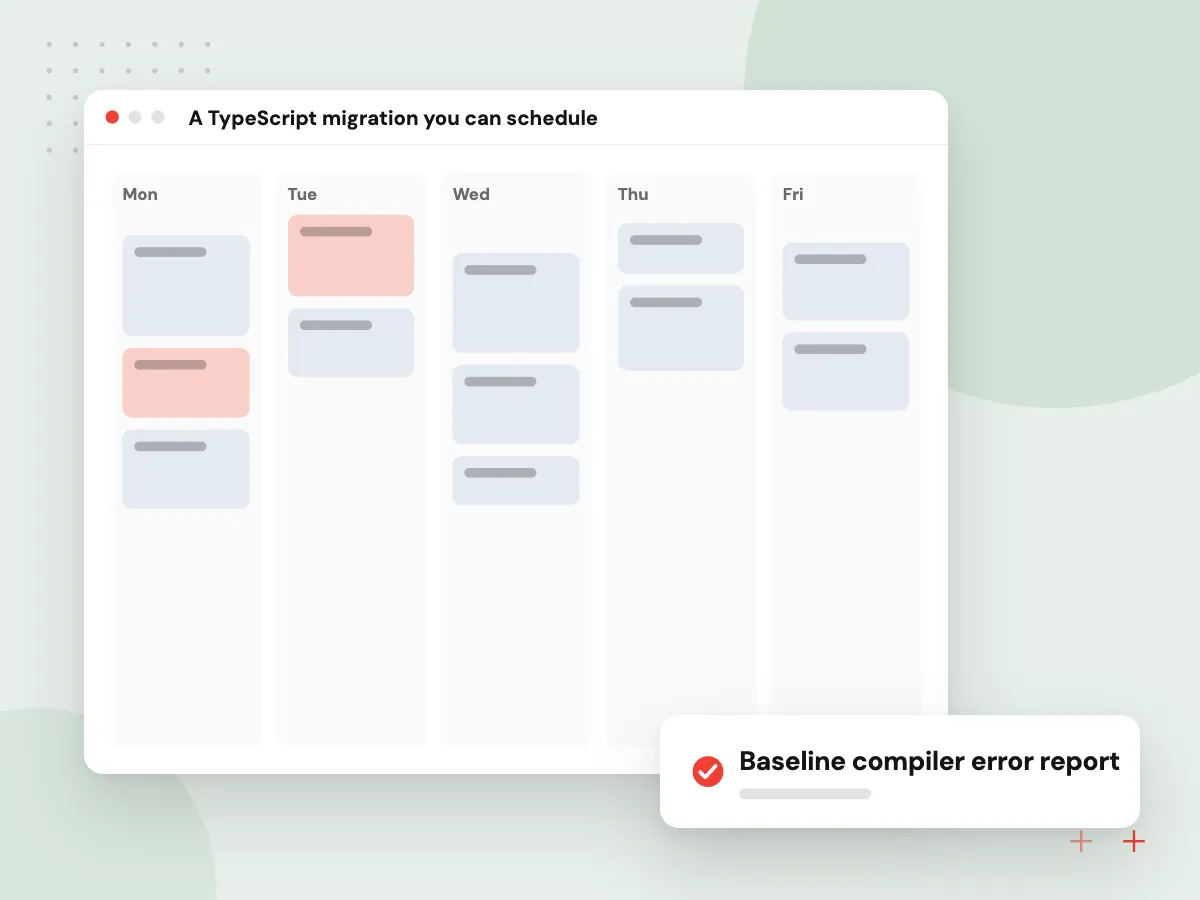
A TypeScript migration you can schedule
Migrations stall when they are one large task with no end date. We split yours by folder, each with an error count and an estimate, and track progress in CI so everyone sees untyped files going down. Your developers review every batch, so they learn the new types as they land.
What we do
- Baseline compiler error report
- Folder-by-folder conversion plan
- Strict flags raised in stages
- Types for untyped libraries
- CI check against regressions
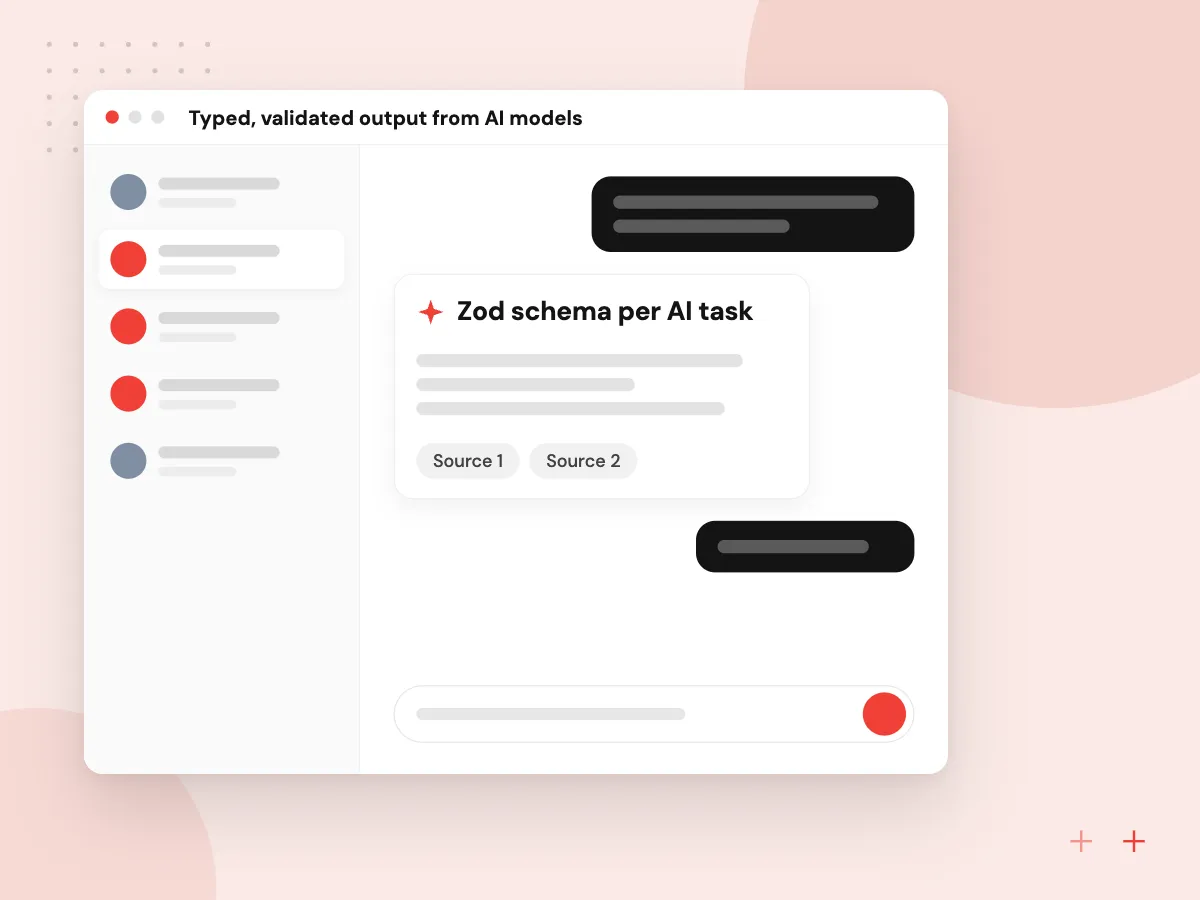
Typed, validated output from AI models
A language model can return a field under the wrong name or a number written as text. In TypeScript we describe the expected result once as a Zod schema, use it to request structured output, and parse every reply against it. Failed replies are retried or passed to a person.
What we do
- Zod schema per AI task
- Structured output requests
- Retry on parse failure
- Typed results passed to your UI
- Logged failures for prompt fixes

How we approach a project
TypeScript migration. We start with the compiler in a permissive mode across the codebase, convert files from the bottom of the dependency tree up and raise strictness as each area is done. The TypeScript handbook’s migration guide explains the compiler options involved.
Apps that are dated in more ways than missing types may need legacy application modernization instead. For the frameworks we combine with TypeScript, open the full technologies list.
How we work
- Strict mode as the goal
- Runtime checks at every boundary
- One source of truth for models
Our Process
-

Measure the starting point
We run the compiler over your code, count errors per folder and list libraries without type definitions.
-

Agree the strictness target
We pick which compiler flags to reach and in what order, and add them to CI so progress cannot slip back.
-

Convert in reviewable batches
Each pull request covers one folder or feature, small enough for your developers to review in one go.
-

Lock in the gains
Once a folder is strict, lint rules block new untyped code there and generated API types replace hand-written ones.
Why Aranv for TypeScript
We migrate while you ship
Conversion happens in small batches next to normal feature work, so your roadmap does not stop for a big rewrite.
Types that match real data
The schemas that define types also validate data at API, form and AI boundaries, so build-time and runtime checks agree.
Your developers learn as we go
Your team reviews each converted folder with us, so the conventions are theirs by the end rather than a surprise at handover.
Progress you can see
A CI report tracks strict files, remaining errors and new untyped code each week, so the migration’s pace is visible.
Planning TypeScript Development Services?
Book a 30-minute conversation with the team that would build it.
TypeScript development FAQs
-
Is it worth migrating our JavaScript app to TypeScript?
Usually, if the app is still growing and several people work on it. Types catch errors before release and make refactoring safer. For a small app that rarely changes, the effort may not pay back. We measure the codebase first and tell you which case applies.
-
Can we migrate to TypeScript without pausing feature work?
Yes. TypeScript can check JavaScript files alongside TypeScript files, so the migration moves folder by folder while your team keeps shipping. New code is written in TypeScript from the start, and older files convert as they are touched or in planned batches.
-
How long does a TypeScript migration take?
That depends on codebase size, test coverage, how dynamic the current code is and how strict you want the end state. Once the compiler has run over your code, each folder can be estimated on its own, turning the migration into small tasks you can schedule.
-
Does TypeScript make an app slower?
No. TypeScript compiles to plain JavaScript and the types are removed before the code runs. The added cost is build time, which current tooling keeps short. Runtime validation at API edges adds a little work per request, a fair trade for the bugs it stops.
-
How does TypeScript help with AI features?
Model output is only text until it is checked. We define the expected shape with a schema library such as Zod, ask the model for JSON in that shape and validate the reply, so the rest of your code works with a typed object and handles failures in one place.

Let’s talk about your next step
Contact Aranv to discuss your workflow, current tools, and goals. Meet with our team or send an inquiry.
Book a meeting with our team
Choose an available date and time for a 30-minute conversation about your project.
Tell us about your project
Share a few details so we can discuss a useful next step.
Prefer email? sales@aranv.com