


What Svelte development includes
Aranv provides Svelte development for businesses that want quick, lean web applications: SvelteKit sites and apps with server rendering, customer portals and dashboards, upgrades from older Svelte versions to Svelte 5, and AI features such as streaming assistants, built and supported by one team.
Svelte is a compiler: components become plain JavaScript at build time, so the browser downloads less framework code. SvelteKit adds routing, server rendering, form handling and deployment adapters. Together they suit content-heavy sites, portals and dashboards that must load quickly on modest phones, alongside our web application development work.
Svelte is not the only good option. React and Next.js have larger ecosystems and talent pools, and Vue offers a similar template style with wider adoption. We recommend Svelte when smaller bundles and simpler components outweigh those strengths for your team.
How a SvelteKit app comes together
Compiled components, server-first pages
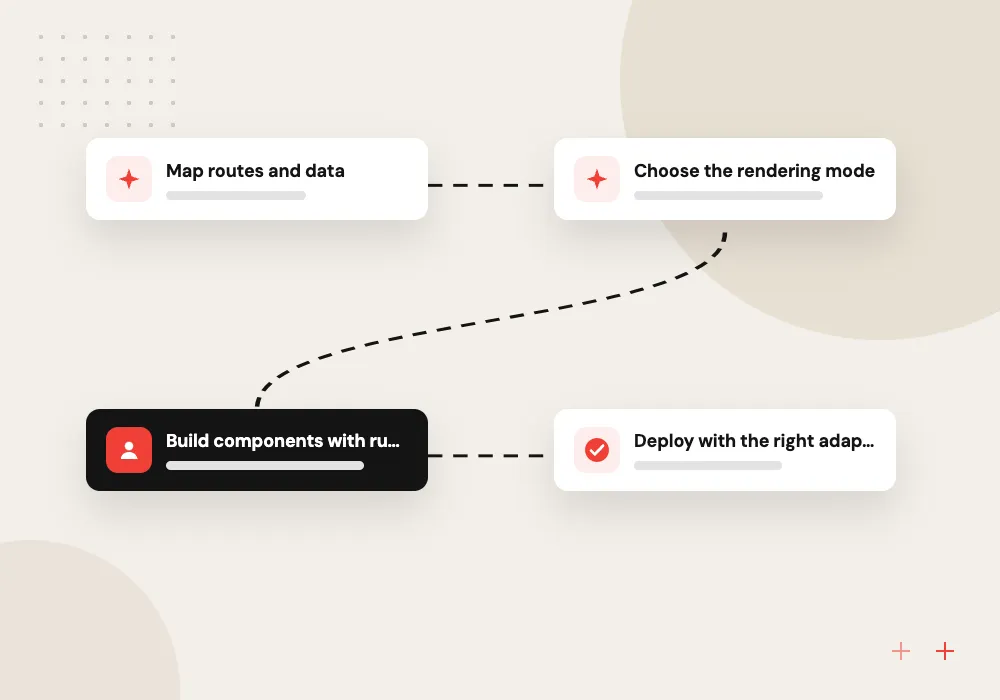
- 01 Map routes and data Each page, its data source and who may see it are listed first.
- 02 Choose the rendering mode Prerendered, server-rendered or client-only, decided route by route in SvelteKit.
- 03 Build components with runes Svelte 5 state, derived values and props keep components small and readable.
- 04 Deploy with the right adapter Node server, static hosting or a serverless platform, matched to your hosting.
SvelteKit runs on Vite, so builds are quick and the tooling feels familiar to front-end developers.
Svelte apps we build
Svelte suits projects where page speed, small bundles and readable code matter more than the largest plugin ecosystem.
SvelteKit websites and apps
Marketing sites, booking flows and member areas that render on the server, load quickly on phones and stay easy to edit.

Dashboards and portals
Customer portals and internal dashboards with live tables, filters and charts, fed by your API or database through SvelteKit load functions.
Svelte 5 upgrades
Svelte 3 and 4 codebases moved to Svelte 5 runes, and older Sapper projects rebuilt on SvelteKit, one route at a time.
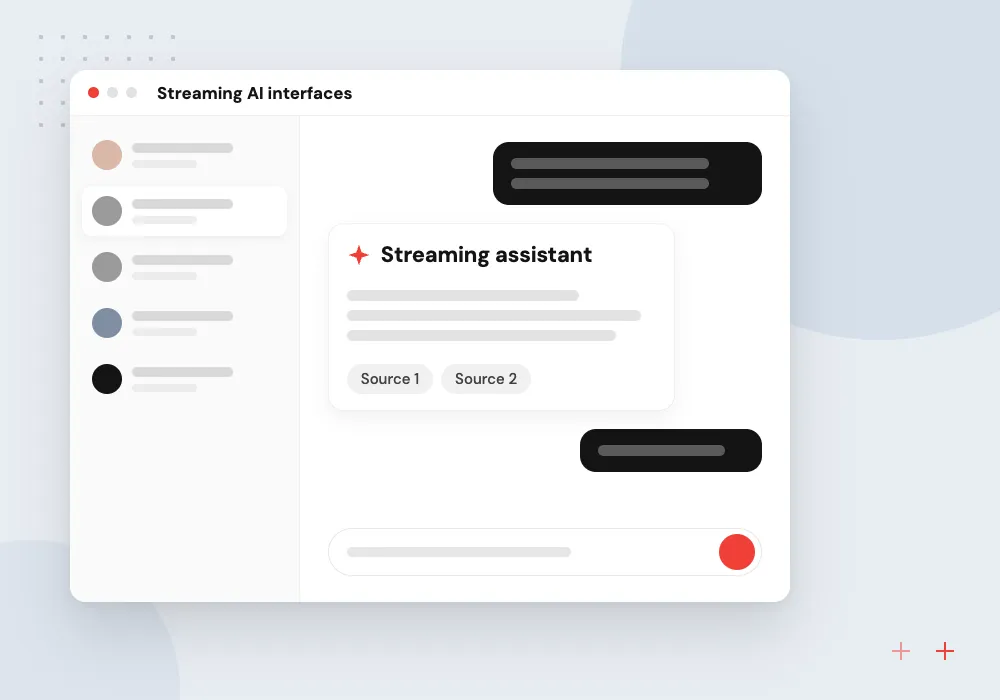
Streaming AI interfaces
Chat panels and drafting tools that show model output as it is generated, with the model call made in a server endpoint.
Moving to Svelte 5 and SvelteKit
Svelte 5 introduced runes such as $state, $derived and $props in place of the implicit reactivity of earlier versions. The official sv migrate command converts much of the syntax, and Svelte 5 still runs older components while you upgrade. We migrate in stages, review every automated change and finish the parts the script flags for manual work.
What we do
- Dependency and library audit
- Automated migration with manual review
- State moved to runes
- Sapper routes rebuilt in SvelteKit
- Visual regression tests per route
AI features in SvelteKit
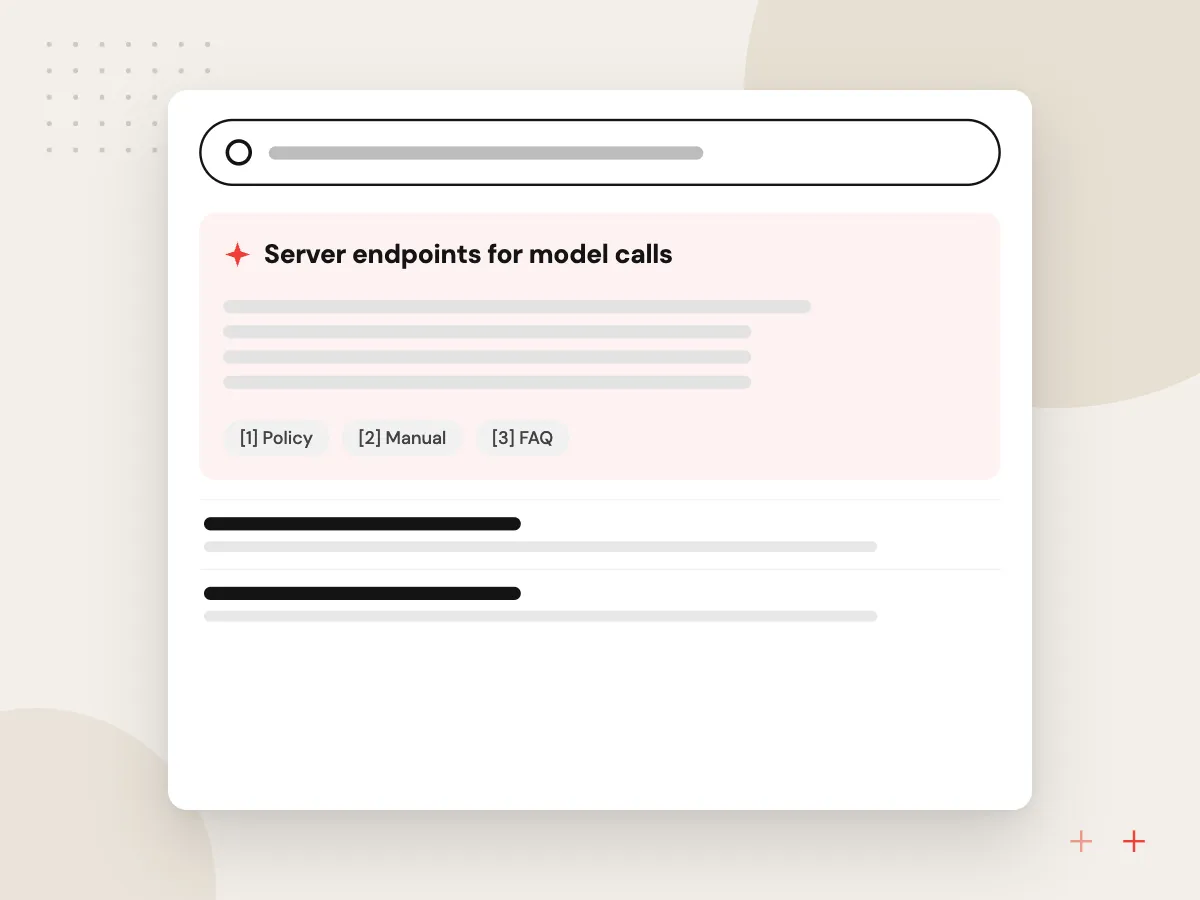
SvelteKit’s server routes are a natural home for model calls. Keys sit in private environment variables that cannot be imported into browser code, and responses stream to the page as they are generated. We build search over your documents, drafting help inside forms and summaries of long records, with each answer logged for review.
What we do
- Server endpoints for model calls
- Private environment variables for keys
- Streamed responses in the UI
- Retrieval over your own documents
- Rate limits and usage logs

How we approach a project
Svelte 5, released in October 2024, changed how state is written. The official migration guide lists the differences, and we follow it when upgrading older apps. Components are written in TypeScript so props and data shapes are checked.
After launch, framework updates, security patches and new features continue under maintenance and support. Browse the technologies section for the other front-end and back-end stacks we use.
How we work
- Ship less JavaScript to browsers
- Pick rendering per route
- Keep secrets on the server
Our Process
-

Route and data workshop
We agree the pages, user roles and data sources, and decide which routes render where.
-

Component kit first
Buttons, forms, tables and layouts are built once and checked against your brand before pages.
-

Pages in short sprints
Each sprint delivers working routes on a preview deployment your team can click through.
-

Performance and launch
We measure load times on real phones, fix the slow spots, then deploy and watch error logs.
Why Aranv for Svelte work
Framework choice made openly
Svelte has a smaller hiring pool than React. We weigh that against its speed and simplicity with you, and recommend React or Vue when they serve the business better.
Server and client both covered
Our developers write SvelteKit load functions, form actions and the APIs behind them, so data access and validation are designed together rather than handed between teams.
Accessibility checks from the start
The Svelte compiler warns about common accessibility mistakes, and we add keyboard and screen reader testing on top of those warnings before each release.
Code your team can maintain
Components follow one folder structure, with TypeScript types, tests and short notes, so an in-house developer can pick up the project without a long briefing.
Planning Svelte Development?
Book a 30-minute conversation with the team that would build it.
Svelte and SvelteKit FAQs
-
When does Svelte make sense for a company website or app?
When page speed and simple, readable components matter most. Svelte produces small bundles, and SvelteKit handles routing, server rendering and forms. The trade-off is a smaller ecosystem and hiring pool than React, which matters if you plan to staff the app in-house later.
-
What is the difference between Svelte and SvelteKit?
Svelte is the component framework and compiler. SvelteKit is the application framework built on top of it, adding file-based routing, server-side rendering, data loading, form actions and adapters for different hosts. Most new projects use both.
-
Should we upgrade our app to Svelte 5?
Usually yes, because new libraries and documentation now assume Svelte 5 and runes. Svelte 5 can run older components, so the upgrade can happen gradually. We review your dependencies first, since some older libraries may need replacing.
-
Can SvelteKit work with our existing back end?
Yes. SvelteKit load functions and server routes can call any REST or GraphQL API, or query a database directly. Keeping the current back end and adding SvelteKit for the front end and a thin server layer is a common, lower-risk setup.
-
What affects the cost of a Svelte project?
The number of routes and user roles, the APIs and data sources involved, design work, and whether you are upgrading an existing app or starting fresh. We give a phased estimate after a short discovery, so the first release can be funded on its own.

Let’s talk about your next step
Contact Aranv to discuss your workflow, current tools, and goals. Meet with our team or send an inquiry.
Book a meeting with our team
Choose an available date and time for a 30-minute conversation about your project.
Tell us about your project
Share a few details so we can discuss a useful next step.
Prefer email? sales@aranv.com