


Choosing and building a B2B ecommerce platform
Aranv builds a B2B ecommerce platform around how your trade customers already buy: an ordering portal with account-specific price lists, quotes, quick reorders and net terms, connected to the ERP that holds your stock and invoices. It suits distributors, manufacturers and wholesalers.
No one product wins among B2B commerce platforms. The right choice depends on where your stock and pricing live, how many accounts you serve and how unusual your rules are. We compare hosted options, open source and a custom build against your ERP, order volume and team before recommending one.
B2B on Shopify is now practical for many wholesalers. Shopify’s B2B features by plan table shows company accounts, net terms, quantity rules, price breaks and quick order lists on every plan from Basic up to Plus, while direct company catalogs, deposits and partial payments need Plus. Store work is covered under Shopify development.
How a trade order flows
From buyer login to invoice
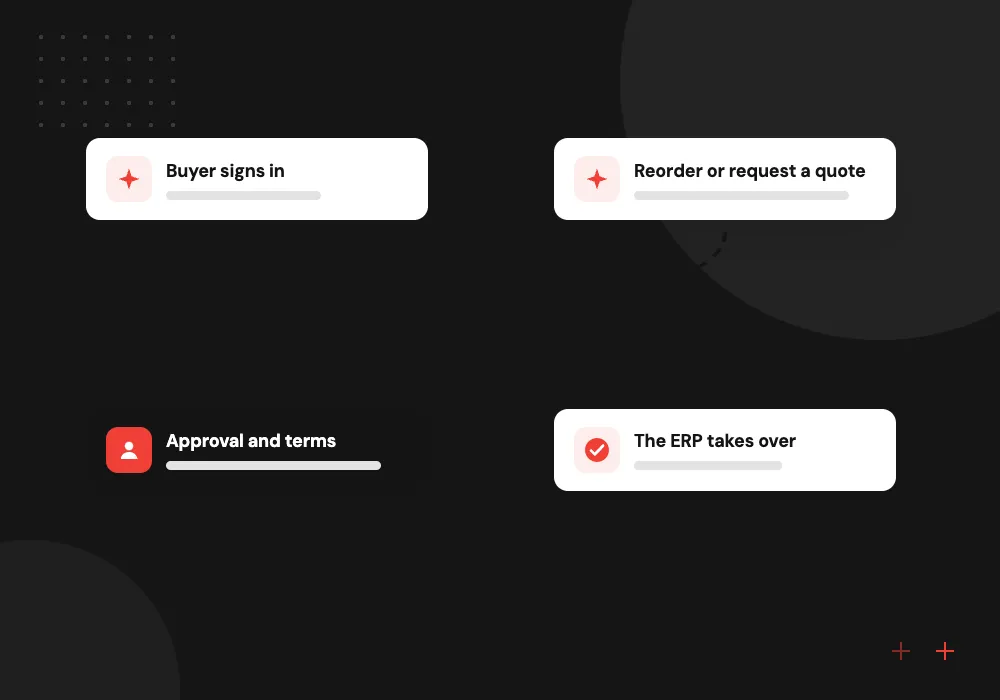
- 01 Buyer signs in Each company sees its own catalog, prices and approved delivery addresses.
- 02 Reorder or request a quote Buyers repeat past orders, paste a SKU list or ask sales for a price.
- 03 Approval and terms Orders over a set limit go to a manager; payment follows agreed net terms.
- 04 The ERP takes over Order, stock reservation and invoice land in your ERP with no retyping.
Underneath, the platform can be Shopify, Odoo, Adobe Commerce or a custom build.
What a B2B ordering portal should handle
Trade buying works differently from retail. These are the four gaps we are asked to close most often.
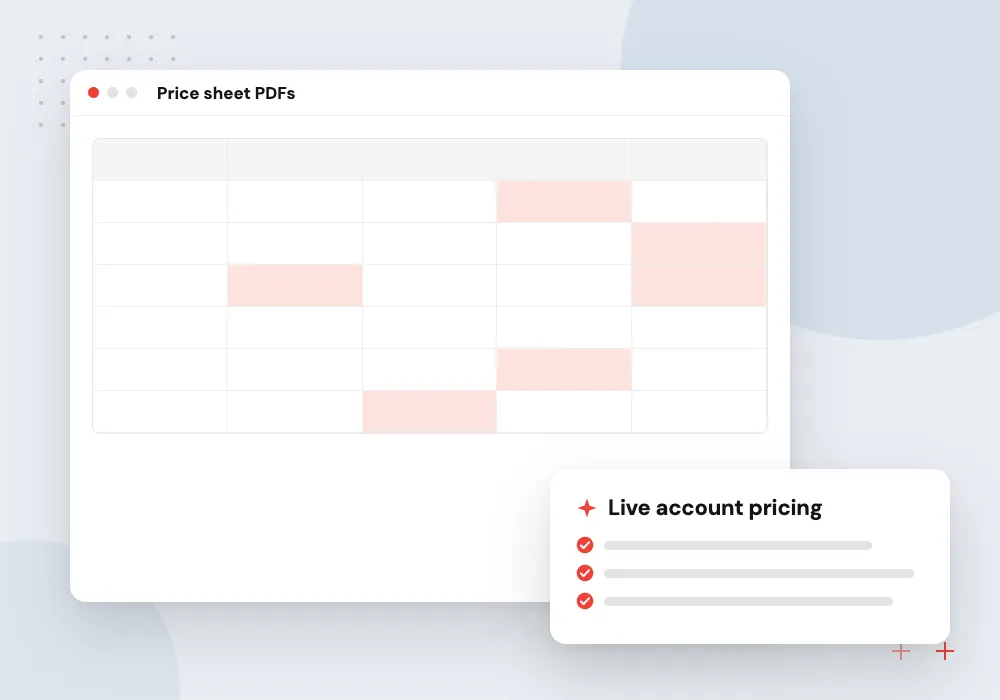
Account price lists
Contract prices, tiered discounts and quantity breaks shown per company, so reps stop checking spreadsheets before every quote.
Quotes and approvals
Buyers request quotes online, sales staff answer inside the platform and large orders route to the buyer’s own manager.
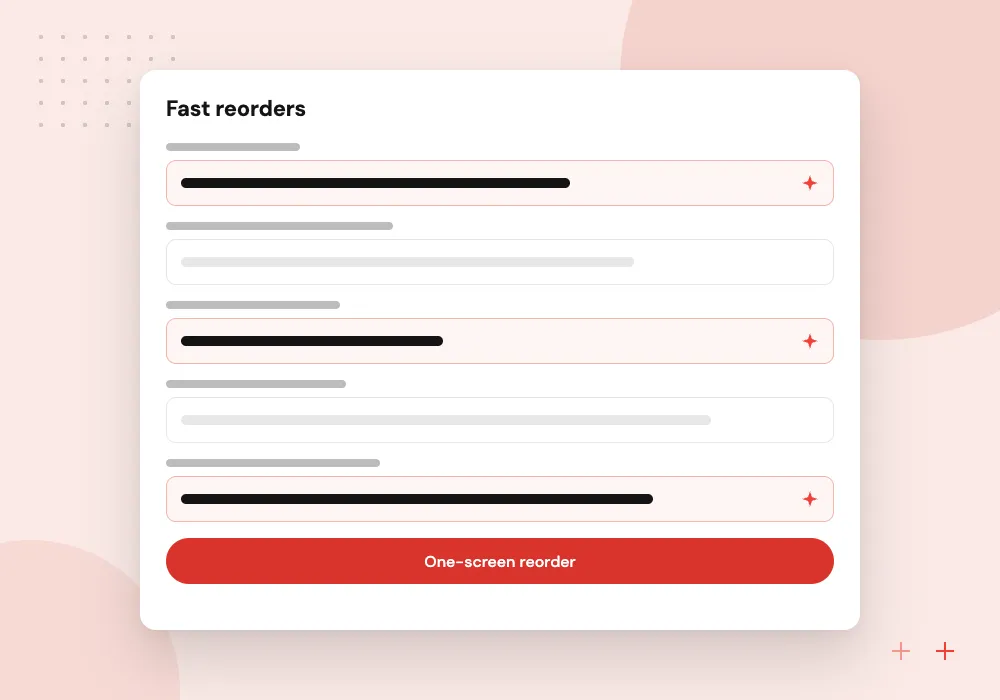
Fast reorders
Order history, saved lists and quick order forms with SKU entry for buyers who already know what they need.

Ordering for sales reps
Reps place orders for their accounts from a tablet on the road, seeing live stock and each account’s credit limit.
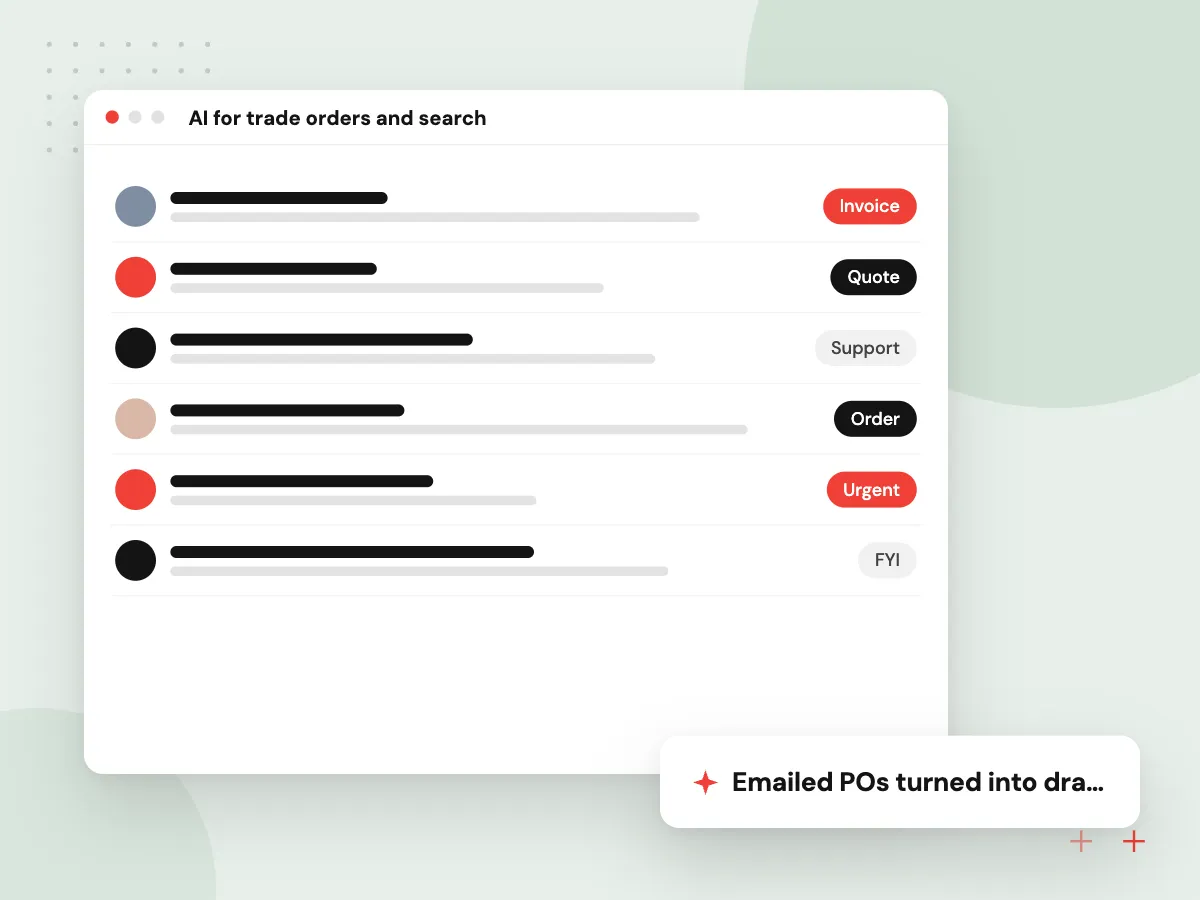
AI for trade orders and search
Many trade orders still arrive as emailed PDFs or spreadsheets. An AI step can read those files, match each line to your SKUs and the buyer’s price list, and place a draft order in the portal for staff to confirm. The same catalog data can drive search that understands part numbers and trade names.
What we do
- Emailed POs turned into draft orders
- Line matching to SKUs and prices
- Search by part number or trade name
- Reorder prompts from order history
- Staff confirmation before anything ships
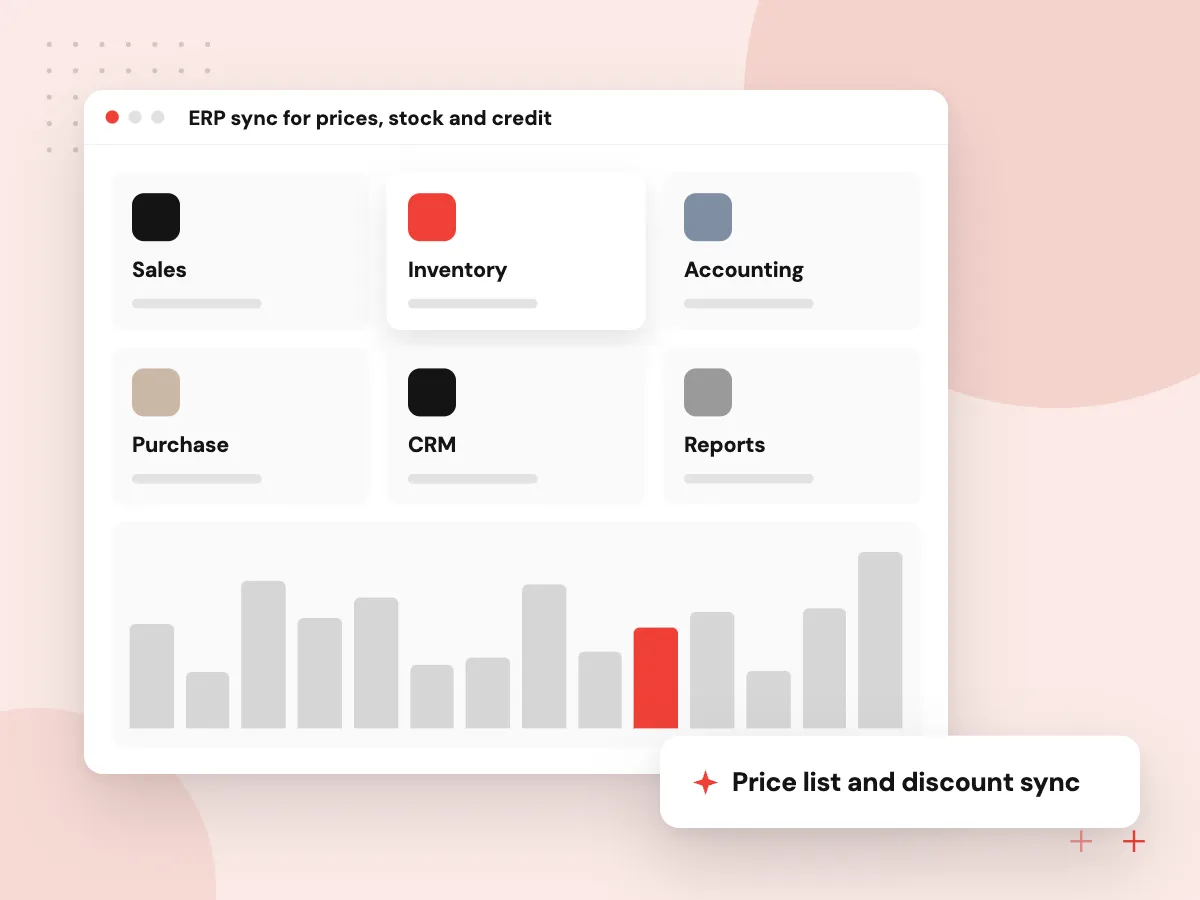
ERP sync for prices, stock and credit
The ERP stays the record for prices and stock. Price lists, stock levels and credit limits reach the portal on change or on a schedule, orders and payments travel back, and each message is logged so a rep can see why a price or stock figure looks different.
What we do
- Price list and discount sync
- Stock by warehouse location
- Credit limit and hold checks
- Orders and invoices back to the ERP
- Sync log visible to staff

How we approach a project
If your business already runs on Odoo, its website and eCommerce apps can serve trade customers from the same database as sales, inventory and accounting. Our wider team built one such portal, listed as Project 03 on our case studies page: an Odoo 17 build with order approvals and purchase orders, made for a medical supplies distributor in the US. See Odoo development for more.
Large catalogs with layered account structures may suit Adobe Commerce, whose B2B extension adds company hierarchies, requisition lists and negotiated quotes. This work sits within our eCommerce development services.
How we work
- Prices that match the contract
- Reorders without a phone call
- One source of truth for stock
Our Process
-

Map the trade rules
We document price lists, discounts, payment terms, approval limits and how orders reach the warehouse today.
-

Pick the platform
Two or three realistic options are compared against your ERP, catalog size and budget, and we recommend one in writing.
-

Build and connect
Accounts, catalogs and checkout rules are configured, and the ERP sync is built and tested with real customer data.
-

Pilot with key accounts
A few trusted customers order first, we fix what they find, then invite the remaining accounts in waves.
Why Aranv for B2B commerce
Trade rules before platform choice
We document price lists, terms and approval limits first, then compare platforms against them, so the recommendation follows your rules instead of a vendor’s feature list.
Buyers brought on in waves
A few loyal accounts order first and their feedback shapes the fixes, so most of your customers meet a portal that already handles their real orders.
One view for reps and buyers
Sales reps see the same catalog, stock and credit position as buyers, so orders taken on the road follow the same prices and limits as orders placed online.
Clean data before launch
Accounts, delivery addresses and product records are checked and deduplicated before import, because a wrong price or address on the first order costs trust.
Planning B2B eCommerce Development?
Book a 30-minute conversation with the team that would build it.
B2B eCommerce FAQs
-
What is the best B2B ecommerce platform for a small distributor?
There is no single answer. If you already sell on Shopify, its B2B features may be enough. If Odoo runs your stock and accounting, its eCommerce app avoids a separate sync. A custom portal fits unusual pricing or approval rules. We recommend one after mapping your rules.
-
Can trade and retail customers share one store?
Yes, on most platforms. Trade buyers sign in to see their own prices, terms and catalog, while retail visitors see public prices. Shopify, Adobe Commerce and Odoo all allow this, though each handles it differently.
-
How do account prices stay in sync with our ERP?
We treat the ERP as the source of truth and push price lists and stock to the store on a schedule or when they change. Orders and payments flow back the other way. Every sync is logged, so a mismatch is visible and fixable.
-
What drives the cost of a B2B ordering portal?
The number of pricing rules, the depth of the ERP integration, approval workflows, catalog size and whether you start from a platform or build custom. Clean product and customer data lowers cost more than anything else.
-
What should we prepare before a B2B project?
Current price lists and discount rules, a sample of real orders, access to your ERP or its documentation, and one person who knows how trade orders are handled today. A sales rep’s point of view helps too.
-
Will our trade buyers actually use it?
They do when it saves them time. We launch with a small group of loyal accounts, watch where they get stuck and fix it before inviting everyone. Quick reorders and saved lists tend to win buyers over.

Let’s talk about your next step
Contact Aranv to discuss your workflow, current tools, and goals. Meet with our team or send an inquiry.
Book a meeting with our team
Choose an available date and time for a 30-minute conversation about your project.
Tell us about your project
Share a few details so we can discuss a useful next step.
Prefer email? sales@aranv.com