


What MVP development includes
Aranv is an MVP development company for startups and for businesses testing a new product line. We help you pick the one problem worth solving first, then design and build a minimum viable product that real users can try, on code and hosting that can grow if the idea works.
Most weak first versions try to do too much. A short scoping phase turns your idea into user stories, then sorts them into what the MVP must include, what can wait and what to drop. The result is a written scope your team and any investor can read quickly.
The build covers interface design, front end and back end, a database, sign-in, payments if you plan to charge, analytics and hosting. We favor well-known frameworks such as React and Node.js because they make the next hire easier.
How an idea becomes a testable product
The smallest version that proves the point
- 01 Name the riskiest assumption Decide what must be true for the business to work, and test that first.
- 02 Cut the feature list Keep the one journey that tests the assumption and park everything else.
- 03 Build on solid foundations Real sign-in, a proper database and a deployment pipeline, so nothing is thrown away.
- 04 Measure with real users Analytics and short interviews show whether people return, pay or ask for more.
Frequent demos keep the scope honest and let you change direction without wasted work.
Minimum viable product development for different goals
An MVP is a learning tool. What it needs to prove decides what goes into it.
MVP for startups
A first product for founders who need early customers, a working demo for investors or proof that people will pay.
New line for established firms
A separate product tried with a few existing customers before the company commits a full budget.
AI MVP
One narrow AI feature, such as document summaries or a support assistant, tried on real data to check accuracy.
Clickable concept
A tested prototype for when the open question is the workflow rather than the technology, so no back end is needed yet.
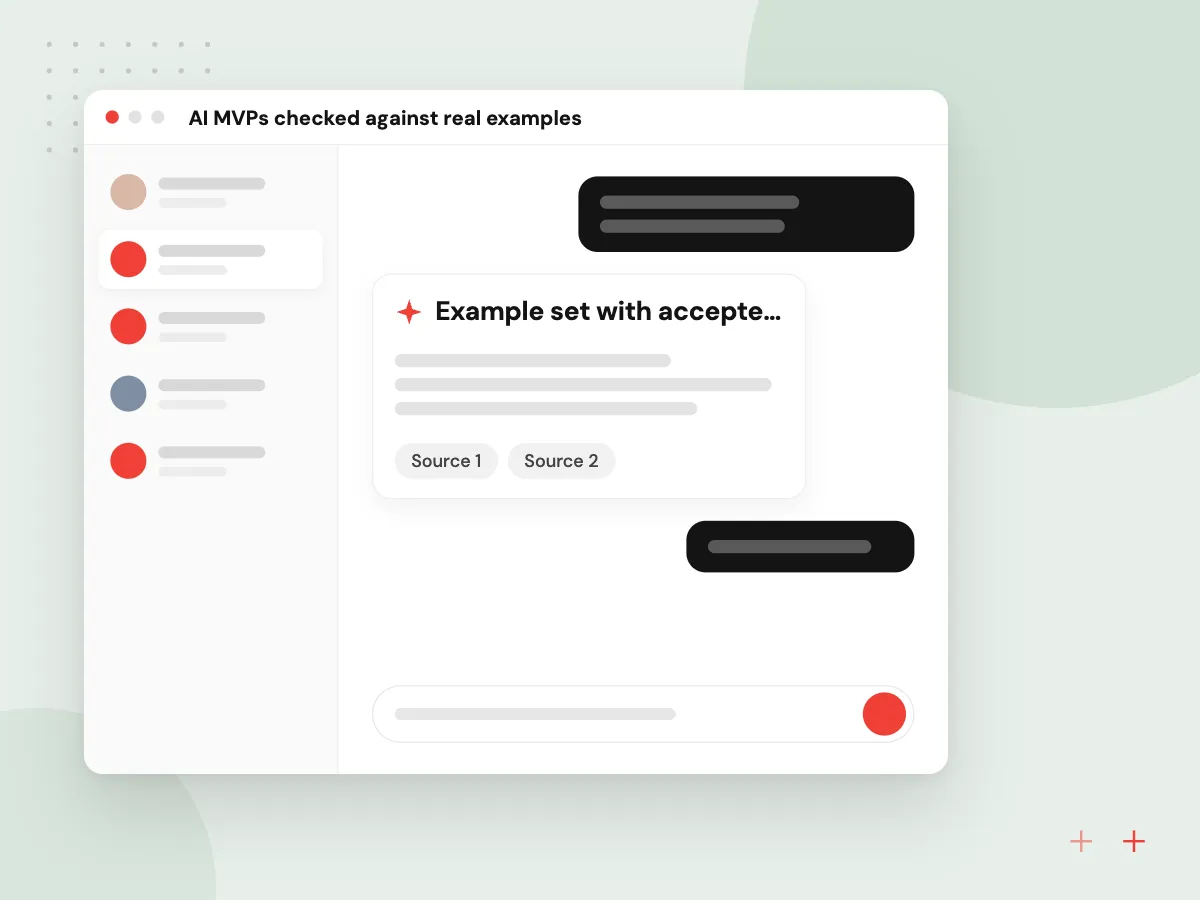
AI MVPs checked against real examples
For an AI product, the riskiest assumption is usually that a model can do the job well enough. We gather real cases with the answers you would accept, score candidate models on them, and build the interface only once quality and cost per request look workable.
What we do
- Example set with accepted answers
- Two or more models compared
- Cost per request estimated
- Human review in the first release
- Clear verdict before interface work
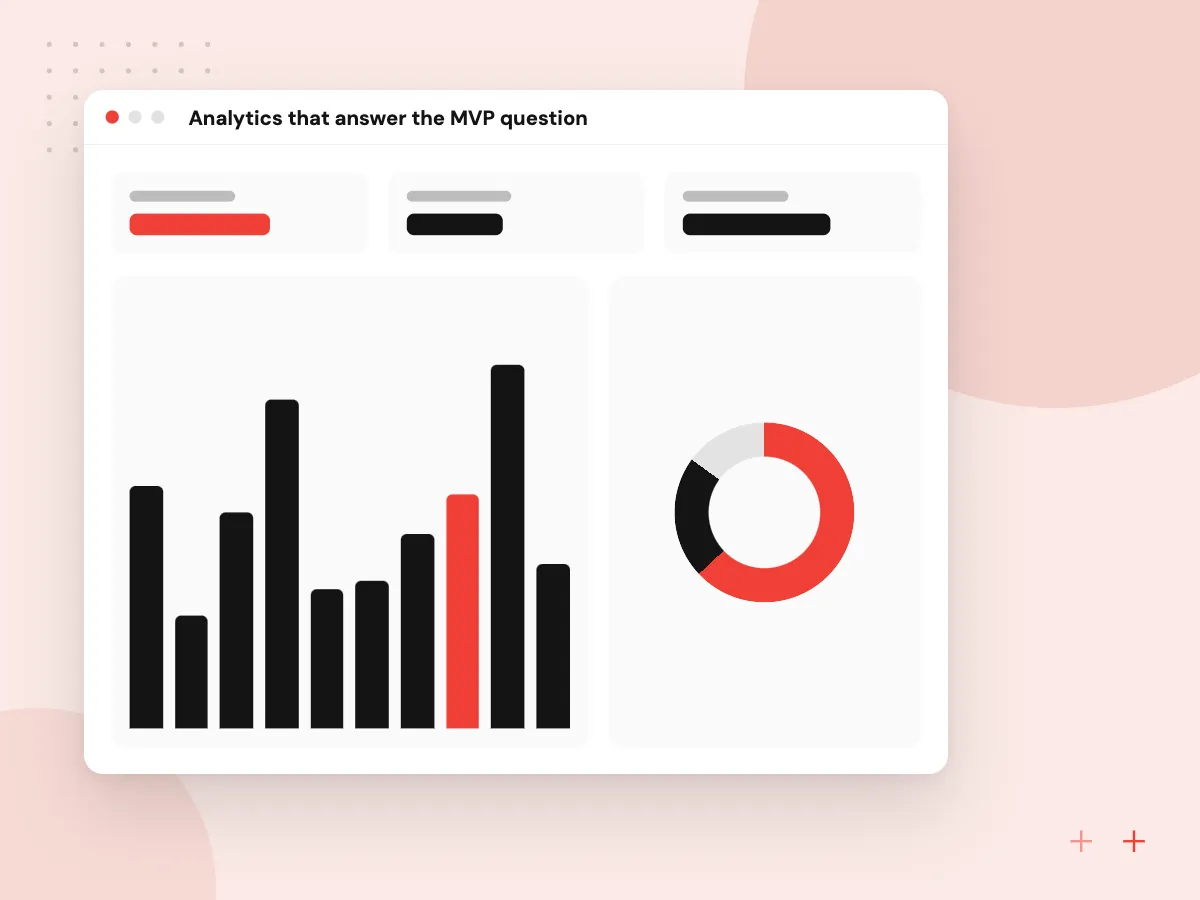
Analytics that answer the MVP question
An MVP is only useful if it shows whether the idea works. Before launch we agree two or three signals, such as sign-ups that finish onboarding, repeat use in week two or a first payment, then set up the events and a simple dashboard to follow them.
What we do
- Success signals agreed before launch
- Event tracking on key steps
- Simple dashboard for founders
- Short user interview script
- Next release planned from findings

How we approach a project
An MVP is not a throwaway prototype. When the idea works, the same code base grows into the full product, so we keep its structure clean enough to extend. If the long-term plan is a subscription business with many customer accounts, SaaS development explains how the data model is prepared for that from the first release. For a phone-first idea, see mobile app development.
AI MVPs need one extra step: a set of real examples to measure answers against before anyone builds a polished interface. Model choice and testing come from our AI software development team, and wireframes for any MVP come from UI/UX design. MVPs sit within our wider custom software development service.
Have an idea to test? Book a 30-minute call through the contact page.
How we work
- One problem, solved well
- Real users before more features
- Code that survives success
Our Process
-

Scoping sprint
Turn the idea into user stories, rank them and agree what success should look like after launch.
-

Clickable prototype
Put the main journey in front of a few target users before any production code is written.
-

Focused build
Develop the agreed stories with frequent demos, cutting scope rather than stretching the date.
-

Launch and learn
Release to a first group of users, read the analytics, then decide what to build, change or stop.
Why build your MVP with Aranv
No rewrite after traction
The MVP gets the same basics as a full product, including real sign-in, tests on payment paths and automated deploys, so growth does not begin with a rebuild.
Candid about what to skip
We tell you which features can wait, even ones you are attached to, because every extra screen delays the moment real users respond.
Decisions written in plain words
Technical choices are explained in a short note, so non-technical founders can follow them and investors can see why each was made.
Ready for your first hire
Code, docs and a setup guide are kept current, so your first in-house developer can run the project on their own machine in the first days.
Planning MVP Development?
Book a 30-minute conversation with the team that would build it.
Questions founders ask about MVPs
-
How quickly can an MVP be ready?
A focused MVP usually takes between several weeks and a few months, depending on user roles, integrations and whether payments are involved. We protect the launch date by moving lower-priority features to a later release rather than adding time.
-
What is the difference between a prototype and an MVP?
A prototype shows how the product would work, often as clickable screens with no real data behind them. An MVP is working software that people can sign up for and use, so it gathers evidence such as repeat visits or payments. Many projects test a prototype first and then build the MVP.
-
What drives the cost of an MVP?
Scope drives it: the number of screens and user roles, any integrations or payments, and whether AI features need testing on your data. We estimate after the scoping sprint and show where to cut if the budget is tight.
-
Can a non-technical founder work with you on an MVP?
Yes. You bring knowledge of the customer and the problem; we handle architecture, code and hosting and explain each choice in plain language. We recommend that hosting, the code repository and analytics accounts are set up in your company’s name from day one.
-
What happens after the MVP launches?
We review usage data and feedback with you and plan the next release: fix what confuses people, build what they ask for and remove what nobody uses. We can keep developing it or hand it to an in-house team with documentation.
-
Can you build an AI MVP?
Yes. We gather real examples first, measure how well a model handles them and only then build the interface. That keeps the first version honest about accuracy and shows early whether the AI feature is worth its running cost.

Let’s talk about your next step
Contact Aranv to discuss your workflow, current tools, and goals. Meet with our team or send an inquiry.
Book a meeting with our team
Choose an available date and time for a 30-minute conversation about your project.
Tell us about your project
Share a few details so we can discuss a useful next step.
Prefer email? sales@aranv.com