


What our WooCommerce development services cover
Aranv is a WooCommerce development company for businesses that want to own their store code and data. We build and repair WooCommerce stores on WordPress: custom plugins, checkout and pricing rules, order system integrations, speed work and safe upgrades.
WooCommerce is a free plugin that turns a WordPress site into a store, so most projects touch both. A usual scope covers theme or block work, product and checkout setup, payment and shipping plugins, custom plugin code, data migration, integrations and a staging site for testing. If the wider site needs content or design work, see our WordPress development service.
Order storage matters for busy stores. WooCommerce now keeps orders in dedicated tables through High-Performance Order Storage, which new installs use by default. Older stores often still rely on the posts tables, and some plugins lag behind. We check each plugin for compatibility, then switch with syncing between old and new tables turned on, following the WooCommerce HPOS documentation.
Where WooCommerce work happens
Plugins, orders and hosting
- 01 Plugin audit first We list every plugin, what it does and where custom code would serve better.
- 02 Custom plugin code Pricing, shipping and checkout rules written as your own plugin using WooCommerce hooks.
- 03 Orders in their own tables High-Performance Order Storage keeps order data out of the WordPress posts table.
- 04 Hosting sized for peaks Caching, background jobs and a server plan matched to your busiest order days.
Each change is tested on a staging copy of your store before customers see it.
Common WooCommerce projects
Store owners usually come to us with one of these four needs, sometimes all of them at once.
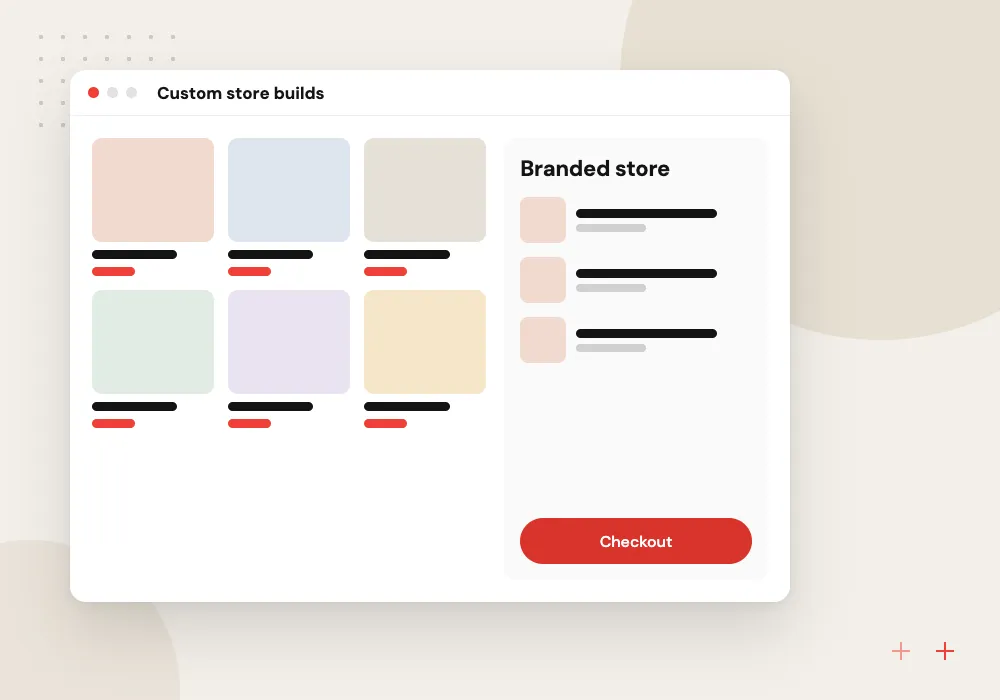
Custom store builds
A block theme or custom theme, product templates and checkout fields shaped around how your customers actually buy.
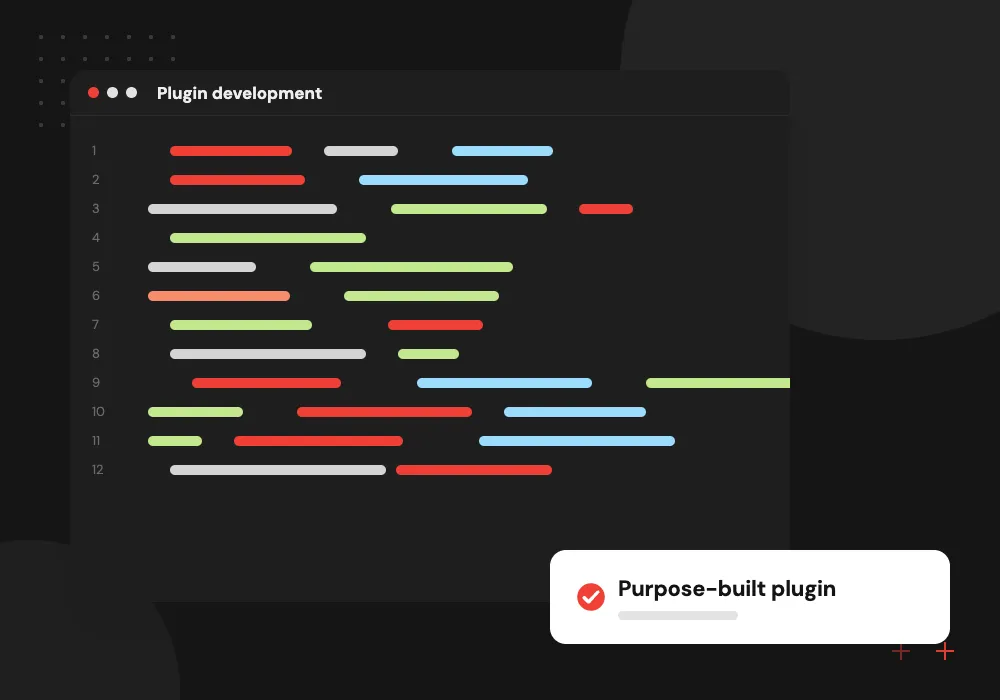
Plugin development
Custom plugins for tiered pricing, product configurators, booking rules or account features that listed plugins handle poorly.
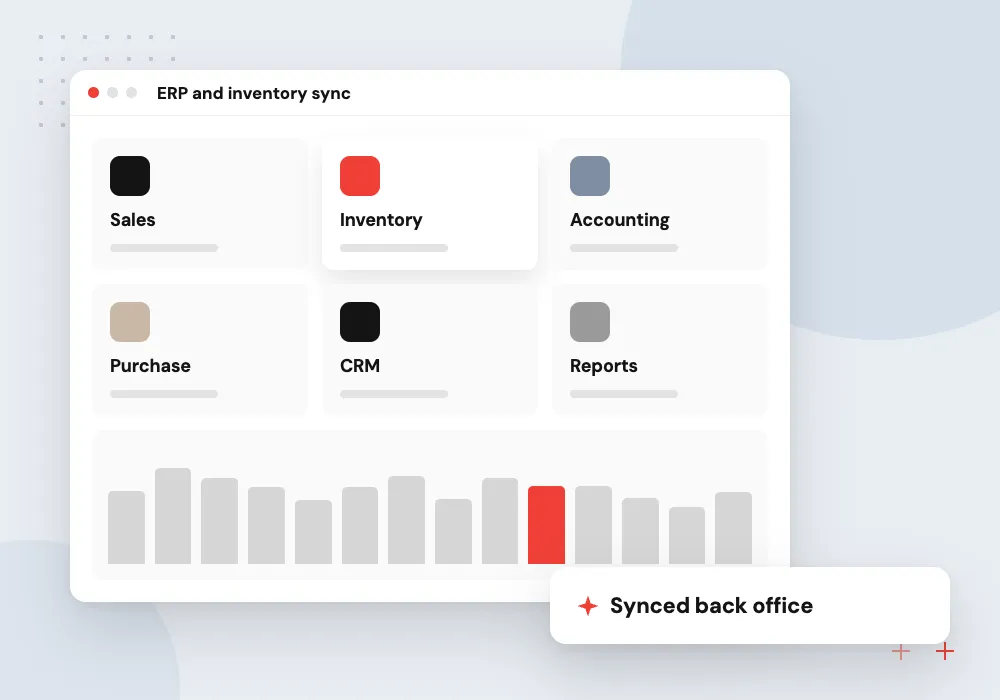
ERP and inventory sync
Orders, stock and customer records kept in step with your ERP, warehouse or accounting software through the WooCommerce REST API.
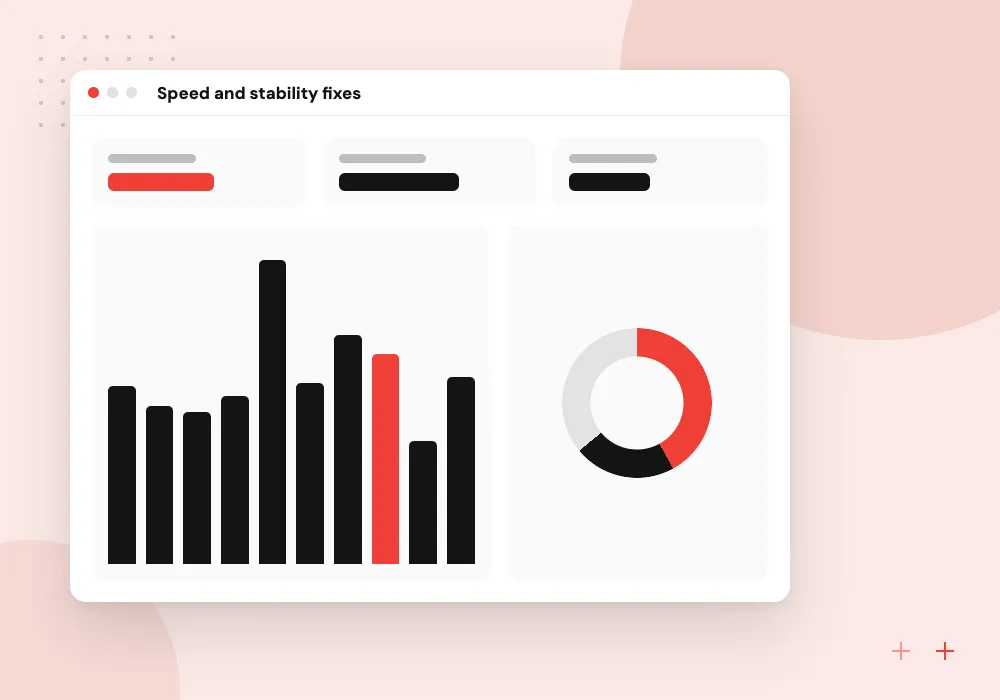
Speed and stability fixes
Slow pages, checkout errors and plugin conflicts traced to their cause and fixed, rather than hidden behind yet another plugin.
Checkout and pricing rules
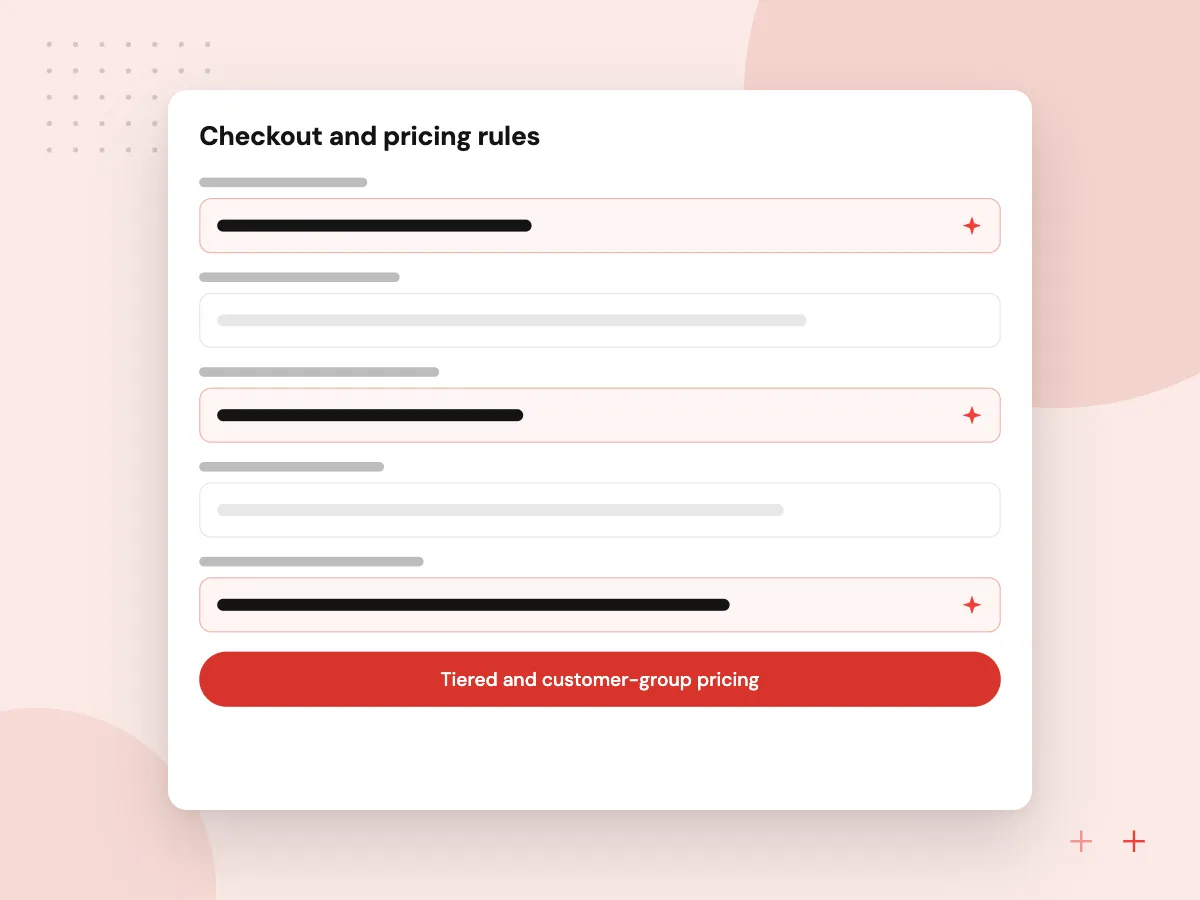
Many stores need checkout rules that no listed plugin covers well. We build tiered and customer-group pricing, minimum order rules, extra checkout fields and conditional shipping as maintained plugin code, then test them on the block checkout and on any classic checkout pages you still run.
What we do
- Tiered and customer-group pricing
- Minimum order and quantity rules
- Custom checkout fields
- Conditional shipping and payment options
- Tests on block and classic checkout
AI features for WooCommerce stores
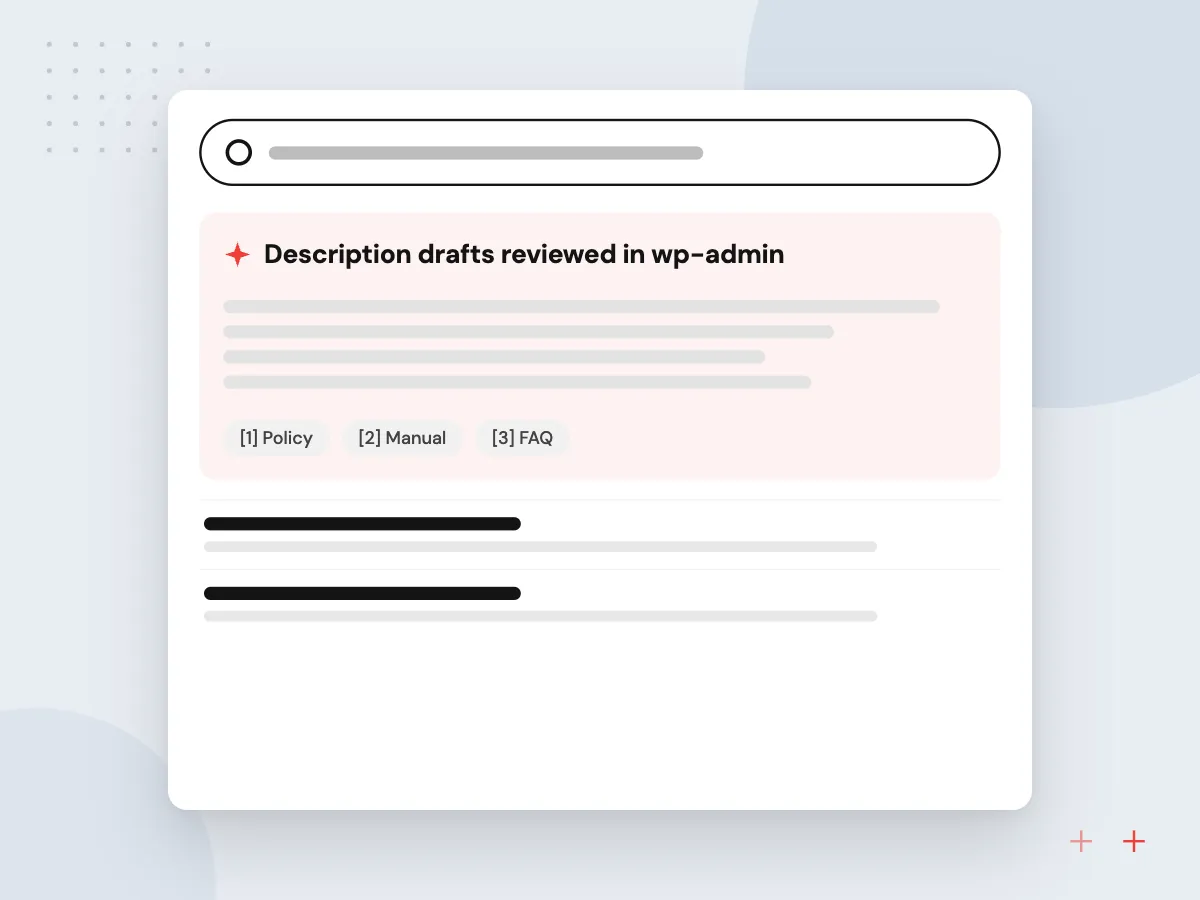
Because you own the code and data, AI can be added to WooCommerce wherever it helps. We build product description drafts that staff approve in the admin, search that understands how shoppers phrase things, and an order lookup assistant that reads status through the REST API for signed-in customers.
What we do
- Description drafts reviewed in wp-admin
- Search that handles shopper wording
- Order lookup for signed-in customers
- Review summaries on product pages
- Prompts and logs on your own server

How we approach a project
Integrations usually run through the WooCommerce REST API or webhooks. We connect stores to ERPs such as Odoo, to QuickBooks and to 3PL warehouses, with logging and retry rules so a failed sync is spotted the same day. More on this under API development and integration.
WooCommerce fits well when content and commerce share one site, when you want full control of hosting and data, or when product logic is unusual. If you would rather not manage servers and updates, compare it with Shopify development. Both sit under our wider eCommerce development services.
How we work
- Fewer plugins, more maintained code
- A staging copy before every release
- Your hosting, your customer data
Our Process
-

Site and plugin review
We copy the site to staging, list plugins and custom code, and record speed and error baselines.
-

Agree the change list
Fixes and new features are ranked by their effect on orders, and you approve the order of work.
-

Build on staging
Code goes into version control, and each change is tested with real products, coupons and payment sandboxes.
-

Release and monitor
Updates go live in quiet hours after a fresh backup, then we watch error logs and checkout completion.
Why Aranv for WooCommerce
Plugins audited, not piled on
Before adding anything we review what each installed plugin does and remove overlaps, which takes away a common source of conflicts and slow pages.
Code under version control
Themes and custom plugins move into a Git repository, so every change is reviewed, recorded and can be rolled back.
Sync errors surfaced quickly
Each integration logs what it sent and received, retries short outages and alerts your team when an order or stock update fails.
Your server, your customers
The store, its database and customer records stay on hosting you control, and we document the setup so another developer could take over.
Planning WooCommerce Development Services?
Book a 30-minute conversation with the team that would build it.
WooCommerce questions from store owners
-
Is WooCommerce a good choice for a growing store?
Yes, if you want control over code, hosting and data, or your product rules are unusual. It needs more upkeep than a hosted platform, because you or your developer handle updates, security and server capacity.
-
What affects the cost of WooCommerce work?
Mainly the amount of custom plugin code, the number of integrations, the state of the existing site and how much data must move. Fixing a slow checkout is a short job; a new store with ERP sync is a larger one. We estimate after reviewing a staging copy.
-
Can you take over a WooCommerce site another developer built?
Yes. We begin with a review of the theme, plugins, custom code and hosting, then list risks and quick fixes. Most handovers start by moving the code into version control and setting up a staging site.
-
Should we move from WooCommerce to Shopify?
Sometimes. Shopify removes server and update work but limits how far checkout and data can be changed. If your store depends on custom product logic or a lot of content, staying on WooCommerce and fixing it is often the better path. We compare both against your needs.
-
Why is our WooCommerce store slow?
Common causes are too many plugins, heavy page builders, oversized images, no object caching and cheap shared hosting. Large order histories in the old posts tables can also slow the admin. We measure first, then fix the biggest causes.
-
Do you offer WooCommerce maintenance?
Yes. A monthly plan covers WordPress, WooCommerce and plugin updates tested on staging, backups, uptime checks and an agreed block of hours for small changes and fixes.

Let’s talk about your next step
Contact Aranv to discuss your workflow, current tools, and goals. Meet with our team or send an inquiry.
Book a meeting with our team
Choose an available date and time for a 30-minute conversation about your project.
Tell us about your project
Share a few details so we can discuss a useful next step.
Prefer email? sales@aranv.com