


What healthcare software development includes
Aranv offers healthcare app development and medical software for medical practices, clinics, community health programs and medical suppliers: patient apps and portals, scheduling and intake tools, EHR connections and AI that sorts referrals and paperwork, all planned around the privacy rules that apply to your data.
Healthcare projects begin with data classification. If an app creates, stores or sends protected health information, HIPAA requirements shape the hosting choice, user access, audit logging and the business associate agreements needed with each vendor. We agree these points with your compliance lead before the build and do not assume any tool meets them by default.
EHRs certified under the federal health IT program generally provide a standardized HL7 FHIR API, though access usually needs registration or approval from the vendor. Patient-facing apps for iPhone and Android come from our mobile app development team.
How patient information moves through a practice app
Intake, record, follow-up
- 01 Patient books and completes intake Forms, consent and insurance details captured once on a phone or tablet.
- 02 Details reach the clinical record A FHIR or vendor API writes approved fields into the EHR.
- 03 Staff work from one queue Referrals, refill requests and messages sorted by urgency, with AI drafting routine replies.
- 04 Follow-up happens on time Reminders, check-ins and outcome tracking run without staff chasing each patient.
Which data the app may store, and where, is agreed with your compliance lead before design starts.
Medical practice software and patient apps
Healthcare teams lose hours to phone calls, faxes and retyped forms. These four projects go after that work directly.
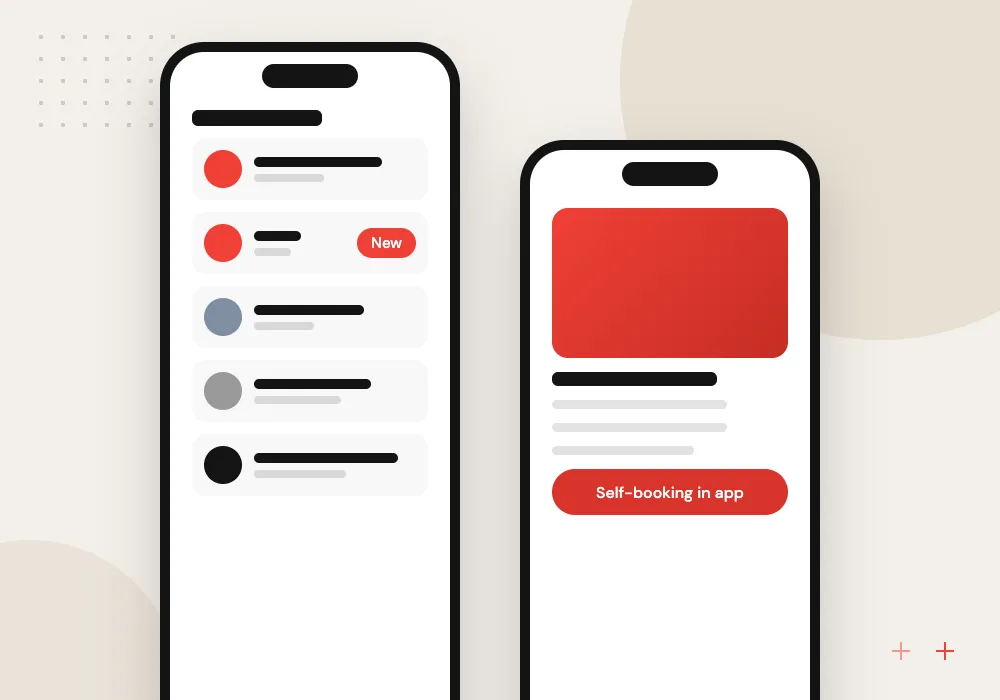
Patient app development
Booking, reminders, secure messages and forms in an iOS, Android or web app tied to your schedule.
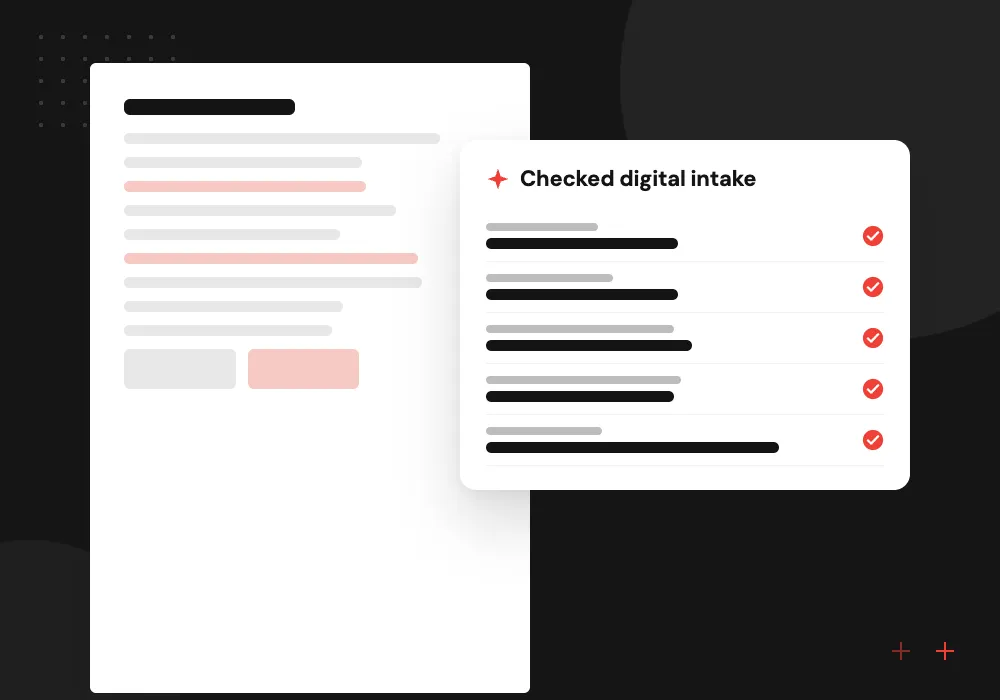
Intake and referral processing
AI reads referral letters, insurance cards and faxed forms, then fills fields for staff to confirm.
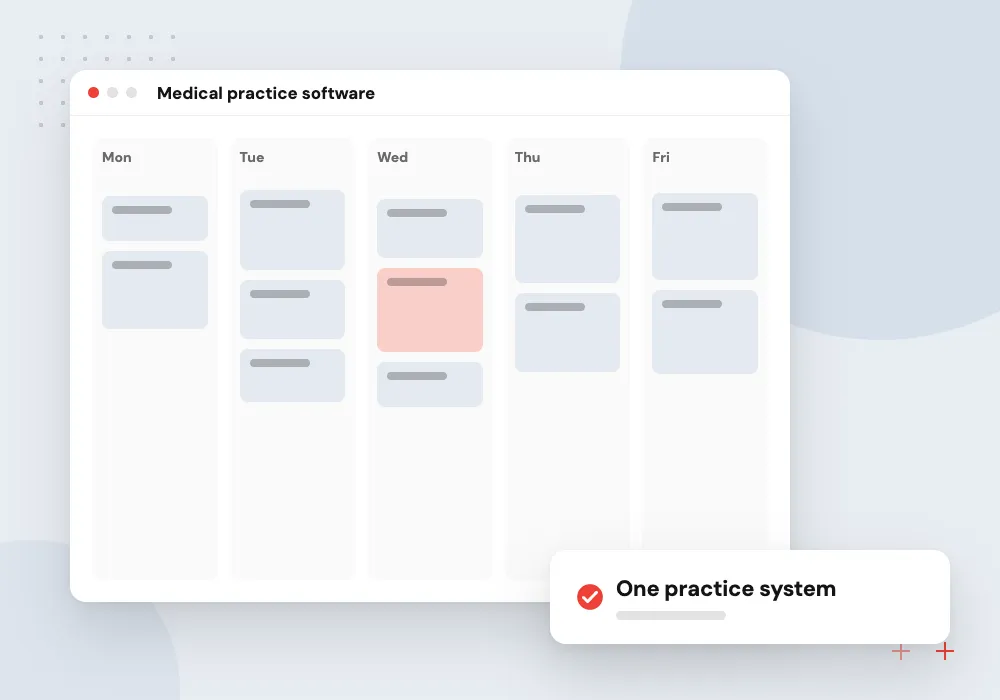
Medical practice software
Scheduling, staff rotas, supply stock and billing handoffs built around how your clinic actually runs.
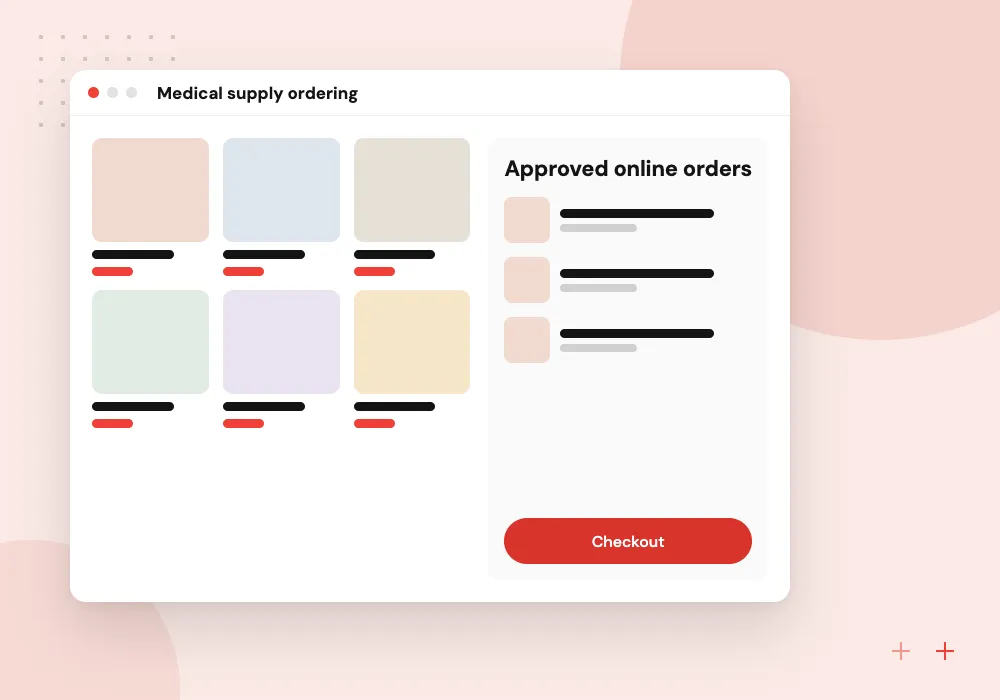
Medical supply ordering
B2B portals where clinics reorder supplies, with approvals, purchase order references and account pricing.
EHR connections that end double entry
Intake, scheduling and referral details should reach the EHR without anyone retyping them. We help with app registration at your EHR vendor, map which fields the app may read or write, and test against a sandbox or test environment before any live record is touched.
What we do
- Help with vendor app registration
- Read and write field mapping
- FHIR or vendor API connection
- Sandbox tests with synthetic records
- Alerts when a write fails
AI for referrals, faxes and messages
AI reads incoming referrals, insurance cards and faxed forms, suggests the fields to fill and sorts patient messages by type, such as refill, billing or scheduling. Staff confirm each suggestion, clinical questions go to a clinician, and the model provider is chosen with your compliance lead based on its data terms.
What we do
- Field extraction from referrals and faxes
- Insurance card reading
- Message sorting by request type
- Draft replies for routine questions
- Staff confirmation on every record

How we approach a project
Our wider team has delivered two projects in this space, described on our case studies page. Project 05 is a UK social prescribing platform that links people to local health and well-being services and keeps data from three clinical and service APIs in sync. Project 03 redesigned the Odoo 17 storefront of a US medical supplies distributor, adding multi-user approvals and purchase order references.
AI helps most with the paperwork around care, not with clinical decisions. Typical tasks are reading referrals and prior authorization forms with AI document processing, answering appointment and directions questions with an AI chatbot, and summarizing long message threads.
How we work
- Privacy decisions made before the build
- Clinicians approve anything clinical
- Readable for patients of every age
Our Process
-

Data and risk mapping
With your compliance lead, we list every data field, who sees it and which rules apply.
-

Observe the front desk
We sit with reception and clinical staff to see where calls, forms and handoffs slow care.
-

Build with synthetic records
Development uses made-up patient data; real records enter only in the agreed production setup.
-

Staged rollout
One location or team goes first, staff feedback is applied, then the tool expands.
Why Aranv for healthcare software
Compliance lead at the table
Your compliance lead joins scoping, data mapping and vendor selection, so hosting, access rules and vendor agreements are settled in writing first.
Screens patients can manage
Large text, plain wording and short steps keep patient apps usable for older adults, and we test with screen readers and enlarged system fonts.
AI limited to admin work
We point AI at forms, messages and scheduling, not diagnosis or treatment, and a person reviews every output that affects a patient.
Access history from release one
Logs of who viewed or changed a record, and when, ship in the first release rather than as a later add-on.
Accounts held by your organization
Where the vendor allows it, API credentials and registrations sit under your organization’s accounts, so changing developers later does not mean starting over with your EHR vendor.
Planning Healthcare Software Development?
Book a 30-minute conversation with the team that would build it.
Healthcare software FAQs
-
Can you build a HIPAA compliant app?
We build to the HIPAA requirements your compliance lead sets, but we do not certify apps or claim compliance on your behalf. When an app handles protected health information, those requirements decide hosting, access controls, audit logs and business associate agreements, and we agree them in writing before development.
-
Can a patient app connect to our EHR?
Usually. Federally certified EHRs generally offer FHIR APIs, and many vendors also provide their own interfaces. Access normally needs registration or approval from the vendor, so during discovery we confirm what your EHR allows and which fields it lets an outside app write.
-
Is AI safe to use in a medical practice?
It can be, for administrative work with clear limits. We use AI to read forms, sort messages and draft replies, keep a person in charge of anything clinical, log what the AI produced, and pick model providers whose data terms fit your privacy requirements.
-
Should we buy medical practice software or build our own?
Buy when an off-the-shelf product covers your scheduling, billing and records well. Build or extend when your workflow is unusual, when you run a program that products do not fit, or when several existing systems need to work together.
-
How long does a patient app take to build?
A focused first version, such as booking, reminders and intake forms, often takes a few months including design, testing and app store review. EHR or billing integrations add time, and we confirm the schedule once we know the systems involved.
-
What will you need from our clinic or company?
A product owner who can make decisions, time with front desk and clinical staff, your compliance lead’s requirements, and vendor contacts for your EHR and other systems. Begin with a 30-minute conversation booked on our Contact page.

Let’s talk about your next step
Contact Aranv to discuss your workflow, current tools, and goals. Meet with our team or send an inquiry.
Book a meeting with our team
Choose an available date and time for a 30-minute conversation about your project.
Tell us about your project
Share a few details so we can discuss a useful next step.
Prefer email? sales@aranv.com