


What Golang development services include
Aranv offers Golang development services for US businesses whose back ends must handle heavy traffic on modest servers: Go APIs and microservices, background workers for queues and large files, command-line tools, and gateway services that route and log calls to AI models.
Go was designed for networked services. Goroutines make thousands of concurrent connections practical, the compiler is quick, and the Go 1 compatibility promise means old code still builds on new releases. It is a weaker fit for form-heavy admin apps, where Django or Rails get further with less code.
Go backend development. A typical scope covers API design, PostgreSQL access through pgx or sqlc, structured logs with the standard slog package, OpenTelemetry tracing, table-driven tests and CI that runs the race detector. Most Go services we ship run on Kubernetes or a managed container service.
Why teams pick Go for a back end
One binary from code to production
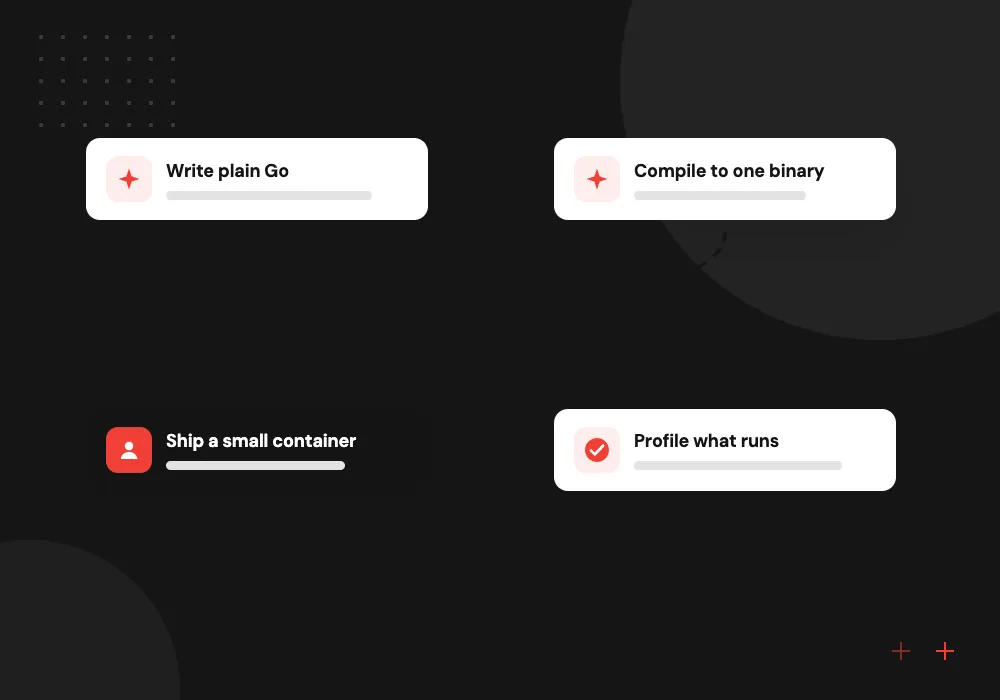
- 01 Write plain Go The standard library covers HTTP, JSON, crypto and database access.
- 02 Compile to one binary The build produces a single executable with no runtime to install.
- 03 Ship a small container Images stay small and start quickly on low-cost instances.
- 04 Profile what runs Built-in profiling shows where time and memory actually go.
Small images and quick start-up make Go a good match for services that scale up and down with demand.
What we build with Go
Go works best for services that move a lot of requests or data and must stay simple to deploy. Where those traits do not matter, we suggest another stack.
Go APIs and gateways
REST and gRPC services in front of databases or older systems, handling sign-in, rate limits and request logs.
Go microservices
Small services for pricing, stock or notifications, each with its own database and pipeline, talking over HTTP or a queue.
Data and queue workers
Workers that read from Kafka, SQS or RabbitMQ, parse large files and write clean rows to PostgreSQL in parallel.
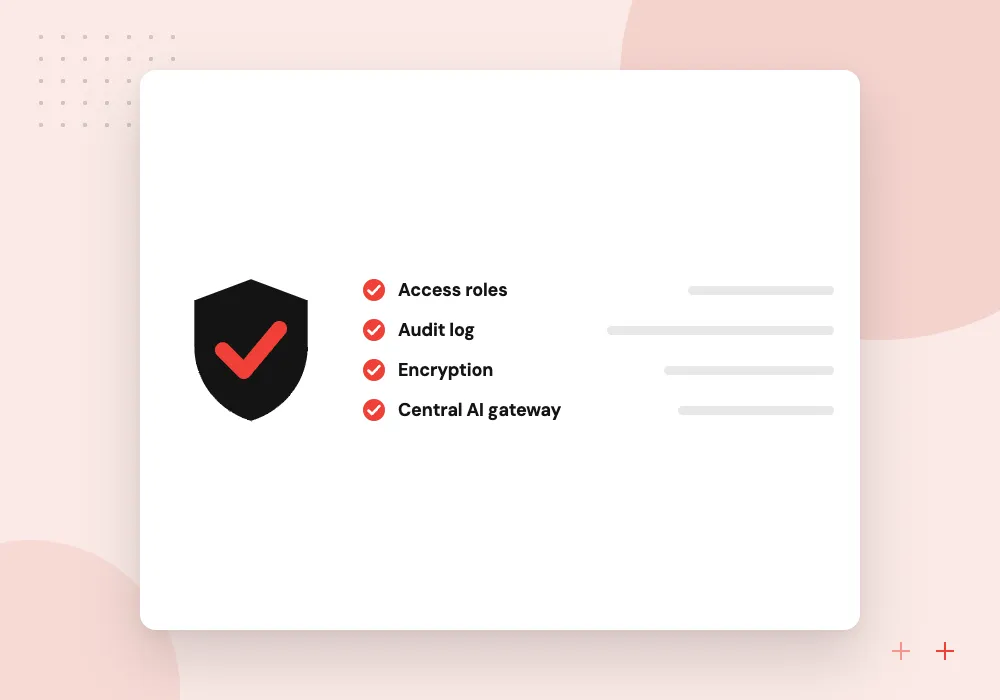
AI model gateway
One Go service that routes prompts to approved model providers, strips personal data, caps spend per team and logs every call.
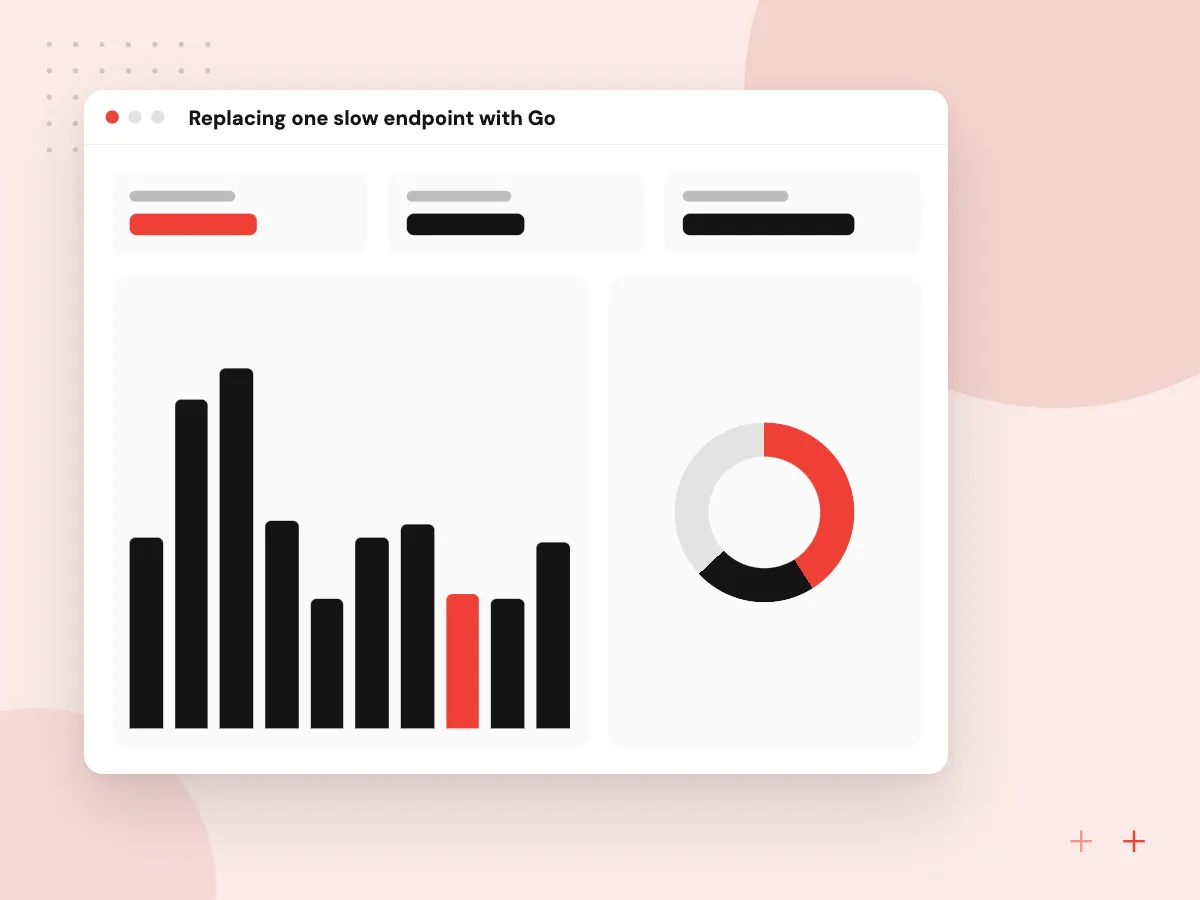
Replacing one slow endpoint with Go
You rarely need to rewrite a whole platform. Often one endpoint, such as search, pricing or a file import, causes most timeouts. We rebuild that piece as a Go service behind the same URL, run it next to the old code on mirrored traffic, and switch once the responses match.
What we do
- Profiling report on the hot path
- Go service with the same contract
- Mirrored traffic comparison
- Traffic shifted by percentage
- Rollback switch kept ready
A Go gateway for AI model calls
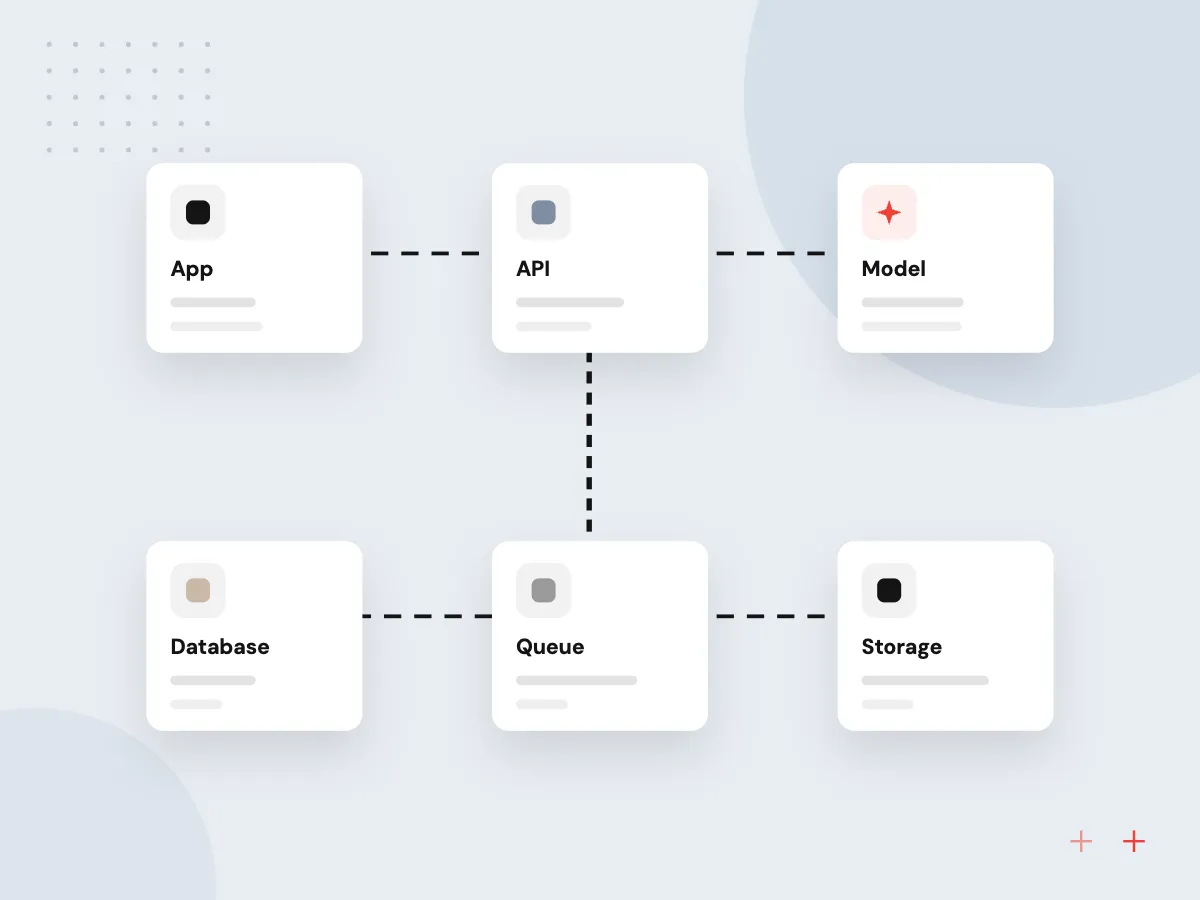
When several teams start calling language models, keys spread across many apps and nobody sees the total bill. A small Go gateway gives you one place to control it: each request is checked for who is asking, cleaned of data that should not leave, sent to an approved model and logged with cost and latency.
What we do
- One endpoint for all model providers
- Per-team keys and spending caps
- Personal data redaction rules
- Streaming replies to clients
- Usage report by team

How we approach a project
Go microservices. Go suits teams splitting a large system, since each service compiles to a small, self-contained binary. Before any split we check whether a modular monolith would do; our microservices development page covers that choice. The Go team’s release history shows when each version shipped.
Go services often replace one slow part of a larger platform, link systems through API integration, or give AI agents access to tools through an MCP server. For the languages we pair with Go, browse our technology list.
How we work
- Standard library before frameworks
- Concurrency only where it pays
- Profile first, then tune
Our Process
-

Measure the current load
Request rates, payload sizes and slow endpoints come from your logs, so the design fits real traffic.
-

Define contracts first
Protobuf or OpenAPI files describe each endpoint before coding, so client teams can start in parallel.
-

Build with race checks
Every pull request runs tests with the race detector, linters and a container build.
-

Load test, then release
We replay realistic traffic on staging, fix what the profiler finds and roll out behind a feature flag.
Why Aranv for Go
Sized from real traffic
Designs start from your logs and load figures rather than assumptions, so you do not pay for servers or complexity you do not need.
Plain, idiomatic Go
Every file goes through gofmt and go vet, dependencies stay few and functions stay short, so reviews are quick and new developers settle in fast.
Tracing from the first release
OpenTelemetry traces and metrics ship with version one, so a slow call can be followed across services from the start.
A clean handover
Each service comes with its contract files, a runbook and load test scripts, so your team or another vendor can carry on.
Planning Go Development Services?
Book a 30-minute conversation with the team that would build it.
Go development FAQs
-
When is Go a better choice than Node.js or Python for a back end?
Go fits when a service handles many concurrent requests, processes large files or streams, or must run in little memory. Node.js suits teams sharing TypeScript with a front end, and Python suits data and AI-heavy code. Many systems mix them, with Go for the busiest service.
-
Is it hard to find Go developers later?
The Go talent pool is smaller than Java’s or JavaScript’s, but the language is small and readable, so experienced back-end developers learn it fast. We keep code idiomatic, avoid clever abstractions and document each service so a new hire can find their way around.
-
Which Go version should our services run?
A supported one. The Go team supports each major release until two newer major releases exist, so with Go 1.27 out since August 2026, that means Go 1.26 or 1.27. Upgrades are usually small thanks to the Go 1 compatibility promise.
-
Can Go be used for AI features?
Yes, on the serving side. Most model work happens through provider APIs, and Go handles calling models, streaming replies, enforcing limits and logging well. Training and data science usually stay in Python, and a Go service can call a Python model server when needed.
-
What does it cost to rewrite a slow service in Go?
Cost depends on how much logic the service holds, how well its behavior is documented and how many systems call it. We often rewrite one hot endpoint first and compare results, so the estimate for the rest rests on measured gains rather than guesses.

Let’s talk about your next step
Contact Aranv to discuss your workflow, current tools, and goals. Meet with our team or send an inquiry.
Book a meeting with our team
Choose an available date and time for a 30-minute conversation about your project.
Tell us about your project
Share a few details so we can discuss a useful next step.
Prefer email? sales@aranv.com