


What ML model development includes
Aranv is a machine learning development company for businesses that want predictions from their own records. We build demand forecasts, lead and churn scores and classification models, then connect them to your ERP, CRM or dashboards so each prediction reaches the person who acts on it.
Machine learning here means statistical models trained on structured records, such as sales lines, tickets, invoices or sensor logs, to forecast a number, score a likelihood or assign a category. Whole applications built around language models and connected systems belong to AI software development.
Most of the effort goes into data. We check what you hold, how far back it goes, where it is missing or inconsistent, and whether the outcome you want to predict is actually recorded.
How a model goes from data to decisions
From history to a prediction
- 01 Gather the history Sales, orders, tickets or transactions are pulled from your systems and cleaned.
- 02 Set a baseline A simple rule or last year’s figures show what any model has to beat.
- 03 Train and validate Candidate models are scored on held-out data they never saw in training.
- 04 Deploy and monitor Predictions flow into your tools, and accuracy is tracked as the business changes.
If a simple baseline is close enough, we will recommend it over a complex model.
Predictive analytics on your business data
Machine learning earns its keep where a decision repeats often and past records hold clues about the outcome.
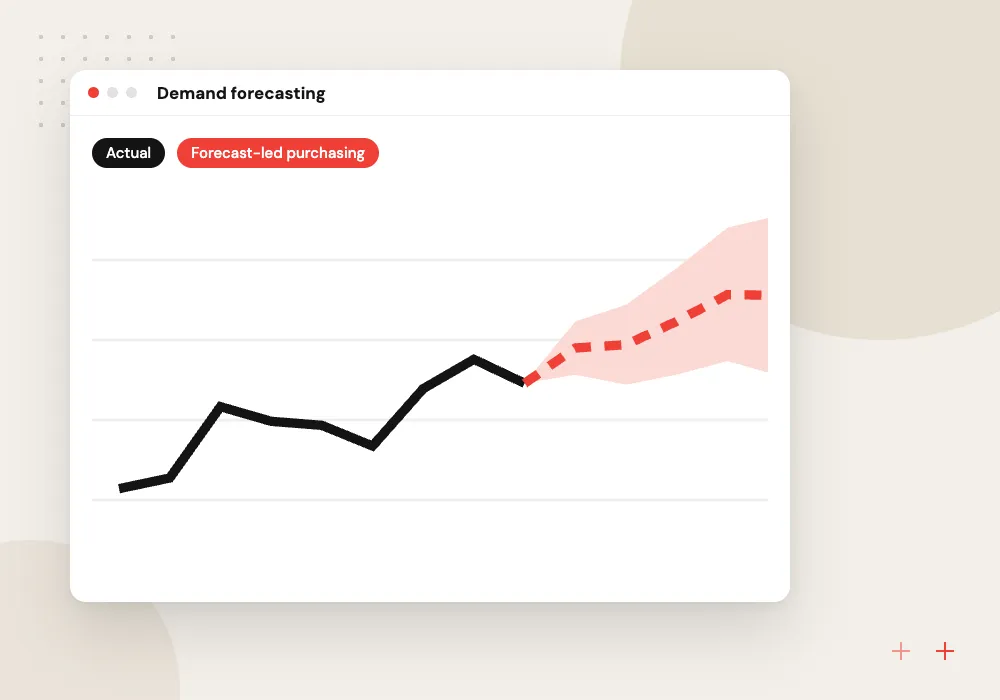
Demand forecasting
Forecasts by product and location that use sales history, seasonality, promotions and supplier lead times.

Lead and churn scoring
Scores that rank which leads are likely to buy and which customers show signs of leaving.
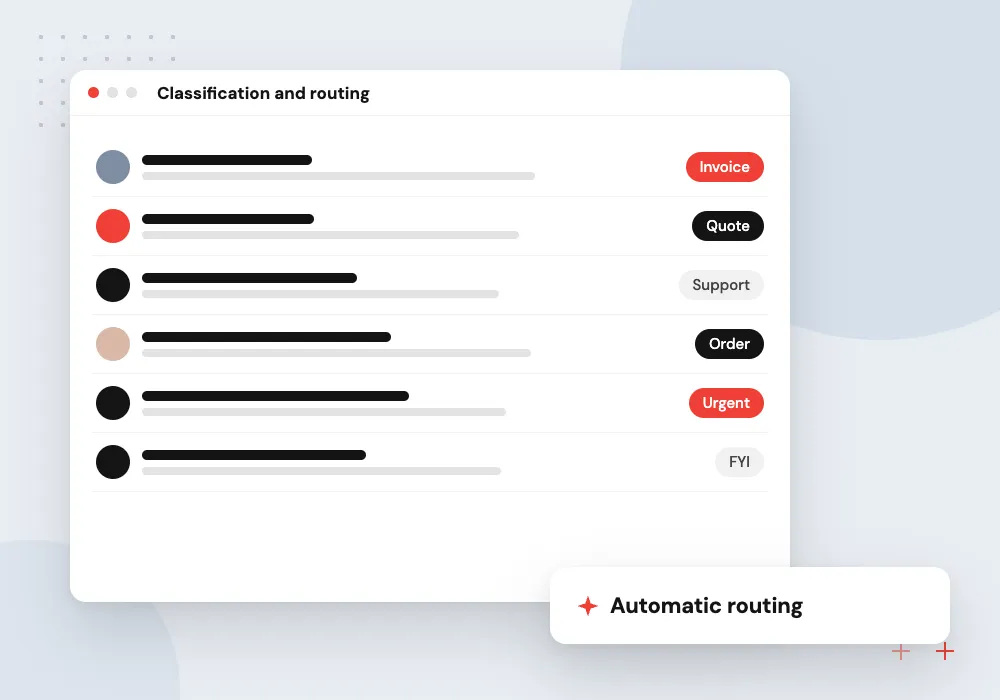
Classification and routing
Tickets, invoices, claims or products sorted into the right category or queue from their content and history.
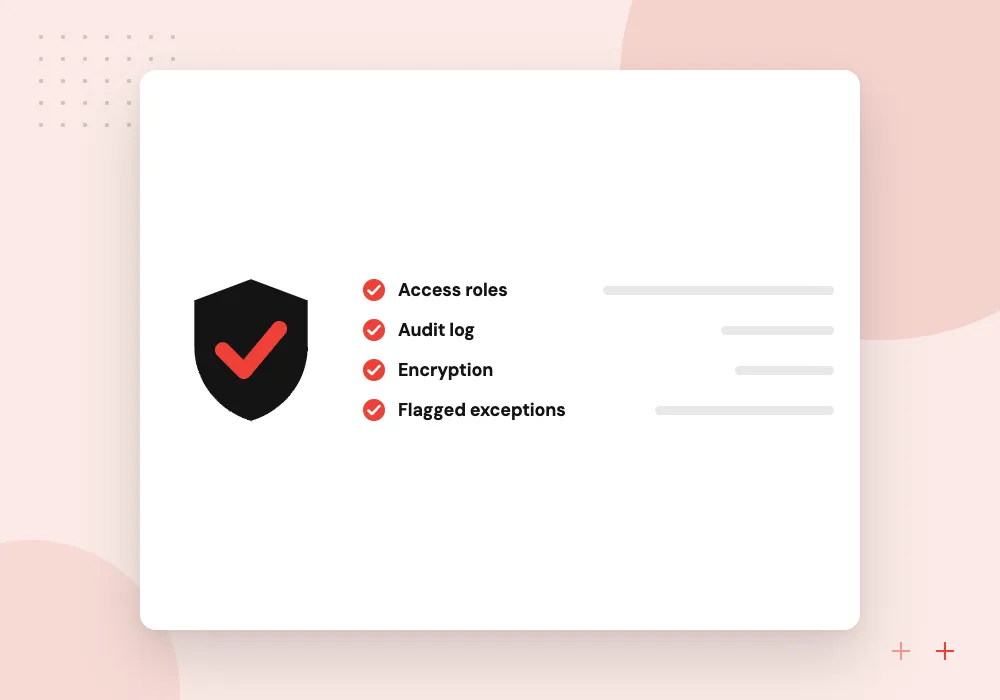
Anomaly detection
Unusual orders, payments, sensor readings or expense claims flagged for review before they become costly.
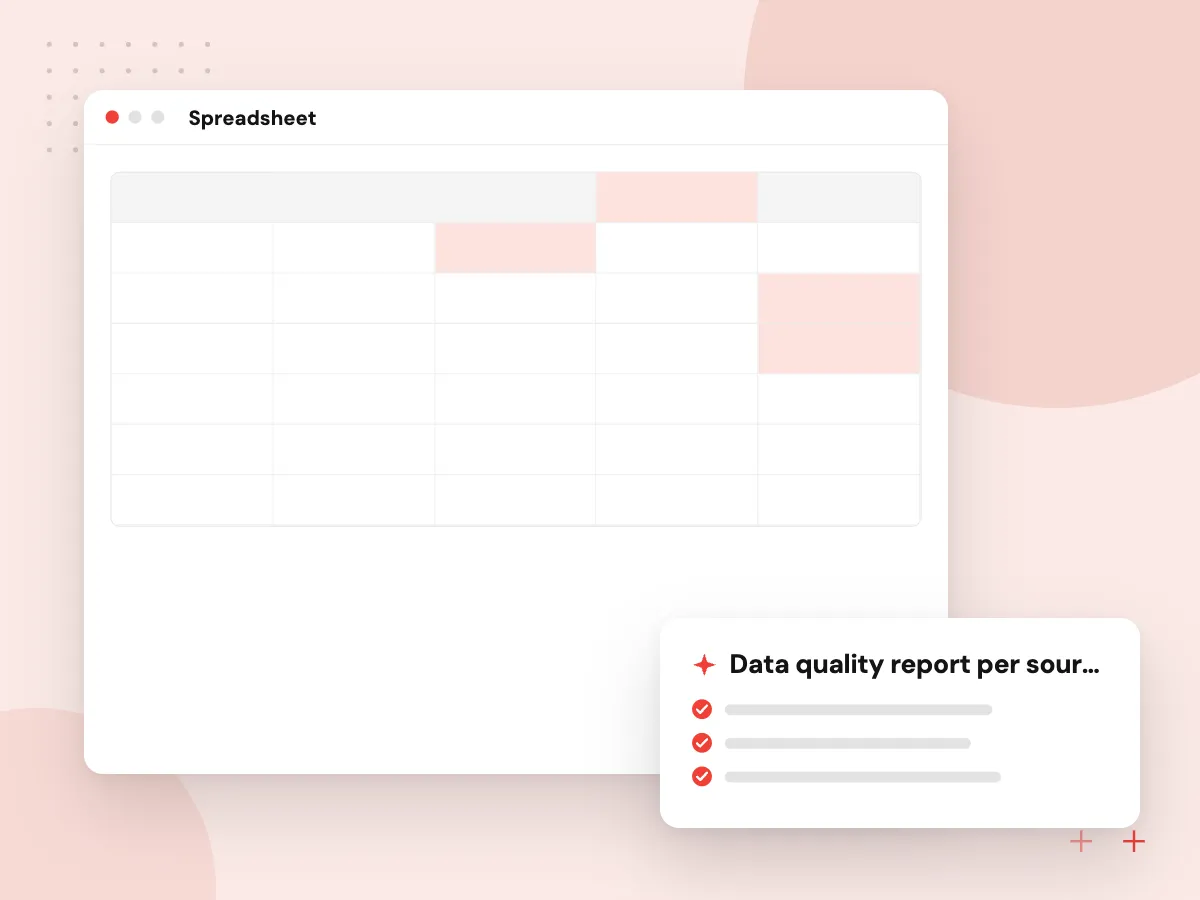
Data checks and model reviews
Before training, we profile every source for problems such as duplicate customers, gaps after a system change or returns booked as negative sales. After training, your team reviews a sample of predictions with the reasons behind each one, and we write up where the model is weak so nobody relies on it blindly.
What we do
- Data quality report per source
- Agreed definition of the outcome
- Held-out test periods
- Top drivers explained in plain terms
- Sample predictions reviewed with staff
- Written list of known weak spots
Forecasts that feed purchasing
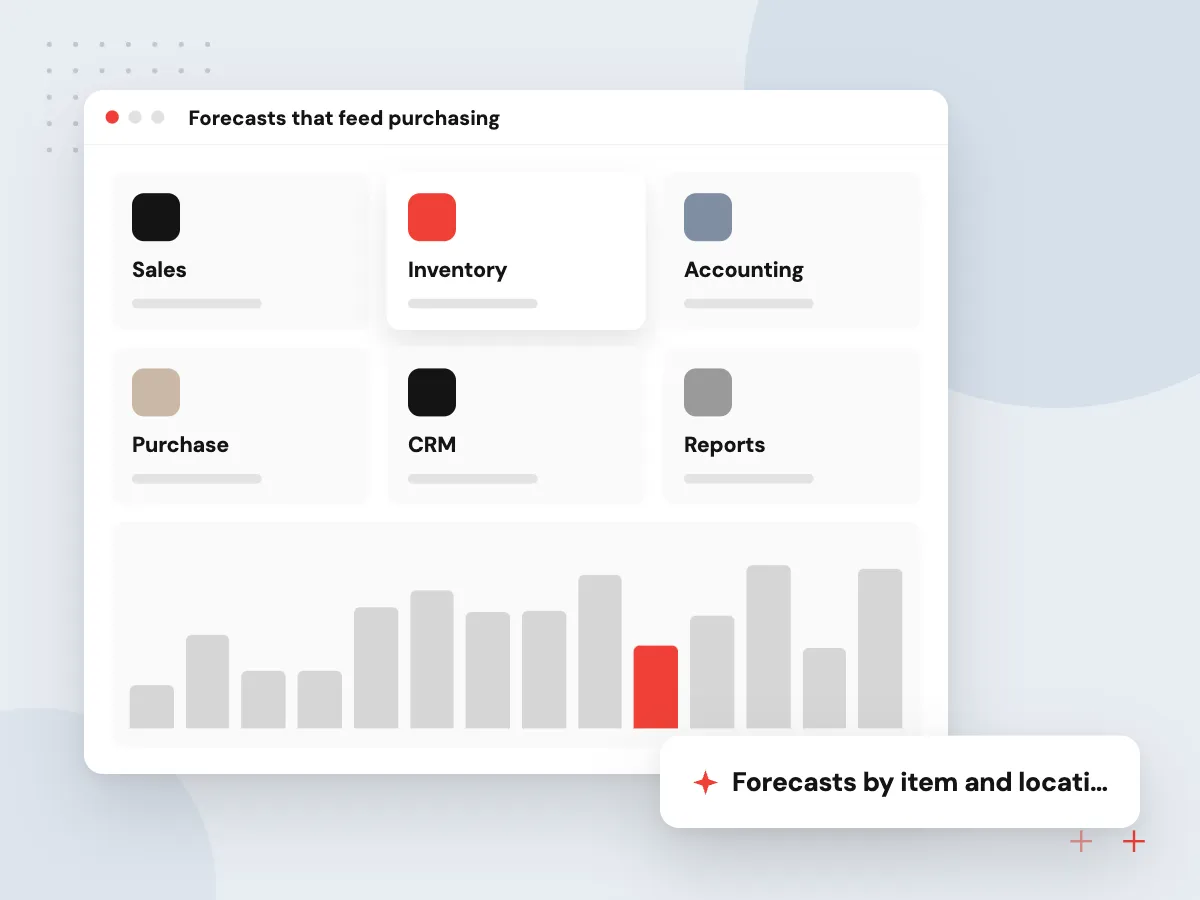
A demand forecast is most useful when it lands in the purchase plan. We forecast by item and location with a likely range rather than a single number, and push suggested order quantities into your ERP so buyers can accept, edit or reject each line.
What we do
- Forecasts by item and location
- A range shown with each forecast
- Suggested quantities in your ERP
- Buyer accept, edit or reject
- Forecast against actual tracking

How we approach a project
We start with well-understood methods such as gradient-boosted trees, regression and time-series models, written in Python with libraries like scikit-learn, and turn to deep learning only when the data calls for it. Every model is judged against a simple baseline on data it was not trained on, and we explain which inputs drive its predictions.
A model only helps if people see its output where they work. We deliver predictions into your ERP, your CRM or business intelligence dashboards, including Power BI reports, and schedule retraining as new data arrives. Pipelines and model hosting can run in your own cloud account.
Wondering whether your data can support a forecast or score? A 30-minute data conversation is the place to find out; arrange one from our contact page.
How we work
- Beat a simple baseline first
- Predictions inside tools people use
- Accuracy tracked after launch
Our Process
-

Data audit
Review sources, history, gaps and labels, and confirm the outcome to predict is recorded reliably.
-

Baseline and features
Build a simple benchmark, then engineer inputs such as seasonality, price changes or customer activity.
-

Model training and testing
Compare candidate models on held-out periods and agree an accuracy target with your team.
-

Production and retraining
Serve predictions to your tools, watch for drift and retrain on a schedule or when accuracy slips.
Why Aranv for machine learning
A fair comparison first
Model accuracy is reported next to your current method on the same past periods, so the decision to go live rests on like-for-like numbers.
Python code you keep
Training code, features and pipelines are written in standard Python and stored in your repository, so an analyst or another vendor can rerun and extend them.
Reasons staff can read
Each prediction can show the inputs that pushed it up or down, in plain terms such as recent orders or open tickets, so staff know when to question it.
Straight talk about thin data
If your records are too short or inconsistent for a model, the data audit says so, and we suggest what to start recording instead.
Planning Machine Learning Development?
Book a 30-minute conversation with the team that would build it.
Machine learning FAQs
-
How much data do we need for machine learning?
It depends on the task. Demand forecasting usually needs a couple of years of history to capture seasonality, while a scoring model needs enough past examples of each outcome, such as customers who stayed and customers who left. The data audit shows whether your records are sufficient.
-
How is machine learning different from generative AI?
Machine learning in this sense predicts a number, score or category from structured business data, such as next month’s demand or a lead’s chance of converting. Generative AI produces new content, such as text, images or summaries. They solve different problems and often work side by side.
-
How accurate will a demand forecast be?
That depends on how stable your demand is and how much history exists, so we do not promise a figure up front. We measure accuracy on past periods the model never saw, compare it with your current method and only recommend going live if the model does better.
-
Can a model work with our ERP or CRM?
Yes. Predictions can be written back as fields in your ERP or CRM, sent through an API to another system or shown in dashboards. We pick the route that puts the number in front of the person making the decision, inside a tool they already open.
-
Do we need our own data scientist?
Not to start. We handle data preparation, modeling and deployment, and document the work so an analyst on your side can follow and maintain it. Many firms use an outside team first and hire once the value is proven.
-
What happens when predictions get worse over time?
Patterns change, so we compare predictions with actual results and raise an alert when accuracy drops. Retraining on recent data fixes most drift; bigger shifts, such as a new product range or pricing model, may need new inputs.

Let’s talk about your next step
Contact Aranv to discuss your workflow, current tools, and goals. Meet with our team or send an inquiry.
Book a meeting with our team
Choose an available date and time for a 30-minute conversation about your project.
Tell us about your project
Share a few details so we can discuss a useful next step.
Prefer email? sales@aranv.com