


How HIPAA applies when AI handles PHI
Aranv’s short answer: HIPAA compliant AI is a setup you run, not a product you buy. An AI tool can work with protected health information when every vendor touching the data signs a business associate agreement, access stays at the minimum necessary, your risk analysis covers the AI, and staff review its output.
HIPAA covers health plans, clearinghouses and providers that send standard transactions such as claims electronically, plus the business associates handling PHI for them. A wellness app sold straight to consumers may answer to other privacy laws instead. Our pages on AI for medical practices and AI patient intake show where these tools usually sit.
AI creates new places for PHI to rest: prompts, transcripts, uploaded files, search indexes built from records and the vendor’s logs. Treat each as PHI unless your compliance lead decides otherwise. Where a service offers no business associate agreement, a private LLM deployment in a cloud account already covered by your hosting agreement is one alternative.
Planning an AI tool that touches patient data
Four checks before PHI meets a model
- 01 Trace the data path Note every system, prompt, log and file that would hold PHI.
- 02 Sign the right agreements Each vendor that stores or processes PHI signs a business associate agreement first.
- 03 Update the risk analysis Add the AI service, its hosting and logs to the Security Rule review.
- 04 Pilot with human review Start small, approve every output and audit who saw what.
HIPAA judges how a tool is contracted and used, not a label on it.
Four points that decide whether AI fits HIPAA
Most of the work is about contracts, data flow and review rather than the model itself.
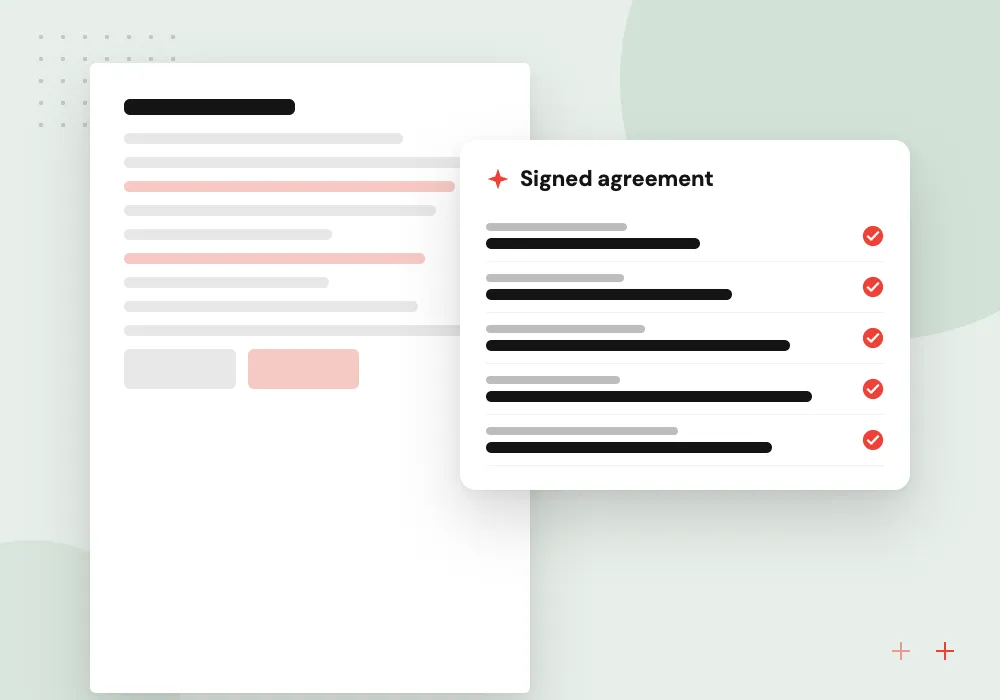
Business associate agreements
Any AI vendor or cloud host handling PHI for you is a business associate, and the agreement is signed before one record reaches it.
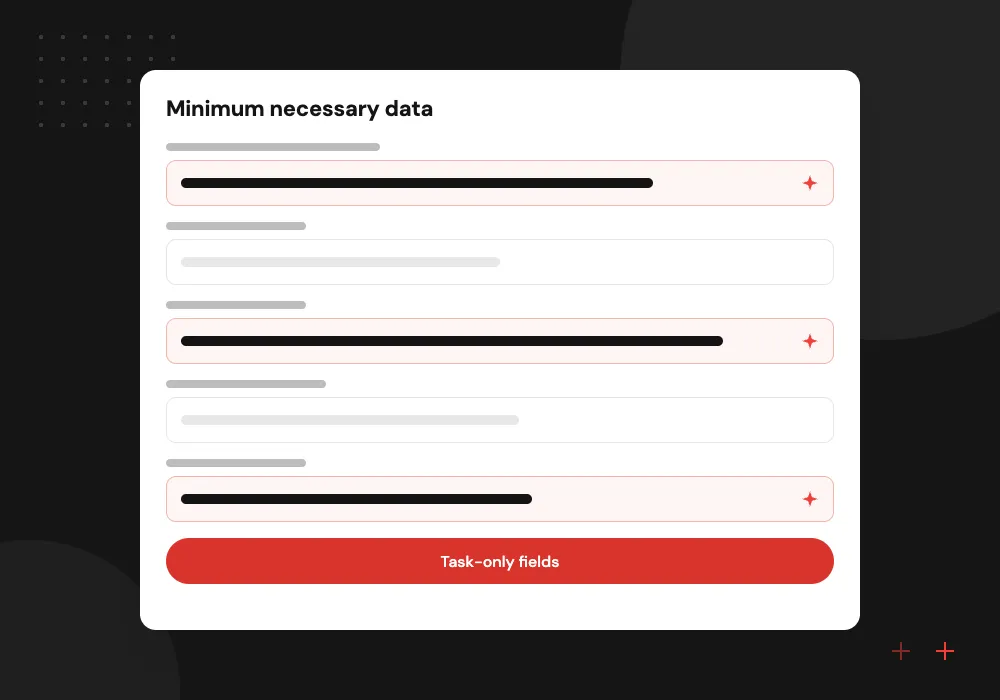
Minimum necessary data
Send the model only the fields a task needs. A reminder assistant needs a name, time and phone number, not chart notes.
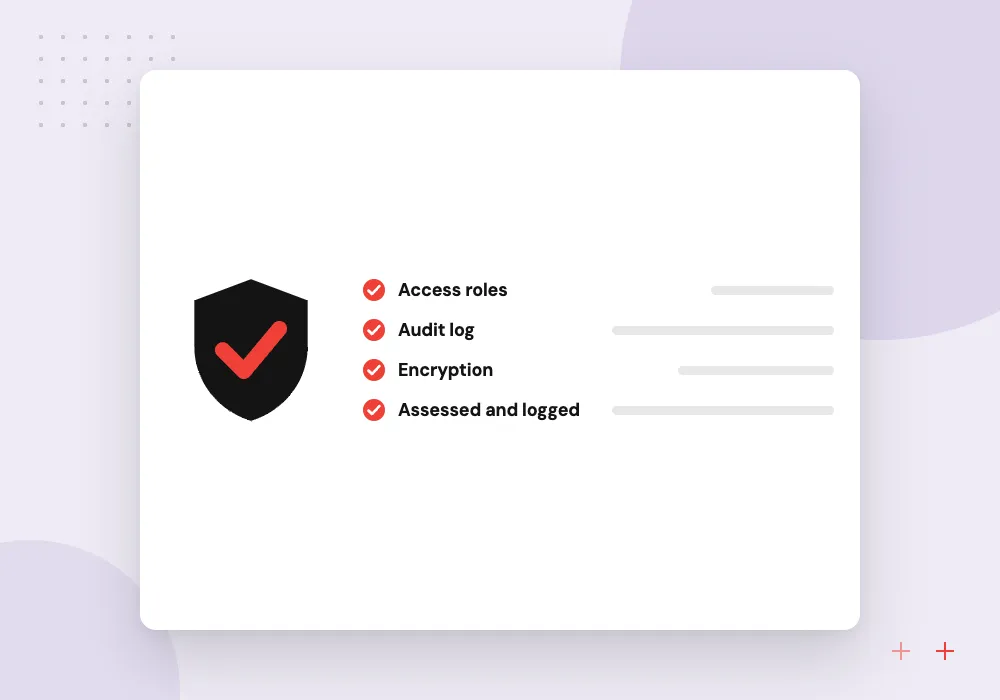
AI in the risk analysis
The Security Rule risk analysis should name the AI service, where prompts and outputs are stored and who can open the logs.
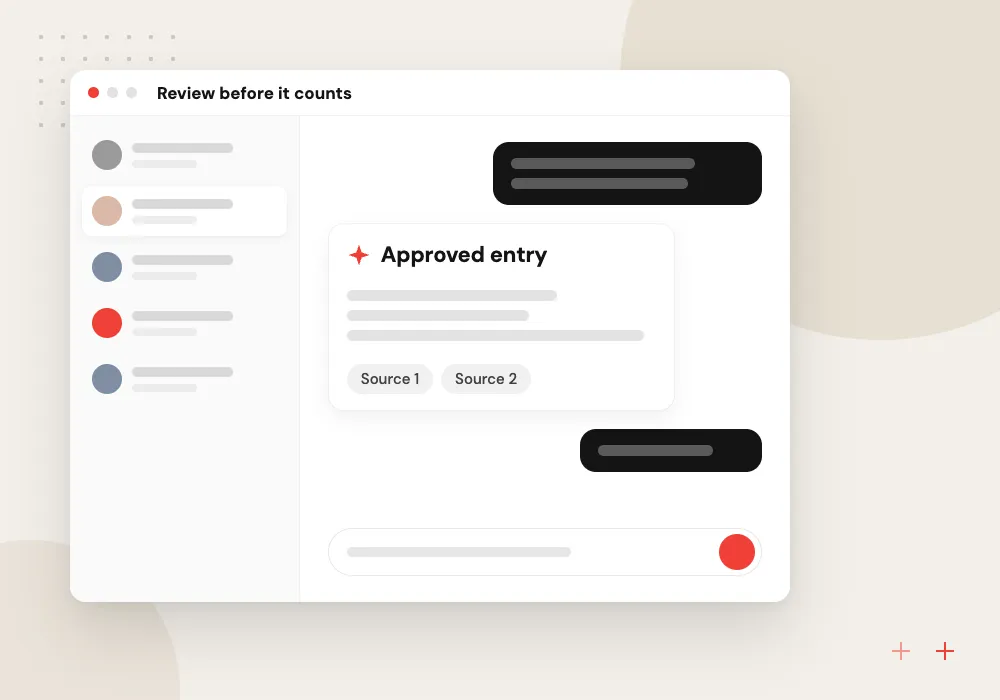
Review before it counts
Drafted visit notes, coding suggestions and patient replies wait for a clinician or coder, and the record shows who approved each.
Using de-identified data for AI work
Many AI tasks need no identities. Testing a summarizer or measuring accuracy can often run on records stripped under the safe harbor list or cleared by a qualified expert, which keeps that work outside the Privacy Rule.
What we do
- Safe harbor identifier removal
- Expert determination when dates matter
- Free-text scrubbing with spot checks
- Separate codes for re-linking
- Written record of the method
Questions to put to a HIPAA AI vendor
A sales page that says HIPAA ready answers nothing by itself. Before a pilot, get written answers on which products the agreement names, where data and logs live and what happens to them when the contract ends.
What we do
- Which services the BAA covers
- Whether your data trains models
- Where prompts and logs are stored
- Retention and deletion on exit
- Subcontractors in the data path
- Breach reporting window

How we approach a project
De-identified data falls outside the Privacy Rule. The safe harbor method in 45 CFR 164.514 removes 18 listed identifiers, from names and most date elements to medical record numbers; the other route is an expert determination. Rules also move: HHS published proposed changes to the Security Rule on January 6, 2025, so plan to the current rule and check for a final version.
When a project we build handles PHI, HIPAA requirements shape its hosting, access controls and vendor agreements, and your compliance lead signs off on each of them before development begins. Our AI governance consulting covers review and logging design, and the guides for software and AI buyers cover related choices. Nothing here is legal advice; it is general information, and your counsel or privacy officer should confirm how HIPAA applies to your organization.
How we work
- Contracts in place before patient data
- Only the data each task needs
- A person signs off every output
Our Process
-

Write down the use case
Name the task, its users, the records it needs and what a wrong answer could mean for a patient.
-

Check every vendor contract
List each AI, hosting and transcription vendor in the data path and confirm a signed agreement covers the exact product you will use.
-

Update policies and training
Add the tool to your risk analysis, access policy and training, including what must never be pasted in.
-

Pilot, audit, then widen
Review every output in a small pilot, check access logs weekly and widen use once your privacy officer agrees.
How Aranv helps with this decision
Data path mapped first
Before any build, we draw where patient information enters, rests and leaves the AI workflow, so reviewers see a concrete diagram, not a feature list.
Your privacy officer has the say
We bring the facts about each option, your privacy officer chooses, and the design follows what they decide.
Review built into the screens
Drafts land in an approval queue with the source records beside them, so staff check and sign each output inside the tool they already use.
Logs you can audit
We record who asked what, which records the model saw and who approved the result, in an export your team can hand an auditor.
Ready to act on this guide?
Ask our team in a 30-minute conversation.
Or see how we build it: Explore all services
HIPAA and AI questions
-
Can staff paste patient information into a public AI chatbot?
Not unless the vendor has signed a business associate agreement covering that specific product and plan. Free and consumer chat tools often sit outside those agreements, so give staff a written rule and an approved tool.
-
Does an AI vendor have to sign a BAA?
Yes, if it creates, receives, maintains or transmits PHI on your behalf, even if it only stores the data. Its subcontractors that handle the PHI, such as its cloud host, are business associates too.
-
Is de-identified health data still covered by HIPAA?
No. Data de-identified under the safe harbor or expert determination method is not protected health information. Doing it properly is the hard part: free-text notes hide names, dates and places, so automated removal needs testing and spot checks.
-
Is there an official HIPAA certification for AI software?
No. HHS does not certify software or vendors as HIPAA compliant, so a vendor’s claim proves little alone. Ask for the business associate agreement, security documentation and where your data is stored, logged and deleted.
-
What happens if an AI vendor has a breach?
The vendor must report it to you, and a covered entity must notify affected individuals without unreasonable delay and no later than 60 calendar days after discovery. Give the vendor a shorter reporting window in your agreement.

Let’s talk about your next step
Contact Aranv to discuss your workflow, current tools, and goals. Meet with our team or send an inquiry.
Book a meeting with our team
Choose an available date and time for a 30-minute conversation about your project.
Tell us about your project
Share a few details so we can discuss a useful next step.
Prefer email? sales@aranv.com