


What a private LLM deployment covers
Aranv handles private LLM deployment for businesses that cannot send prompts or documents to a shared public API. We size the hardware, install an open-weight model in your cloud account or on your own servers, connect it to your apps behind your sign-in, and keep it patched and monitored.
We start with the model. Open-weight families differ in license terms, languages and context length, and our open-source LLM development team shortlists two or three against your tasks. If a managed service with private endpoints in your account, such as Amazon Bedrock or Azure OpenAI, meets your rules, we say so, because it removes GPU operations from your list.
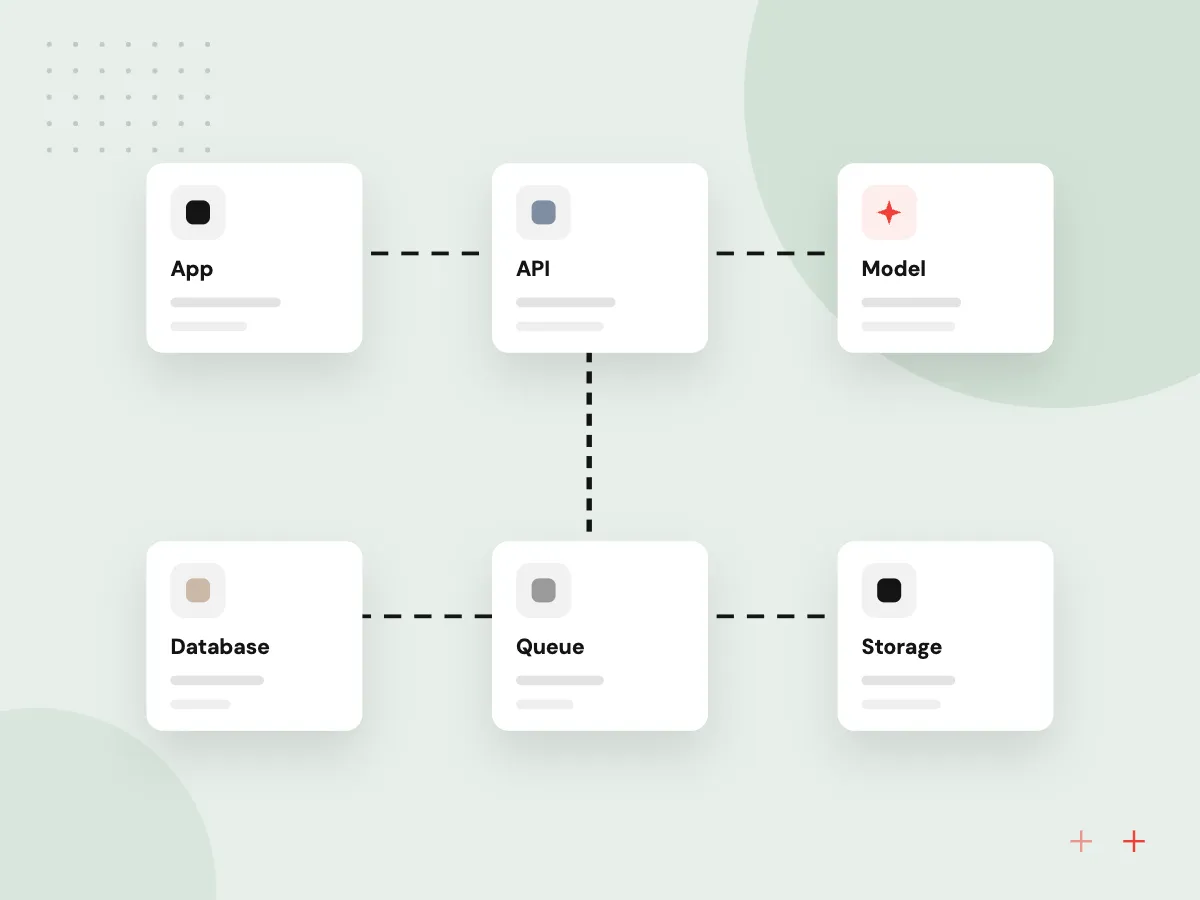
For an on-premise LLM or a dedicated cloud server, we set up an inference engine such as vLLM, which batches requests so one GPU can serve many users. It runs in containers, often on Kubernetes, behind an internal API your apps call like any hosted model.
A language model inside your own network
Your model, your servers, your logs
- 01 Classify the data We list which records the model will see and which rules apply to them.
- 02 Pick model and hardware Model size, context length and expected users set the GPU and memory budget.
- 03 Install and lock down Inference server, private network, single sign-on and audit logs configured together.
- 04 Run and update We patch the stack, watch latency and test new model releases before switching.
Private does not always mean on-premise. A dedicated deployment in your own cloud account often meets the same rules.
Where a self-hosted LLM makes sense
Teams choose their own deployment when contracts, regulators or customers restrict where text may be processed.
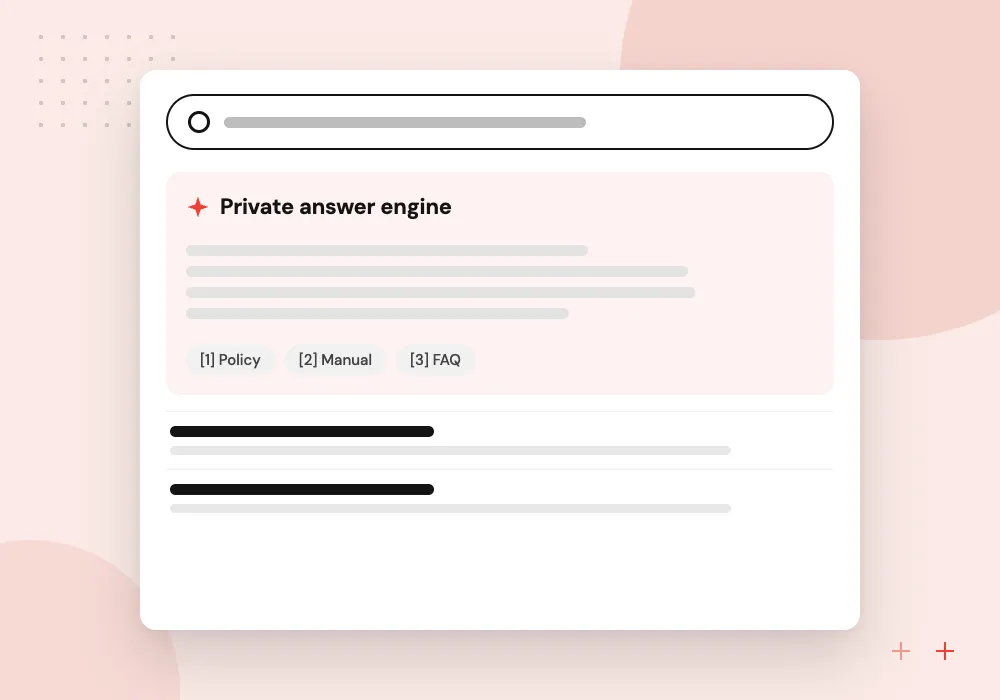
Confidential document search
Staff ask questions across contracts, case files or engineering drawings, and the index, the model and the answers never leave your network.
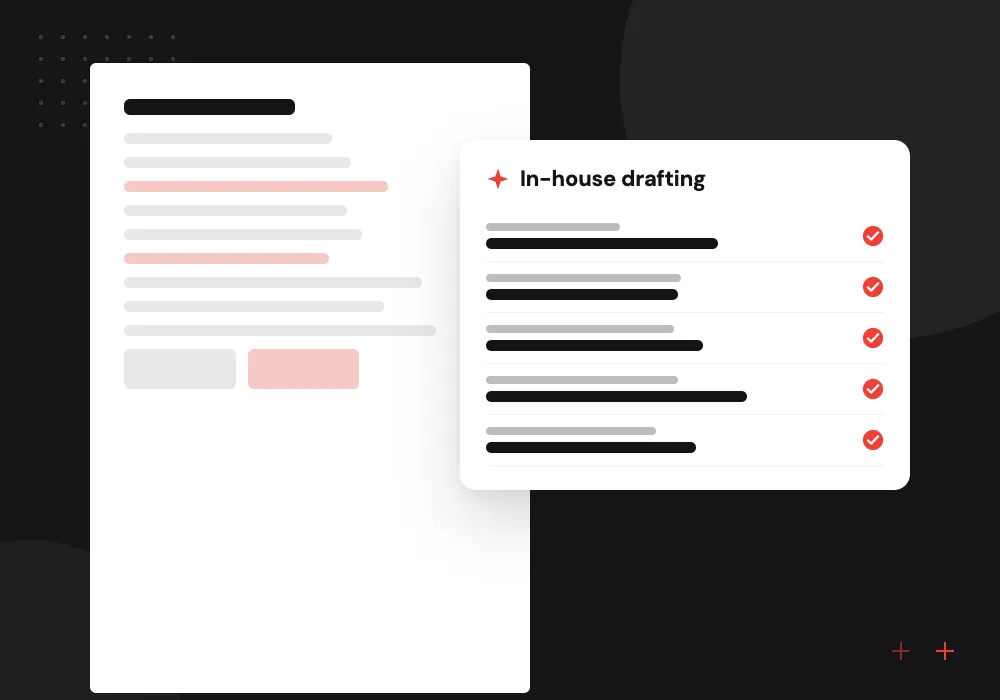
Restricted customer records
Summaries and drafts built from patient, client or account records where your agreements forbid sending data to an outside model provider.
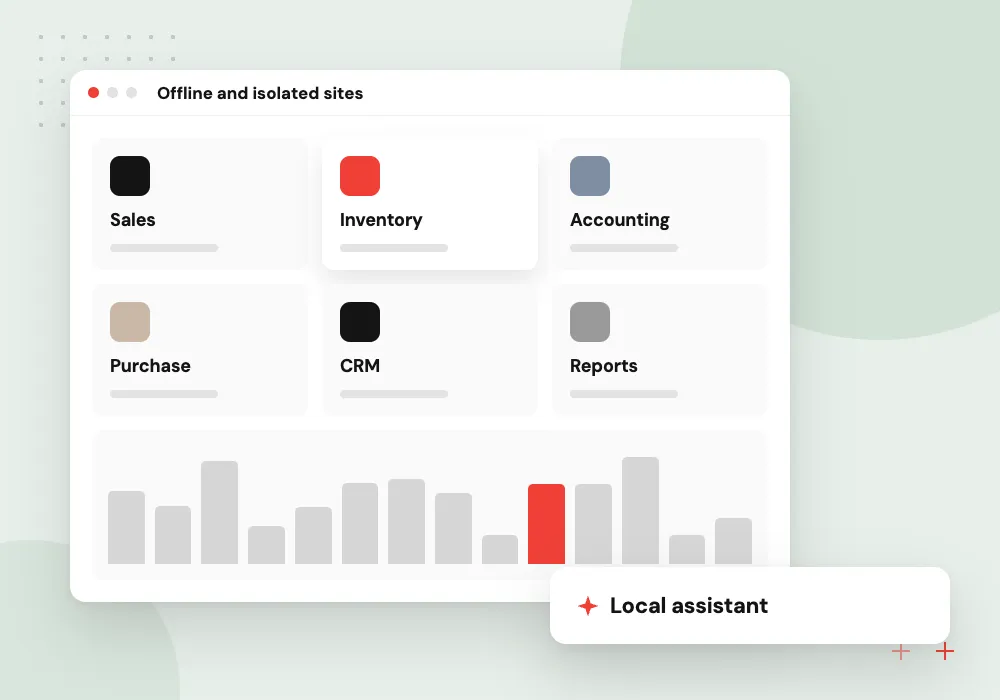
Offline and isolated sites
Plants, labs or field offices with limited internet that still need an assistant for manuals, work orders and shift notes.
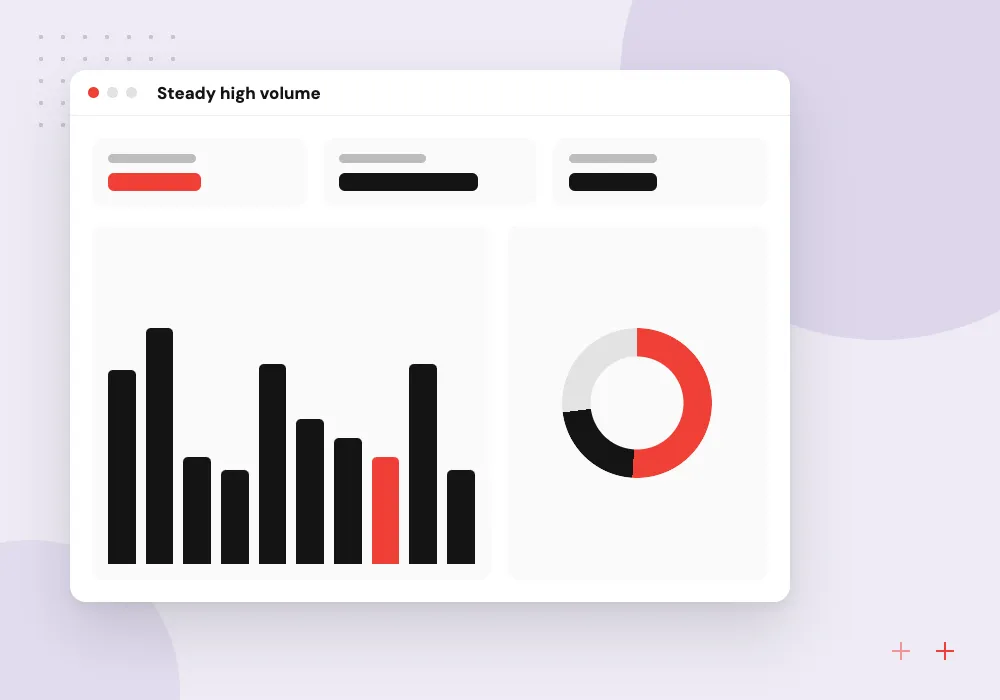
Steady high volume
Heavy, predictable workloads such as classifying every new ticket overnight, where owning the capacity can cost less than paying per token.
On-premise LLM servers
For sites that must keep everything in the building, we specify GPU servers, install the inference stack and connect it to your directory for sign-in. Updates arrive as tested packages your IT team can apply in a maintenance window, even on networks with no internet route.
What we do
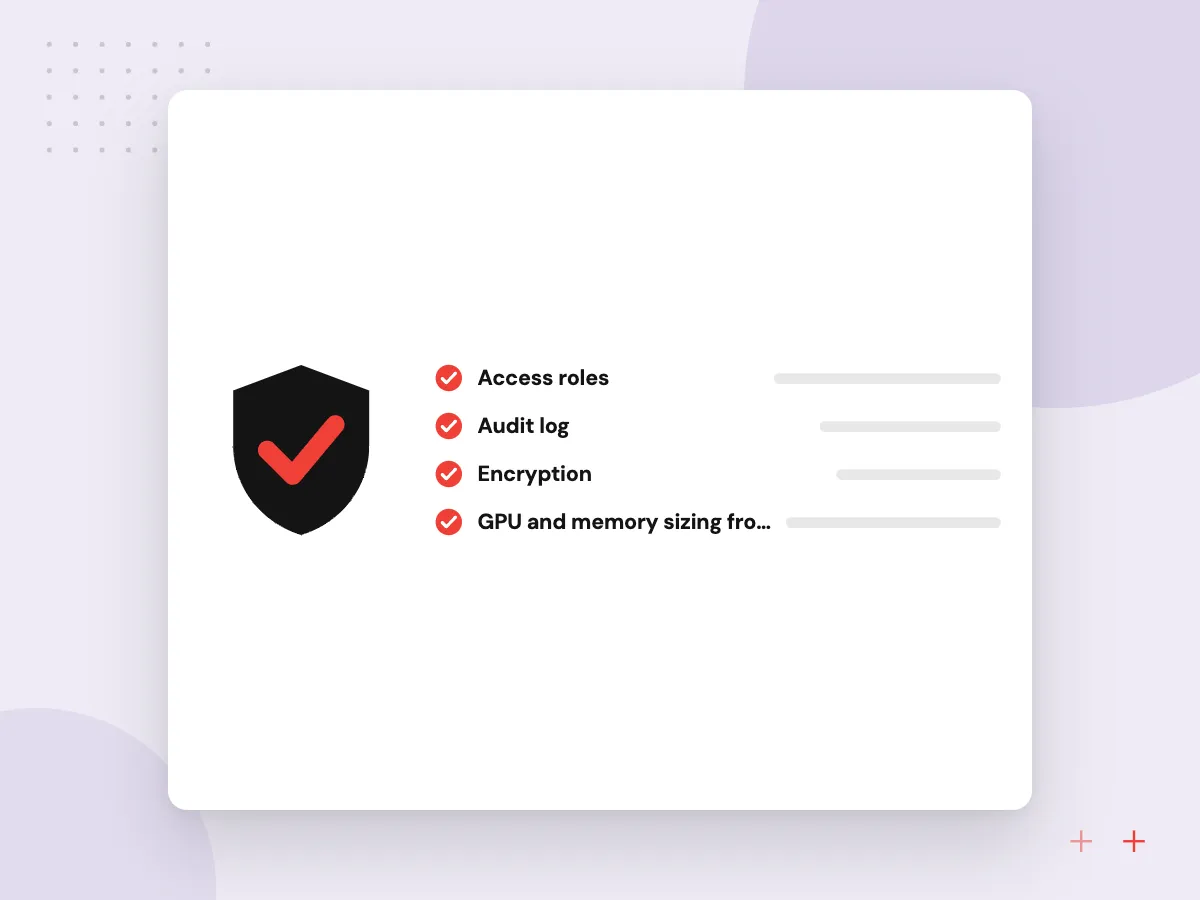
- GPU and memory sizing from benchmarks
- Inference server and model install
- Directory sign-in and roles
- Offline update packages
- Backup and restore runbook
Self-hosted LLM in your cloud account
A dedicated deployment in your own AWS, Azure or Google Cloud account gives you control of data and logs without buying hardware. We define it as code, keep it on a private network, scale GPU nodes to working hours where usage allows, and set budget alerts.
What we do
- Infrastructure as code
- Private endpoints, no public address
- Autoscaling GPU node pools
- Budget alerts and usage reports
- Staging copy for upgrades

How we approach a project
Security work covers network isolation, single sign-on, role-based access to document collections, encrypted storage and logs that tie each prompt to a user. The security and IP page sets out how our contract and NDA treat your code and data, and AI governance consulting helps write the usage policy around the system.
After go-live the model needs the same care as any server: patches, capacity checks and tested upgrades. LLMOps keeps quality, latency and GPU use visible, so you know when to add capacity or try a newer model.
How we work
- Data stays inside your boundary
- Sized for real usage, not guesses
- Every request logged to a user
Our Process
-

Data and rules review
We map the documents and systems involved, the rules that bind them and who may see what, with your security lead in the room.
-

Benchmark on target hardware
Candidate models run your real tasks on the planned GPUs, so you see answer quality, speed and memory use before buying capacity.
-

Harden the environment
We configure private networking, sign-in, secrets, backups and logging, then walk through a security review with your IT team.
-

Pilot, then hand over
A pilot group starts first. We document the setup, train your administrators and agree how future models will be adopted.
Why Aranv for private LLMs
Benchmarks before hardware
We test candidate models on your real tasks and target GPUs first, so capacity purchases rest on measured speed and answer quality.
Security set up with your IT
Network rules, sign-in and logging are configured alongside your administrators, and they hold the keys and admin accounts at handover.
A managed option when it fits
When a cloud provider’s private endpoint meets your rules with less effort, we recommend it, even though it means less infrastructure work for us.
Upgrades without surprises
New model releases are tested in a staging copy against your saved test cases before anyone switches production traffic.
Planning Private LLM Deployment?
Book a 30-minute conversation with the team that would build it.
Private LLM FAQs
-
How is a private LLM different from using a public AI API?
With a public API, your prompts go to the provider’s servers and its terms govern retention and use. A private LLM runs on infrastructure you control, so prompts, documents and logs stay in your network or cloud account. The trade-off is that you take on hardware, updates and capacity planning.
-
Do we need on-premise servers, or can a self-hosted LLM run in the cloud?
Either works. A dedicated deployment in your own AWS, Azure or Google Cloud account keeps data under your control and avoids buying hardware. On-premise suits sites with strict rules, weak connectivity or existing GPU servers. We compare both against your data rules and expected usage.
-
Are open-weight models good enough for business work?
For focused tasks such as summarizing, extracting fields or answering from your documents, current open-weight models often do well, especially with retrieval. For hard, open-ended reasoning the largest hosted models may still lead. We benchmark on your own tasks, so the choice rests on evidence rather than leaderboards.
-
What drives the cost of a private LLM deployment?
Model size, how many people use it at once, response speed targets, the length of documents it reads and whether hardware is bought or rented. Patching and monitoring time is a running cost as well. We estimate after benchmarking on your workload, not from a generic sizing table.
-
Does a private LLM solve HIPAA or client confidentiality rules on its own?
No. Keeping data in your environment helps, but rules on access, logging, retention and vendor agreements still apply. When a project handles protected health information, HIPAA requirements shape hosting, access and vendor agreements, and we agree them with your compliance lead before the build.

Let’s talk about your next step
Contact Aranv to discuss your workflow, current tools, and goals. Meet with our team or send an inquiry.
Book a meeting with our team
Choose an available date and time for a 30-minute conversation about your project.
Tell us about your project
Share a few details so we can discuss a useful next step.
Prefer email? sales@aranv.com