


What Amazon Bedrock development includes
Aranv provides Amazon Bedrock development for US small and mid-sized firms already running on AWS: generative AI features and agents built inside your own AWS account, using foundation models from several providers, Knowledge Bases over your documents, Guardrails for content rules and IAM roles for every action.
Bedrock gives one API to models from Amazon, Anthropic, Meta, Mistral and other providers, billed through your AWS account. The AWS Bedrock data protection guide says model providers have no access to customer prompts and completions. We compare two or three models on your examples, because quality and price vary by task.
Knowledge Bases handle retrieval over your documents, and Guardrails filter harmful content, denied topics and personal data in prompts and replies. Bedrock Agents covers simpler tool-calling flows, while AgentCore gives custom agents their own runtime, memory, identity and tracing, with frameworks such as LangChain. Our AI agent development page explains agent design in general.
A Bedrock application in your AWS account
Several model providers behind one API
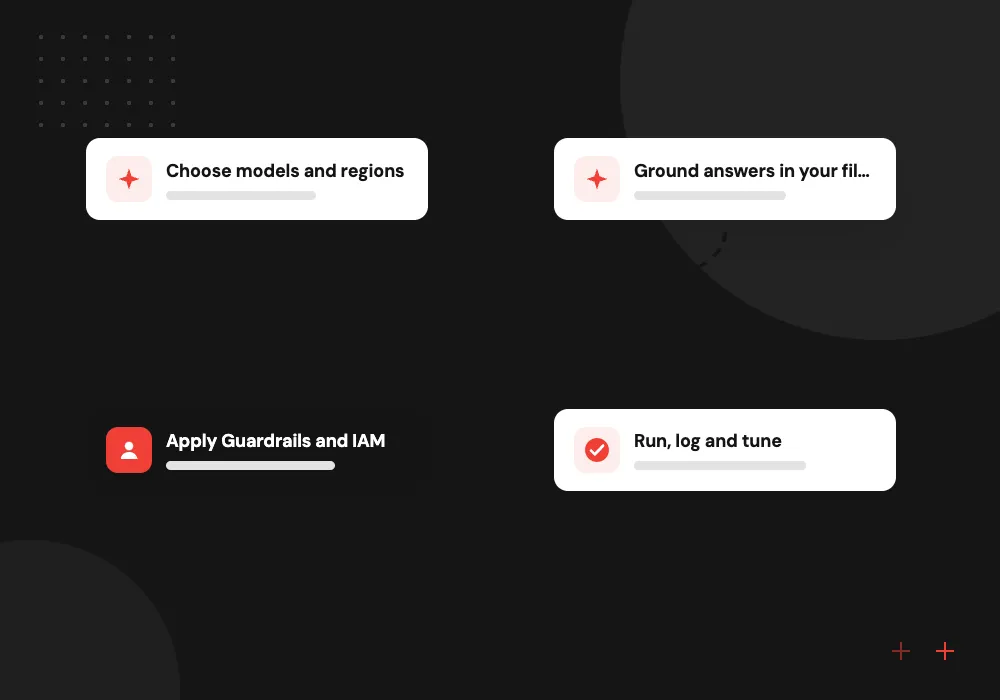
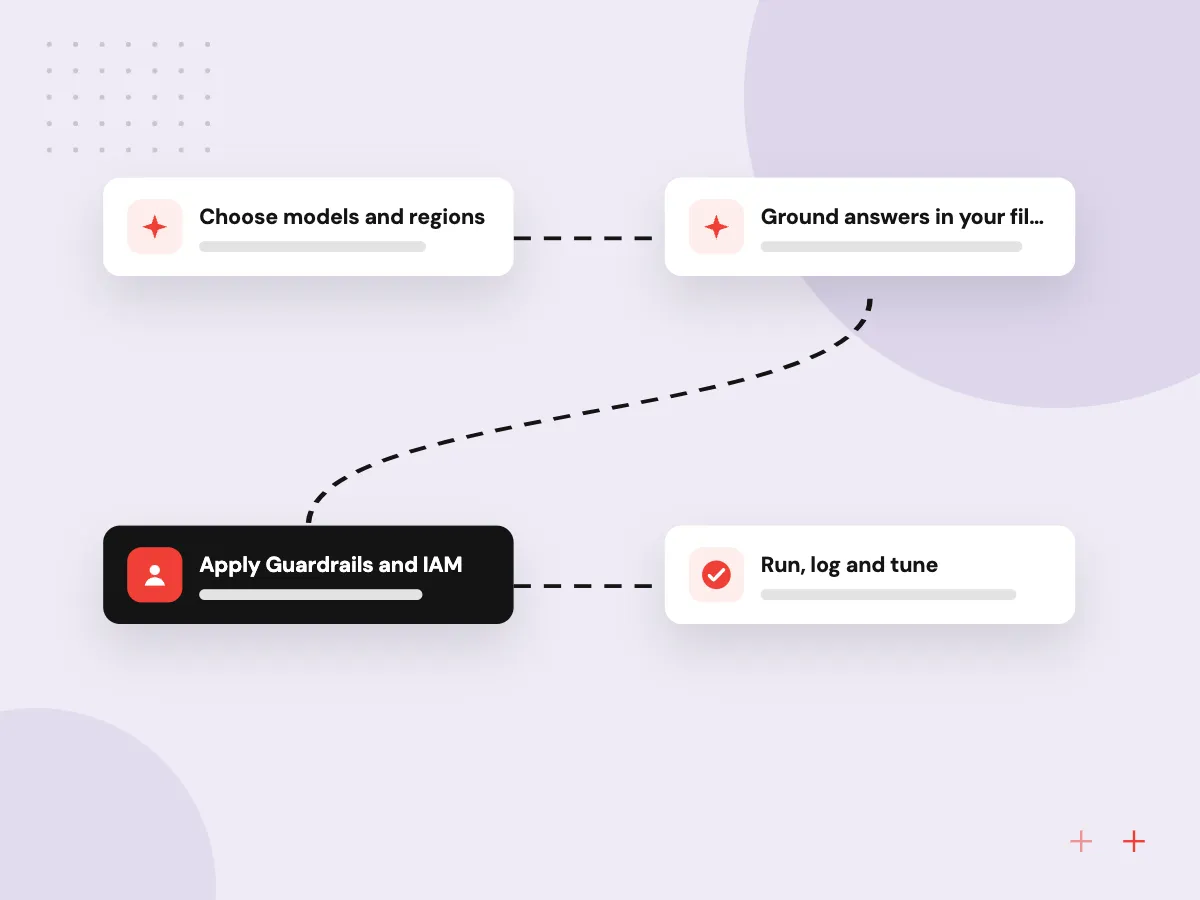
- 01 Choose models and regions We shortlist models offered in your AWS regions and note any provider terms.
- 02 Ground answers in your files Knowledge Bases index documents from S3 and other sources for retrieval.
- 03 Apply Guardrails and IAM Content rules, personal data filters and roles control what goes in and out.
- 04 Run, log and tune CloudWatch and CloudTrail record usage, errors and cost for each feature.
Swapping models is mostly a configuration change, so we can retest when a better option appears.
AWS generative AI applications we build
Teams on AWS usually want AI features that inherit the security and billing they already manage there.
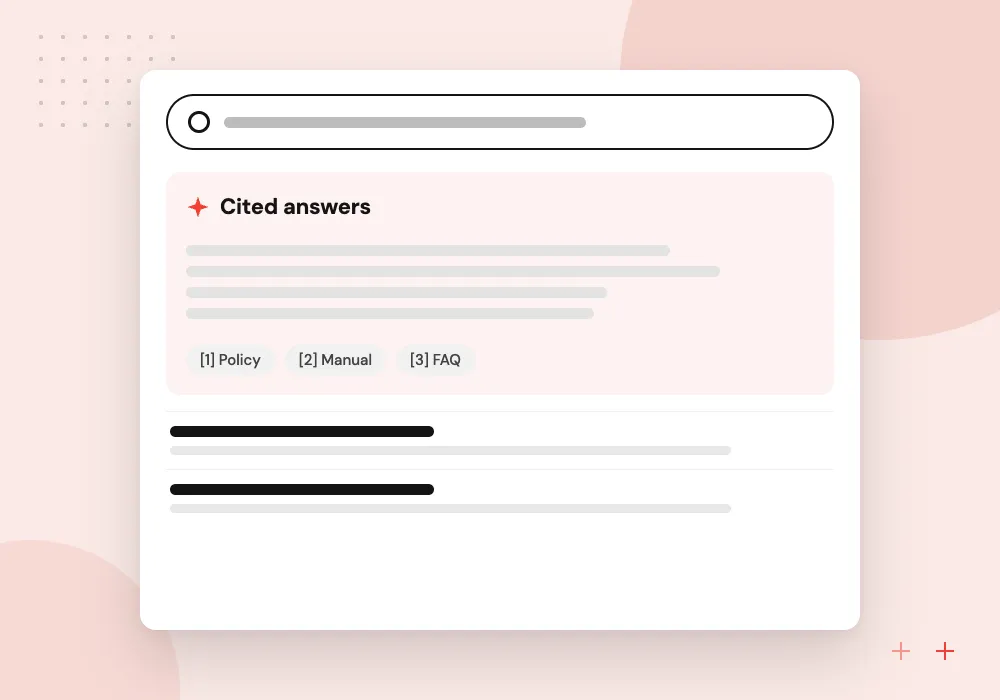
Q&A over S3 documents
Manuals, contracts and reports stored in S3 become searchable through a Bedrock Knowledge Base, with answers that cite the source file.
Bedrock agents for operations
An agent checks stock, opens support tickets or updates orders by calling Lambda functions and APIs you approve, with each step logged.
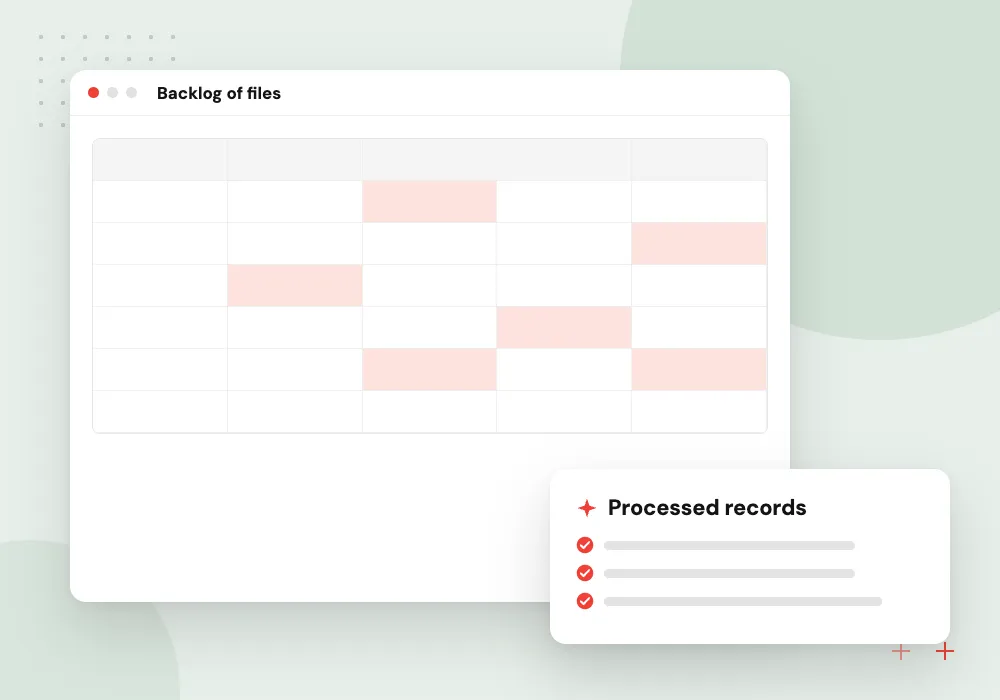
Batch content processing
Product descriptions, call transcripts or claim notes are processed in bulk overnight with batch inference, then checked and loaded into your database.
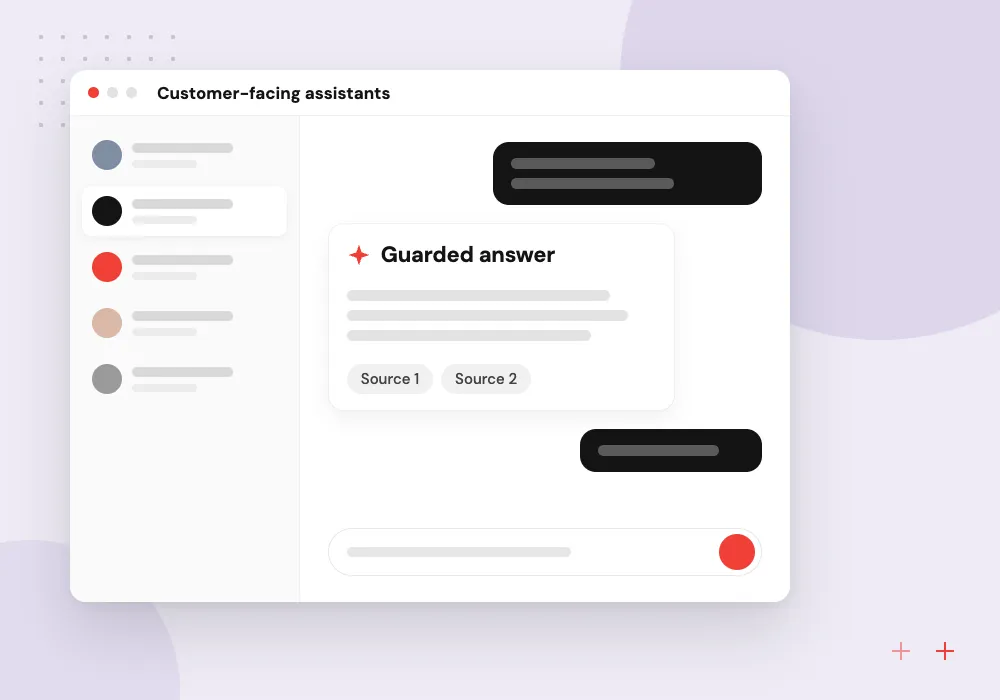
Customer-facing assistants
A chat assistant on your site or app answers from approved content, while Guardrails block the topics you rule out and mask personal data.
Bedrock agents with narrow permissions
An agent on Bedrock can look up stock, open tickets or change orders through Lambda functions. We give each function its own IAM role, mark which actions need a person’s approval, cap the steps per run and record every call for review.
What we do
- Action groups or AgentCore tools
- One IAM role per function
- Approval before write actions
- Step and token limits
- Traces in CloudWatch
Knowledge Base and Guardrails tuning
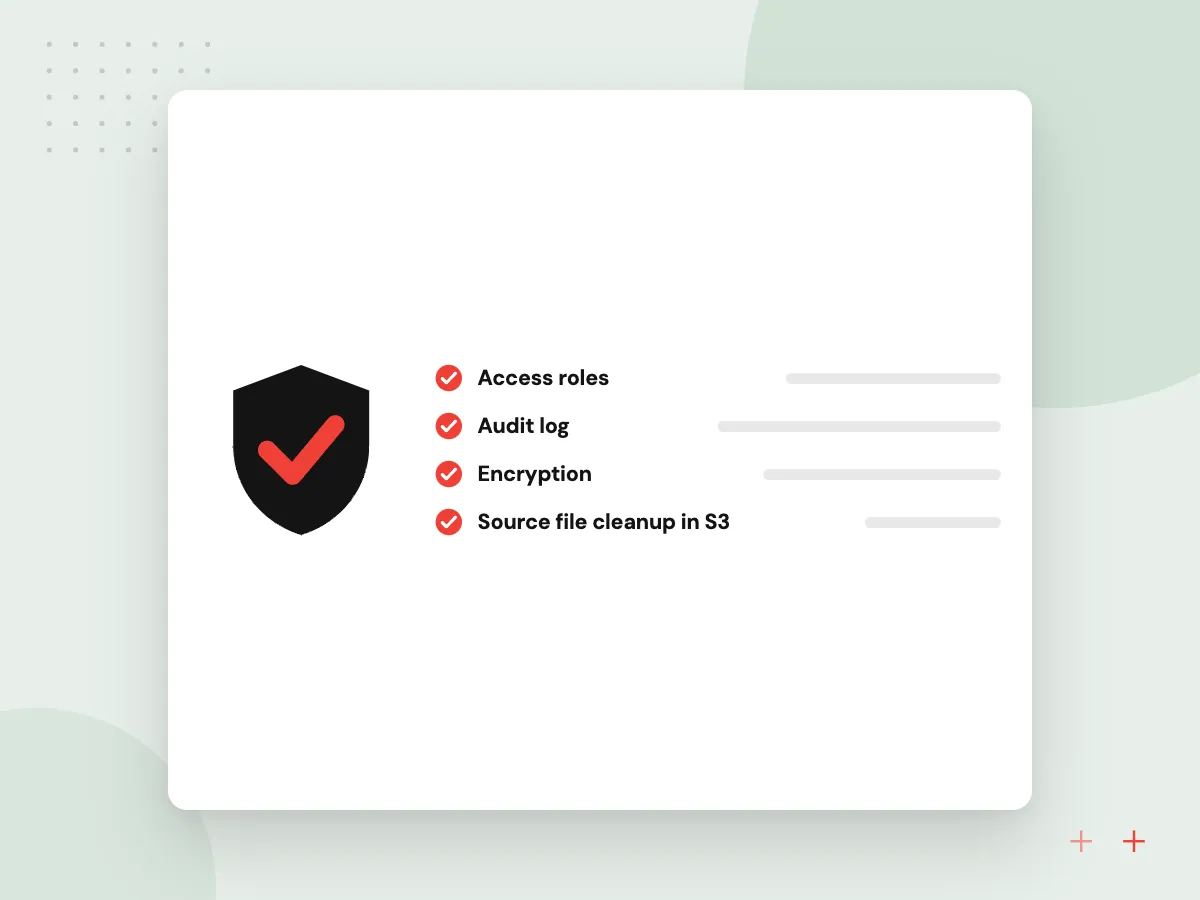
Retrieval quality depends on how documents are split and tagged. We clean source files in S3, choose chunking and metadata filters, and test answers with questions from your staff. Guardrails are set for denied topics and personal data, and blocked requests are reviewed weekly.
What we do
- Source file cleanup in S3
- Chunking and metadata choices
- Staff question test set
- Personal data and topic filters
- Weekly blocked-request review

How we approach a project
The rest is AWS engineering: Lambda or container services that call Bedrock, VPC endpoints, an IAM role per function, CloudTrail for audit and cost tags per feature. That work overlaps with our AWS development services and serverless development teams.
If Claude is the model you plan to use, our Claude API integration page explains when Anthropic’s own API is the better route. Designs that span several clouds or model vendors are handled through LLM integration.
How we work
- Your AWS account, your controls
- Models chosen on test results
- Agents with narrow IAM roles
Our Process
-

AWS account review
We check regions, VPC layout, IAM habits and where the source data lives in S3 or databases.
-

Model bake-off
Candidate models run on your examples through Bedrock, compared on accuracy, speed and token cost.
-

Build as infrastructure code
Knowledge Bases, Guardrails, agents and services are defined in CDK or Terraform and deployed to a test account.
-

Production with cost tags
We promote to production with alarms, cost allocation tags and a runbook for model updates.
Why Aranv for Amazon Bedrock
AWS engineering beyond the model
We build the Lambda functions, networking, IAM and deployment pipelines around Bedrock, so the AI feature meets the same standards as your other AWS workloads.
Models compared on your work
Your examples run through several Bedrock models, and you see accuracy, speed and cost side by side before committing.
Test account before production
Knowledge Bases, Guardrails and agents are deployed through infrastructure code to a test account first, then promoted with approval.
Spend you can trace
Cost allocation tags and dashboards show what each AI feature costs per month, so budget owners can decide what to scale.
Planning Amazon Bedrock Development?
Book a 30-minute conversation with the team that would build it.
Amazon Bedrock FAQs
-
What is Amazon Bedrock used for?
Bedrock is AWS’s managed service for generative AI, offering foundation models from Amazon and other vendors behind a single API. Businesses use it for document question answering, content generation, summaries and agents that call internal systems, all inside their AWS account.
-
Can the model provider see our data on Bedrock?
AWS documents that model providers cannot access Bedrock logs or customer prompts and completions. Your data stays under your AWS account controls, such as IAM, encryption keys and logging, and we limit each request to the fields it actually needs.
-
What is the difference between Bedrock Agents and AgentCore?
Bedrock Agents is a managed way to set up an agent that calls functions and Knowledge Bases through configuration. AgentCore supplies building blocks such as a runtime, memory and identity for agents written in the framework you choose. Simple tool-calling flows suit Agents; custom or long-running agents suit AgentCore.
-
Should we use Bedrock or call model providers directly?
Bedrock suits companies on AWS that want one bill, IAM-based access, private networking and the freedom to swap models. Going to a provider directly can bring earlier access to new features. We check which features you need on each route before deciding.
-
How is Amazon Bedrock priced?
On-demand use is charged by tokens processed, with batch inference and reserved capacity as options for steady workloads. Knowledge Bases, Guardrails and agent features add their own charges. We estimate monthly usage from your volumes and set AWS budgets and alerts.

Let’s talk about your next step
Contact Aranv to discuss your workflow, current tools, and goals. Meet with our team or send an inquiry.
Book a meeting with our team
Choose an available date and time for a 30-minute conversation about your project.
Tell us about your project
Share a few details so we can discuss a useful next step.
Prefer email? sales@aranv.com