


What serverless development includes
Aranv provides serverless development for US businesses that would rather pay for compute as it runs than keep servers idling: AWS Lambda APIs and event handlers, file and queue processing, scheduled jobs and AI workflows on AWS, Azure Functions or Google Cloud, all defined as code.
A serverless architecture hands servers, scaling and patching to the cloud provider. It suits bursty traffic, event-driven work and small teams without operations staff. It fits less well for steady heavy load, where containers can cost less, and for long jobs: AWS sets a 15-minute ceiling on a standard Lambda invocation, as its Lambda quotas page explains.
A typical build covers event design, functions in TypeScript, Python, Go or C#, HTTP triggers, queues, a managed database, IAM permissions, infrastructure as code with AWS CDK or Terraform, local tests, CI deployment, logs, traces and cost alarms. Hosting options are covered on our AWS, Azure and Google Cloud pages.
How a serverless workflow runs
Events in, results out, no servers to patch
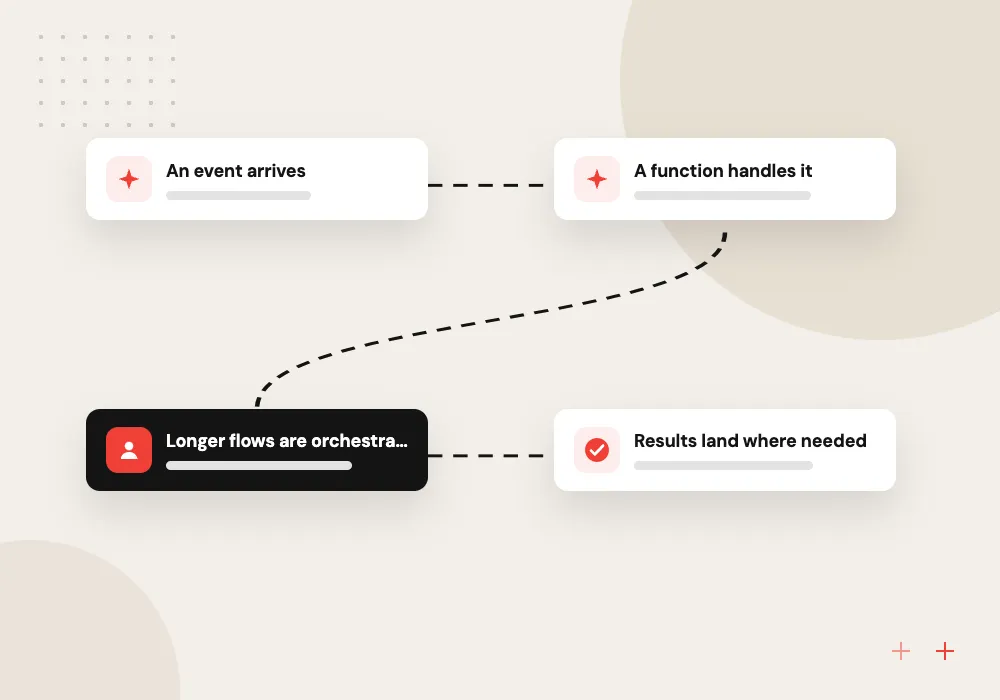
- 01 An event arrives A file upload, API call, queue message or schedule starts the work.
- 02 A function handles it Short code runs, reads what it needs and writes a result.
- 03 Longer flows are orchestrated Step Functions or durable functions chain steps with retries and waits.
- 04 Results land where needed Records reach your database, CRM or a staff notification.
The cloud provider runs and patches the servers; you pay mainly for requests and run time.
What we build with serverless
Serverless fits work that arrives in bursts or on a schedule: uploads, webhooks, nightly jobs and APIs with uneven traffic.
AWS Lambda development
Lambda functions behind API Gateway or function URLs, with DynamoDB or Aurora, a scoped IAM role per function and CloudWatch alarms.
File and document pipelines
Uploads to S3 or Blob Storage trigger functions that resize images, parse PDFs or import spreadsheets into your database.
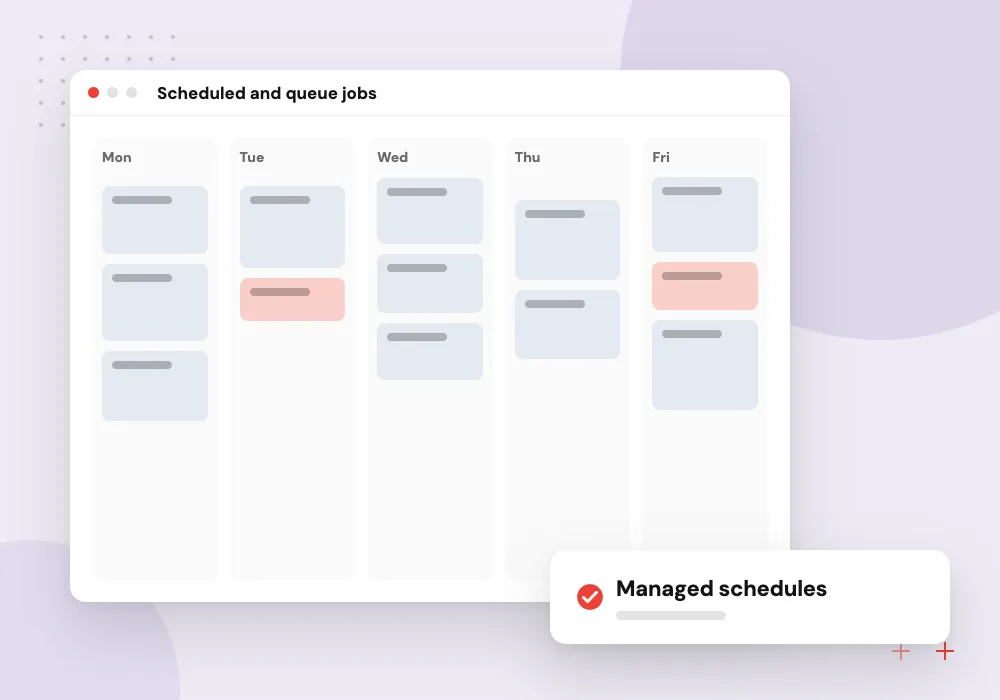
Scheduled and queue jobs
Nightly syncs, report runs and retries from SQS or Service Bus queues, with no server waiting idle between runs.
Serverless AI workflows
Functions that send documents or messages to a model on Amazon Bedrock or Azure OpenAI and route the results to people or systems.
AWS Lambda functions you can maintain
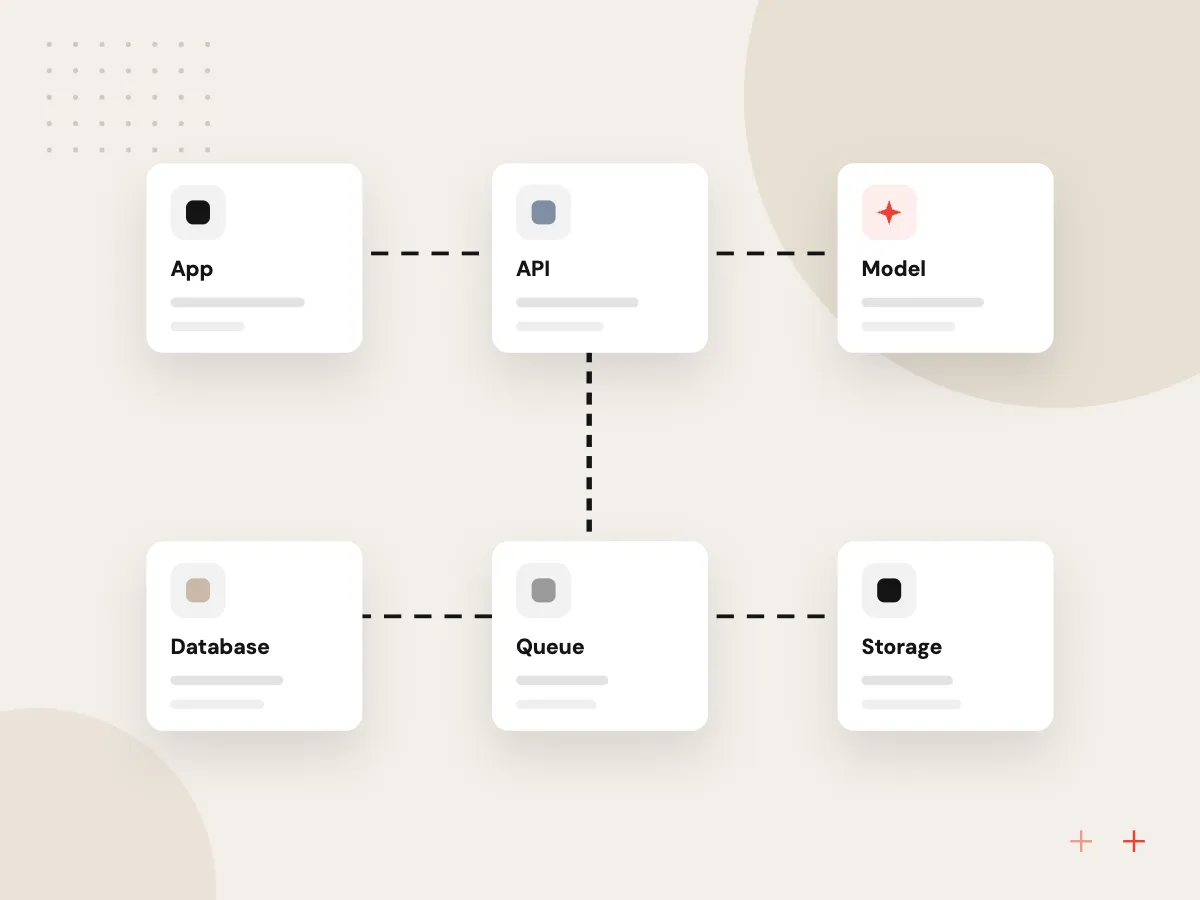
Lambda makes code easy to deploy and just as easy to lose track of. We give every function a single purpose, its own narrow IAM role, structured logs and tracing, and define it in infrastructure code next to the queues and tables it uses, so the whole system can be rebuilt in a fresh account.
What we do
- One IAM role per function
- AWS CDK or Terraform definitions
- Dead-letter queues for failures
- X-Ray or OpenTelemetry tracing
- Budgets and cost alarms
Event-driven AI workflows without servers
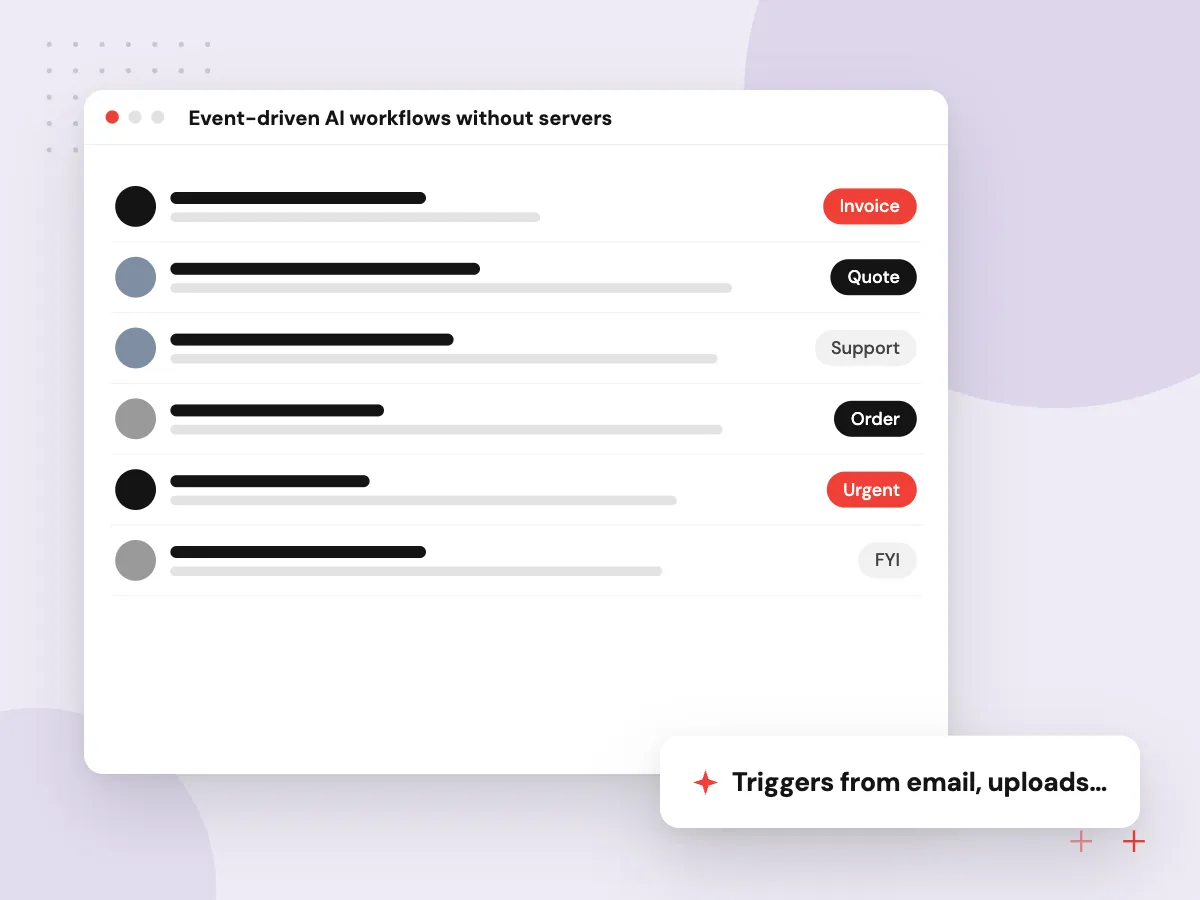
Many AI tasks start with an event: an email arrives, a PDF is uploaded, a form is sent. A serverless workflow picks it up, sends the content to a model for extraction or classification, checks the output, and either writes the result to your system or queues it for staff review.
What we do
- Triggers from email, uploads or forms
- Model calls via Bedrock or Azure OpenAI
- Orchestrated steps with retries
- Unclear results routed to staff
- Results written to CRM or ERP

How we approach a project
Moving to serverless. Cron jobs on an aging server, webhook handlers buried in a monolith and file imports make good first candidates. We move them one at a time and leave steady, heavy services where they run best. For model steps inside these flows, see Amazon Bedrock development and AI workflow automation.
Serverless is one option within our cloud computing services; other platforms and languages appear on the Aranv technologies page.
How we work
- Small functions with one job
- Infrastructure defined as code
- Cost alarms from the first deploy
Our Process
-

Map events and volumes
We list each trigger, how often it fires, payload sizes and time needs, and check each against serverless limits.
-

Design functions and permissions
Every function gets one job, its own least-privilege IAM role and a failure path such as a dead-letter queue.
-

Build with infrastructure as code
Functions, queues, tables and alarms are defined in code and deployed to a test account on each merge.
-

Launch with cost watch
We go live with budgets, error alarms and tracing, then review cold starts, duration and spend after the first month.
Why Aranv for serverless
Fit checked before building
Each workload is measured against time limits, payload sizes and cost at your volumes, and work that suits containers better stays on containers.
Least privilege by default
Each function gets only the permissions it needs, defined in code and reviewed, which limits what a bug in one function can reach.
Costs you can see
Budgets, alarms and per-function cost tags go live with the first deploy, so a runaway loop shows up as an alert rather than a surprise invoice.
Your account, your code
Everything runs in your cloud account and lives in your repository, with deployment scripts your team can run without us.
Planning Serverless Development Services?
Book a 30-minute conversation with the team that would build it.
Serverless development FAQs
-
Is serverless cheaper than running our own servers?
Often, for traffic that is uneven or quiet between peaks, because you pay per request and per unit of run time instead of for idle servers. For steady high load, containers or reserved instances can cost less. We model both with your traffic figures before recommending one.
-
What are the limits of AWS Lambda?
Per AWS documentation, a standard Lambda invocation can run for up to 15 minutes and a function can use up to 10,240 MB of memory. Payload sizes and concurrency have quotas too. Longer work is split into steps with Step Functions or durable functions, or moved to containers.
-
Will cold starts slow down our app?
A cold start is the delay while a new function instance starts. For most business APIs it is short, and runtime choice, package size and memory all affect it. Where steady response times matter, provisioned concurrency or a container service keeps instances ready.
-
Can serverless functions run AI features?
Yes. A function can send a document or message to a model on Amazon Bedrock, Azure OpenAI or another provider, check the result and pass it on. Long AI jobs are queued and split into steps, so they stay within time limits and failed calls can retry.
-
Does serverless lock us into one cloud provider?
Partly. Triggers, permissions and managed services differ between AWS, Azure and Google Cloud. We keep business logic in plain modules apart from the provider-specific handler code, so a later move means rewriting the edges rather than the whole system.

Let’s talk about your next step
Contact Aranv to discuss your workflow, current tools, and goals. Meet with our team or send an inquiry.
Book a meeting with our team
Choose an available date and time for a 30-minute conversation about your project.
Tell us about your project
Share a few details so we can discuss a useful next step.
Prefer email? sales@aranv.com