


What Claude integration services include
Aranv provides Claude API integration for US firms with lean teams and long documents, putting Anthropic’s Claude models to work inside their own systems: reading contracts and reports, answering with citations, calling internal tools and drafting documents for review, through Anthropic’s API or the cloud account you already use.
We build on the Claude Messages API with the features a task calls for: tool use for reaching your systems, structured outputs when another program reads the result, citations when answers come from documents, and the Files API for sources reused across requests. Work that needs several cooperating agents falls under our agentic AI development service.
Claude is offered through Anthropic’s own API as well as Amazon Bedrock, Google Cloud and Microsoft Foundry. If your data already sits in AWS, our Amazon Bedrock development team can run Claude inside your account with IAM roles and private networking. New features do not always reach every platform at once, so we confirm support before the design is fixed.
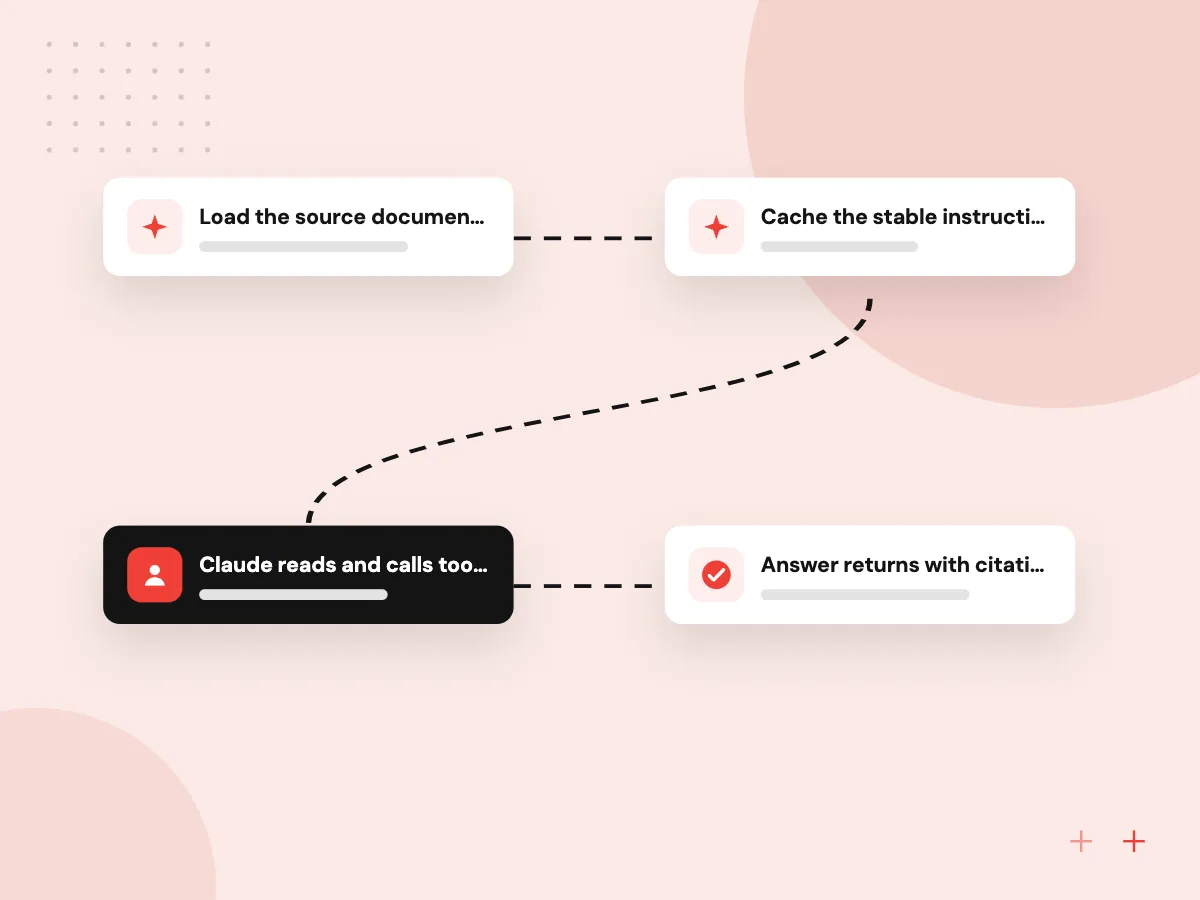
A Claude request with documents and tools
From long document to checked answer
- 01 Load the source documents PDFs and text files go with the request or are uploaded once and reused.
- 02 Cache the stable instructions Long policies and tool lists are cached, so repeat requests cost less and respond sooner.
- 03 Claude reads and calls tools It can ask for a lookup in your CRM or database before writing.
- 04 Answer returns with citations Each cited passage points to its page or section, so a reviewer can check it.
The same application can reach Claude directly or through AWS, Google Cloud or Microsoft Foundry.
Anthropic Claude development for business tasks
Teams often pick Claude for work with long documents, careful writing or many tool calls in a row.
Contract and policy review
Claude compares a new contract or policy with your standard terms and lists each difference with the clause quoted, for a reviewer to accept or reject.
Report and proposal drafts
Account data, meeting notes and past proposals become a first draft in your house style, which a manager edits before it goes out.
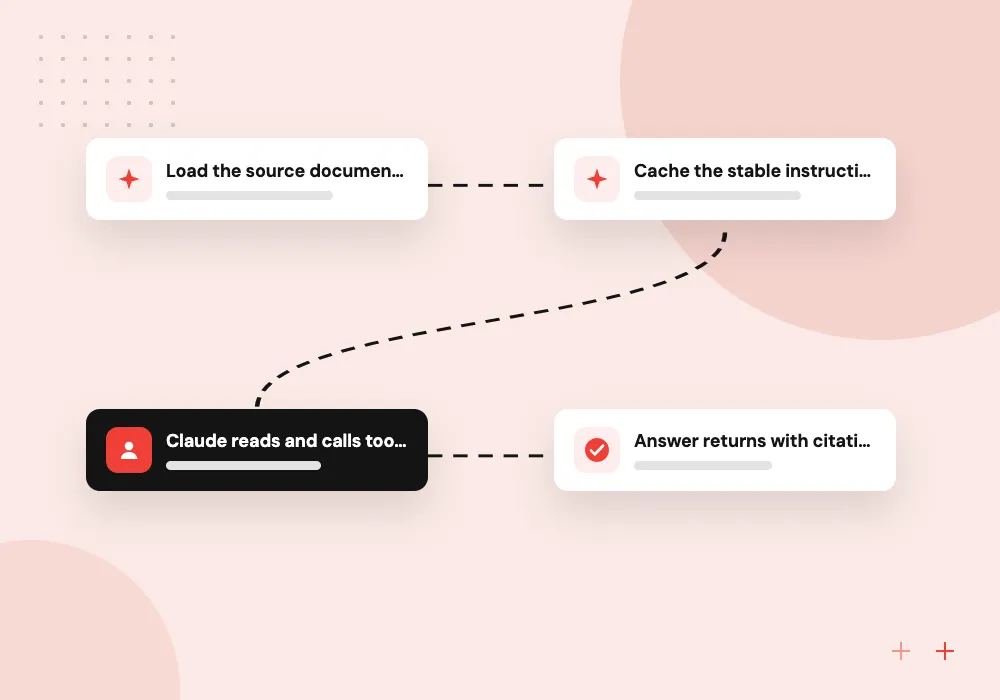
Internal tools via tool use
Staff make a request in plain words and Claude calls approved functions to look up orders, open tickets or update records, with each call logged.
Code and data helpers
Developers and analysts get help reading old code, writing SQL against your schema and explaining results inside the tools they already use.
Document work with citations
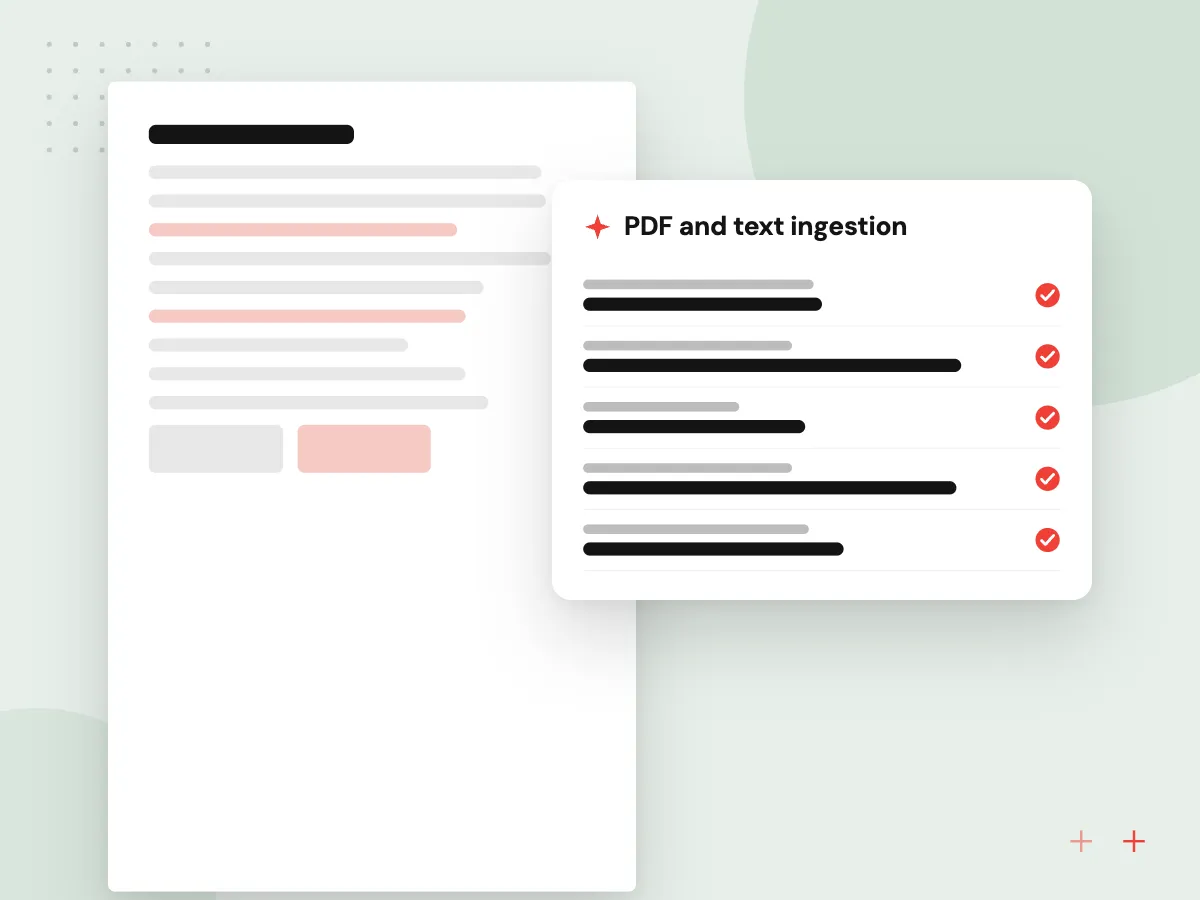
For contracts, policies and long reports, Claude can return answers that quote the passages they rely on. We set up document loading, page-level citations and a review screen where staff see each claim next to its source before accepting it.
What we do
- PDF and text ingestion
- Page-level citation display
- Clause comparison with your standard
- Accept and reject controls
- History of accepted changes
Tool use with approval and logs
Claude can call functions you define, one after another, to finish a task. We write narrow tool definitions with strict input schemas, decide which actions need a person’s approval and log every call, so a manager can see what was looked up or changed.
What we do
- Strict schema for each tool
- Read and write tools kept apart
- Approval before record changes
- Per-call logs with inputs
- Caps on steps and spend
How we approach a project
Cost and speed depend on how prompts are built. Anthropic’s prompt caching lets a long system prompt or document set be reused across calls, and batch processing suits overnight jobs. We measure token use per feature and send simple steps to smaller Claude models.
Claude also reaches tools through the Model Context Protocol, which Anthropic created and later gave to a Linux Foundation project. When a system needs a connector several AI apps can share, our MCP server development service builds it once. Work across several model vendors sits under LLM integration.
How we work
- Long documents, cited answers
- Cached context, predictable spend
- Tools with the least permission
Our Process
-

Collect documents and cases
We gather the contracts, reports or tickets the feature will handle and agree what a good result looks like.
-

Write prompts and tool schemas
System instructions, tool definitions and citation rules are drafted and versioned like any other code.
-

Score on a fixed test set
Each Claude model option runs on the same cases and is scored for accuracy, cost and response time.
-

Release behind a review step
Outputs that change records or reach customers pass a staff check until results justify loosening it.
Why Aranv for Claude projects
Platform choice explained
We tell you whether Anthropic’s API, Bedrock, Google Cloud or Foundry fits your contracts, data location and feature needs, and we write down the reasons.
Citations reviewers can check
When answers come from documents, reviewers see the quoted passage beside each claim, so checking means reading the source line, not the whole file.
Spend tracked per feature
Caching, model routing and batch jobs are set up from the start, and monthly reports split costs by feature and team.
Narrow permissions for tools
Every tool Claude can call has the least access it needs, and actions such as updating records or sending email wait for staff approval.
Planning Claude API Integration?
Book a 30-minute conversation with the team that would build it.
Claude API integration FAQs
-
Why choose Claude over other AI models?
Consider it when the work involves long documents, careful writing, cited answers or many tool calls in sequence, areas Anthropic has focused on. It is not the best choice for every task, so we test Claude against at least one alternative on your own examples before recommending it.
-
Can we use Claude through AWS or Google Cloud instead of Anthropic?
Yes. Claude models are sold through Amazon Bedrock, Google Cloud and Microsoft Foundry as well as Anthropic’s API. Using your cloud provider keeps billing, access control and networking in one place, though some features arrive on Anthropic’s API first.
-
How is our data handled when it goes to Claude?
Each request carries only the data that step requires, with personal details masked where possible. Your team should review Anthropic’s commercial terms and retention options, and running Claude in your own AWS, Google Cloud or Azure account keeps the data under agreements you already have.
-
How do you keep Claude API spending predictable?
Long instructions and documents that repeat are cached, context is trimmed to what each step needs, smaller Claude models take the simple steps, and non-urgent work runs in batches. You get spend per feature each month, with alerts when usage jumps.
-
Can we switch away from Claude later?
Yes. Prompts, tool definitions and test sets are written so another provider can be tried with limited changes, and the contract we recommend assigns them to your company on final payment. Running the same test set on a new model shows what a switch would change.

Let’s talk about your next step
Contact Aranv to discuss your workflow, current tools, and goals. Meet with our team or send an inquiry.
Book a meeting with our team
Choose an available date and time for a 30-minute conversation about your project.
Tell us about your project
Share a few details so we can discuss a useful next step.
Prefer email? sales@aranv.com