


Where agentic workflows fit in a business
Aranv’s direct answer to what is agentic AI: it is software in which a language model works toward a goal over several steps, deciding what to do next, using tools such as search, email or your ERP, checking the results and asking a person when it is unsure or the stakes are high.
Agentic AI suits work that has several steps, needs information from more than one place and follows rules a person could write down: preparing a quote from a request, chasing missing documents for a claim, reconciling a supplier statement. The idea draws on research such as the ReAct paper, in which models alternated between reasoning and taking actions.
Not every task needs an agent. If the steps never change, a fixed workflow with one model call is easier to test and cheaper to run, and our AI workflow automation often takes that form. If a person only needs answers, a chatbot is enough, as the AI agent vs chatbot guide explains.
An agentic workflow in a purchasing team
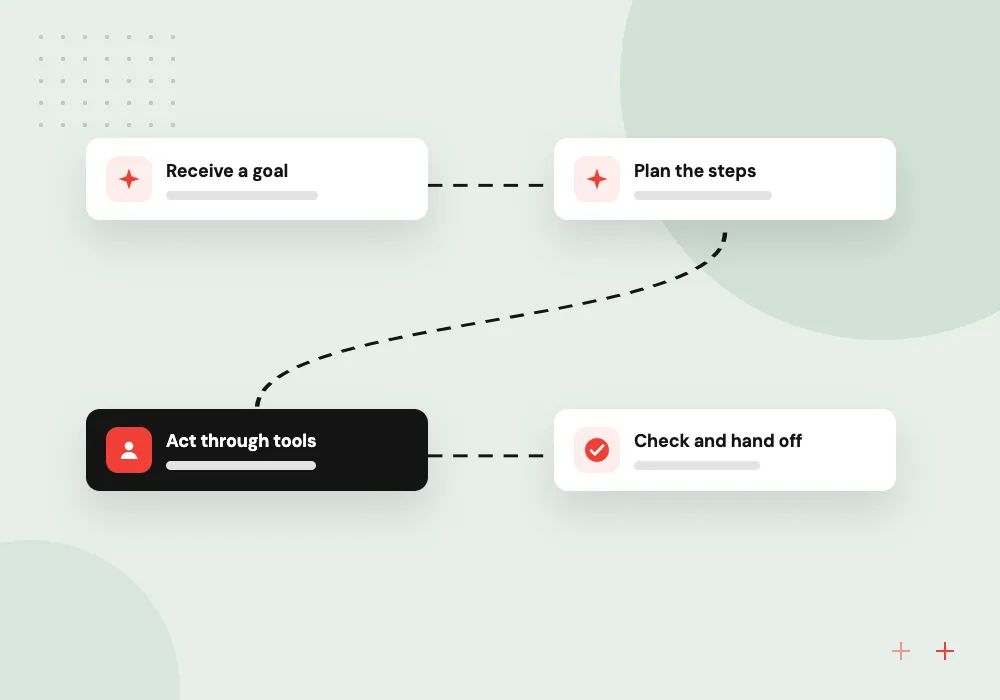
Goal, plan, act, check
- 01 Receive a goal Reorder stock for items below their minimum level before Friday’s supplier cutoff.
- 02 Plan the steps The agent lists items, checks open orders and looks up preferred suppliers.
- 03 Act through tools It drafts purchase orders in the ERP and emails suppliers about missing prices.
- 04 Check and hand off A buyer approves any order over the set limit before it is sent.
Each step is logged, so the buyer can see why the agent picked each supplier.
Agentic AI for business in four points
Agentic AI is a way of building software, not a single product. These points separate it from earlier AI tools.
It works toward goals
Instead of answering one prompt, the system takes a goal and keeps working through steps until the goal is met or it needs help.
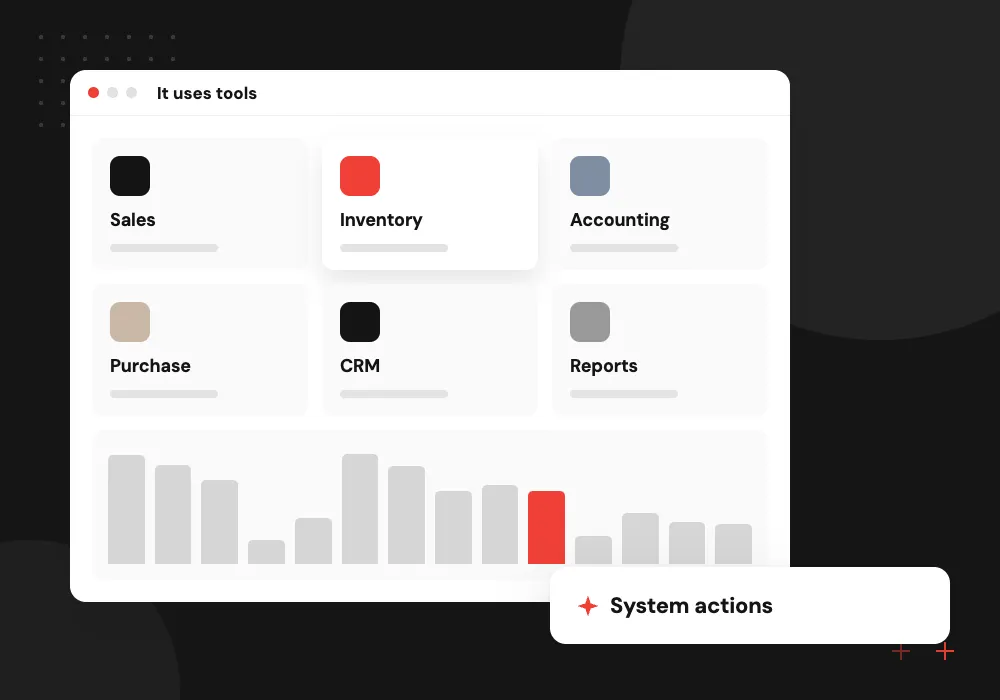
It uses tools
Searches, database queries, emails and ERP updates are how an agent acts. What it can do is set by the tools and permissions you grant.
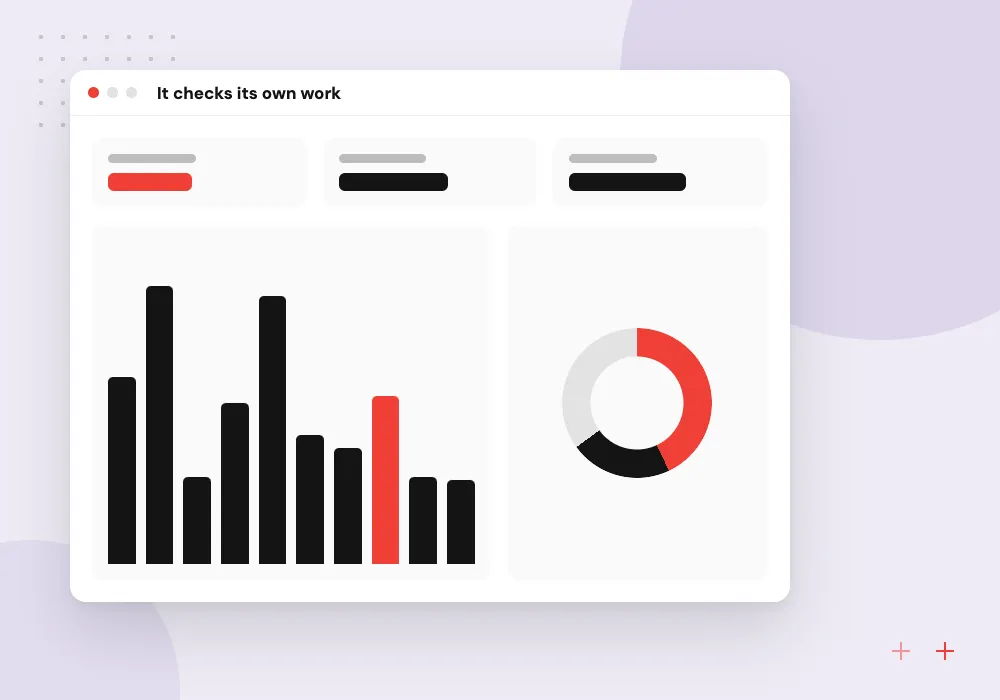
It checks its own work
Well-designed agentic workflows compare results against rules, retry failed steps and flag doubtful cases instead of guessing.
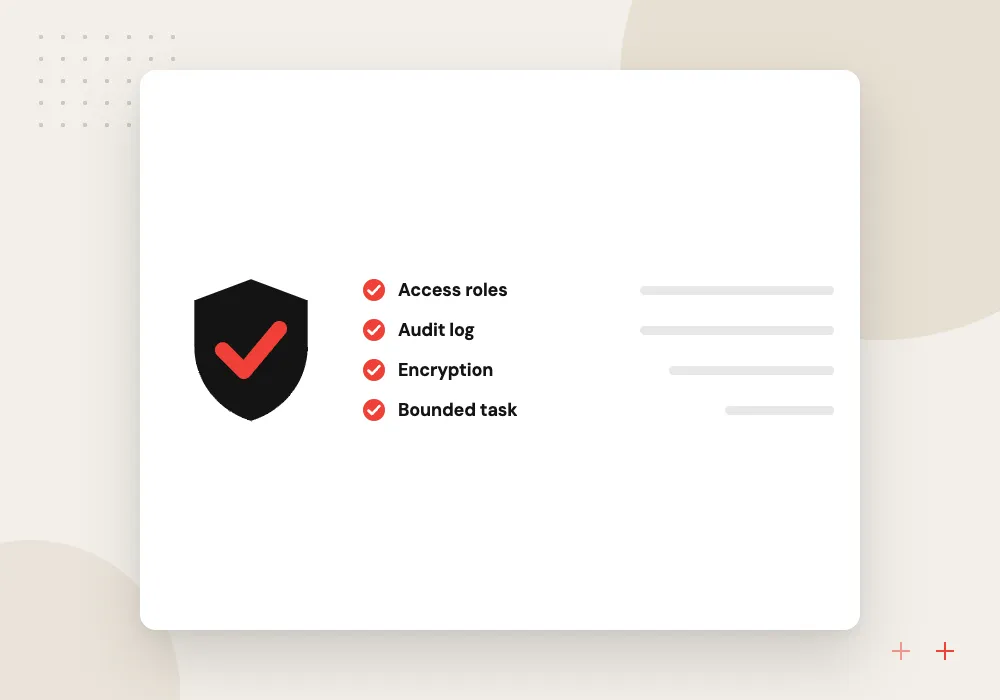
It knows when to stop
Caps on spend, time and number of actions, plus approval points, mean a person still makes the calls that carry real money or risk.
The parts of an agentic system
Under the label, most agentic systems share the same parts: a model that plans, a set of tools with permissions, memory of the task so far, rules that stop runaway loops and a log of each step. A weak point in any one part shows up as errors in the work.
What we do
- Planner model and instructions
- Tools with scoped permissions
- Task memory and state
- Step and spend limits
- Trace of every action
Where people stay in the loop
Agentic does not mean unattended. The design decides where a person approves, edits or takes over: before money moves, before a customer receives a message, when confidence is low or when a case is new. Those points can shift as the logs build trust in each step.
What we do
- Approval before payments
- Review of outbound messages
- Escalation on low confidence
- Manual path for new case types
- Regular review of run logs

How we approach a project
When a process truly needs judgment across steps, AI agent development builds a single agent for one job, and agentic AI development covers several agents passing work along, such as intake, research and drafting agents with a reviewer at the end. Agents reach your systems through APIs or the Model Context Protocol.
Controls matter as much as the model: an account with narrow permissions for each agent, a log of every step, tests on past cases and a clear point where a person approves. The AI agent examples guide shows jobs where those controls are already practical.
How we work
- Goals with clear limits
- People approve costly steps
- Every action leaves a record
Our Process
-

Choose a bounded process
Pick work with a clear start, a clear finish and written rules, such as collecting missing claim documents.
-

Map tools and limits
List the systems involved, the actions allowed in each and the points where a person must approve.
-

Test on past cases
Run the agent on closed cases and compare its steps and results with what staff actually did.
-

Launch with a reviewer
Start with every output reviewed, then reduce review only where the logs show consistent results.
How Aranv approaches agentic AI
Workflow first, agent second
We map the process and build the fixed parts as plain code, giving the model decisions only where judgment is actually needed.
Permissions per tool
Each agent gets its own credentials, with access limited to the records and actions agreed with the system owner.
Replays before launch
We run the agent on past cases from your records and review every step with your team before it touches live work.
Logs you can read
Every run leaves a readable trace of what the agent saw, decided and did, so staff can check a result or explain it.
Ready to act on this guide?
Ask our team in a 30-minute conversation.
Or see how we build it: Explore all services
Common questions about agentic AI
-
How is agentic AI different from generative AI?
Generative AI produces content, such as text or images, in response to a prompt. Agentic AI uses a generative model for its reasoning but adds goals, tools and a loop of steps, so it can carry out work across systems rather than only produce a draft.
-
What are agentic workflows?
An agentic workflow is a process in which a model decides some of the steps: which record to look up, which document is missing, whether to retry or escalate. The surrounding workflow still sets the boundaries, the tools on offer and the approval points.
-
Is agentic AI ready for small businesses?
For narrow, well-defined tasks with good system access, yes. Examples include triaging inbound email, gathering documents for a file or preparing draft orders. Open-ended goals with broad access remain risky for a business of any size, so start small and keep a reviewer in place.
-
What can go wrong with AI agents?
They can misread a request, call the wrong tool, loop without finishing or follow instructions hidden in an email or web page. Narrow permissions, step limits, logs, tests on past cases and approval for costly actions keep these failures small and visible.
-
How is a multi-agent system different from a single agent?
A multi-agent system splits a process between agents with separate roles and tools, such as intake, research and drafting. Each agent becomes simpler to test, but there are more handoffs to monitor. We use it only when a single agent grows too broad to check.

Let’s talk about your next step
Contact Aranv to discuss your workflow, current tools, and goals. Meet with our team or send an inquiry.
Book a meeting with our team
Choose an available date and time for a 30-minute conversation about your project.
Tell us about your project
Share a few details so we can discuss a useful next step.
Prefer email? sales@aranv.com