


The AI agent definition, in context
Aranv’s short answer to what is an AI agent: software that gives a language model a goal, tools such as search, email or your CRM, and limits, then lets it choose each next step, act, check the result and repeat until the task is finished or handed to a person.
Where the term comes from. In AI research, an agent has long meant anything that perceives its surroundings and acts on them toward a goal. Language models added a reasoning engine that can read untidy input, such as a free-text email, and choose an action. NIST’s AI standards center describes today’s agent systems as a generative model wrapped in software that supplies its tools.
How the loop runs. The model never reaches into your systems itself. In Anthropic’s tool use documentation, the model returns a structured request naming a tool and its inputs, your application runs it and sends back the result, and the model picks the next step. Other providers often call this pattern function calling.
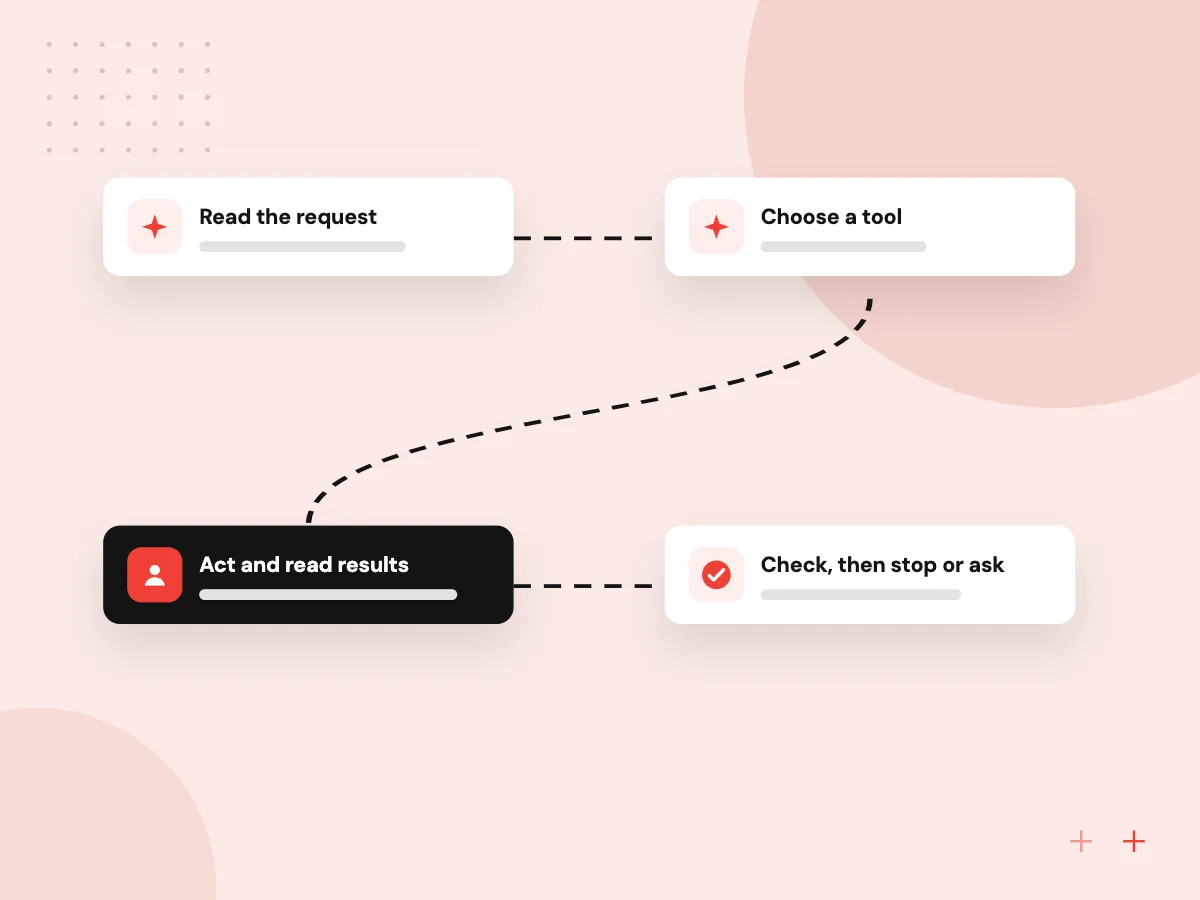
One request through the agent loop
Read, choose, act, check
- 01 Read the request A sales rep asks for a quote on office chairs for Monday delivery.
- 02 Choose a tool The model decides it needs prices and stock levels from the ERP.
- 03 Act and read results Your code runs both lookups and returns the results.
- 04 Check, then stop or ask It drafts the quote, spots a stock shortfall and asks the rep first.
The loop repeats until the goal is met or a person steps in.
AI agents explained in four parts
Every agent, simple or complex, is built from four parts, and each part can be tested on its own.
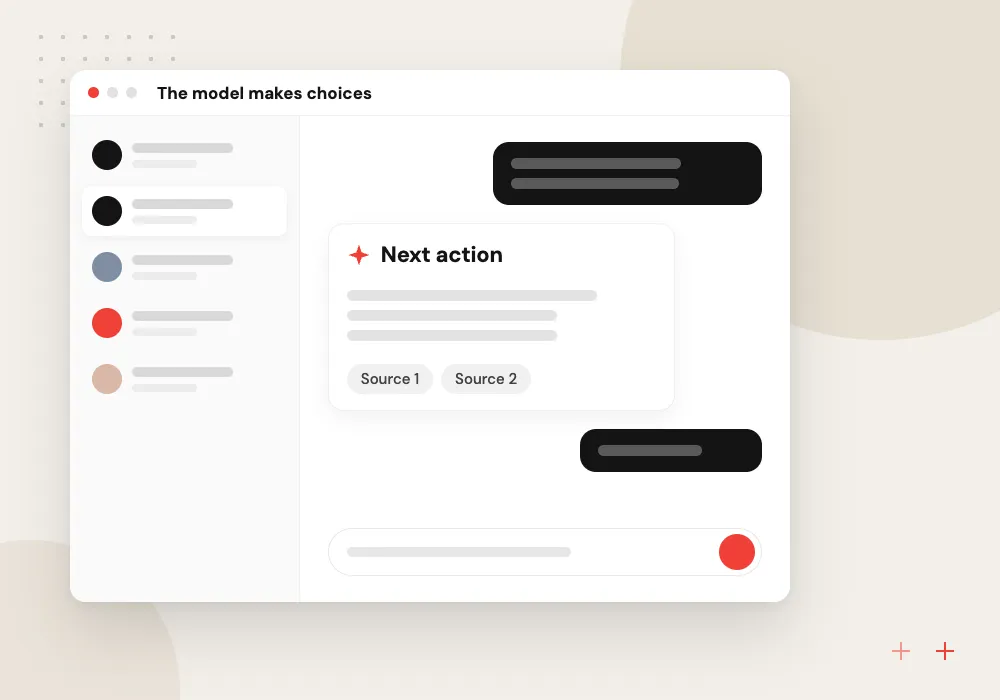
The model makes choices
A large language model reads the goal, its instructions and the results so far, then proposes the next action or writes the final reply.
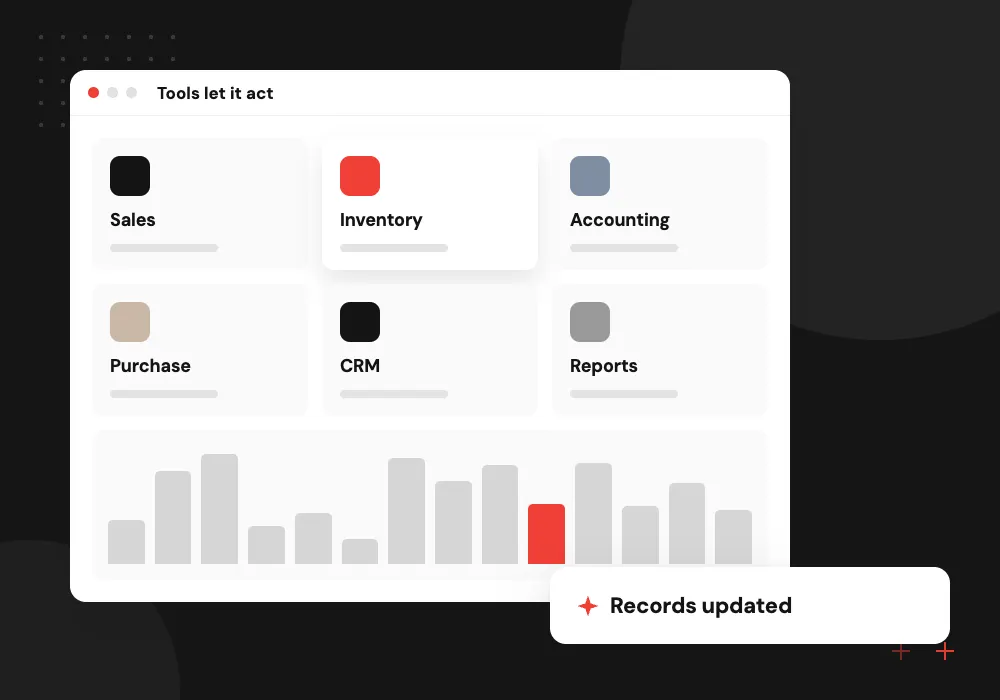
Tools let it act
Each tool is a named function, such as find a customer, create a ticket or send an email. Without tools, a model only writes text.
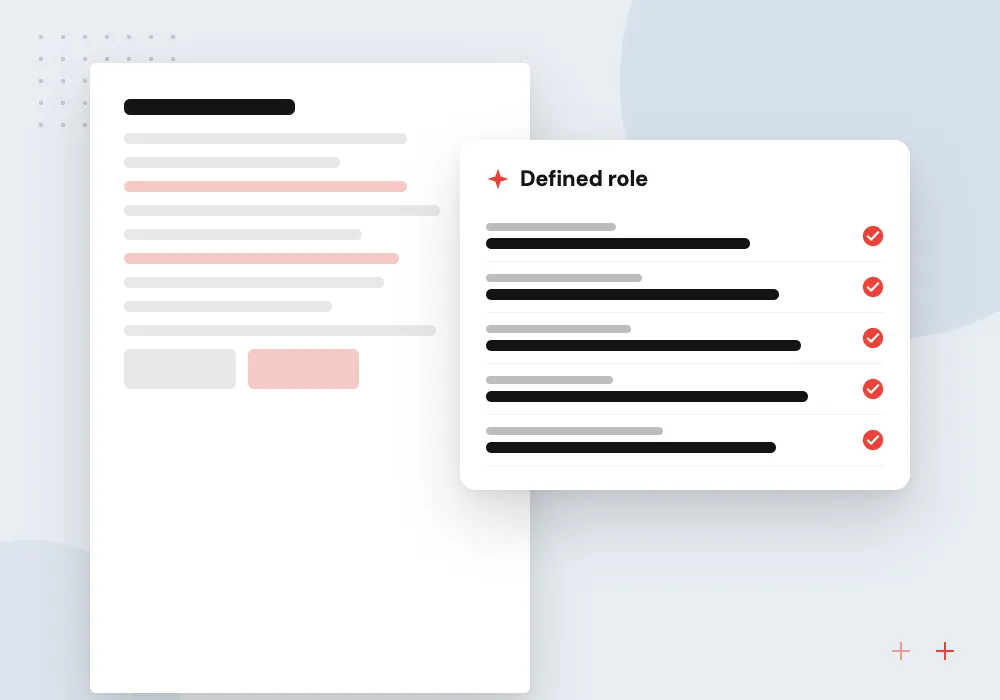
Instructions define the job
A written brief sets the agent’s role, allowed steps, tone with customers and the cases it must pass to staff.
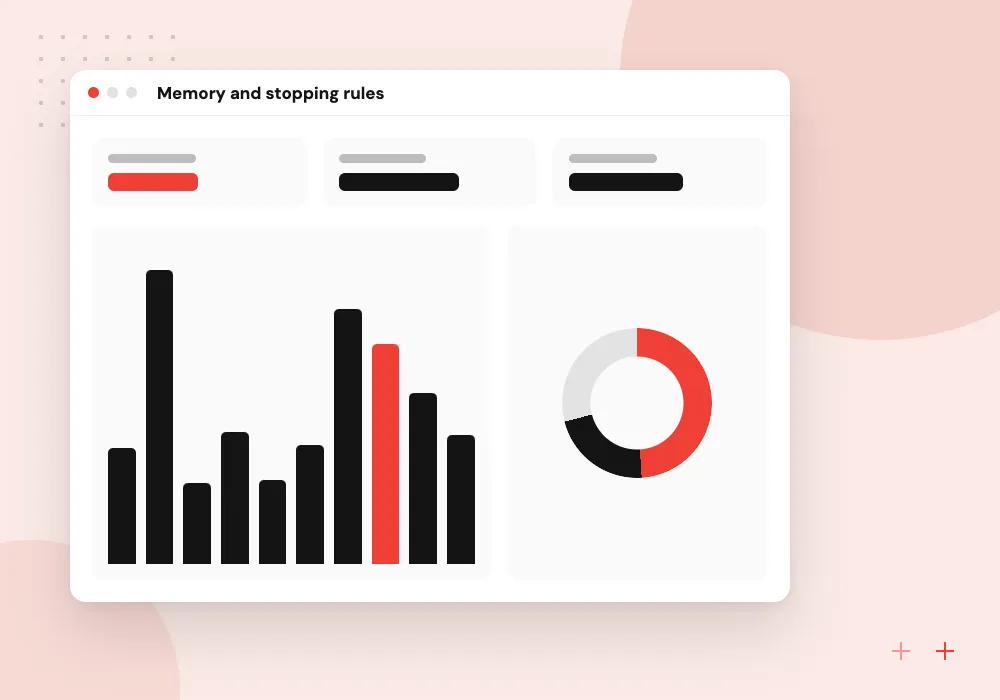
Memory and stopping rules
Memory holds the task so far. Stopping rules cap steps, time and spend, and name the actions that must wait for approval.
How AI agents work, step by step
Each run is a loop. The model reads the goal and context, then asks for a tool. Your software runs the call under the agent’s own login and returns what it found. The model then takes another step, answers or stops at a limit.
What we do
- Goal and instructions loaded
- Tool request from the model
- Call run by your code
- Result added to memory
- Stop on success or limit
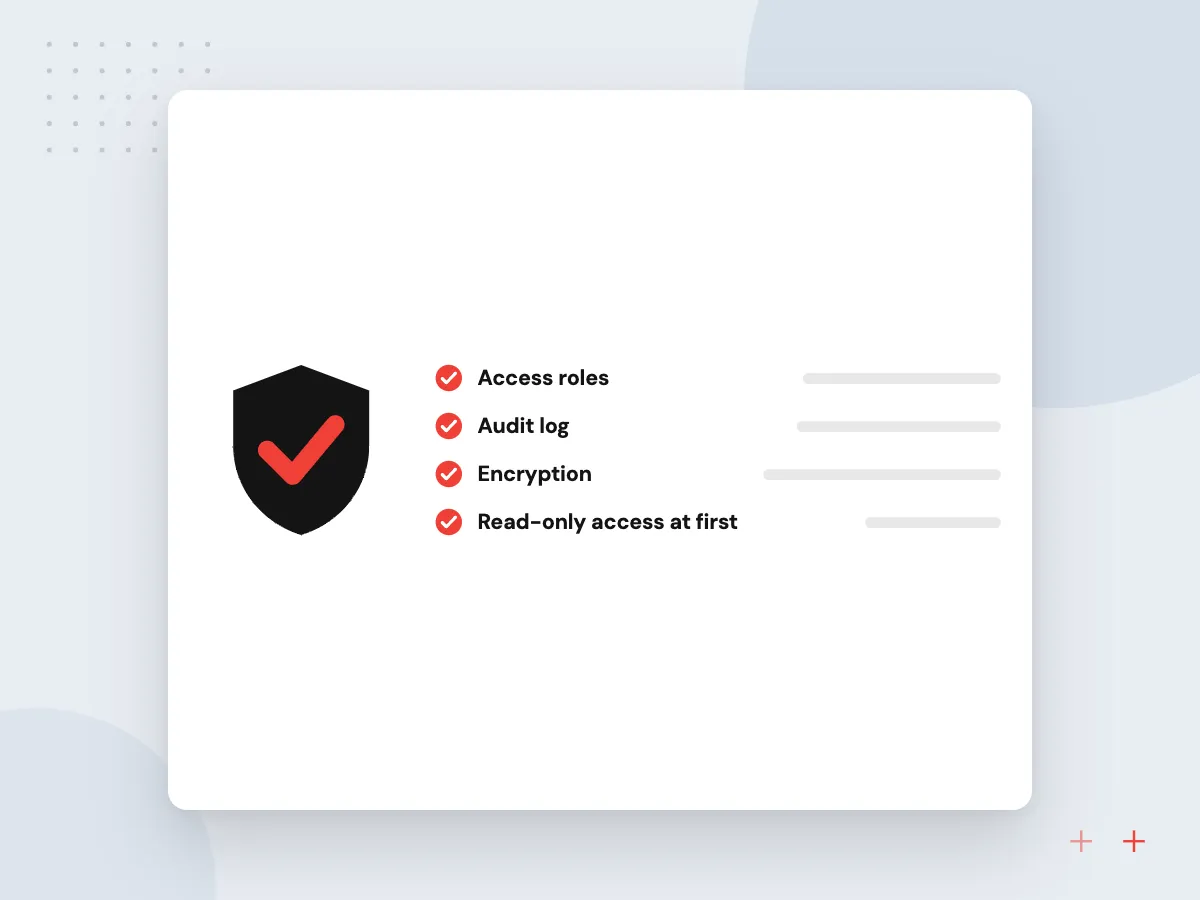
Risks to plan for before launch
An agent can misjudge a request, update the wrong record or loop without finishing. It may also obey text hidden in a document it reads, called prompt injection. NIST’s AI standards center names hijacking among the agent risks it asked industry about.
What we do
- Read-only access at first
- Approval before money moves
- Caps on steps and spend
- A separate login per agent

How we approach a project
Agent, chatbot or workflow. A chatbot is done once it replies. An agent is done once something changes in another system, so it needs its own login, tight permissions and more testing, which our AI agent vs chatbot comparison covers. A workflow may call the same model, but your code fixes the step order in advance, while an agent picks its own. Systems of one or more agents are often called agentic AI.
What agents do in a business. Common first agents sort a shared inbox, draft quotes from a price list or log call notes in the CRM, and the AI agent examples guide covers more. We build single-job agents through AI agent development and multi-agent processes through agentic AI development.
How we work
- Goal, tools and limits, written down
- The model asks, your code acts
- Staff sign off on risky actions
Our Process
-

Write the goal as an outcome
Say what should be true when the agent stops, such as a quote sent.
-

List tools and permissions
Name each system and action, marking which only read data and which change it.
-

Set approval and stop points
Decide which amounts, customers and messages always wait for a staff member.
-

Trial it on finished jobs
Run closed work through it and mark each step staff would have handled differently.
Where Aranv comes in
Agent only when it fits
We first check whether a fixed workflow, a chatbot or document search would do, and propose an agent only when the steps truly vary.
A tool list you can read
Before any code is written, you get a plain list of every tool the agent will hold and what each one may change.
Stopping rules set with you
We agree step, time and spend caps with the process owner, plus the cases that always go to staff.
Traces your managers can follow
Each run records what the agent read, which tools it called and what it changed, so results can be checked later.
Ready to act on this guide?
Ask our team in a 30-minute conversation.
Or see how we build it: Explore all services
AI agent questions, answered
-
What is the simplest AI agent definition?
Software that lets a language model choose and carry out steps toward a goal with the tools you allow, until the job is done or a limit stops it. The goal, tools and limits set it apart from a chat window.
-
How do AI agents work with the software we already use?
Through tools that call your systems’ APIs. Each tool has a name, a description and defined inputs. The model requests one, your application runs it under the agent’s own account and returns the result. MCP servers are one standard way to package tools.
-
What is the difference between an AI agent and an AI assistant?
The terms overlap. An assistant usually helps a person who approves each step, such as drafting a reply. An agent may take several steps alone within set limits. What a product does without your click matters more than its label.
-
Do AI agents learn from their mistakes on their own?
Not by default. The model does not retrain itself while the agent runs. An agent can keep notes in memory if designed to, but most improvement comes from people reviewing traces, fixing instructions and adding failed cases to the tests.
-
Can an AI agent run without human oversight?
It can, and NIST’s notice says agent systems may be deployed with little oversight. For business work we advise against starting that way: review every action at first, then relax review only where logs show reliable results.

Let’s talk about your next step
Contact Aranv to discuss your workflow, current tools, and goals. Meet with our team or send an inquiry.
Book a meeting with our team
Choose an available date and time for a 30-minute conversation about your project.
Tell us about your project
Share a few details so we can discuss a useful next step.
Prefer email? sales@aranv.com