


What to put in a software development RFP
Aranv’s short answer: a good software development RFP explains the problem, the users, the systems the software must connect to, your constraints and how you will choose. It then asks each vendor for an approach, a team, a phased plan and its open questions, rather than a quote against a fixed feature list.
Open with context: who you are, what the software must achieve and why now. Then describe users and roles, the main workflows, the systems involved and the volume of records. Mark each requirement must-have or nice-to-have. If the requirements are still unclear, a software discovery phase can produce them first, and our guide to AI project requirements covers features that depend on a model.
Non-functional terms belong in the RFP too: hosting location, single sign-on, data retention, uptime expectations, accessibility and security. Naming standards keeps answers comparable; you might cite WCAG 2.2 level AA for accessibility and a level of the OWASP ASVS for application security. Ask who owns the code, designs and data at the end, and see our security and IP page for the terms we recommend.
From an internal need to a vendor shortlist
An RFP vendors can answer well
- 01 Agree the problem internally Sponsor, users and IT sign off one problem statement.
- 02 Describe, do not design Share users, systems, data and limits; leave the solution to bidders.
- 03 Ask comparable questions One response format lets proposals be scored side by side.
- 04 Score, meet, then decide Shortlist on written scores, then hold working sessions with finalists.
A short, clear RFP usually draws better proposals than a long feature list.
Four things a strong software vendor RFP gets right
These four parts do most of the work in any RFP template for software.
A clear problem statement
Explain what is broken today, who it affects and what a good result looks like, with real figures from your own operation where you have them.
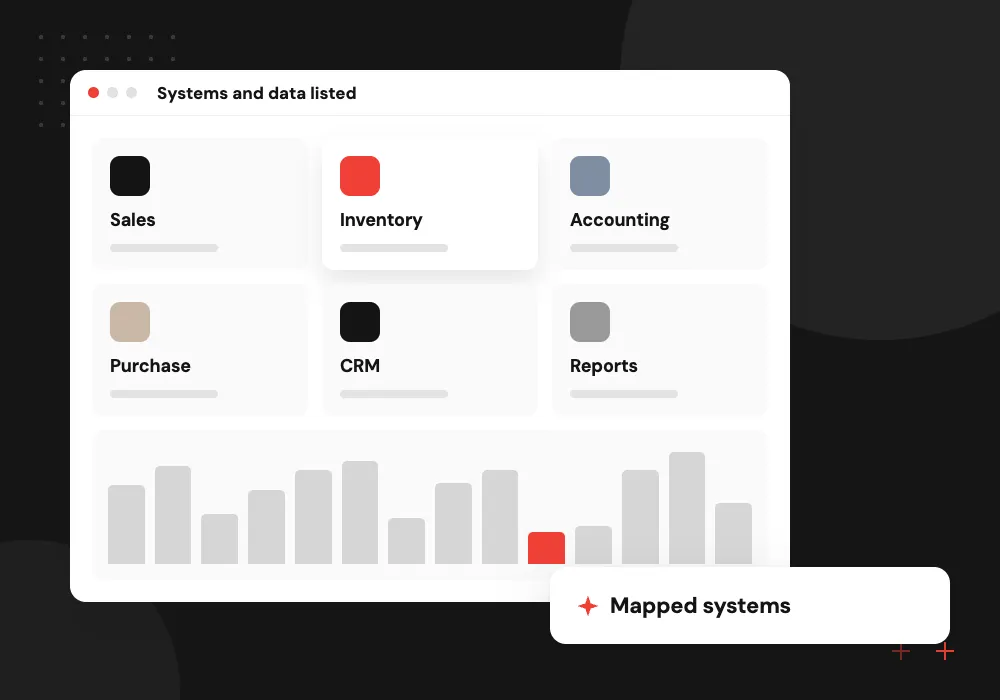
Systems and data listed
Name the CRM, ERP, accounting and sign-in tools the software must connect to, how much data moves and who owns each system.
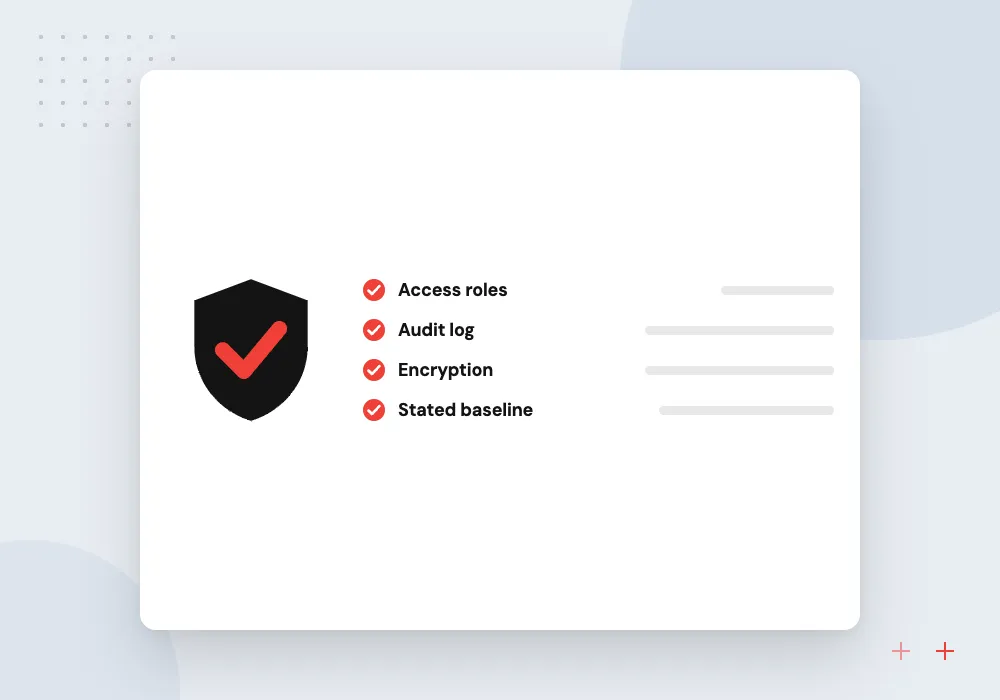
Security and accessibility terms
State hosting, access, data and accessibility rules up front, citing named standards so every vendor plans for the same requirements.
AI features described plainly
If you want AI, describe the task, sample inputs, the review step and how you will judge accuracy, and ask vendors how they test model output.
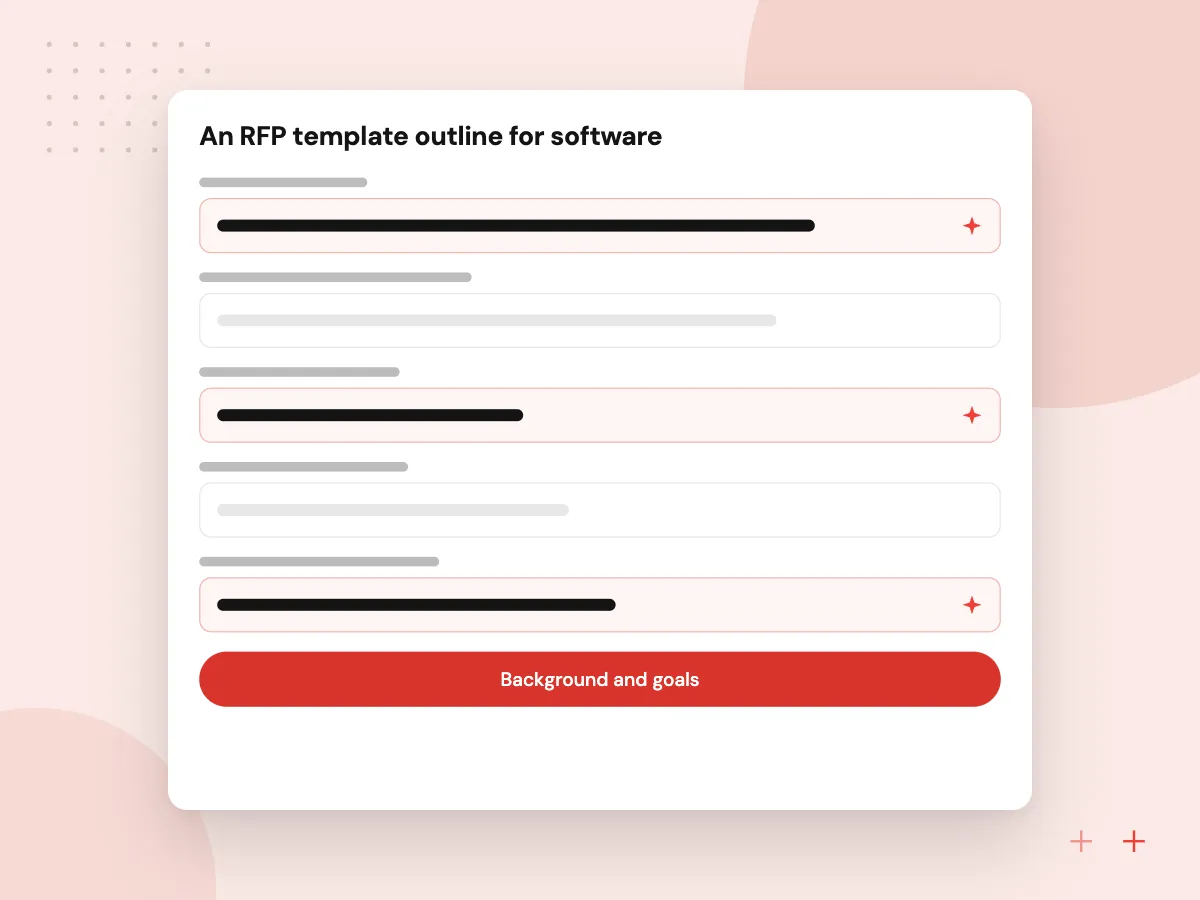
An RFP template outline for software
Most good RFPs follow the same order: context, then needs, then terms, then how you will decide. Keep requirements in a numbered table so vendors can answer line by line, and put sample documents, screenshots and data volumes in appendices.
What we do
- Background and goals
- Users, roles and workflows
- Systems, integrations and data
- Security, hosting and accessibility
- Ownership, support and timeline
- Submission format and scoring
Scoring proposals side by side
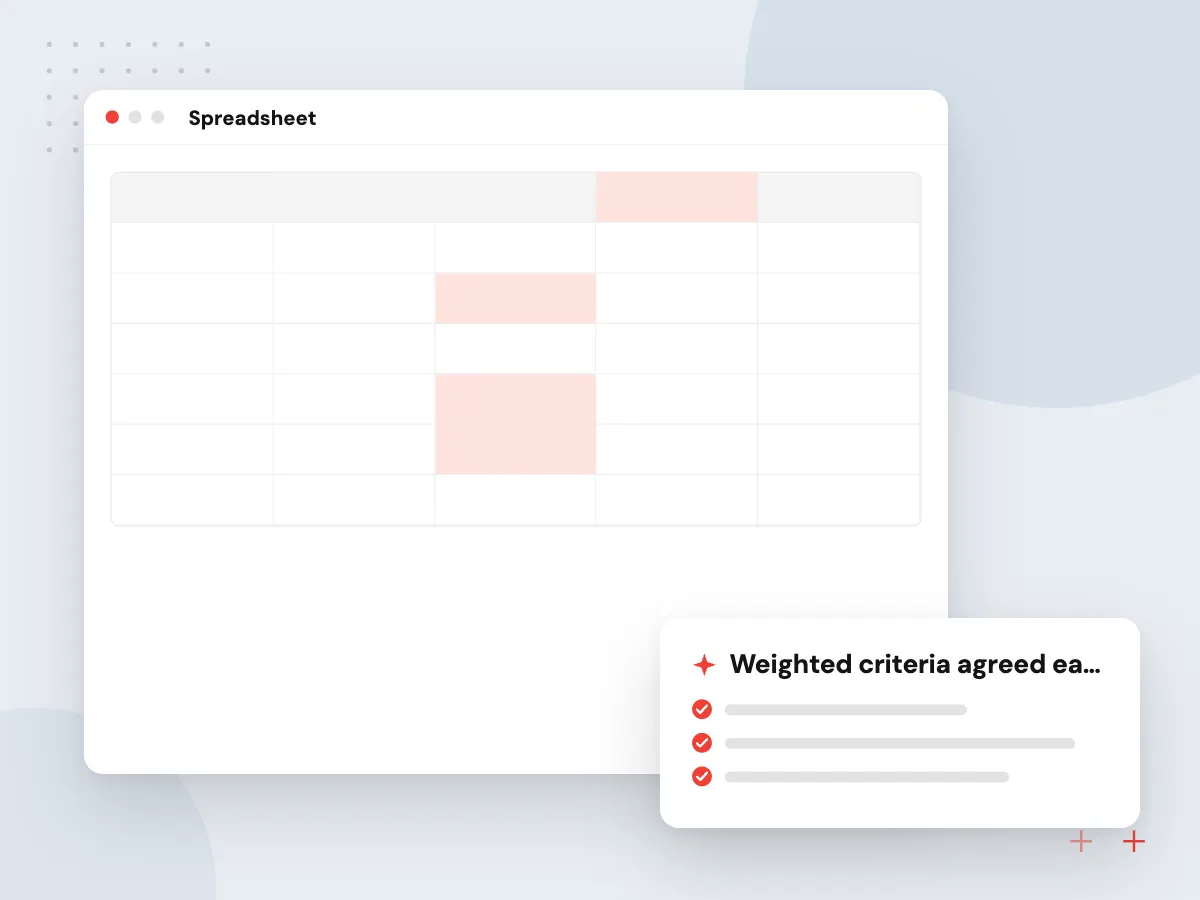
Fix the criteria and weights before any proposal arrives, and have two people score each one separately before comparing notes. A working session with finalists, built around one of your real workflows, shows more about a team than any written answer.
What we do
- Weighted criteria agreed early
- Independent scoring by two reviewers
- Clarifying questions in writing
- Working session with finalists
- Reference calls with past clients

How we approach a project
Be open about budget and timing. A budget range and a target launch window let vendors propose a realistic first release instead of guessing. Ask how each would charge for the work and why; our fixed price vs time and materials guide compares the two common models.
Finally, say how you will choose: criteria, weights, timetable, how questions are handled and who decides. Give every bidder the same answers in writing. For the build itself, see our custom software development page, and more buyer topics are in the software and AI guides.
How we work
- Problems over feature lists
- Same questions for every vendor
- Scoring agreed before reading
Our Process
-

Gather the people affected
Interview the staff who will use the software and its IT owner, and record their problems in their own words.
-

Draft and test the document
Write context, requirements, constraints, ownership terms and scoring, then ask one outsider to read it for gaps.
-

Run a fair question period
Send it to a short list of vendors, take written questions by a set date and share every answer with all bidders.
-

Score, test and negotiate
Score proposals against your weights, run a working session with two or three finalists and check references before signing.
How Aranv helps with your RFP
Questions before the proposal
We use the question period to learn about your users, systems and data, so our answer rests on your situation rather than assumptions.
Phased answers you can compare
Our proposals separate discovery, first release and later phases, each with scope and assumptions written out, so you can set them beside other bids.
AI scope that can be tested
Where an RFP asks for AI, we describe the evaluation set, the review step and the monitoring we would run, not only the model.
Ownership stated up front
Code, design and data ownership is set out in the proposal itself, in line with the terms on our security and IP page.
Ready to act on this guide?
Ask our team in a 30-minute conversation.
Or see how we build it: Explore all services
Software RFP questions
-
How long should a software development RFP be?
Long enough to describe the problem, users, systems, constraints and scoring clearly, which for most small and midsize projects means a handful of pages plus appendices. Missing integration details cause more trouble than a short document does.
-
Should we include our budget in an RFP?
Usually yes, as a range or a ceiling. Without it vendors guess, and proposals swing between a minimal build and a full platform, which makes them hard to compare. A stated range lets each bidder show what it would deliver first.
-
How many vendors should receive our RFP?
A short list of three to six qualified vendors works for most projects. Sending it widely means more reading and thinner answers, since firms invest less in a request they see as a long shot. Pre-qualify on relevant work and team first.
-
What should we ask vendors about AI features?
Ask how they would test accuracy on your own documents, where data is sent and stored, which model providers they use, how staff review outputs and what monitoring runs after launch. Sample test plans are easier to judge than promises.
-
Should we choose the lowest bid?
Not by default. Check what each bid includes: discovery, testing, documentation, training and support after launch. A lower total often leaves some of those out. Weigh team, approach and references alongside cost, using weights agreed before you open proposals.

Let’s talk about your next step
Contact Aranv to discuss your workflow, current tools, and goals. Meet with our team or send an inquiry.
Book a meeting with our team
Choose an available date and time for a 30-minute conversation about your project.
Tell us about your project
Share a few details so we can discuss a useful next step.
Prefer email? sales@aranv.com