


Company AI policy: sections and wording
Aranv’s view of an AI acceptable use policy: a short document that lists the AI tools staff may use, the data that must never go into them, when a person must check AI output, when customers are told AI was involved, and who approves new tools. One or two pages is usually enough for a smaller company.
Purpose and scope. Say who the policy covers, contractors included, and that it applies to AI features inside existing software as well as standalone chat tools. A sentence on why the company uses AI helps staff read the rules as guidance rather than a ban.
Data and security. Map your data classes to tools. Public marketing copy may go into any approved tool; customer, employee and financial records only into tools whose business terms rule out training on your data and set retention limits. NIST’s Generative AI Profile lists risks worth naming, and teams building their own assistants should also work through the AI agent security checklist.
Writing a company AI policy
Four decisions behind the policy
- 01 List approved tools Name the AI products staff may use and the account type for each.
- 02 Classify the data Say which information may go into which tool, and what never may.
- 03 Set review rules Define which AI outputs a person must check before they are used.
- 04 Assign ownership Name who approves new tools, answers questions and updates the policy.
Staff follow rules they can remember, so keep the policy short and use your own tool names.
What a generative AI policy should cover
Four sections do most of the work. Each should name your company’s real tools and data types instead of generic wording.
Approved tools and accounts
Which assistants, plugins and built-in features are allowed, on business accounts only, and how staff request a new one.
Data rules
Customer records, health or financial details, passwords and unreleased plans stay out of any tool without approved data terms.
Human review of output
Code, contracts, figures and anything sent to customers is checked by a named person before it is used.
Disclosure and records
When to tell customers AI helped, how to label AI-made images, and which prompts and outputs must be kept on file.
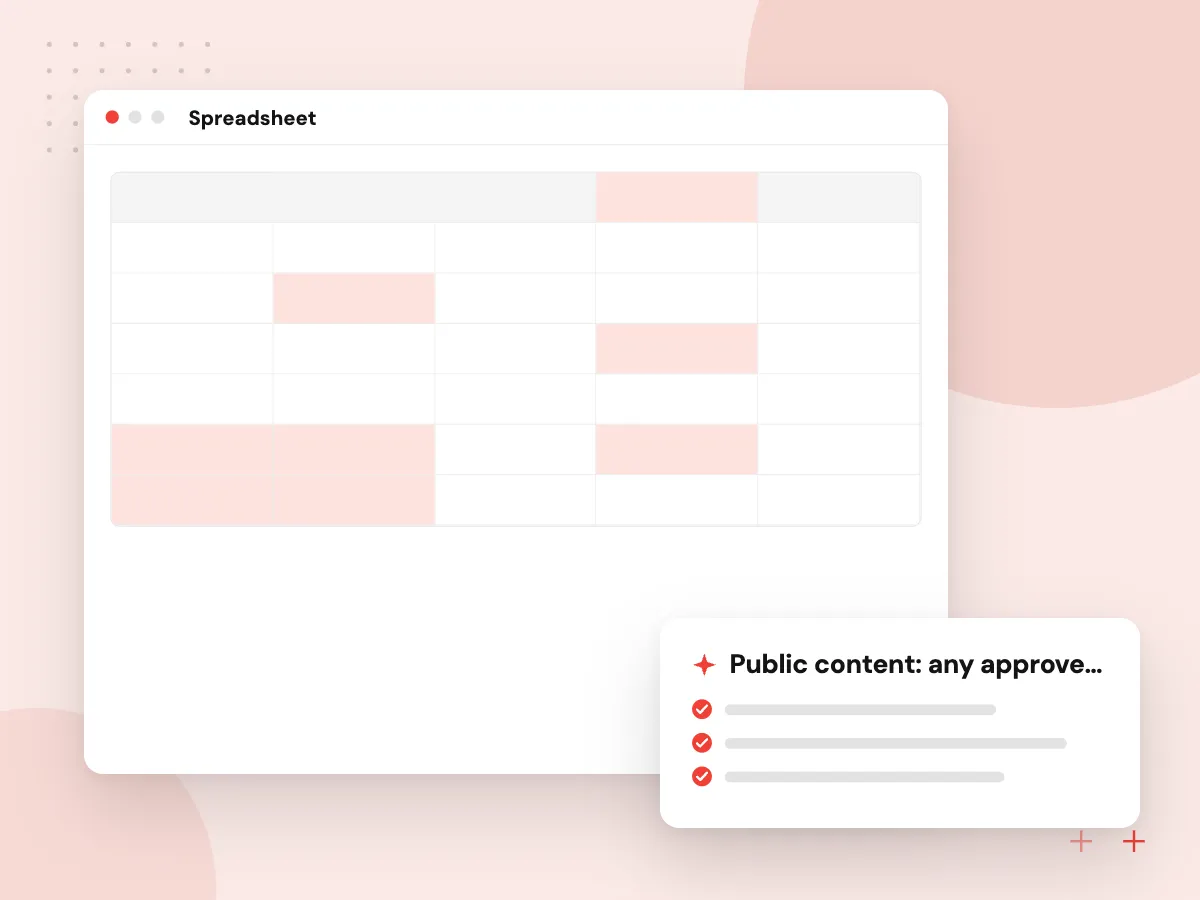
A data table staff can apply
The most useful part of an AI policy is a table that maps each type of information to the tools allowed to receive it. Staff check one row instead of interpreting a paragraph. Build it from your real systems and update it when tools or terms change.
What we do
- Public content: any approved tool
- Internal documents: business accounts only
- Customer and employee records: vetted tools
- Credentials and keys: never
- Owner and review date per row
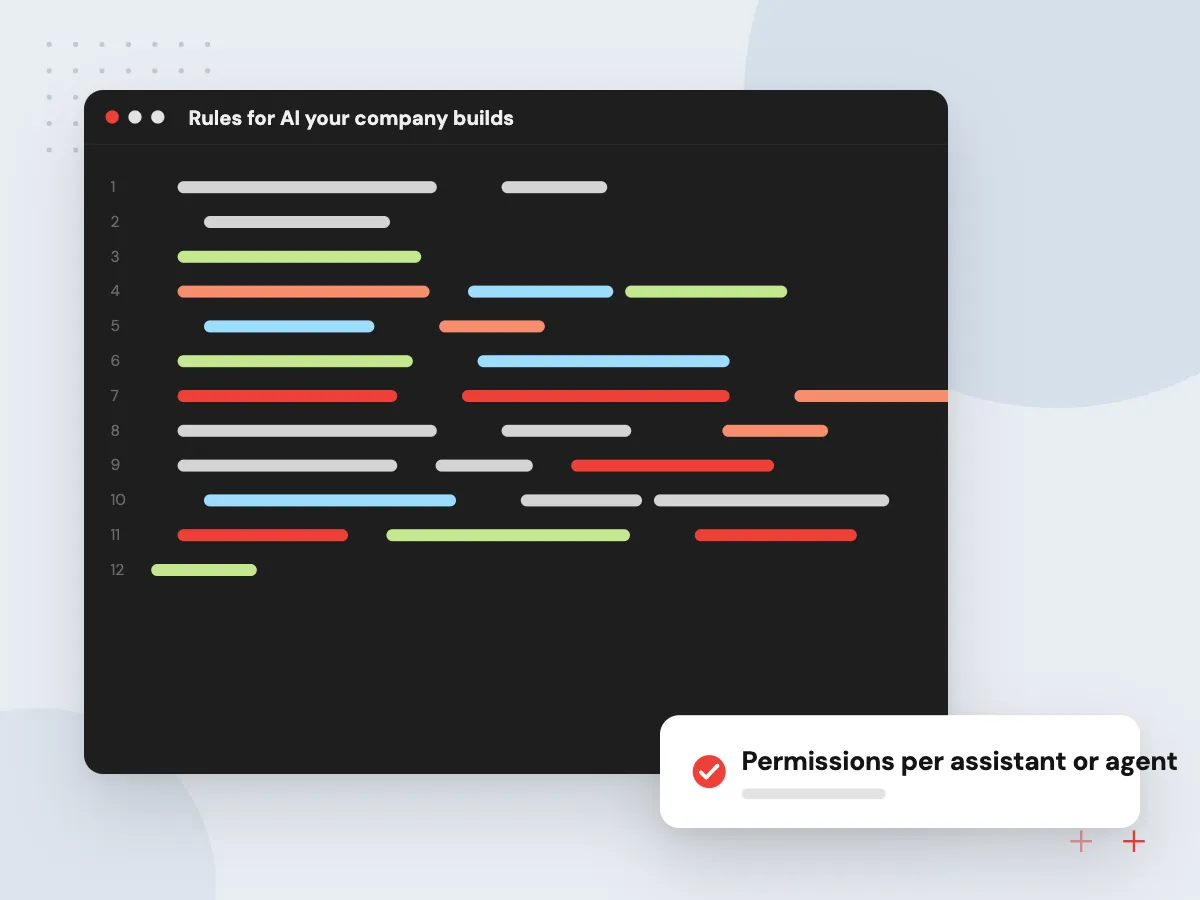
Rules for AI your company builds
Staff using a chat tool is one case. An assistant or agent your company builds and connects to its own systems needs extra rules: what it may read and change, which actions need approval, how its logs are kept and who answers for its output.
What we do
- Permissions per assistant or agent
- Approval for actions that change records
- Log retention and access
- Named business owner
- Testing before each change

How we approach a project
Accountability. The person who uses AI output owns it. Name the role that approves tools, the place to report a mistake or a data leak, and the next review date. The policy works best as one part of wider AI governance, next to a register of AI use cases.
Rolling it out. Brief staff with examples from their own jobs, publish the approved tools list where people will look for it, and revisit both when vendors change their terms. The AI implementation roadmap shows where the policy fits, and if you would like us to read your draft, a 30-minute conversation can be requested through the Contact page.
How we work
- Short enough that staff read it
- Specific tools, specific data
- Reviewed on a fixed schedule
Our Process
-

Find current AI use
Ask each team which AI tools they already use and for what, without blame, so the policy starts from reality.
-

Draft the core rules
Write the approved tools, data classes, review rules and disclosure points on one or two pages.
-

Review with key people
Have IT, HR, a manager from each team and your legal counsel check the draft.
-

Train, publish, revisit
Walk staff through real examples, publish the policy and put the next review date in the calendar.
How Aranv helps with AI policy
Rules based on your tools
We start from the tools and data your staff already use, so the policy names real products and real document types instead of categories.
Policy and build aligned
When we build an assistant or agent for you, its permissions, logs and approval steps follow the policy you have set.
Plain language for staff
We keep rules short enough to remember and add examples from each team’s daily work, which makes them easier to follow.
Counsel stays involved
We help with the practical and technical content and recommend that your legal counsel reviews the final wording before it is published.
Ready to act on this guide?
Ask our team in a 30-minute conversation.
Or see how we build it: Explore all services
AI acceptable use policy FAQs
-
What should an AI acceptable use policy include?
Approved tools and account types, rules on which data may go into each, which outputs a person must review, when to disclose AI use, who approves new tools, how to report problems, and when the policy will next be reviewed.
-
Do small businesses need a company AI policy?
Yes, if staff use any AI tools, including features inside software you already pay for. Even one page prevents the most common problem: confidential data pasted into a tool whose terms nobody checked.
-
Should we ban generative AI tools at work?
A blanket ban tends to push use onto personal accounts you cannot see. Approving a small set of business tools with clear data rules usually gives you more control over what happens to company information.
-
How often should an AI policy be updated?
Review it on a fixed schedule, for example twice a year, and also whenever you adopt a new tool, a vendor changes its data terms, or a new law starts to apply to your business.
-
Is an AI policy a legal requirement?
This page is general information, not legal advice. Some laws and contracts set rules on automated decisions, privacy or disclosure that your policy should reflect, so ask counsel to review it for your sector and the states you operate in.

Let’s talk about your next step
Contact Aranv to discuss your workflow, current tools, and goals. Meet with our team or send an inquiry.
Book a meeting with our team
Choose an available date and time for a 30-minute conversation about your project.
Tell us about your project
Share a few details so we can discuss a useful next step.
Prefer email? sales@aranv.com