


How RAG works in a business setting
Aranv’s short answer to what is RAG: retrieval-augmented generation is a way of producing AI answers in which the system first searches an approved set of your documents, then gives the most relevant passages to a language model, which writes a reply based on them and can cite the source.
The name was coined in a 2020 research paper that paired a text generation model with a searchable index of Wikipedia. Business systems apply the same idea to your own material: help articles, contracts, product sheets, policies and past tickets. Our RAG development services cover the full pipeline, from document intake to the answer screen.
Most of the effort sits before the model. Documents need cleaning, sensible splitting and metadata such as owner, date and department. Search usually combines meaning-based matching through embeddings, stored in a vector database, with plain keyword search for part numbers and names. A reranking step then picks the best few passages.
How RAG works, step by step
Search first, then answer
- 01 Prepare the documents Files are cleaned, split into passages and indexed by meaning and by keywords.
- 02 Search on each question The question is matched against the index, filtered by what the user may see.
- 03 Build the prompt The best passages are added to the instructions sent to the language model.
- 04 Answer with sources The model replies from those passages and links each claim to its document.
When the passages do not hold the answer, a good system says so instead of guessing.
RAG explained in four points
These points cover what RAG is, why teams use it and where it needs care.
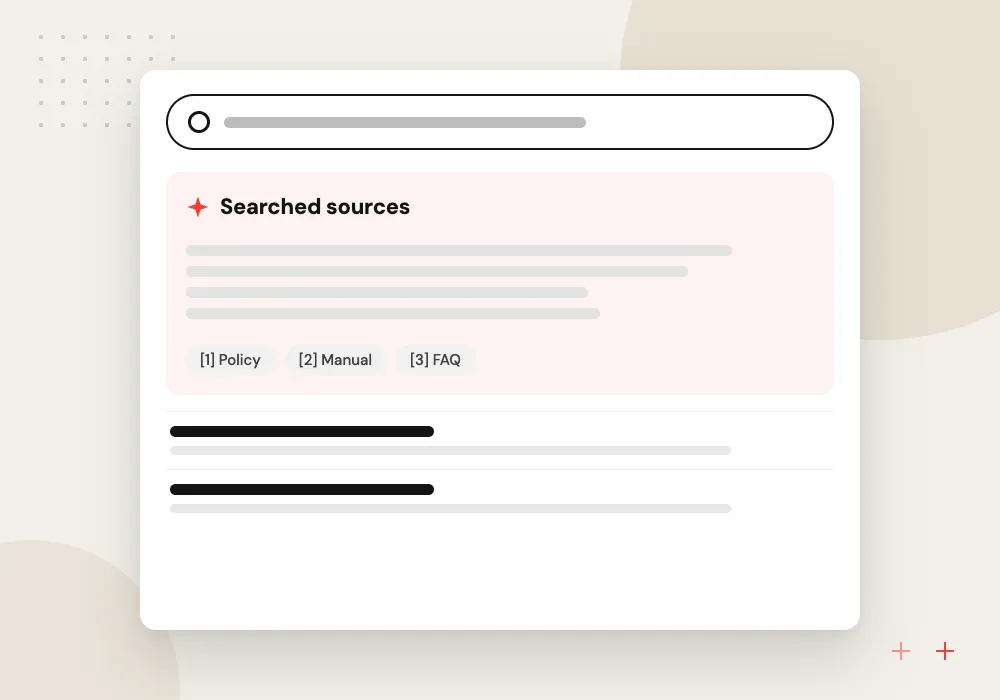
It looks things up first
The model does not rely only on what it learned in training. Each answer starts with a search of documents you chose and keep current.
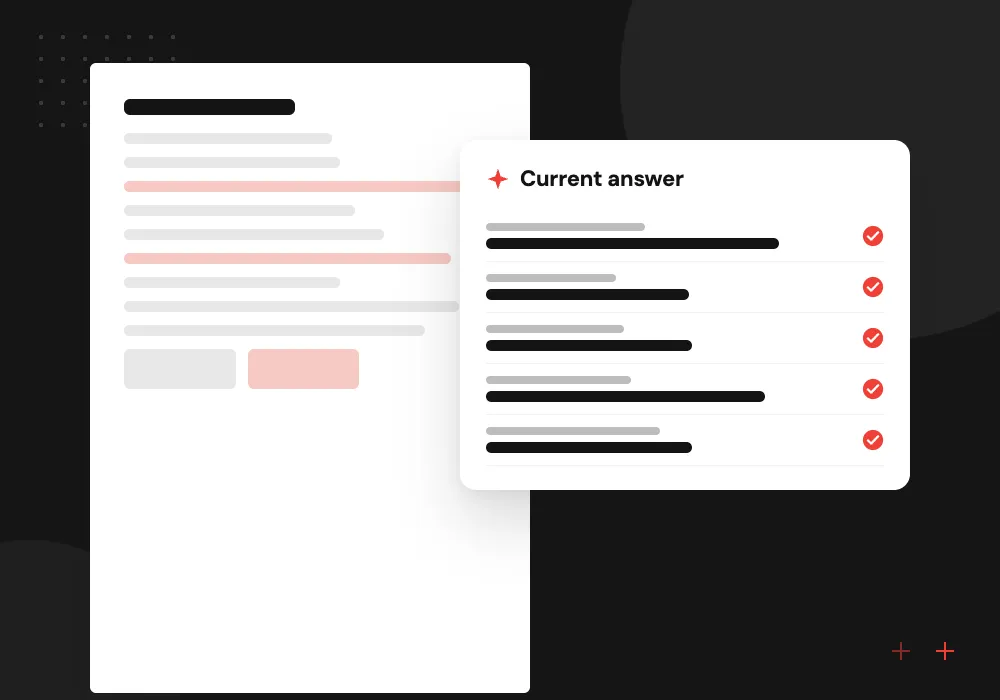
Updates without retraining
Change a policy or a product sheet, reindex the file and the next answer reflects it, with no model training involved.
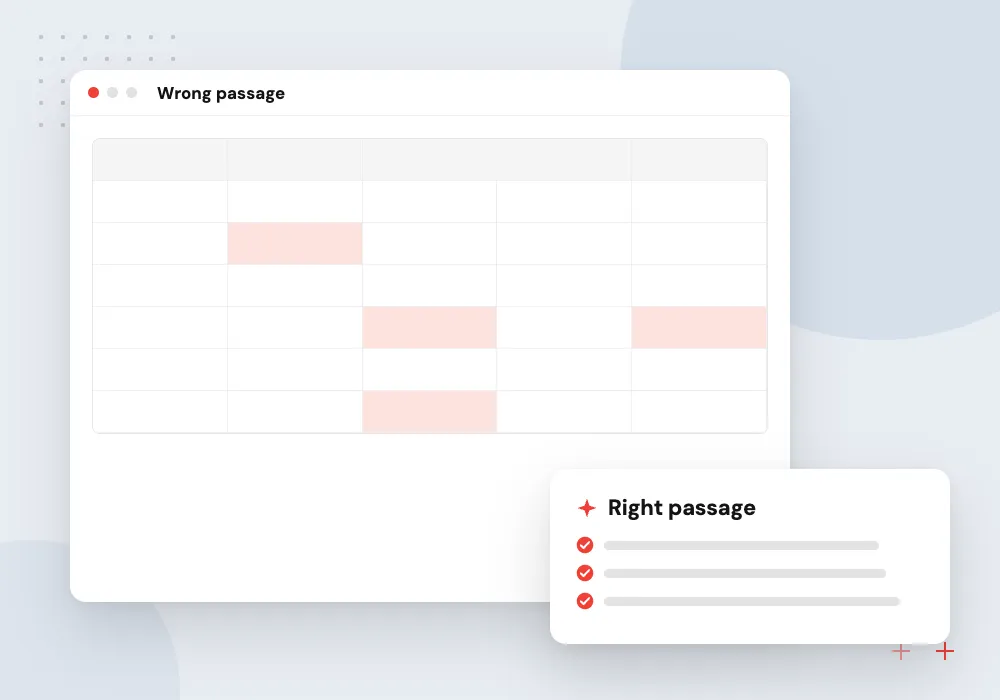
Search quality sets accuracy
If search returns the wrong passage, the model answers from the wrong text. Most accuracy work in a RAG project happens in the search step.
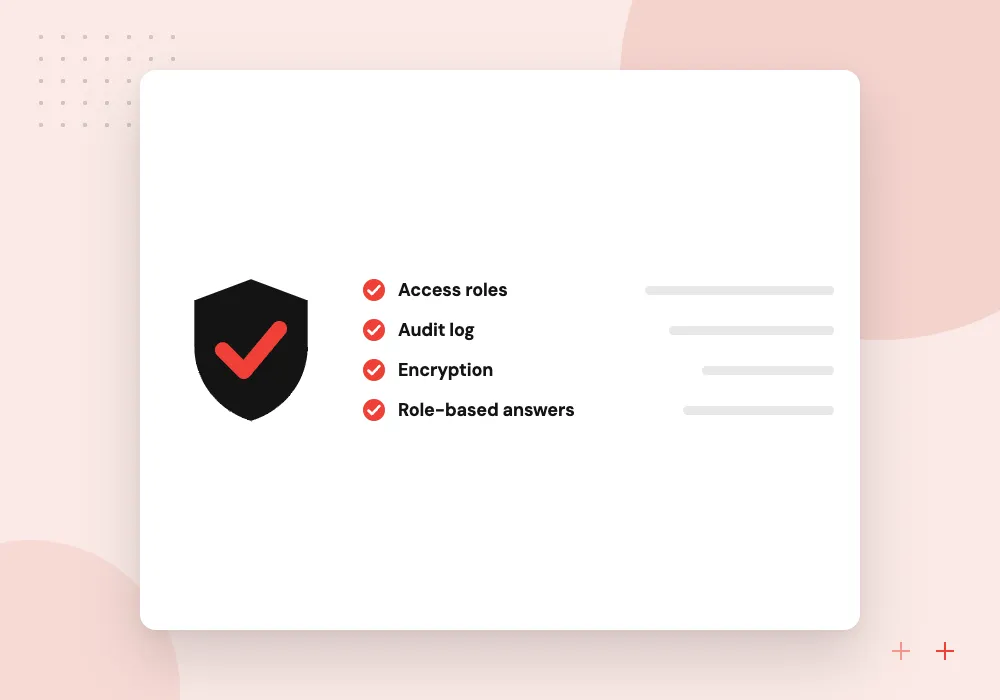
Permissions travel with it
Results can be filtered by the user’s role, so a sales rep and an HR manager receive answers drawn from different document sets.
The search layer behind good answers
Answer quality depends on what search returns. We combine meaning-based and keyword search, add filters for date, department and access, and rerank the top results. Headings and document titles stay attached to each passage, so the model knows where a sentence came from.
What we do
- Hybrid semantic and keyword search
- Metadata and access filters
- Reranking of top passages
- Headings kept with each passage
- Index refresh when files change
Answers people can check
A RAG answer should show its working. Each reply links to the passages it used, says when the documents do not cover the question and offers a route to a person. Questions with no good answer show which documents your team should write or update next.
What we do
- Source links on every answer
- Clear reply when nothing is found
- Handoff to a named team
- Report of unanswered questions
- Feedback buttons for staff

How we approach a project
RAG sits inside many products. An internal AI knowledge base answers staff from the handbook, a support assistant answers customers from the help center, and a chatbot can quote the exact policy line. If you are weighing it against training a model, read RAG vs fine-tuning.
Quality is measured, not assumed. We build a set of real questions with known answers and check two things: whether search found the right passage, and whether the answer stayed true to it. LLM evaluation services rerun that set whenever documents, prompts or the model change.
How we work
- Answers grounded in your documents
- Sources shown with every reply
- Access rules applied at search time
Our Process
-

Pick the document set
Choose one collection with a clear owner, such as the employee handbook or the product manuals.
-

Collect real questions
Gather questions people actually ask, each with the right answer and the document that holds it.
-

Build and measure search
Index the documents and check how often search returns the passage you expected.
-

Add the answer layer
Connect the model, show sources with each answer and review wrong answers every week.
How Aranv builds RAG systems
Documents organized first
We help your team pick, clean and label the source documents before indexing, because messy folders produce messy answers.
Evaluation from day one
A test set of real questions with known answers is built before launch and rerun after every change to search, prompts or model.
Access rules respected
Search results are filtered with the same permissions your staff already have in the systems where the documents live.
Hosting that suits your data
The index and model can run in your cloud account or with a provider whose data terms your team has approved.
Ready to act on this guide?
Ask our team in a 30-minute conversation.
Or see how we build it: Explore all services
RAG questions we hear most
-
How is RAG different from a normal chatbot?
A basic chatbot answers from what its model learned in training or from a fixed script. A RAG system searches your documents on every question and answers from what it finds, so replies can include your own details and a link to the source.
-
Does RAG stop AI from making things up?
It reduces the problem but does not remove it. Good RAG systems tell the model to answer only from the passages provided, show sources for checking and say they do not know when search finds nothing useful. Regular testing shows how often answers still drift.
-
What documents work well with RAG?
Text with clear structure works best: policies, manuals, help articles, contracts, specifications and product data. Scanned files need OCR first, and spreadsheets often need special handling so numbers keep their headings. Remove outdated and duplicate files before indexing.
-
Do we need a vector database for RAG?
Usually, though it need not be a separate product. Many teams use vector search inside a database they already run, such as PostgreSQL with a vector extension. Document volume, filtering needs and what your team already maintains decide the choice.
-
Is our data safe in a RAG system?
That depends on where the index and model run and on the provider’s data terms. Documents can stay in your own cloud account, with only the selected passages sent to the model for each question. Access filters keep users from receiving content they could not open themselves.

Let’s talk about your next step
Contact Aranv to discuss your workflow, current tools, and goals. Meet with our team or send an inquiry.
Book a meeting with our team
Choose an available date and time for a 30-minute conversation about your project.
Tell us about your project
Share a few details so we can discuss a useful next step.
Prefer email? sales@aranv.com