


What vector database development includes
Aranv provides vector database development for small and mid-market US companies building AI search, RAG assistants and recommendations. We choose between pgvector in your Postgres and managed services such as Pinecone, design embeddings, metadata and indexes, load your data and tune queries for accuracy, speed and cost.
For many businesses the first choice is pgvector, an extension that adds vector columns and similarity search to Postgres. Vectors sit next to your business data, so filters, joins and backups work as before. Our PostgreSQL development team handles the database side, including HNSW or IVFFlat indexes and query plans.
A managed service makes sense at larger scale or when you would rather not run the database. In a Pinecone integration we design indexes and namespaces, often one namespace per customer in multi-tenant apps, plus metadata filters and hosted embedding or reranking where it helps. We also work with stores your platform already includes, such as Azure AI Search, OpenSearch or MongoDB.
What happens to one document in a vector store
Text in, nearest matches out
- 01 Split and clean the text Documents are cut into passages that each make sense on their own.
- 02 Turn passages into vectors An embedding model converts each passage into a long list of numbers.
- 03 Store vectors with metadata Each vector is saved beside fields such as customer, date and access group.
- 04 Query by meaning A question is embedded, filtered and matched against the closest stored passages.
Changing the embedding model means re-embedding everything, so we choose it with care.
Vector search we build with pgvector and Pinecone
A vector store sits behind most AI search features, even when users never see it.
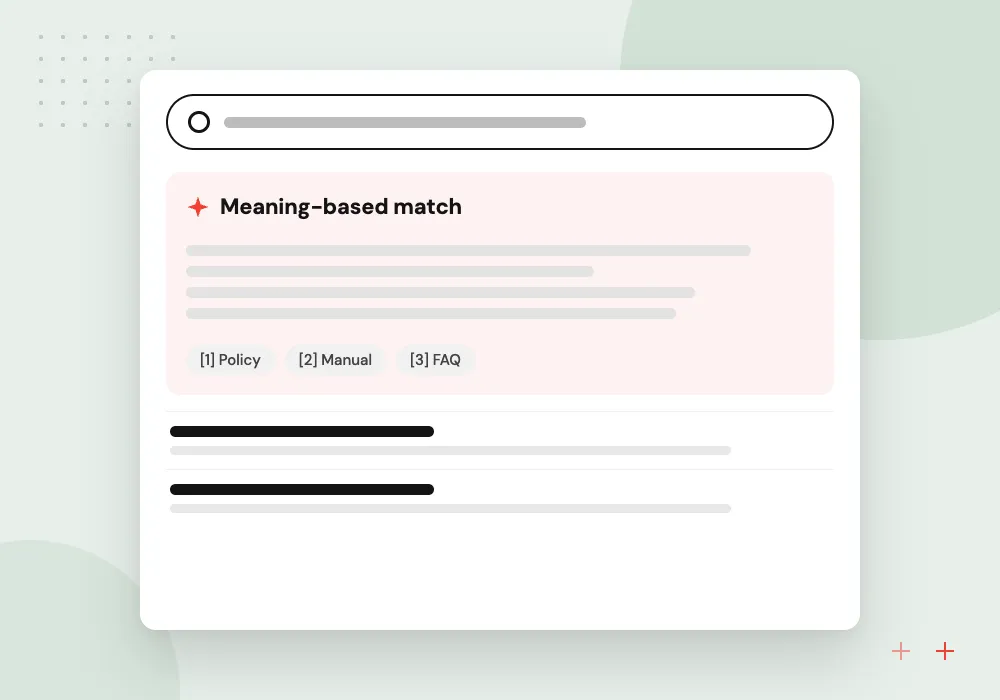
Help content found by meaning
Customers describe a problem in their own words and land on the right help article, even when it uses different terms.
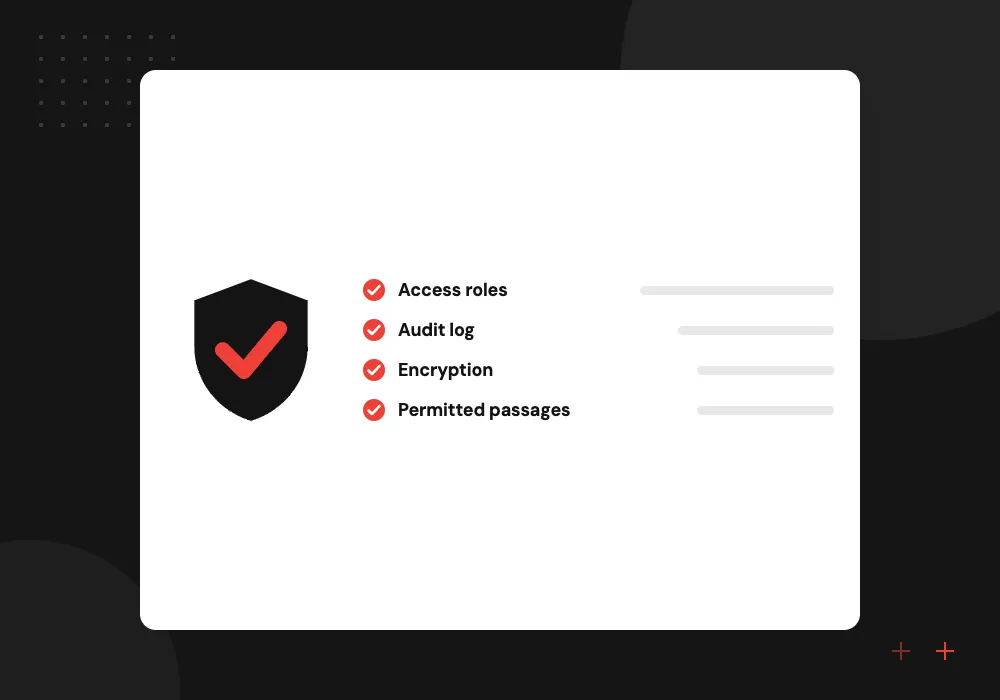
Retrieval for internal documents
An assistant fetches the passages that answer a staff question, filtered to documents that person is allowed to see.
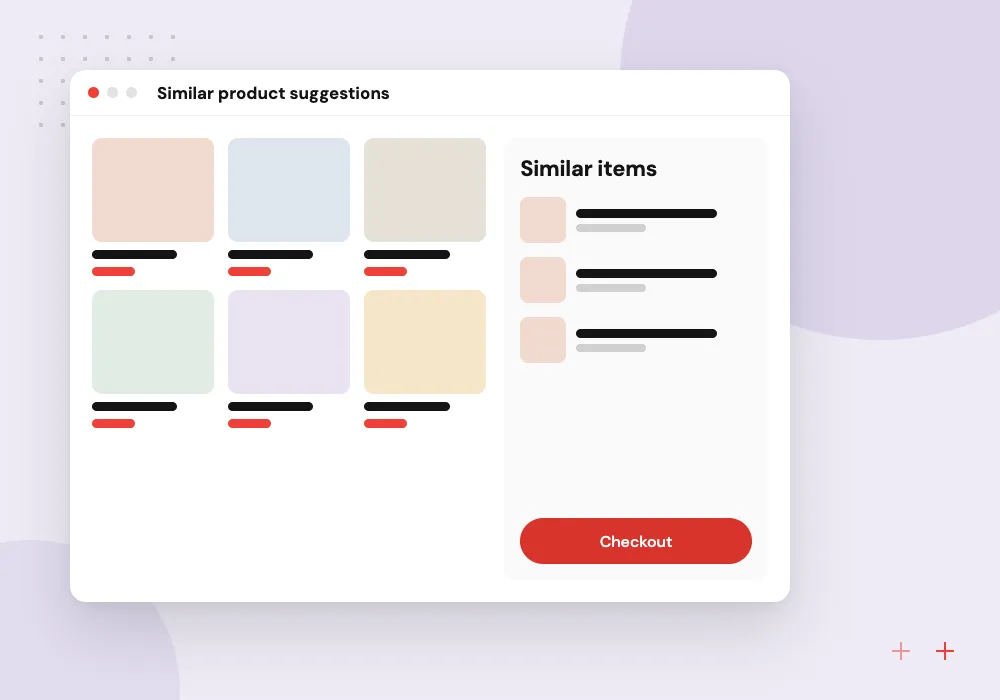
Similar product suggestions
Vectors built from descriptions and images drive ‘more like this’ lists and substitutes when an item is out of stock.
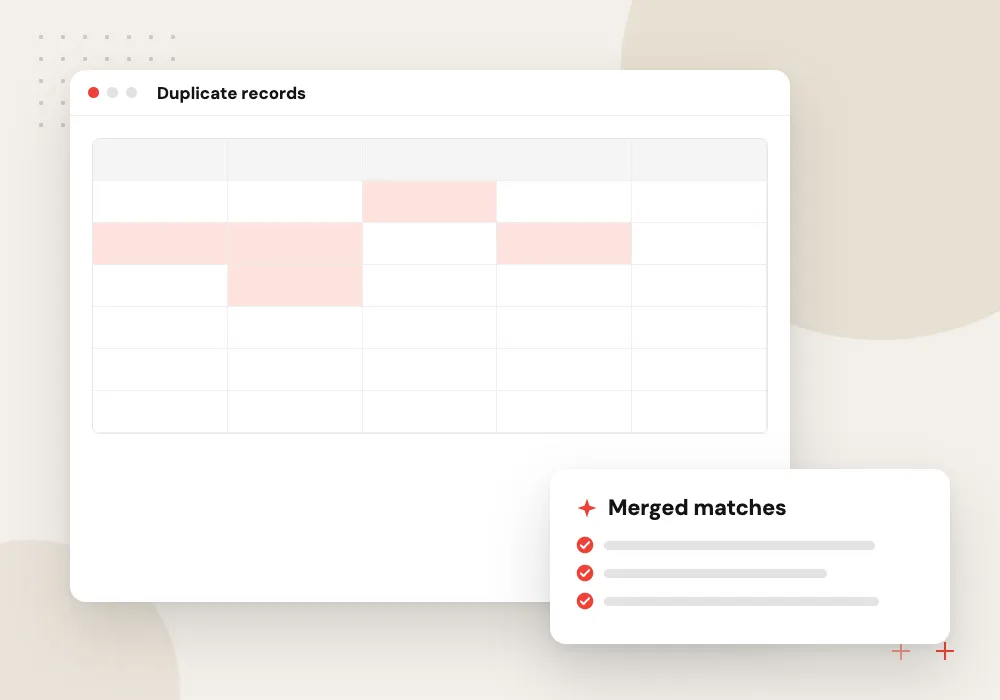
Duplicate and match finding
Support tickets, supplier records or customer accounts are compared by meaning to find duplicates and near matches for a person to merge.
pgvector inside your Postgres
Keeping vectors in Postgres means one backup, one access model and SQL joins between search results and business tables. We add the extension, design tables and indexes, tune index settings for your data size and check query plans so filtered searches stay fast.
What we do
- Schema and index design
- HNSW or IVFFlat settings
- Filtered query tuning
- Row-level security for tenants
- Backup and restore checks
Recall testing and index upkeep
A vector index can look fine and still miss the right answer. We keep a set of questions with known correct passages, measure how often those passages come back near the top, and rerun the set after data, model or setting changes.
What we do
- Questions with known answers
- Top-result recall reports
- Re-embedding plans
- Index lag alerts
- Latency and cost dashboards

How we approach a project
Search quality depends on more than the database. We combine vector and keyword search, add reranking and test recall with real questions and known correct passages. These stores feed our RAG and knowledge search builds and AI recommendation engine projects.
Data arrives through pipelines that clean, split, embed and update records when the source changes, work shared with our data engineering services. Moving to another store or a new embedding model is run as a migration, with a side-by-side recall test before switching.
How we work
- Start with the database you run
- Permission filters before similarity
- Recall measured, never assumed
Our Process
-

Profile data and queries
We measure record counts, update frequency, the filters people use and how quickly answers must return.
-

Pick store and embeddings
Two or three embedding models and storage options are tried on a sample with your real questions.
-

Build the pipeline and index
Loading, chunking, embedding, metadata and indexes are scripted so everything can be rebuilt from source.
-

Tune, then keep watching
Recall, latency and cost are tracked in production, with alerts when the index falls behind its sources.
Why Aranv for vector search
No new database by default
We start from the systems you already run and add a dedicated vector store only when data size or traffic calls for one.
Permissions in every query
Access rules apply at query time and are tested with real role accounts, so search never becomes a way around your permissions.
Search quality you can check
Recall and latency are reported on your own questions, so decisions about models and settings rest on figures you can verify.
Rebuilds are routine work
Every index can be rebuilt from source by script, which turns model changes, migrations and recovery into ordinary tasks.
Planning Vector Database Development?
Book a 30-minute conversation with the team that would build it.
Vector database FAQs
-
Do we need a separate vector database?
Often not. If you already run Postgres and the collection is moderate in size, pgvector keeps vectors in the same database as your other records. A dedicated or managed store pays off at larger scale, with heavy query traffic, or when you want no database to operate.
-
pgvector or Pinecone: which is better?
pgvector suits teams that want one database, joins with business tables and little extra cost. Pinecone suits teams that want a managed service with built-in scaling, namespaces for tenants and hosted embedding and reranking. When the choice is unclear, we test both on your data.
-
What is hybrid search and do we need it?
Hybrid search combines keyword matching with vector similarity. It helps when people search for exact terms such as part numbers, names or codes as well as general meaning. Most business search gains from it, and we measure the difference on your own queries.
-
What happens if we change the embedding model later?
Vectors from different models cannot be compared, so the whole collection must be re-embedded. We store the source text and model version with each record, build the new index beside the old one, compare recall and then switch.
-
How do you stop users seeing documents they should not?
Access groups are stored as metadata on each vector and applied as filters on every query, or enforced through row-level security in Postgres. Before launch we test with accounts from different roles.

Let’s talk about your next step
Contact Aranv to discuss your workflow, current tools, and goals. Meet with our team or send an inquiry.
Book a meeting with our team
Choose an available date and time for a 30-minute conversation about your project.
Tell us about your project
Share a few details so we can discuss a useful next step.
Prefer email? sales@aranv.com