


What recommendation engine development includes
Aranv builds AI recommendation engine software for small and midsize retailers, distributors and content businesses. We train models on your own views, carts and orders, add the business rules your merchandisers need, serve suggestions through an API and measure them against a control group.
We usually design the engine in two stages, a pattern described in a 2016 Google research paper on YouTube recommendations. A fast candidate step narrows the catalog to a short list using co-purchase patterns and item similarity, then a ranking model orders that list for the visitor. Small catalogs may need only the first stage plus good rules.
New products have no history, so their descriptions and attributes are turned into embeddings and stored through our vector database development work, which lets similar items be suggested from day one. Training, deployment and retraining follow the practices of our MLOps services, with scores refreshed in batch or served in real time.
How a recommendation is produced
From click history to a ranked row
- 01 Collect interaction events Views, add-to-carts, purchases and returns are logged against products and visitors.
- 02 Generate candidates Similar and frequently co-bought items form a short list for each visitor.
- 03 Rank and filter A ranking model orders the list; rules remove out-of-stock or excluded items.
- 04 Serve and measure The row appears on the page or in email, tracked against a control group.
Merchandisers can pin, boost or exclude items, and those rules always override the model.
Product recommendation system placements
Recommendations work best where a shopper is already deciding, not as a generic row at the foot of every page.
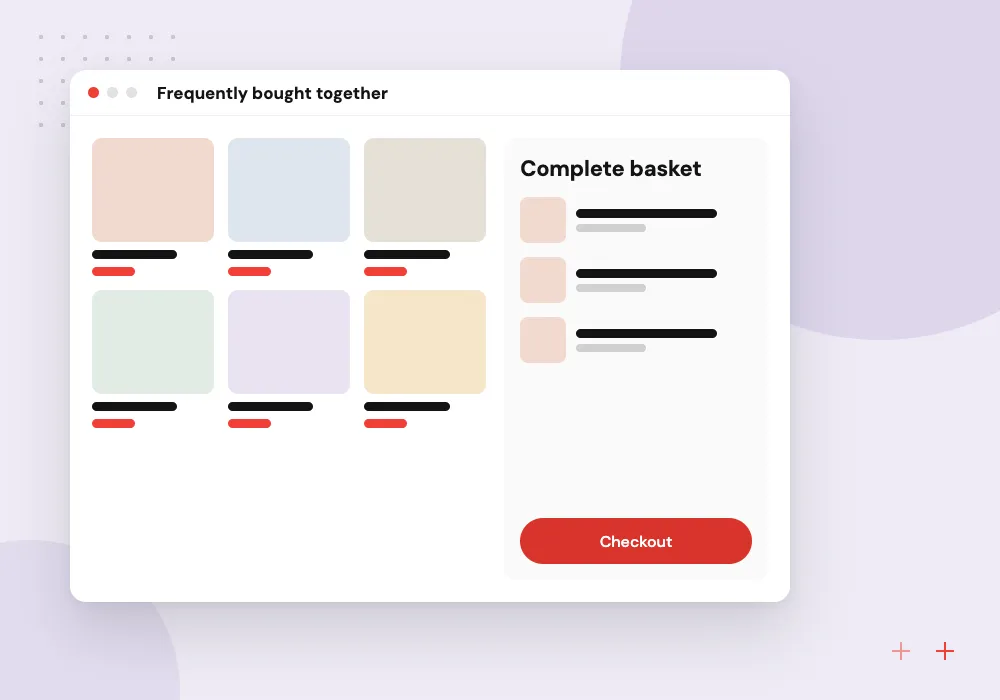
Frequently bought together
Accessories, refills and matching items appear on the product page, based on what customers actually bought in the same order.
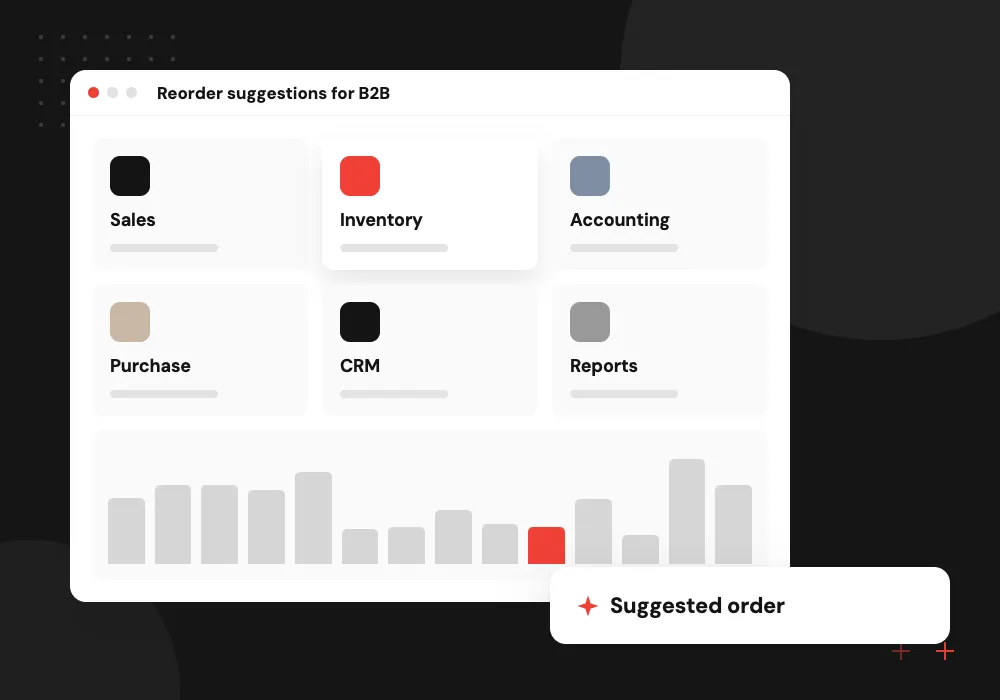
Reorder suggestions for B2B
Buyers see the items they order on a cycle, with quantities taken from their history, ready to add to the next order.
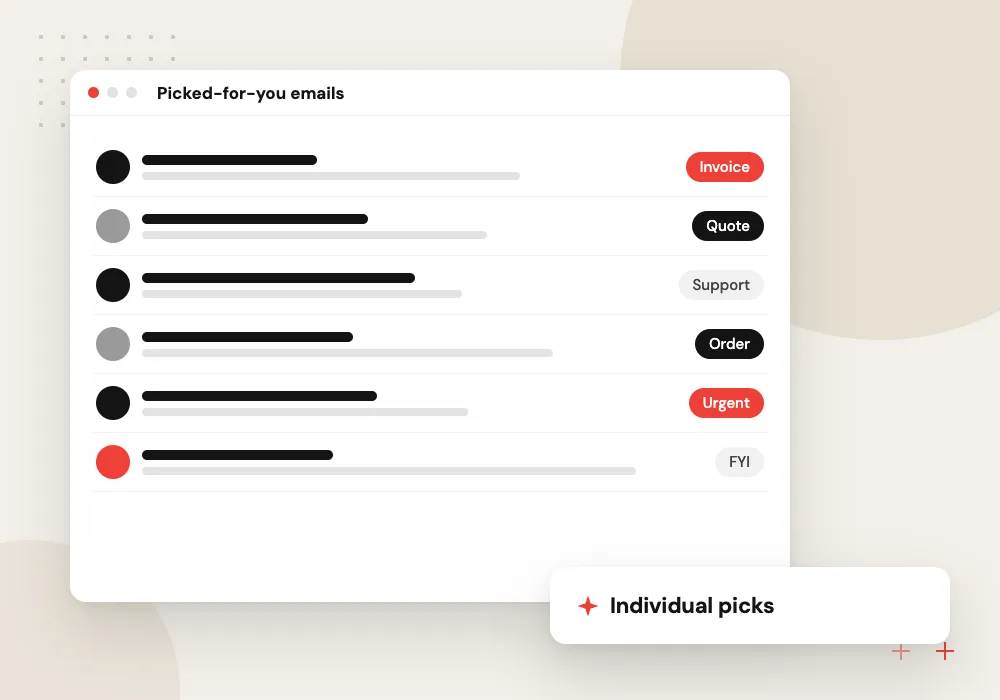
Picked-for-you emails
Each subscriber receives products or articles ranked for them, generated in a batch shortly before the campaign is sent.
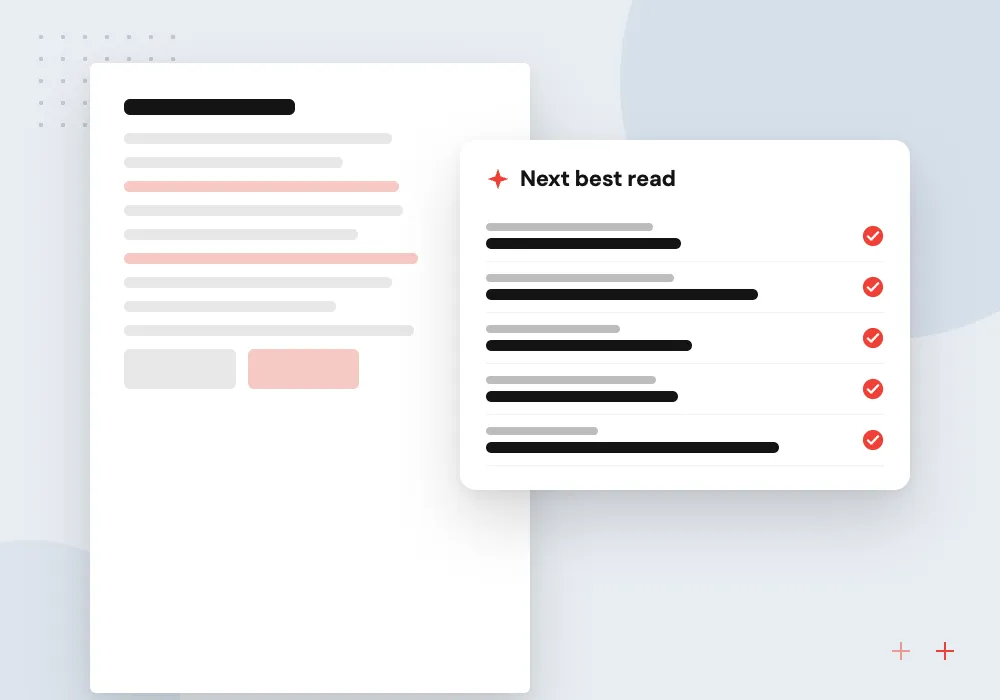
Reading and viewing suggestions
Publishers and course sites suggest the next article, video or lesson from what similar readers finished, not only what is newest.
Candidate retrieval and ranking models
The candidate step uses co-purchase statistics and embedding similarity to find a short list of plausible items quickly. The ranking model then scores that list using the visitor’s recent behavior, item attributes, price and context such as device or time of day, and the top results fill the row.
What we do
- Co-purchase and similarity retrieval
- Embeddings for new items
- Ranking on recent behavior
- Batch and real-time serving
- Scheduled retraining
Merchandising rules and monitoring
Rules run after ranking: remove out-of-stock items, respect contract catalogs, apply margin floors, keep brand exclusions and add variety so one category does not fill the row. A monitoring view tracks coverage, click-through and drift, and raises an alert when suggestions start to narrow.
What we do
- Stock and contract filters
- Pins, boosts and exclusions
- Variety rules per row
- Coverage and drift monitoring
- Control group reporting

How we approach a project
Offline tests on held-out orders come first, then a live test against a control group. We also watch coverage and popularity bias, because an engine that only repeats bestsellers adds little. The same engine can feed AI personalization placements and email.
It matters most to retailers and wholesale distributors with wide catalogs and repeat buyers. Share an export of orders and products ahead of a 30-minute conversation, which you can set up on our contact page, and we can judge together whether your data is enough to start.
How we work
- Trained on your own data
- Business rules override the model
- Judged against a control group
Our Process
-

Audit events and catalog
We check which interactions are logged, how clean the product data is and which placements matter.
-

Baseline with simple rules
Co-purchase and popularity rules set a benchmark that any model has to beat.
-

Train and test offline
Candidate and ranking models are trained and scored on held-out orders against that baseline.
-

Live test and monitor
The winning approach runs against a control group, with drift and coverage watched afterwards.
Why Aranv for recommendation engines
Baseline before models
We first measure simple rules such as co-purchase counts, so any model has to show a real gain before it replaces them.
Rules the business owns
Merchandisers set filters, pins and exclusions in a screen they control, and those rules always apply after the model ranks.
Built for your catalog
B2B price lists, contract catalogs, bundles and stock levels from your ERP are part of the design from the start, not patched in later.
Looked after after launch
Retraining, drift checks and control group reports continue after go-live, so the engine is maintained rather than left to decay.
Planning AI Recommendation Engine Development?
Book a 30-minute conversation with the team that would build it.
Recommendation engine FAQs
-
How much data does a recommendation engine need?
There is no fixed minimum, but behavior-based methods need repeated interactions across many products and customers. With little history, we start with content-based suggestions from product attributes and simple rules, then add behavior-based models as events build up.
-
Should we build a recommendation engine or use our platform’s built-in one?
Use the built-in option when your catalog is simple and its suggestions look sensible. Build when you need B2B rules, contract catalogs, data from several systems, control over ranking, or one source of recommendations across store, email and app.
-
How do you handle new products with no sales history?
New items are described by their attributes and text, turned into embeddings and matched to similar products that do have history. Merchandisers can also boost new arrivals for a set period.
-
Can merchandisers control what gets recommended?
Yes. They can pin items, exclude brands or categories, require stock and set margin floors. Those rules apply after the model ranks, so the business always has the last word on what appears.
-
How do you measure whether recommendations work?
We compare a test group with a control group on clicks, conversion, basket size or revenue per visitor, depending on the placement. Offline accuracy scores guide development, but only the live comparison decides whether a placement stays.

Let’s talk about your next step
Contact Aranv to discuss your workflow, current tools, and goals. Meet with our team or send an inquiry.
Book a meeting with our team
Choose an available date and time for a 30-minute conversation about your project.
Tell us about your project
Share a few details so we can discuss a useful next step.
Prefer email? sales@aranv.com