


What MLOps services include
Aranv provides MLOps services for businesses whose forecasting, scoring or classification models work in a notebook but not yet in daily operations. We build repeatable training pipelines, deploy models behind APIs or batch jobs, monitor accuracy and data drift, and set up retraining your team can run.
MLOps picks up where machine learning development leaves off. Google Cloud’s MLOps architecture guide describes maturity levels from manual training to automated pipelines with CI/CD. For most small teams we aim for the middle: an automated training pipeline without a large platform.
Reliable models need reliable inputs. We build feature pipelines with data engineering practices: schema checks, freshness tests and one definition of each feature for training and serving, so the model sees in production what it saw in training.
From a notebook to a model you rely on daily
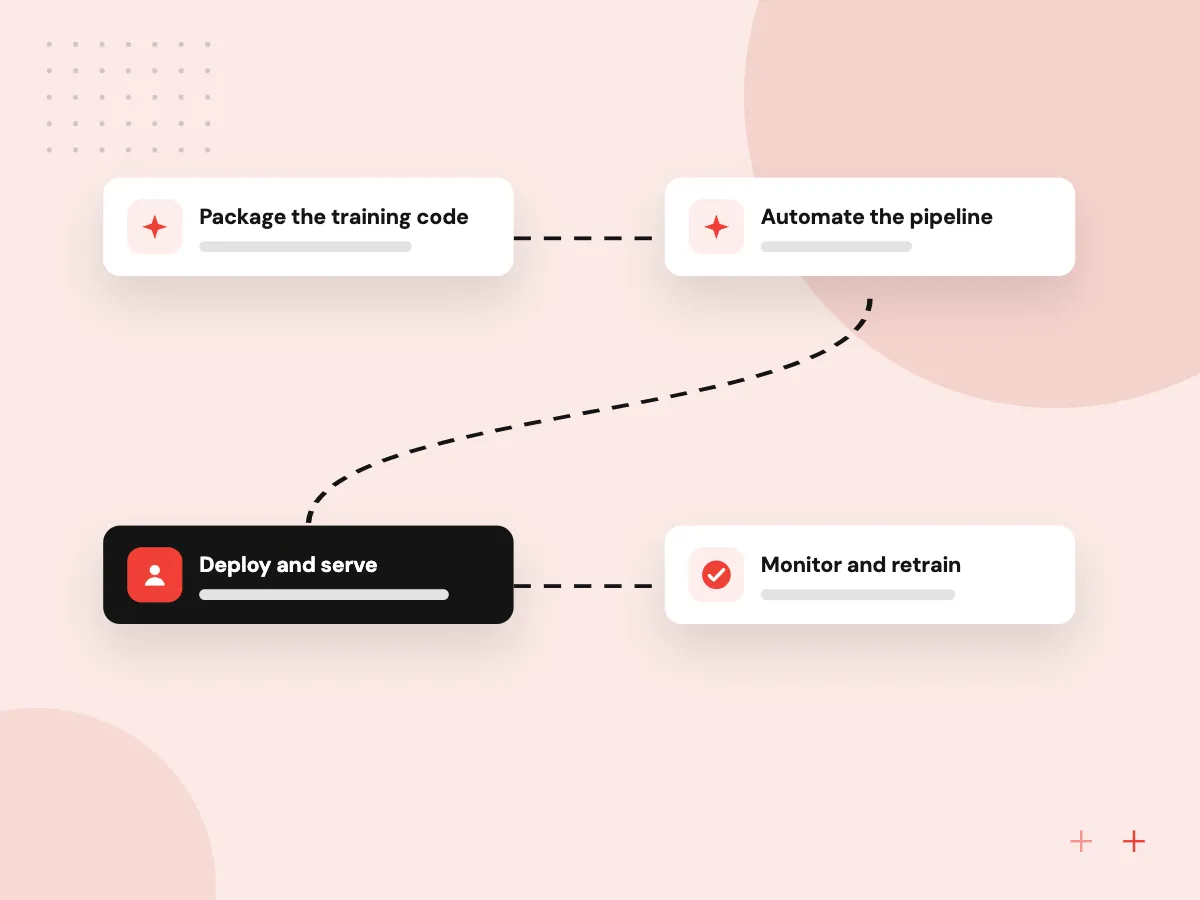
A model with a pipeline behind it
- 01 Package the training code Notebook steps become versioned scripts with pinned data and dependencies.
- 02 Automate the pipeline Data checks, training, evaluation and registration run as one repeatable job.
- 03 Deploy and serve An API, batch job or database write delivers predictions where staff work.
- 04 Monitor and retrain Drift and accuracy alerts trigger retraining, review and a controlled release.
A model is a snapshot of past data. Without monitoring, accuracy can slip for months before anyone notices.
ML model deployment and monitoring we handle
MLOps work often starts when one useful model exists and the team is nervous about touching it.
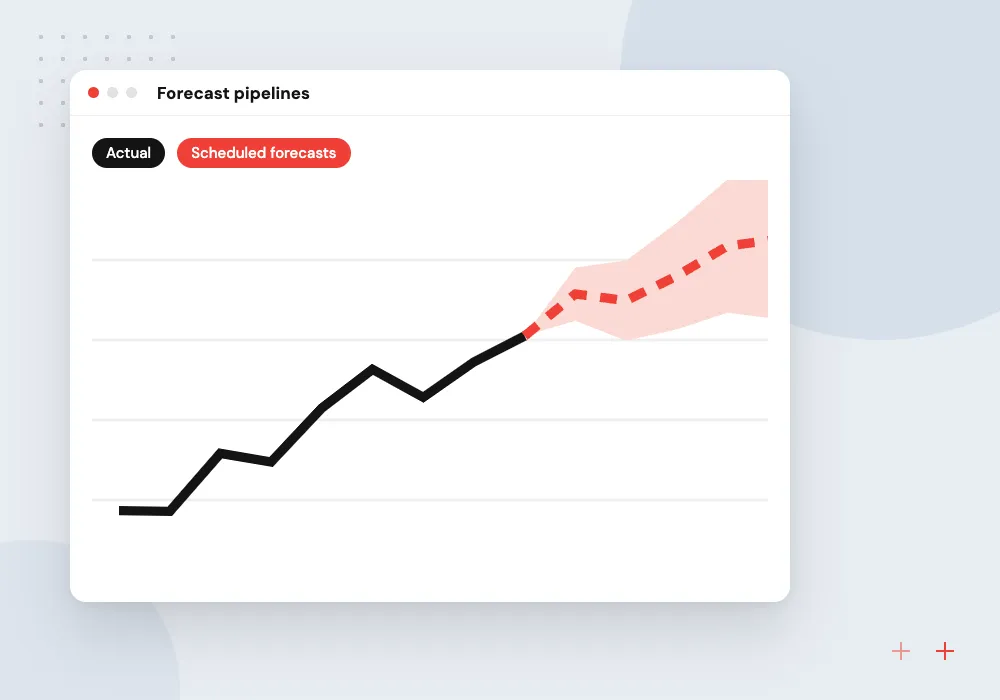
Forecast pipelines
Weekly demand or sales forecasts rebuilt automatically from fresh ERP data and written back to the planning sheet or dashboard buyers already use.
Real-time scoring APIs
Fraud, lead or credit scores served on request to your app or CRM, with every prediction and its inputs logged for later audit.
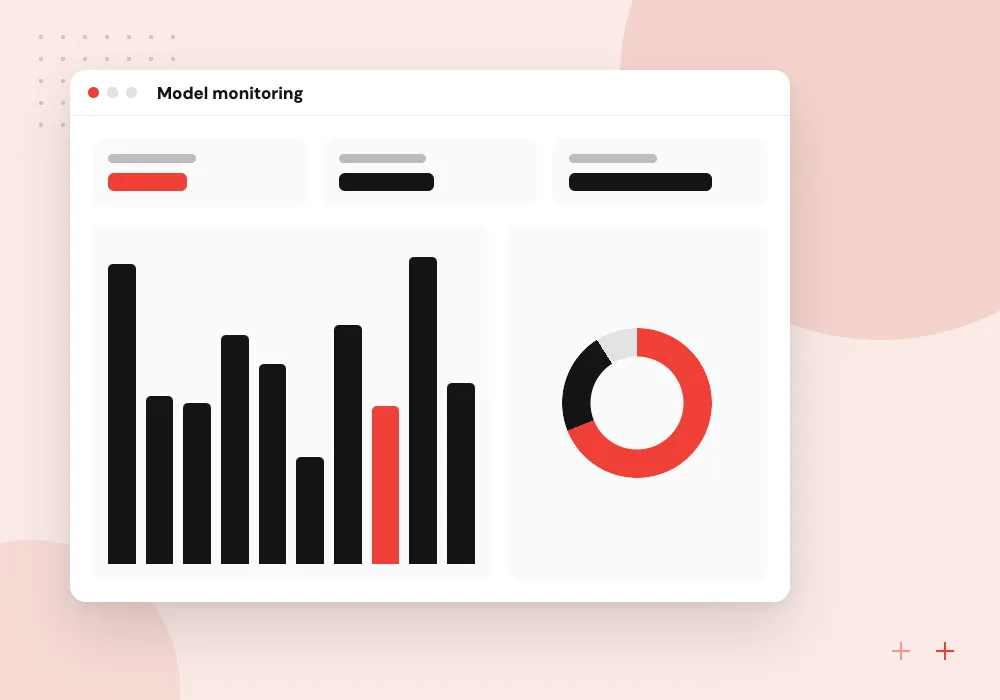
Model monitoring
Checks for missing fields, shifted input distributions and falling accuracy, with alerts that name the feature that changed.
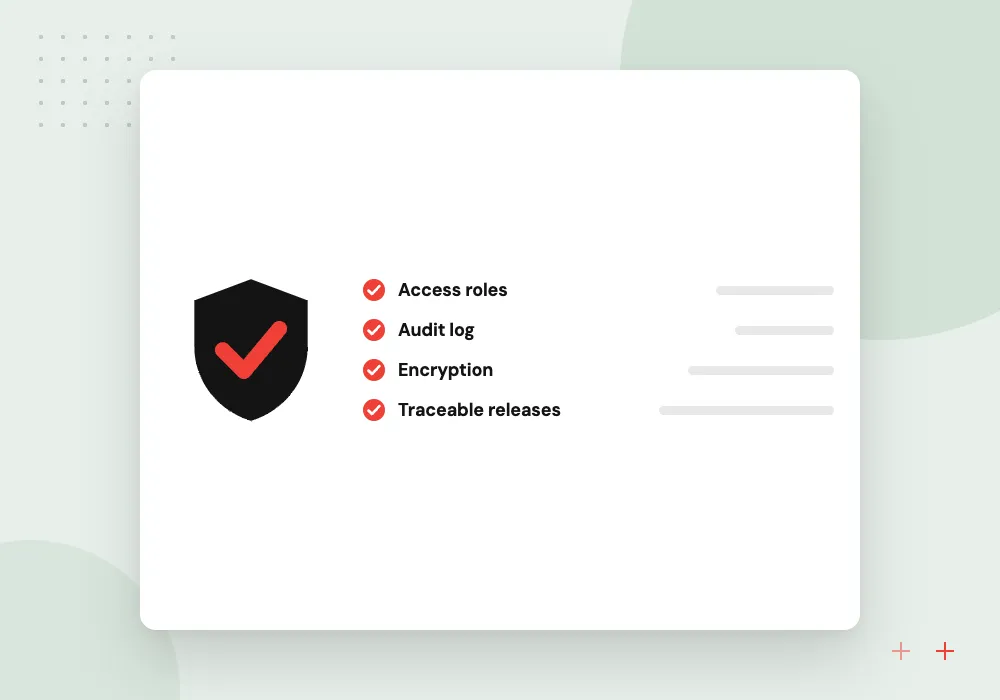
Model registry and audit
Every model version stored with its training data snapshot, metrics and approver, so you can answer what changed and why.
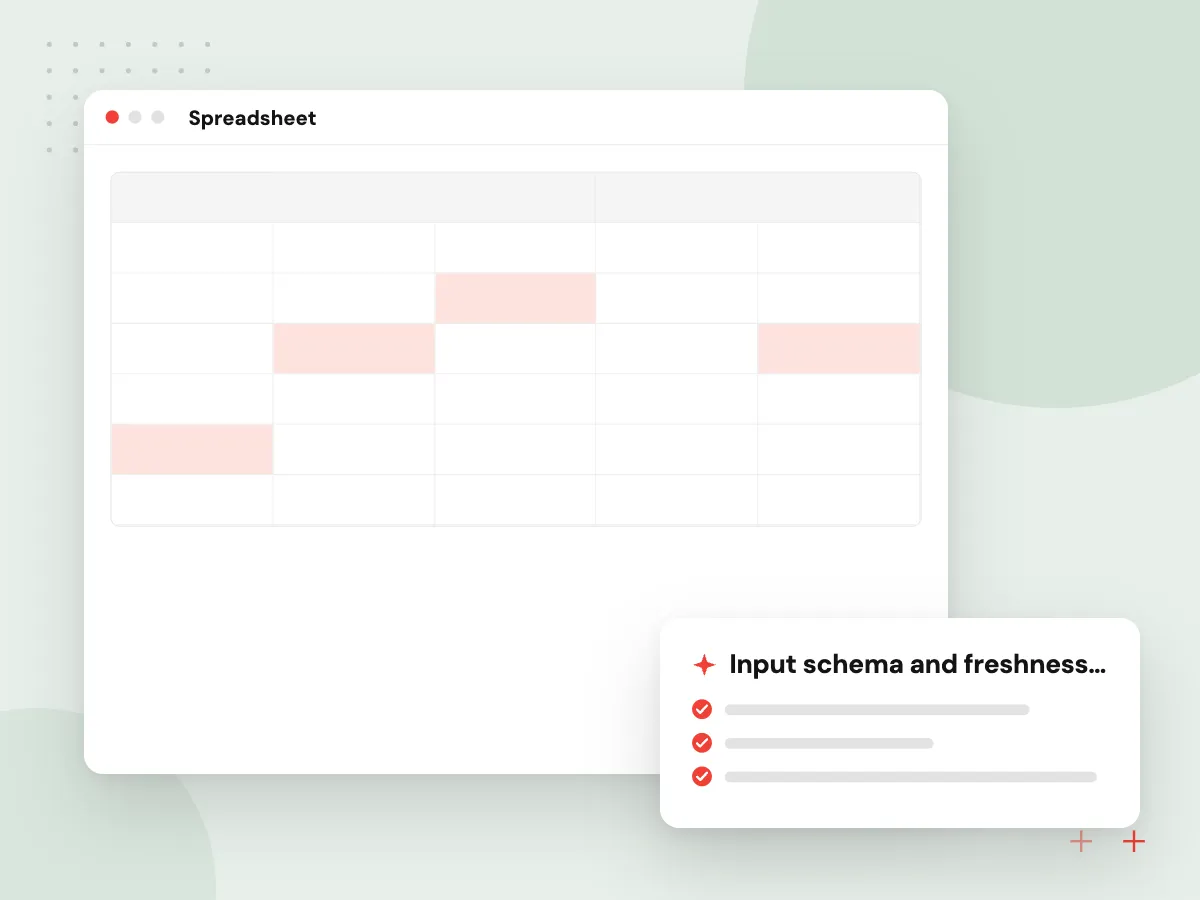
Drift and accuracy monitoring
We record the inputs and predictions of every model call, compare live input distributions with the training data, and calculate accuracy once real outcomes come in. Alerts name the feature that moved, so the person on call can choose between retraining and fixing a broken data feed.
What we do
- Input schema and freshness checks
- Distribution drift by feature
- Accuracy once outcomes arrive
- Alert routing to a named owner
- Monthly model health report
Training pipelines and model registry
Training runs as a chain of small steps: pull data, validate it, build features, train, evaluate against the current model and register the result. Each run records its data snapshot, code version and metrics, and a named person approves promotion to production.
What we do
- Versioned data snapshots
- Experiment tracking with MLflow
- Champion and challenger comparison
- Approval step before promotion
- Rollback to any registered version

How we approach a project
Tooling fits your cloud. We work with open tools such as MLflow for experiment tracking and the model registry, and with the managed ML services on AWS, Azure and Google Cloud. Containers, CI and infrastructure as code come from our DevOps practice.
The same discipline applies to demand forecasting, churn prediction and scoring models for predictive analytics. Applications built on large language models need different operating work, which LLMOps covers.
How we work
- Reproducible from data to model
- Predictions delivered where decisions happen
- Retraining as a routine job
Our Process
-

Review the model and data
We read the notebook, rerun training from scratch and note every manual step, hidden file and hard-coded date.
-

Build the pipeline
Data validation, training, evaluation and registration become one job that runs on demand or on a schedule in your cloud.
-

Deploy with a fallback
The new model runs alongside the old one or a simple rule first, so you can compare results before switching over.
-

Hand over the runbook
Your team gets dashboards, alert rules and a written retraining procedure, and we train the person who will own it.
Why Aranv for MLOps
We rebuild before we automate
Reproducing your current model from scratch comes first, so the pipeline automates something proven rather than a guess at how it was made.
Tooling sized to your team
A handful of models does not need a platform built for hundreds. We pick the smallest set of tools your staff can run and understand.
Predictions land in your systems
Scores and forecasts are written to the ERP, CRM or dashboard where decisions happen, not left in a file someone has to remember to open.
Handover your team can run
Runbooks, alert rules and a recorded walk-through mean the model keeps running when its original builder moves on.
Planning MLOps?
Book a 30-minute conversation with the team that would build it.
MLOps FAQs
-
What do MLOps services actually deliver?
A repeatable path from data to a running model: versioned training code, an automated pipeline, a model registry, a deployment as an API or batch job, monitoring for drift and accuracy, and a retraining procedure. The aim is that someone other than the original data scientist can update the model safely.
-
How do you monitor a model when true outcomes arrive weeks later?
We watch the inputs first, because missing values, new categories and distribution shifts show up at once. When outcomes arrive, such as actual sales or confirmed cancellations, accuracy is calculated and compared with the release baseline. Alerts fire on either signal.
-
How often should an ML model be retrained?
It depends on how fast your data changes. A demand model for seasonal products may need weekly runs, while a credit or churn model may hold for months. We retrain on a schedule or a drift threshold, and each new model must beat the current one before release.
-
Do we need a big ML platform for MLOps?
Usually not. A team with a few models can run well on a scheduler, an experiment tracker, a registry and cloud storage. Managed platforms on AWS, Azure or Google Cloud make sense when many models or teams share the work. We size the tooling to your model count.
-
Can you take over a model another team or vendor built?
Yes, if we can get the training code, the data or a documented way to rebuild it, and the current model files. We start by reproducing the existing results. If that is not possible, we tell you what is missing before building anything new.

Let’s talk about your next step
Contact Aranv to discuss your workflow, current tools, and goals. Meet with our team or send an inquiry.
Book a meeting with our team
Choose an available date and time for a 30-minute conversation about your project.
Tell us about your project
Share a few details so we can discuss a useful next step.
Prefer email? sales@aranv.com