


What AI demand forecasting covers
Aranv builds AI demand forecasting for distributors, retailers and manufacturers: a forecasting model trained on your sales history, promotions, prices and seasonality that predicts units by SKU, location and week, then writes those numbers into the ERP or planning sheet your buyers already use.
Most businesses already forecast; it just lives in a buyer’s head or a spreadsheet that repeats last year. A model tracks what nobody can follow by hand across thousands of SKUs: trend, seasonality, price moves, promotions, shifting holidays and the hidden effect of stockouts. We build it within our machine learning development work, as one part of your planning routine.
The hardest part is the history, since sales records show what you shipped rather than what customers asked for. Our AI data preparation team corrects out-of-stock weeks, splits wholesale from retail orders and lines up price and promotion calendars by date.
From order history to a weekly buying plan
How a demand forecast gets made
- 01 Collect demand history Order lines, stockouts, promotions and price changes pulled from the ERP and store systems.
- 02 Repair the history Stockout weeks and one-off bulk orders are marked so they stop distorting demand.
- 03 Forecast and compare Models run per SKU and location and must beat last year’s same-week sales.
- 04 Planners review and approve Buyers add known events, adjust where needed and release numbers to purchasing.
Each forecast carries a high and low band, so safety stock can be set against the uncertainty.
Demand forecasts we build
Each forecast answers a buying, production or staffing question that someone in your business asks every week.
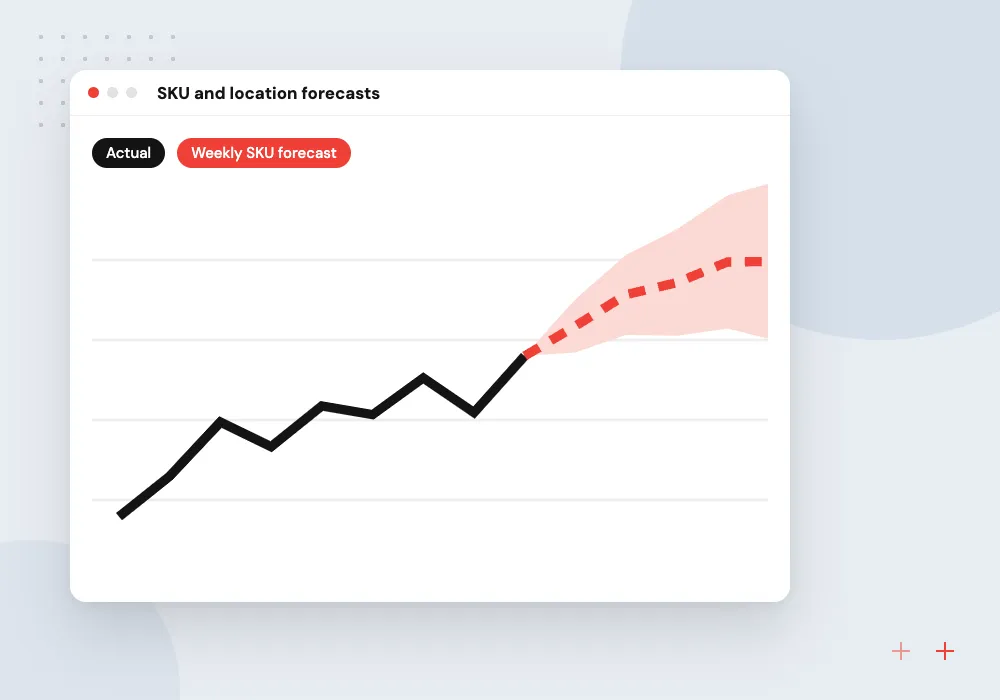
SKU and location forecasts
Weekly unit forecasts for every item at every store or warehouse, with a range that feeds reorder and transfer decisions.
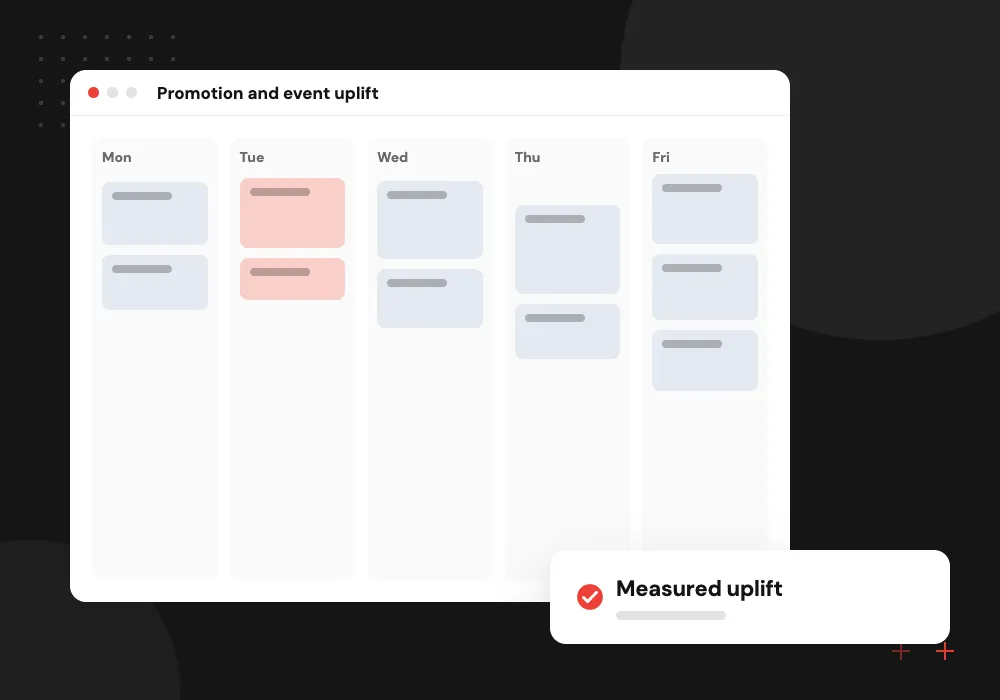
Promotion and event uplift
Estimates of the extra volume a discount, catalog drop or local event adds, and how much demand it borrows from the weeks after it.
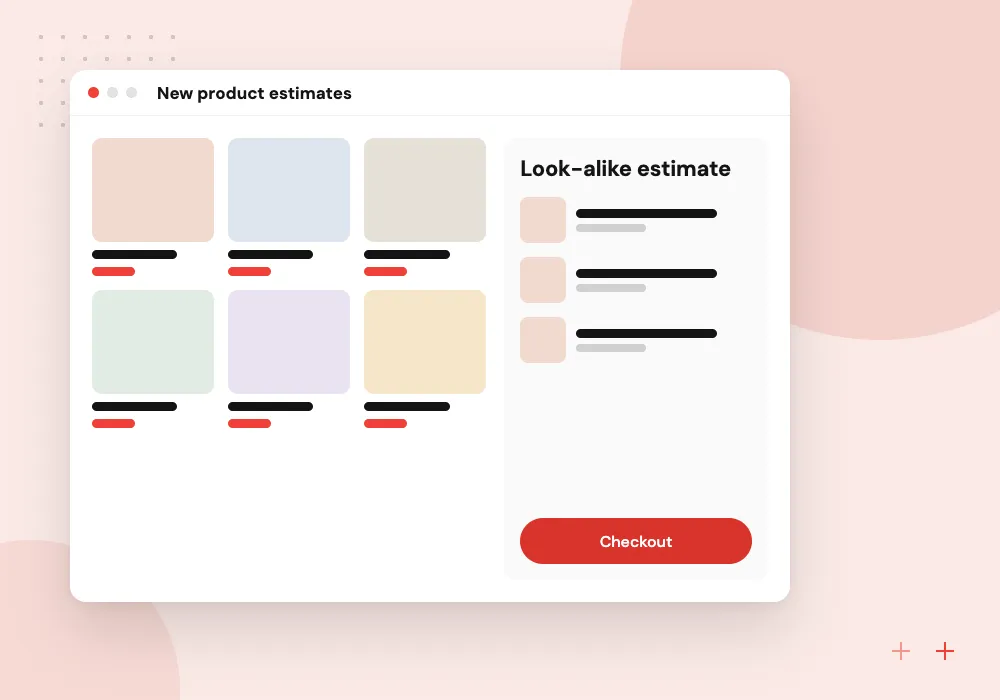
New product estimates
Early numbers for items with no sales yet, borrowed from similar products by category and price point, then corrected as orders arrive.
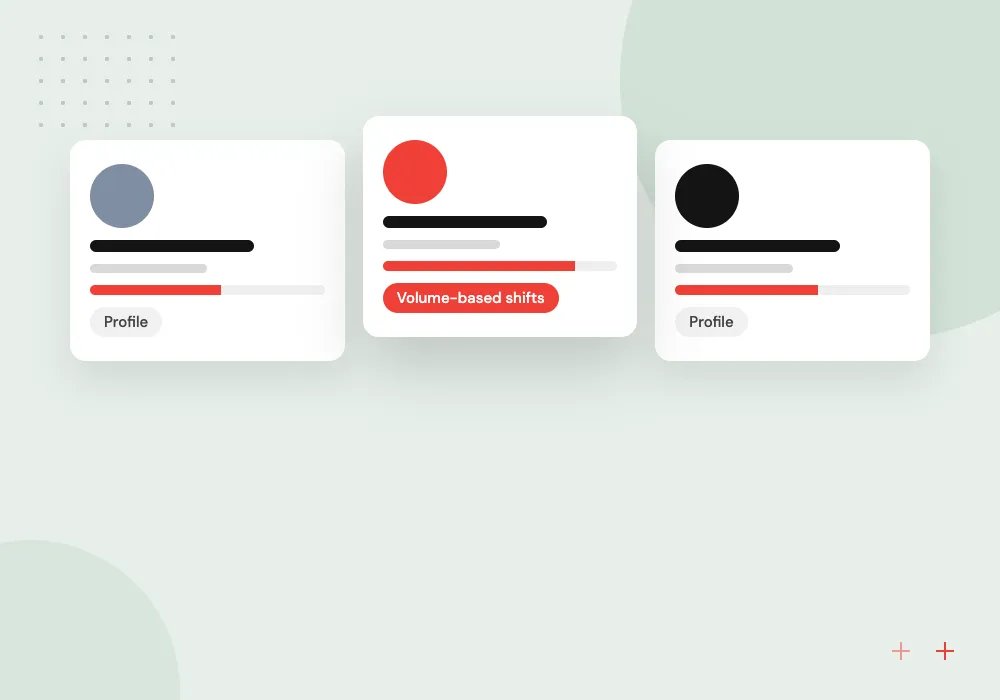
Labor and capacity plans
Expected order volume by day and shift, so warehouse, kitchen or plant managers can roster people to match the work coming in.
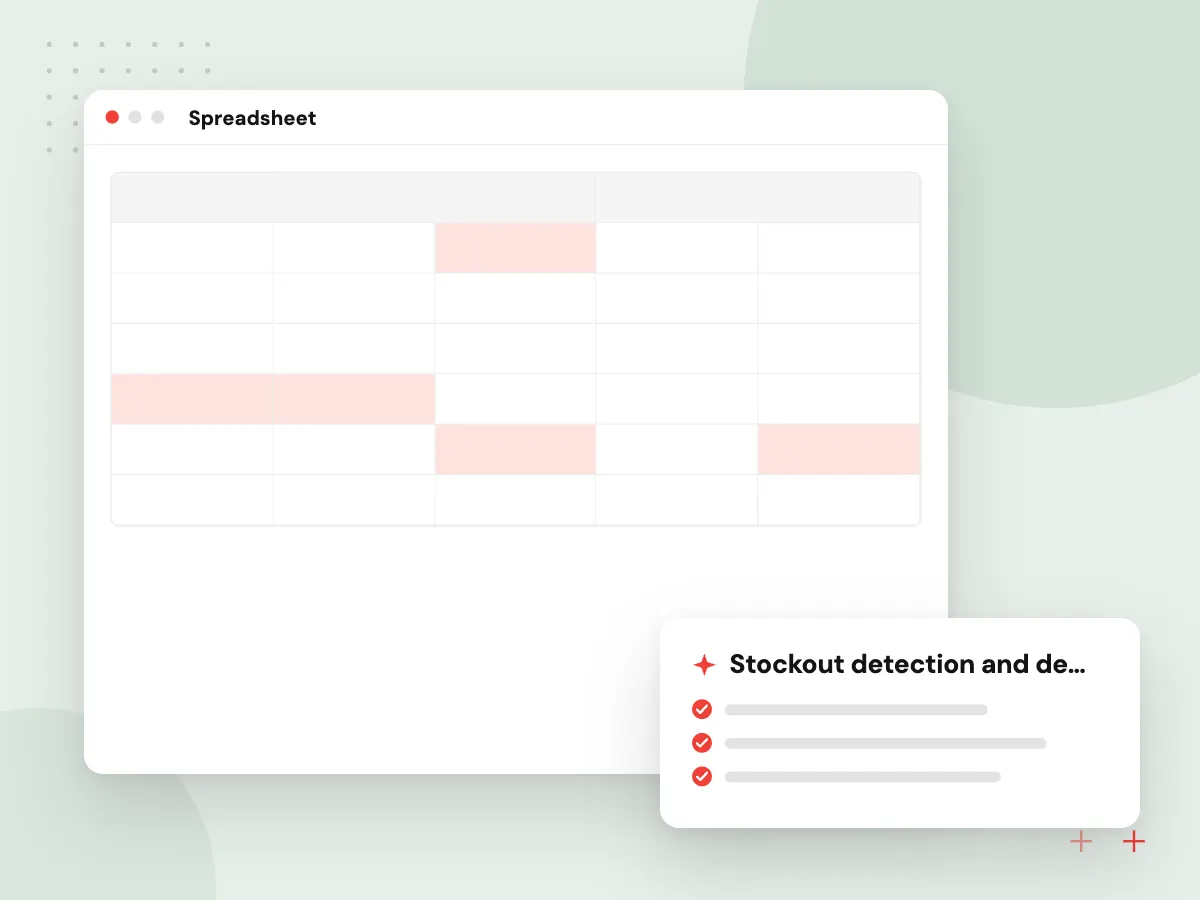
Cleaning demand history before any modeling
Recorded sales give a bent picture of demand. We find weeks when an item sat at zero stock, separate one-time bulk orders, match returns to the original sale and date every promotion and price change, so the model learns from what customers tried to buy.
What we do
- Stockout detection and demand correction
- Promotion and price calendar
- Bulk order and outlier tagging
- Returns matched to original sales
- Product families and substitutes
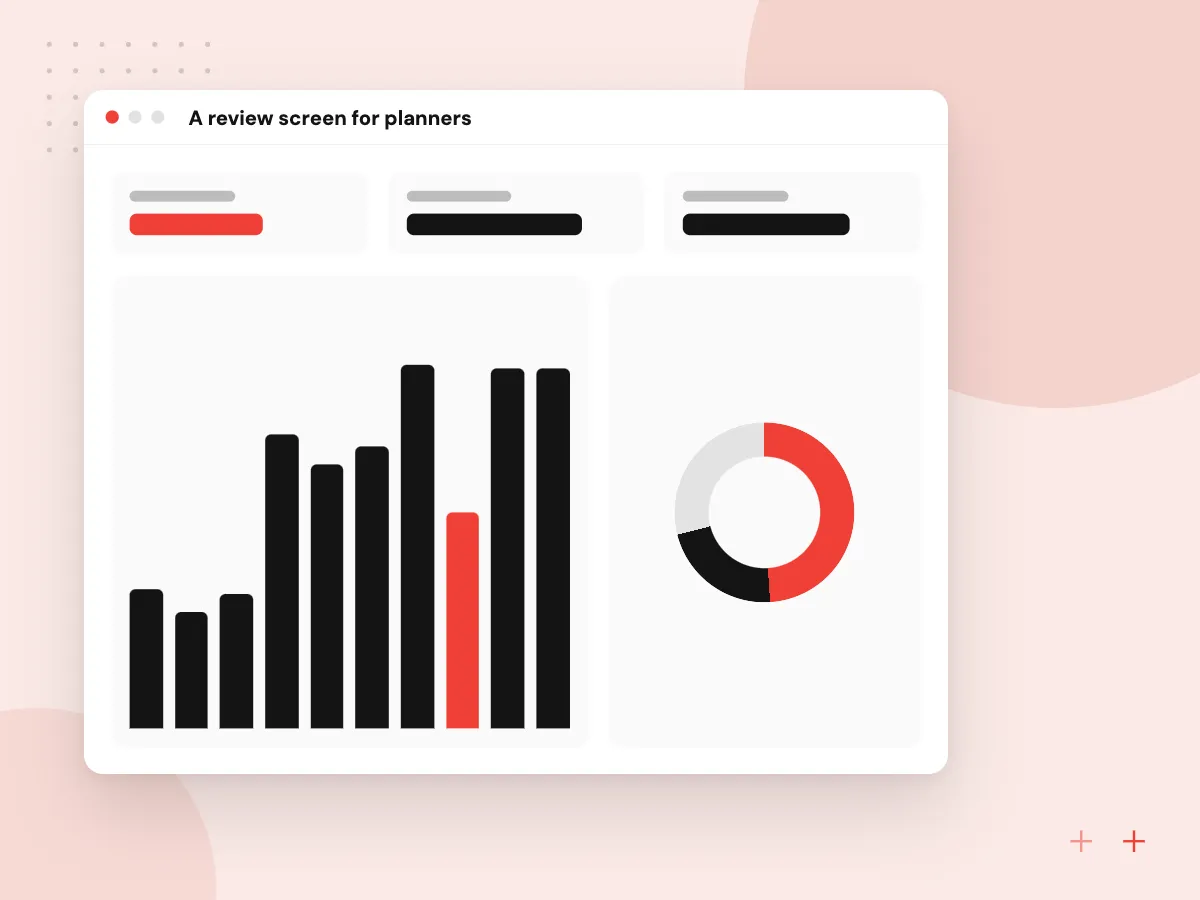
A review screen for planners
Planners see each forecast with its range, last year’s actuals and what drove any jump. They can override a number with a reason code, and the system records whether overrides helped, so the team learns where its judgment adds most.
What we do
- Forecast with high and low band
- Overrides with reason codes
- Override accuracy history
- List of drifting SKUs
- Export to draft purchase orders

How we approach a project
Forecasts are useful only where decisions get made. We write them back to your ERP, an Odoo replenishment screen or a Power BI report, and hand them to inventory optimization when you want reorder points set from the forecast. It fits firms with many SKUs, seasonal swings and long supplier lead times, such as wholesale distributors.
After launch we track error by item group each week, retrain on a schedule and flag SKUs where the model drifts. Not sure your sales history is long or clean enough? Bring a sample export to a 30-minute conversation; the contact page has the booking form.
How we work
- Forecast what customers wanted, not shipped
- Every model must beat a baseline
- Planners keep the final number
Our Process
-

Choose the decision
We agree which decision the forecast serves, such as weekly purchase orders, and the item, site and time level it needs.
-

Audit the sales history
Order lines, stockouts, returns and promotions are checked, and weeks where recorded sales understate demand are corrected.
-

Backtest against baselines
Candidate models predict past months they never saw, and their error is compared with a seasonal naive forecast per item group.
-

Run beside your planners
For the first cycles the model runs next to your current method, and buyers record where and why they overrode it.
Why Aranv for demand forecasting
Baselines before models
Every model is scored against a seasonal naive forecast and your current method on the same past months. If it does not win clearly, we say so and you keep the simpler tool.
Ranges, not single numbers
Each forecast comes with an upper and lower band, so safety stock and staffing are planned around the real uncertainty rather than a point estimate that is rarely exact.
Delivered into planning tools
Numbers land in the ERP screen, purchasing sheet or report your buyers already open each morning, with no extra portal for them to remember.
Problems caught early
Weekly error tracking and alerts on missing data feeds mean a broken input appears as a warning to the planner, not as a wrong purchase order.
Planning AI Demand Forecasting?
Book a 30-minute conversation with the team that would build it.
AI demand forecasting FAQs
-
How much sales history do we need for AI demand forecasting?
Two years of weekly or daily sales is a practical minimum for seasonal demand, because the model must see each season more than once. Steady items need less, and new products borrow patterns from similar ones. Stockout records and promotion dates matter almost as much as sales lines.
-
Is an AI forecast better than the one built into our ERP?
Sometimes. Many ERP forecasts use moving averages, which suit steady items. Models that use prices, promotions and events tend to help on seasonal or promoted items. We score both on the same past months before you decide, and keep the simpler method wherever it does as well.
-
What is the difference between demand planning AI and a forecast?
The forecast is the number: expected units by item, place and week. Demand planning is the routine around it, where planners review that number, add what they know about coming events and agree a plan that purchasing, production and finance all use. We build the forecast and the review screen together.
-
Can the forecasting model handle promotions and one-off events?
Yes, if past events are recorded. We need a promotion calendar with dates, discount depth and channel, plus events such as store openings. Planners enter future promotions so the forecast includes them before purchase orders go out.
-
What keeps a demand forecast accurate after launch?
Scheduled retraining, a weekly look at error by item group and a named owner for overrides. We also watch data feeds, so a store that stops sending sales alerts the planner instead of quietly dragging its forecast toward zero.

Let’s talk about your next step
Contact Aranv to discuss your workflow, current tools, and goals. Meet with our team or send an inquiry.
Book a meeting with our team
Choose an available date and time for a 30-minute conversation about your project.
Tell us about your project
Share a few details so we can discuss a useful next step.
Prefer email? sales@aranv.com