


What a sales forecasting project covers
Aranv builds AI sales forecasting for B2B, subscription and multichannel businesses: models that score every open deal in your CRM, predict when it will close, add expected renewals and channel revenue, and roll it all into a monthly and quarterly forecast that sales leaders and finance can check against the team’s commit.
Sales forecasting answers one question: how much revenue will close this month and this quarter. Most teams build the answer from rep calls and CRM stage percentages, which assume every deal at a stage has the same chance. AI sales forecasting swaps those fixed percentages for probabilities learned from your own history and shows which deals move the total.
Our predictive analytics team builds the model and connects it to Salesforce, HubSpot or a custom CRM. When the real issue is weak leads rather than weak forecasts, scoring at the top of the funnel belongs to lead qualification. Subscription firms pair the forecast with churn prediction so expected cancellations reduce the renewal line.
From stage percentages to a forecast built on your own deals
How the revenue forecast is assembled
- 01 Snapshot the pipeline Each week we record every open deal’s stage, amount, close date and activity.
- 02 Learn from closed deals Past wins and losses show which patterns actually lead to signed contracts.
- 03 Score and roll up Deal probabilities and expected close months add up by rep, region and product.
- 04 Compare with the commit Leaders see the model number beside the rep number and the deals that differ.
The model does not replace the forecast call; it gives the call a second, independent number to test.
What AI sales forecasting adds
Most forecasts multiply each deal by a fixed stage percentage. These pieces replace that guess with evidence.
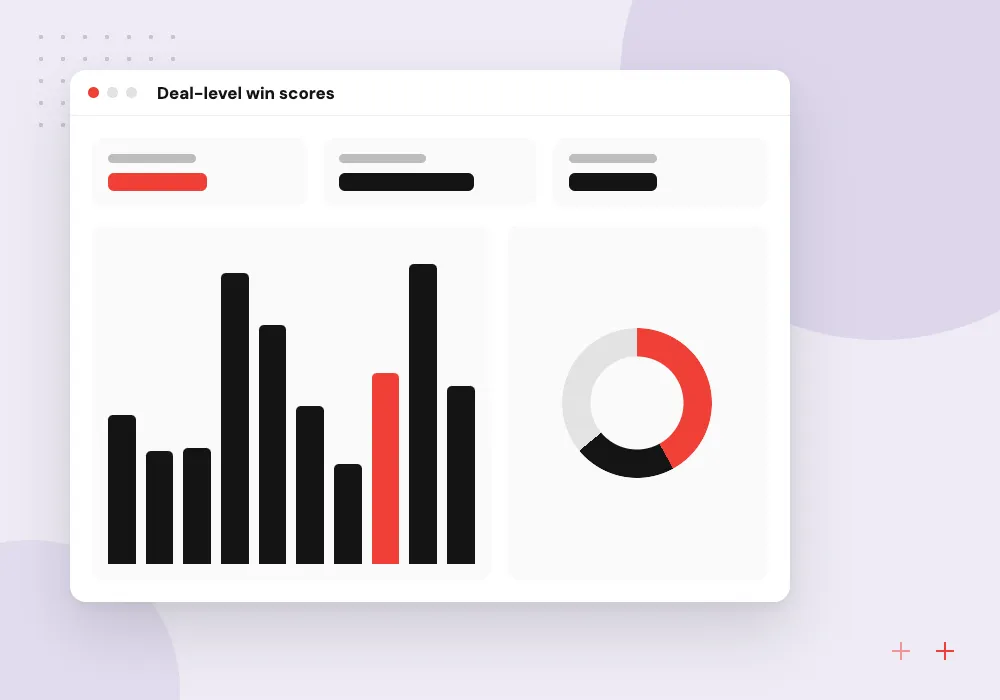
Deal-level win scores
Each open opportunity gets a chance of closing this period, based on stage, age, size, recent activity and how similar past deals ended.
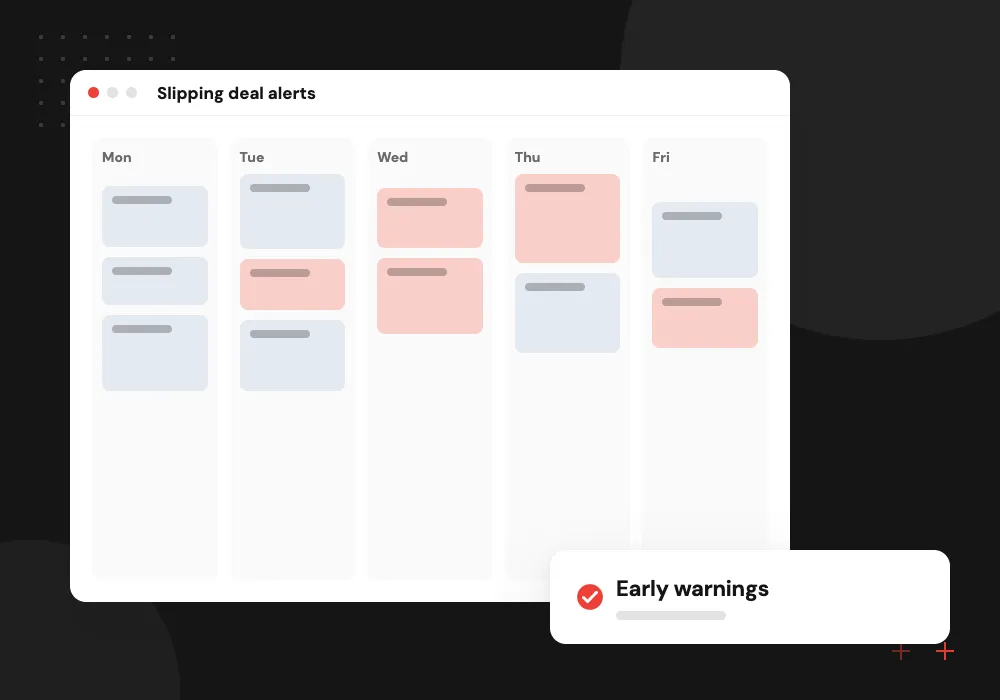
Slipping deal alerts
Deals whose close date has moved twice, whose contacts went quiet or whose stage has stalled are flagged before the weekly forecast call.
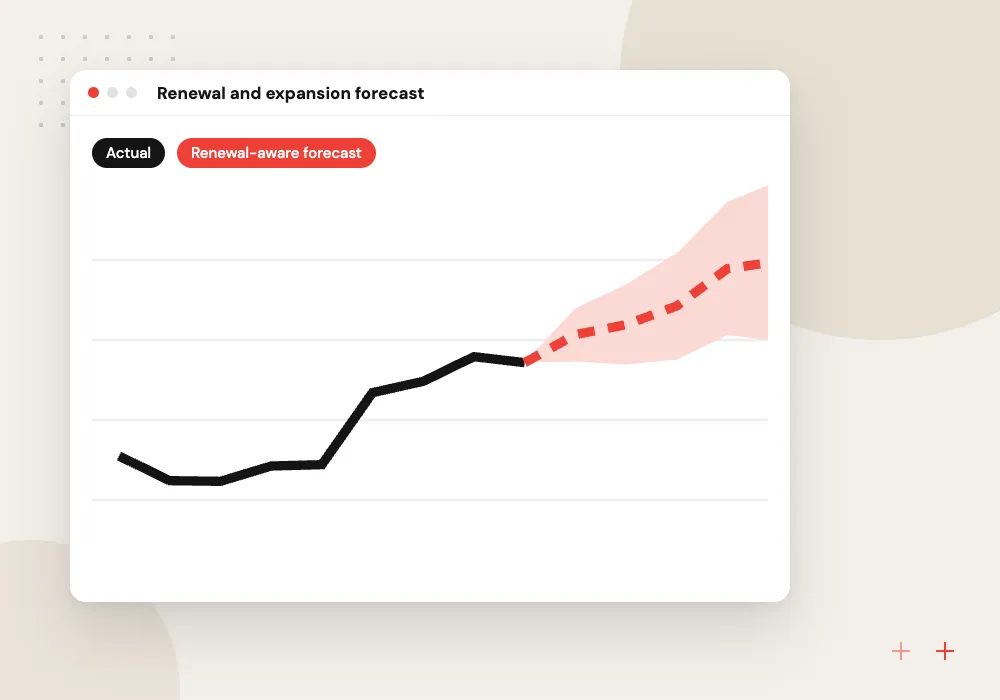
Renewal and expansion forecast
Renewals, upsells and likely cancellations projected from contract dates, usage and billing history, kept apart from new business in the pipeline.
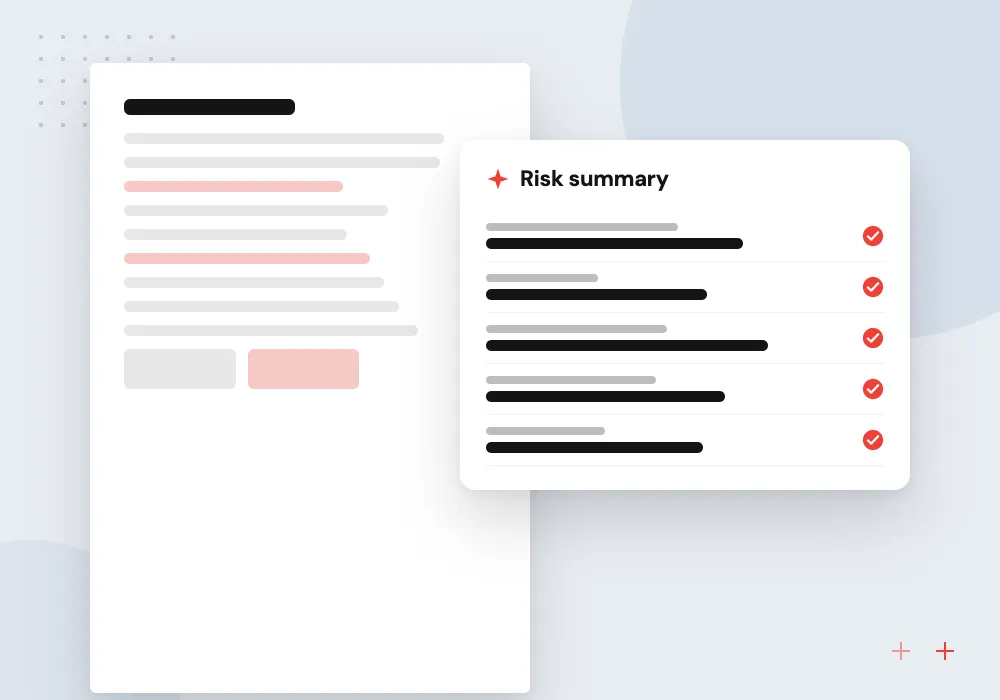
Deal note summaries
A language model reads call notes and logged emails on large deals and lists risks, such as a new decision maker or a budget freeze, for the rep to confirm.
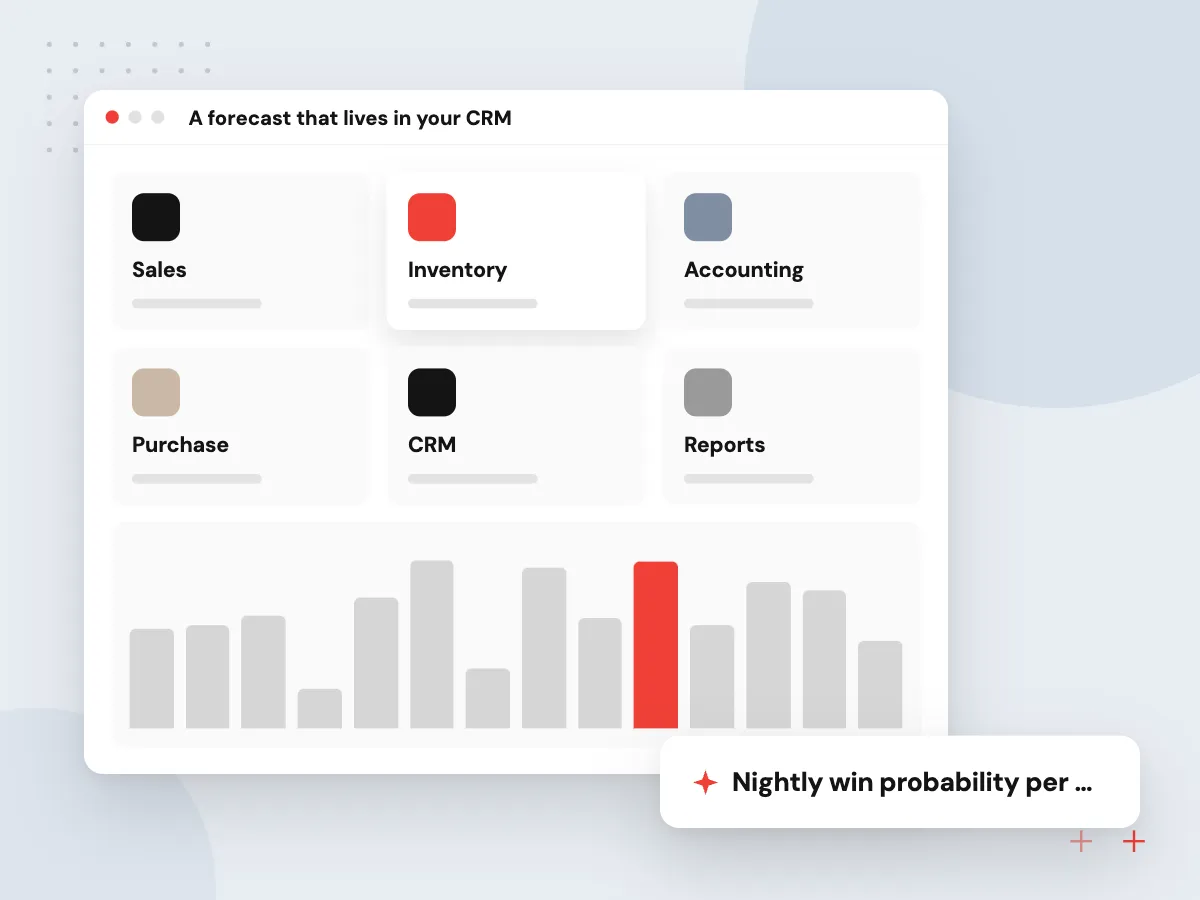
A forecast that lives in your CRM
Every night the model scores each open opportunity and writes two fields to the deal record: win probability and expected close month. A weekly report rolls those into totals by rep, team, region and product, beside the number each manager committed, with the deals that explain the gap listed underneath.
What we do
- Nightly win probability per deal
- Expected close month field
- Model versus commit comparison
- Totals by rep, region and product
- Weekly snapshot history
CRM data hygiene before modeling
Forecasts inherit every flaw in the CRM. We review stage definitions, duplicate and stale deals, missing amounts and closed-lost reasons. If your CRM does not keep a history of stage and amount changes, we start weekly snapshots, because a model must know how a deal looked at the time, not only how it ended.
What we do
- Stage definitions agreed with sales
- Duplicate and stale deal cleanup
- Weekly pipeline snapshots
- Closed-lost reason review
- Field history checks
How we approach a project
Multichannel sellers forecast by channel instead, since store, website and marketplace revenue each follow their own pattern. Finance gets the result as a monthly file or a Power BI report with weekly snapshots showing how the number moved.
SaaS firms and B2B suppliers with long sales cycles are a common fit; our SaaS companies page covers the wider picture. If you want to know whether your CRM history is good enough, a 30-minute conversation booked through the contact page will settle it.
How we work
- Probabilities learned from your closed deals
- Model and rep numbers side by side
- Every swing traced to specific deals
Our Process
-

Agree definitions with sales
We confirm what each stage means, what counts as closed and which revenue types the forecast must include.
-

Rebuild deal history
From CRM field history or exports we reconstruct what each past deal looked like at each week, not only how it ended.
-

Test on past quarters
The model forecasts quarters it never saw, and we compare its error with stage percentages and the reps’ own calls.
-

Launch into the forecast call
Scores appear in the CRM and the weekly report, and we review misses with the sales leader after each quarter closes.
Why Aranv for sales forecasting
Tested on quarters already closed
Before launch, the model forecasts past quarters it never saw, and you see its misses next to your stage-percentage forecast and the reps’ own calls.
Reasons shown with scores
Every probability comes with the factors behind it, such as a stalled stage or quiet contacts, so a manager can question the deal instead of the number.
Notes handled carefully
Call notes and emails are read only for the deals and fields you approve, and the language model’s risk summary is marked as a draft for the rep to confirm.
Built into the forecast call
Scores and roll-ups sit in the CRM and the weekly report your leaders already review, so the meeting keeps its shape and gains better evidence.
Planning AI Sales Forecasting?
Book a 30-minute conversation with the team that would build it.
AI sales forecasting FAQs
-
Is AI sales forecasting more accurate than our reps’ forecasts?
It depends on how many closed deals you have and how consistently stages are used. We test the model and the rep numbers on past quarters before launch. Many teams keep both, using the model as an independent check on the commit.
-
How many closed deals does a revenue forecasting model need?
A few hundred closed-won and closed-lost deals with consistent stages is a workable start. Fewer deals can still support a simpler model or a recurring revenue forecast from contract data. We check your history early and tell you which approach it supports.
-
Does pipeline forecasting work with HubSpot and Salesforce?
Yes. Both CRMs offer APIs for reading deals, stages and activity and for writing custom fields, so win probability and expected close month can sit on the deal record and appear in CRM reports.
-
Will reps see the scores on their own deals?
That is your choice. We recommend showing scores with the main reasons behind them, such as no activity for several weeks, so reps can fix the record or the deal. Hidden scores tend to be distrusted when they disagree with the rep.
-
What happens when our sales process changes?
New stages, products or pricing change what history means. We map old stages to new ones where possible, retrain the model and flag the period when it relies on less comparable data, so leaders weigh the rep number more heavily.

Let’s talk about your next step
Contact Aranv to discuss your workflow, current tools, and goals. Meet with our team or send an inquiry.
Book a meeting with our team
Choose an available date and time for a 30-minute conversation about your project.
Tell us about your project
Share a few details so we can discuss a useful next step.
Prefer email? sales@aranv.com