


What adding AI to a SaaS product includes
Aranv builds AI for SaaS companies: features inside your product such as natural-language search, drafting and summaries, plus assistants for customer support and onboarding, designed with tenant data isolation, evaluation tests and usage cost controls so they hold up when every customer switches them on.
AI features touch the whole stack: the API layer that calls the model, retrieval over tenant data, UI that shows drafts and sources, usage billing and the logs your support team reads. Our SaaS development team works in your codebase and release process. For products where AI is the core offer, see AI SaaS development.
Most features rely on LLM integration with retrieval scoped to one tenant per request. Before release, LLM evaluation and testing checks answer quality and attempts prompt injection through user content, which the OWASP Top 10 for LLM Applications ranks first.
How an in-product AI feature ships
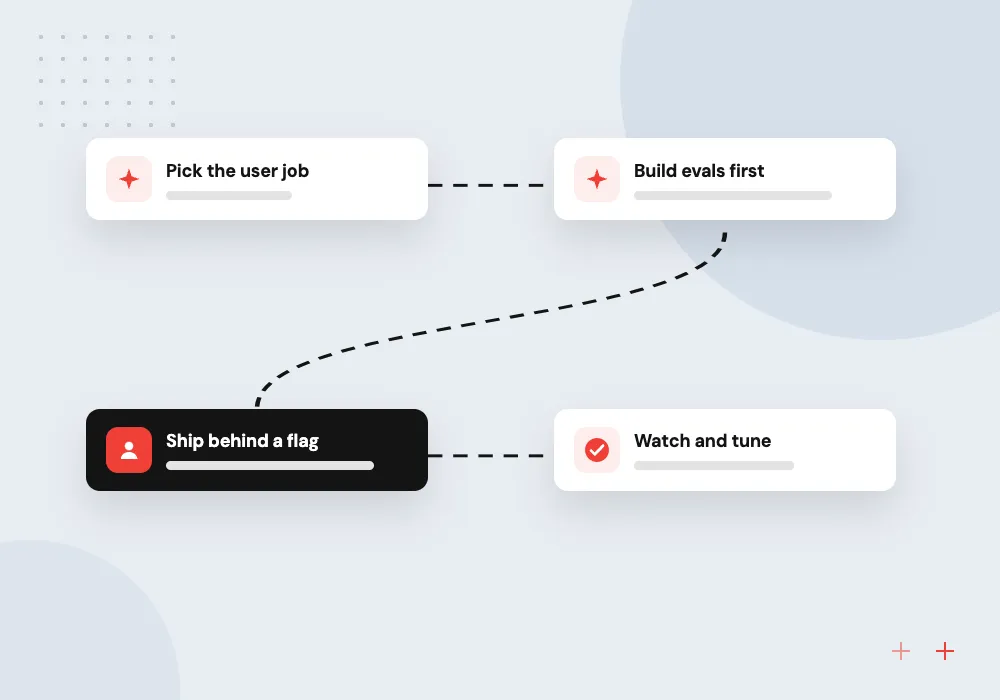
From feature idea to measured release
- 01 Pick the user job We choose one task users repeat, like summarizing a record or drafting a reply.
- 02 Build evals first Test cases from anonymized real data define what a good answer looks like.
- 03 Ship behind a flag A feature flag releases it to chosen tenants while usage and costs are tracked.
- 04 Watch and tune Quality scores, latency, cost per tenant and user feedback guide each iteration.
Tenant isolation is tested like any other security boundary, never assumed.
SaaS AI features customers use
Adding AI to a SaaS product is a product decision first. These four feature types fit most B2B products, each tied to a task users already do in your app.
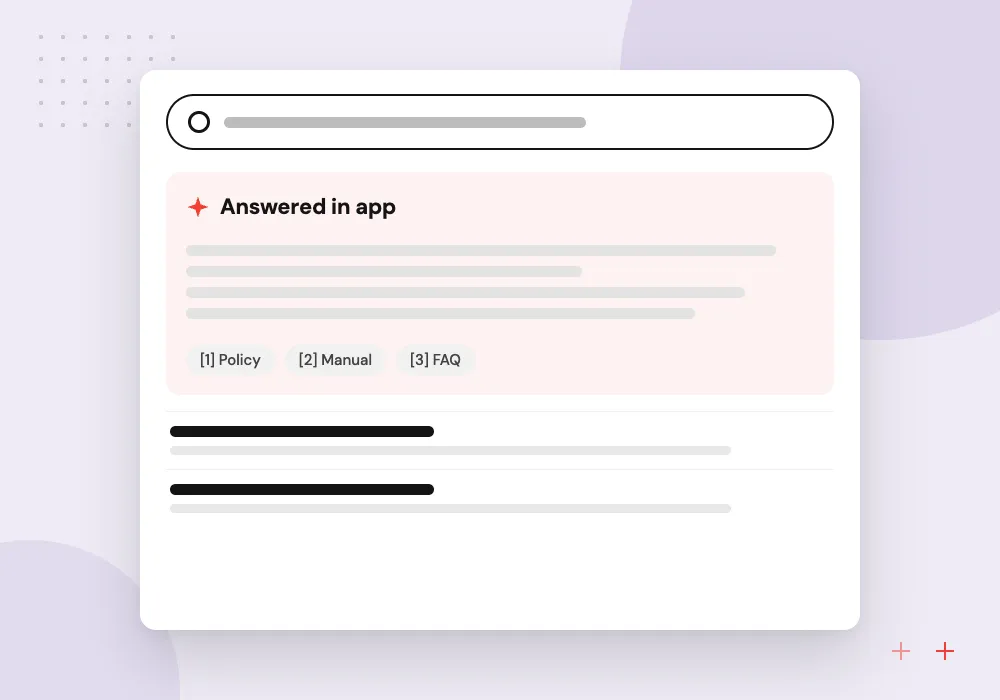
In-app search and answers
Lets users ask plain-language questions about their own records, documents or settings and get answers that link back to the source screen.
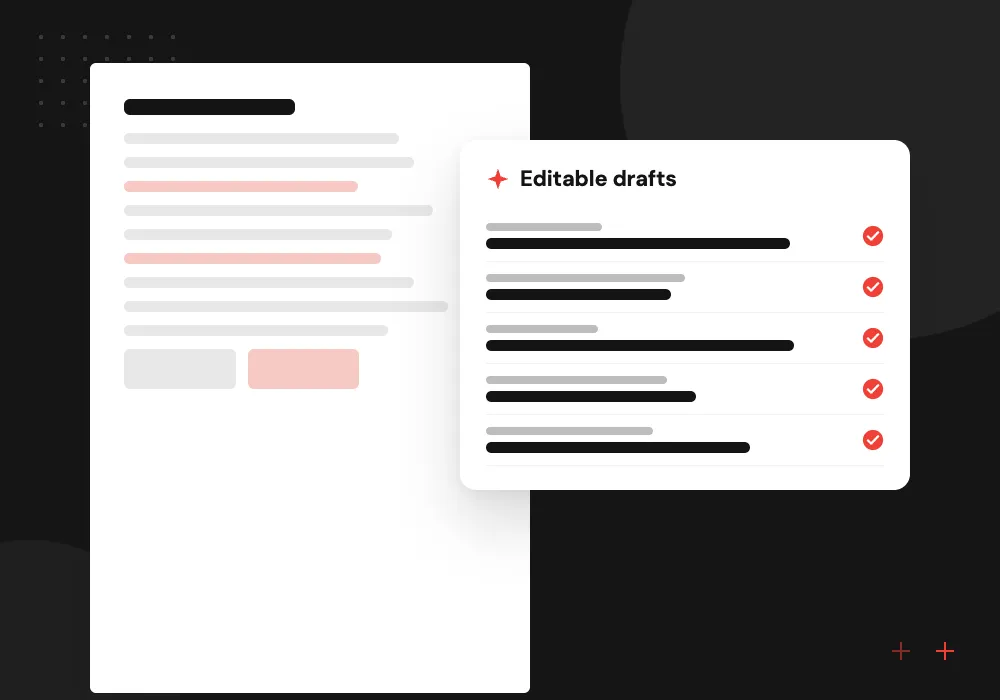
Drafting and summaries
Drafts replies, reports or descriptions from data already in the product and condenses long records, with users editing before anything is saved or sent.
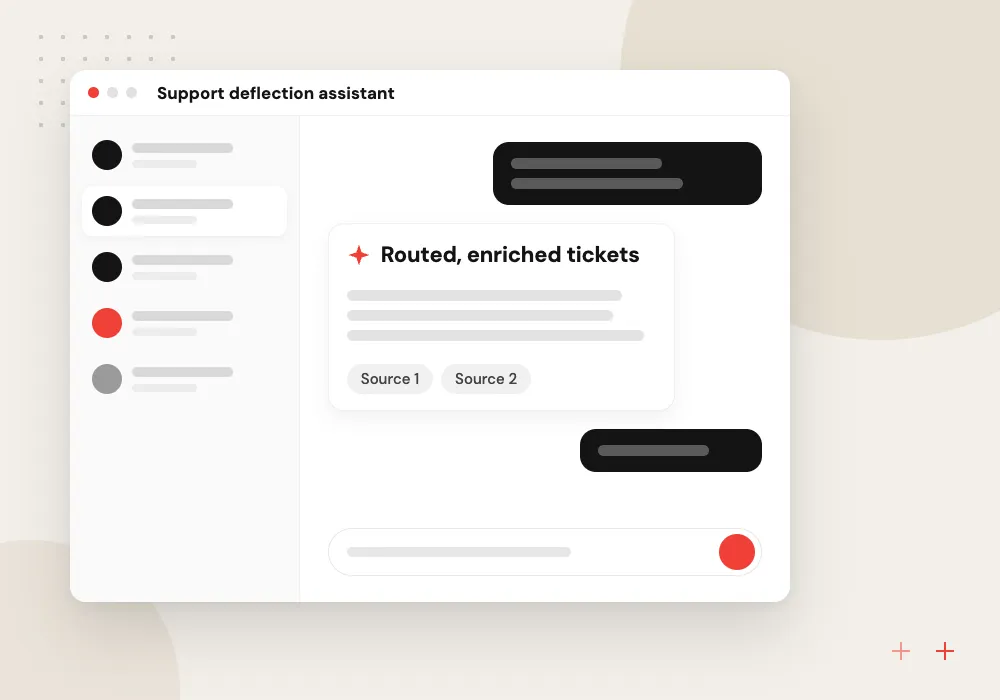
Support deflection assistant
Answers how-to questions from your help center and release notes, gathers context for tickets it cannot solve and routes them to the right queue.
Guided onboarding
Walks new accounts through setup with steps based on their plan and data, imports sample records and flags accounts that stall.
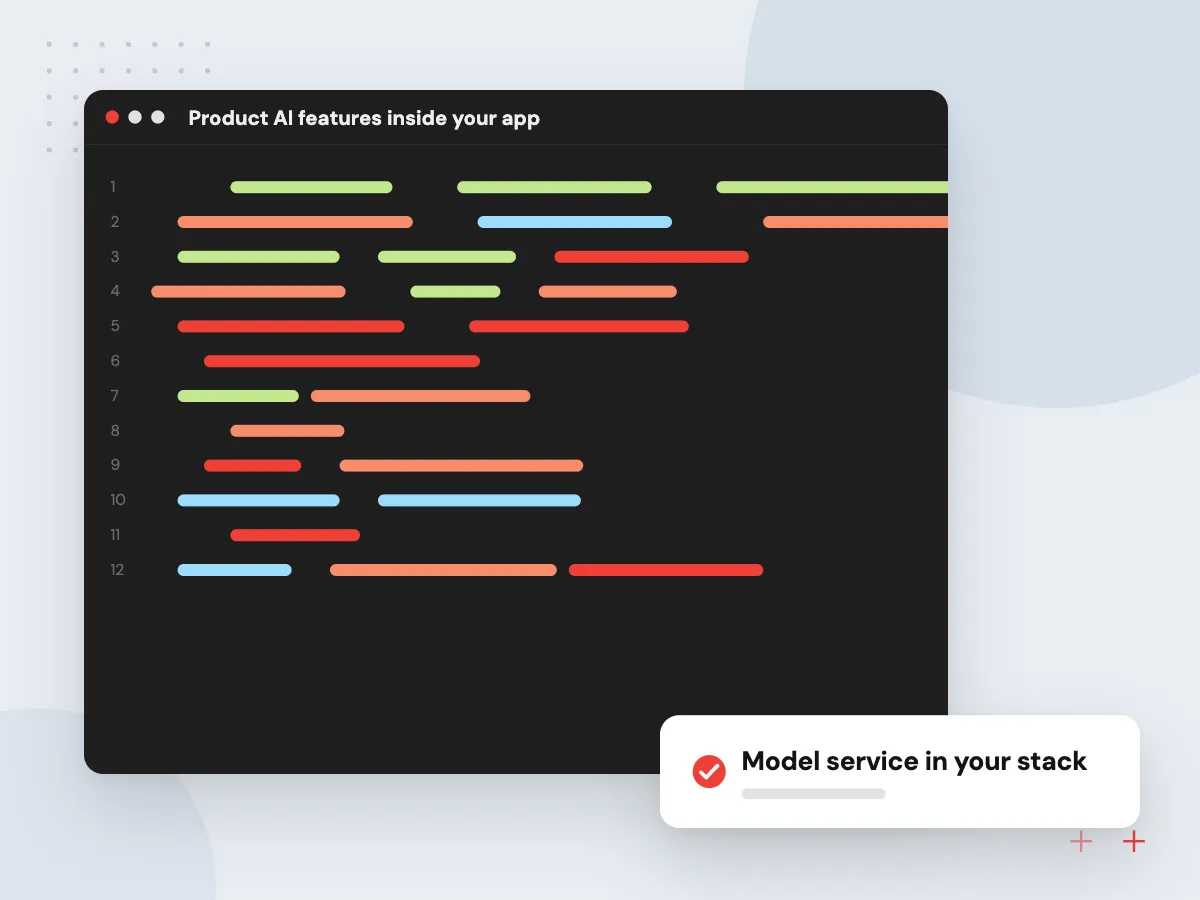
Product AI features inside your app
We build the feature as part of your product rather than a widget on top. That means a model service your backend calls, retrieval over each tenant’s records, UI that shows sources and lets users edit, and events your analytics can track. Features ship behind flags, so you decide which plans and accounts see them first.
What we do
- Model service in your stack
- Tenant-scoped retrieval
- Source links and edit controls
- Feature flags by plan
- Usage events for analytics
Evaluation, isolation and cost controls
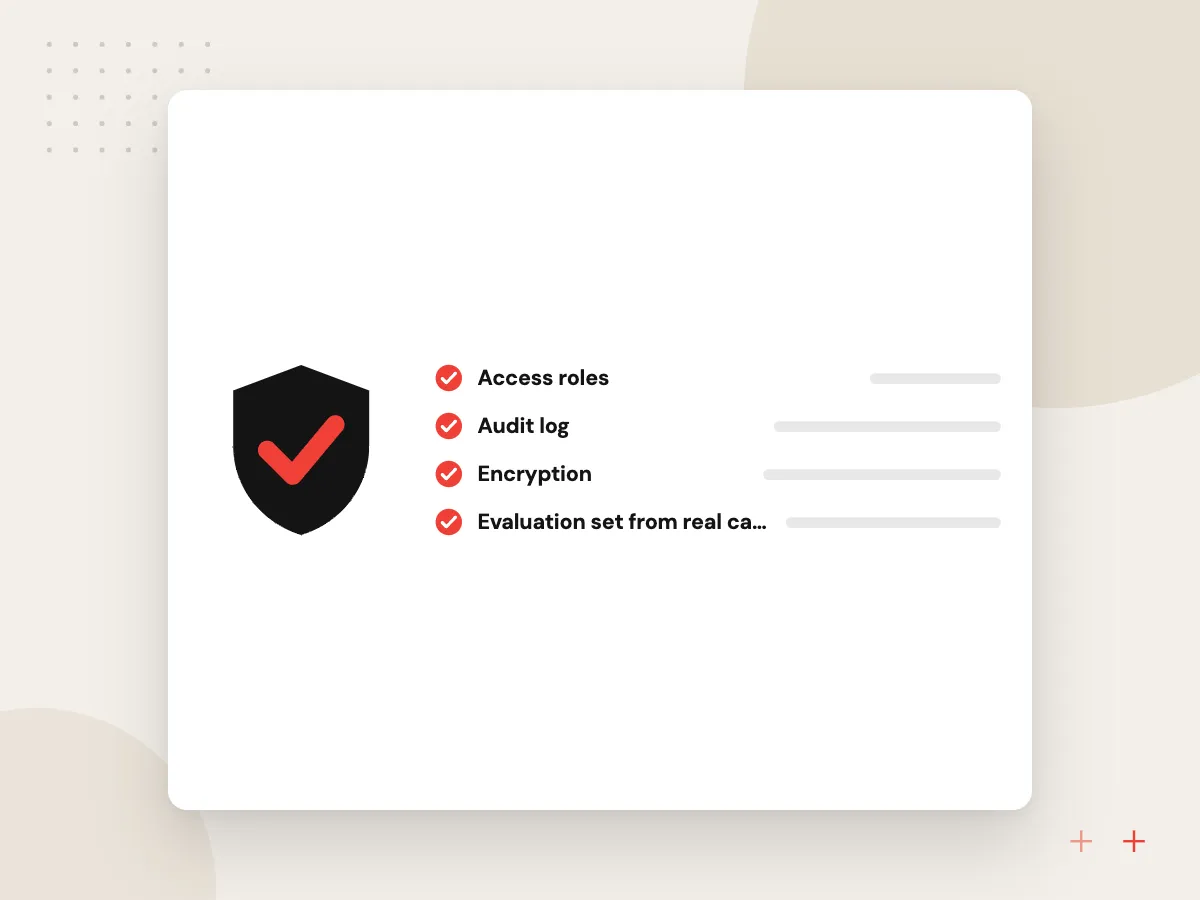
A demo works on clean data; production meets every odd record your customers have. We build an evaluation set from anonymized real cases, test for prompt injection through user content, run cross-tenant leak tests and meter tokens per account. Each release must pass these checks before customers see it.
What we do
- Evaluation set from real cases
- Prompt injection tests
- Cross-tenant leak tests
- Per-tenant cost metering
- Fallback model for outages

How we approach a project
Support and onboarding assistants draw on your help center and release notes, following the patterns in our AI ticket routing work. Product usage data can also feed a churn prediction model that flags accounts at risk for customer success. After launch, LLMOps covers monitoring, model upgrades and cost tracking.
Our wider team has built SaaS products where AI and data rules matter: a US HR support platform in which several agents handle case intake and escalation (Project 02), and a GDPR privacy compliance SaaS (Project 04), both listed with our case studies. Product leaders can request a 30-minute call through our contact page.
How we work
- Tenant data never crosses accounts
- Evaluations before every release
- Cost per tenant tracked daily
Our Process
-

Review usage data
Product analytics and support tickets show which tasks users repeat or get stuck on.
-

Prototype in a branch
A working prototype runs on staging data so product and design can judge it early.
-

Harden for multi-tenancy
Tenant scoping, rate limits, fallbacks and per-tenant cost metering go in before beta.
-

Beta, then general release
Selected customers use the feature behind a flag, and feedback plus eval scores decide the rollout.
Why SaaS teams work with Aranv
We work in your codebase
Our engineers follow your branching, review and release rules, so AI features ship through the same pipeline as the rest of the product.
Isolation treated as security
Tenant scoping is designed, tested and logged like authentication, because a cross-account answer is a data breach, not a quality bug.
Evaluations you keep
Test sets, scoring scripts and dashboards stay in your repository, so your team can check every future model or prompt change.
Costs visible early
Per-tenant and per-feature usage metering goes in before beta, giving product and finance real numbers for pricing decisions.
Planning AI for SaaS Companies?
Book a 30-minute conversation with the team that would build it.
SaaS AI FAQs
-
How do we add AI to our SaaS product without a rebuild?
Most AI features sit beside your existing architecture: a service that calls the model, retrieval over data you already store and new UI components. We work inside your repository and CI pipeline, release behind feature flags and leave the core data model alone unless a feature truly needs a change.
-
How do you keep one customer’s data out of another customer’s AI answers?
Every model request is scoped to a single tenant. Retrieval filters by tenant ID at the database or index level, caches are partitioned and logs record which tenant’s data was used. Automated tests try to cross tenants on every release.
-
How should SaaS companies price AI features?
Pricing is your decision, but data should inform it. We meter model usage per tenant and per feature from the start, so you can see cost per active account and choose between bundling, a higher plan or usage-based add-ons.
-
Which LLM should our product use?
It depends on the task, latency needs, data residency and cost per request. We usually keep the model layer swappable, test a few candidates against your evaluation set and pick the best balance. Our guide to choosing an LLM for business covers the trade-offs.
-
What happens when a model provider retires a model?
Providers announce retirement dates, so we pin model versions, keep the evaluation set current and rerun it against the replacement before switching. A fallback model can also take over during a provider outage.
-
Do you work with our in-house engineering team?
Yes, and that is the usual setup. We join your standups or run a separate stream, follow your code review rules and document prompts, evals and infrastructure so your engineers can own the feature after handover.

Let’s talk about your next step
Contact Aranv to discuss your workflow, current tools, and goals. Meet with our team or send an inquiry.
Book a meeting with our team
Choose an available date and time for a 30-minute conversation about your project.
Tell us about your project
Share a few details so we can discuss a useful next step.
Prefer email? sales@aranv.com