


What AI SaaS development includes
Aranv offers AI SaaS development for founders and established firms building a subscription product with AI at its core. We design and build the multi-tenant application, the AI features, usage metering and cost tracking, plus the evaluation and support tools a product needs before paying customers depend on it.
An AI SaaS product is ordinary SaaS plus a few hard parts. The ordinary parts are sign-up, billing, roles, tenant settings and support tools, which our SaaS development team builds for every product. The hard parts are model calls whose cost varies by customer, answers that can be wrong, and data that must never cross between tenants.
Most products combine several AI pieces: a language model through LLM integration, retrieval over each customer’s documents with RAG, and sometimes agents that complete multi-step jobs. We start with the simplest combination that does the core job well and add pieces when customers need them.
How an AI SaaS product is put together
Product, model, margin
- 01 Define the core job One task customers will pay to have done, measured the way they measure it.
- 02 Separate tenant data Each customer’s documents, embeddings and logs stay isolated from every other customer’s.
- 03 Meter every AI call Tokens, cost and latency are recorded per tenant, feature and plan.
- 04 Evaluate each release A fixed test set runs before deploy so quality does not slip between versions.
Model costs rise with usage, so plan limits and pricing inputs are designed alongside the architecture rather than after launch.
AI product development we take on
AI SaaS products range from narrow tools that do one job well to platforms that add AI across a whole workflow.
Vertical AI tools
A product for one industry, such as drafting inspection reports or summarizing case files, built around that trade’s documents and vocabulary.
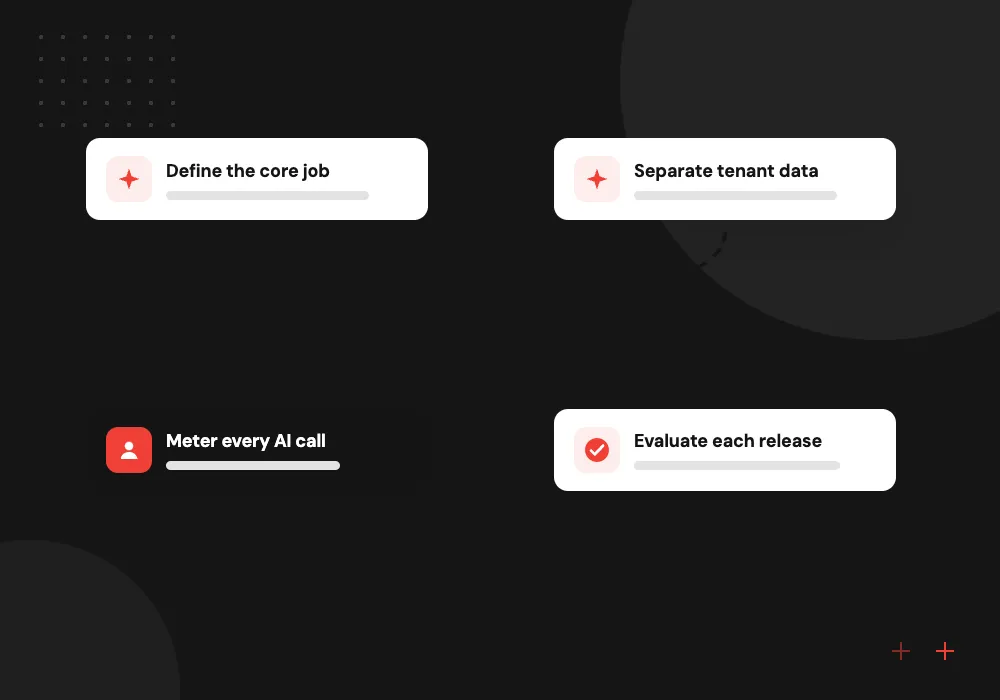
AI workflow platforms
Customers configure intake, review and approval steps where AI does the reading and drafting while their own staff make the decisions.
Analytics with AI answers
Dashboards that let each customer ask questions about their own data in plain language and get charts and figures back.
API-first AI services
An AI capability, such as document extraction or classification, sold to developers through a metered API with keys and usage limits.
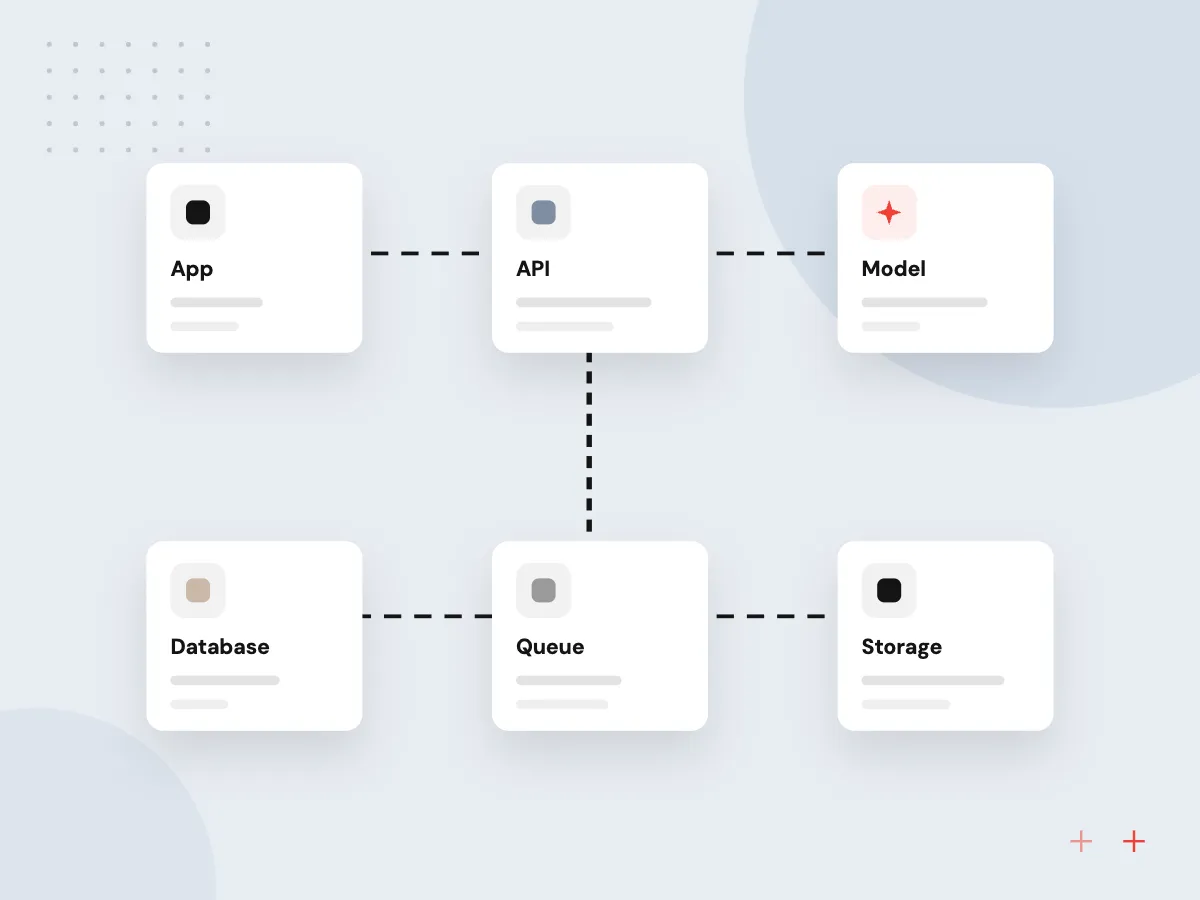
Multi-tenant architecture for AI features
AI adds new places where one customer’s data could reach another: retrieval indexes, cached prompts, logs and fine-tuning sets. We tag every record with its tenant, filter retrieval by tenant on the server, and keep per-tenant settings for models, limits and data retention.
What we do
- Tenant-scoped retrieval indexes
- Per-tenant model and limit settings
- Usage metering tied to billing
- Admin console for your support team
- Data export and deletion per customer
Evaluation, cost control and honest claims
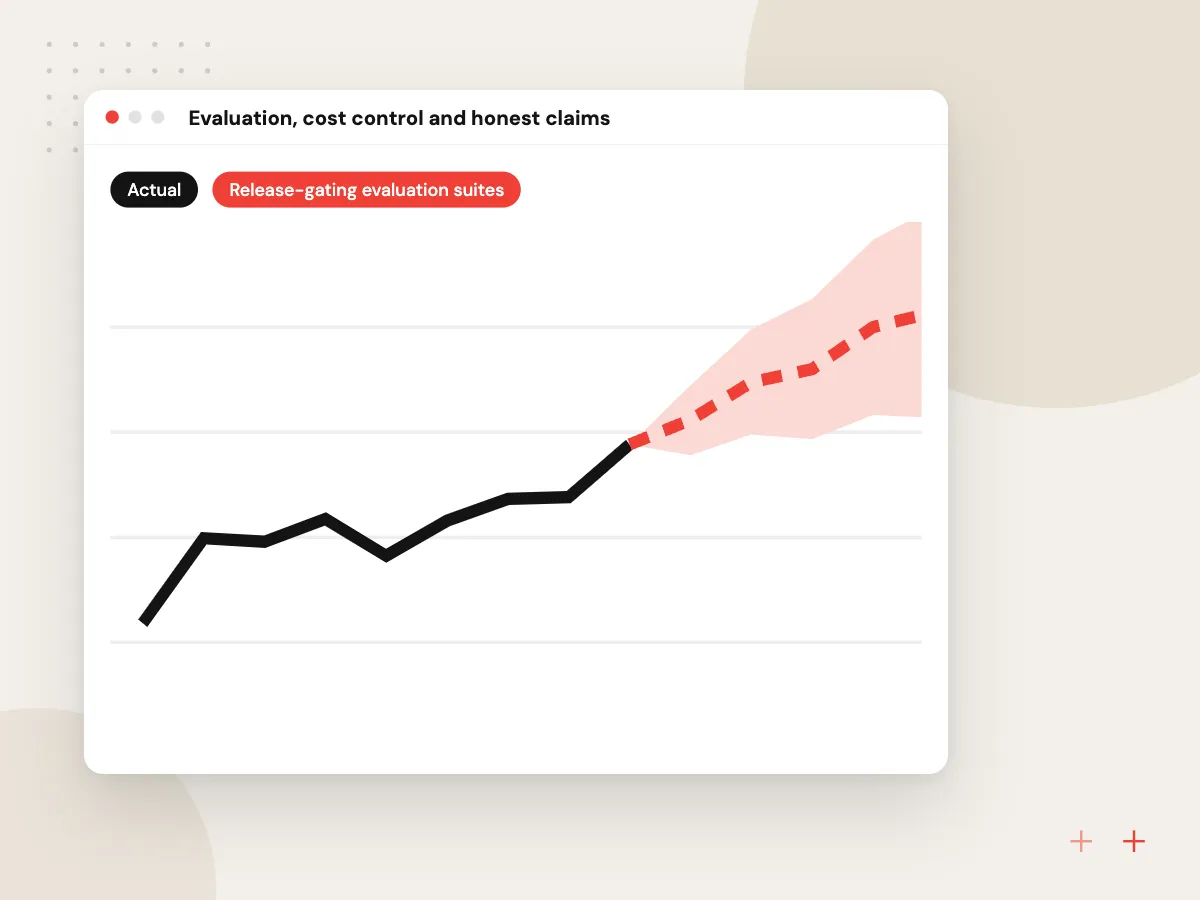
Paying customers notice when answers get worse. We keep an evaluation set per feature, run it on every release and model change, and watch cost per tenant so a heavy user does not erase your margin. Marketing claims about what the AI does are checked against those test results before they reach your website.
What we do
- Release-gating evaluation suites
- Cost per tenant and per feature
- Model routing by task difficulty
- Rate limits and plan quotas
- Claims reviewed against test results

How we approach a project
Selling AI also draws scrutiny. In September 2024 the FTC announced Operation AI Comply, a set of cases over deceptive AI claims, so we keep feature descriptions tied to tested behavior. If demand is not yet validated, AI MVP development is the cheaper first step.
Bring the product idea or your current roadmap and we will spend a 30-minute conversation on the part of the product that carries the most risk and how to test it early. Scheduling is on the contact page.
How we work
- Tenant isolation from day one
- Cost per customer always visible
- Quality tested before every release
Our Process
-

Product and margin model
We define the core job, the plans you intend to sell and the model cost each plan can carry.
-

Core loop first
The single AI workflow customers pay for is built and evaluated before billing, admin and extras.
-

Multi-tenant hardening
Tenant isolation, metering, rate limits and admin tools are added and tested with pilot customers’ data.
-

Launch and operate
We release to paying customers, watch quality and cost per tenant, and ship improvements on a regular cadence.
Why Aranv for AI SaaS
Margin is designed in
We model cost per customer and per plan before building, then meter every AI call, so you can see which accounts are profitable as soon as they start using the product.
Isolation beyond the database
Tenant boundaries cover retrieval indexes, caches, logs and evaluation data as well as tables, because those are the places where AI features add new exposure.
Quality checked every release
Evaluation suites run on each deploy and model update, so customers do not discover a drop in answer quality before you do.
Product skills, not just AI
The same team builds onboarding, billing, admin consoles and support tools, because an AI feature is only one part of a product people pay for.
Planning AI SaaS Development?
Book a 30-minute conversation with the team that would build it.
AI SaaS development FAQs
-
How is building an AI SaaS product different from regular SaaS?
Accounts, billing and permissions work much the same. The differences are that each AI request has a variable cost, answers need ongoing quality testing, and retrieval indexes and logs need the same tenant isolation as your database. Those three points shape the architecture from the first sprint.
-
How do we price an AI product when model costs vary?
We meter tokens and requests per customer from the start, so you can see actual cost by plan. Common approaches include usage allowances per plan, credits for heavy features and limits that stop one account from running up large bills. We supply the data; pricing decisions stay with you.
-
Should we build on one AI provider or several?
Start with the provider that handles your core task best, but keep the model behind your own service layer. That lets you route simple tasks to a cheaper model, add a fallback during outages and change providers if terms or prices move.
-
Can we fine-tune a model on customer data?
Only with clear permission in your customer terms, and often it is not needed. Retrieval over each customer’s own documents gives tailored answers without mixing data across tenants. If fine-tuning makes sense later, we design it per tenant or on data customers have agreed to share.
-
Who owns the code and the models?
The contract sets ownership before work starts, and we recommend that source code, prompts, evaluation sets and infrastructure scripts pass to you on payment. Third-party models stay under their providers’ terms, which is why we document every external service the product depends on.

Let’s talk about your next step
Contact Aranv to discuss your workflow, current tools, and goals. Meet with our team or send an inquiry.
Book a meeting with our team
Choose an available date and time for a 30-minute conversation about your project.
Tell us about your project
Share a few details so we can discuss a useful next step.
Prefer email? sales@aranv.com