


What an AI product search build includes
Aranv builds AI product search for the online stores and B2B portals of small and midsize sellers. It combines keyword and semantic search, turns plain-language queries into filters, handles part numbers and typos, and ranks results with your stock and merchandising rules.
Good search starts with clean product data, so we first check titles, attributes and categories, often alongside AI product description work that fills missing attributes. We then collect real queries from your logs and have merchandisers mark the right results, creating the test set every change is measured against.
The engine runs keyword and vector search in parallel and merges the two lists. Microsoft’s documentation on Reciprocal Rank Fusion explains one common way to combine them. Embeddings are stored through our vector database development work, in a hosted search service or PostgreSQL, depending on your stack.
How one search query is answered
From typed query to ranked results
- 01 Understand the query Size, color, price limits and intent are pulled from the shopper’s words.
- 02 Search two ways Keyword matching and semantic matching run side by side.
- 03 Merge and rank Results are fused, then adjusted for stock, margin and your boosts.
- 04 Learn from behavior Clicks, add-to-carts and zero-result queries feed regular tuning.
Exact matches on SKUs and part numbers come first; semantic matching fills in the rest.
Site search AI for stores and catalogs
Shoppers who search usually know what they want, which makes a poor results page a costly place to lose them.
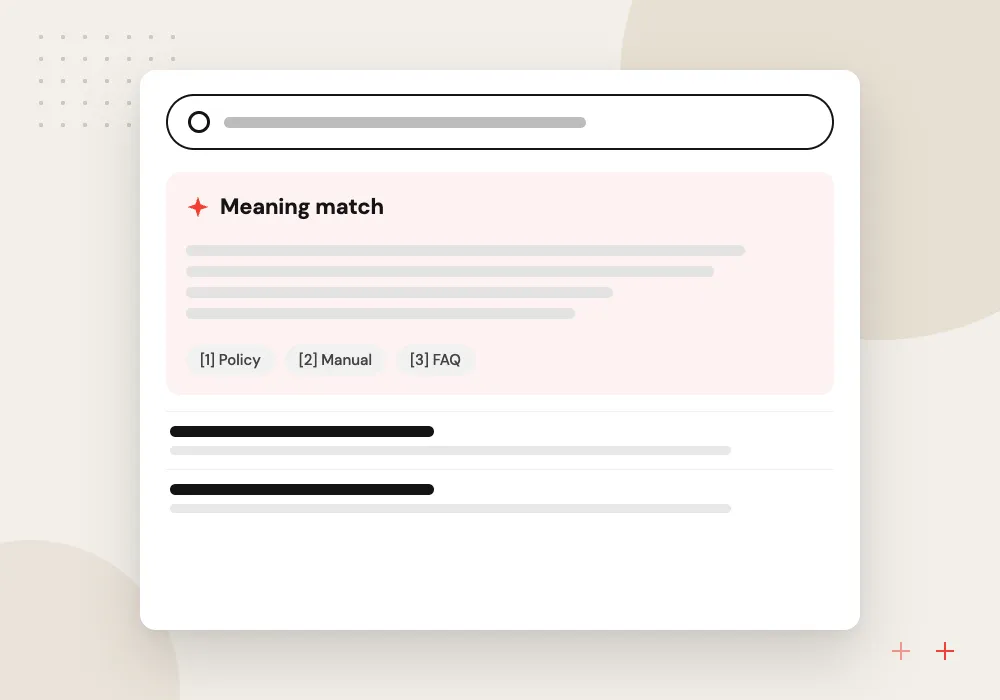
Semantic search for eCommerce
A query like warm jacket for rainy hikes finds matching products even when no description uses those exact words.
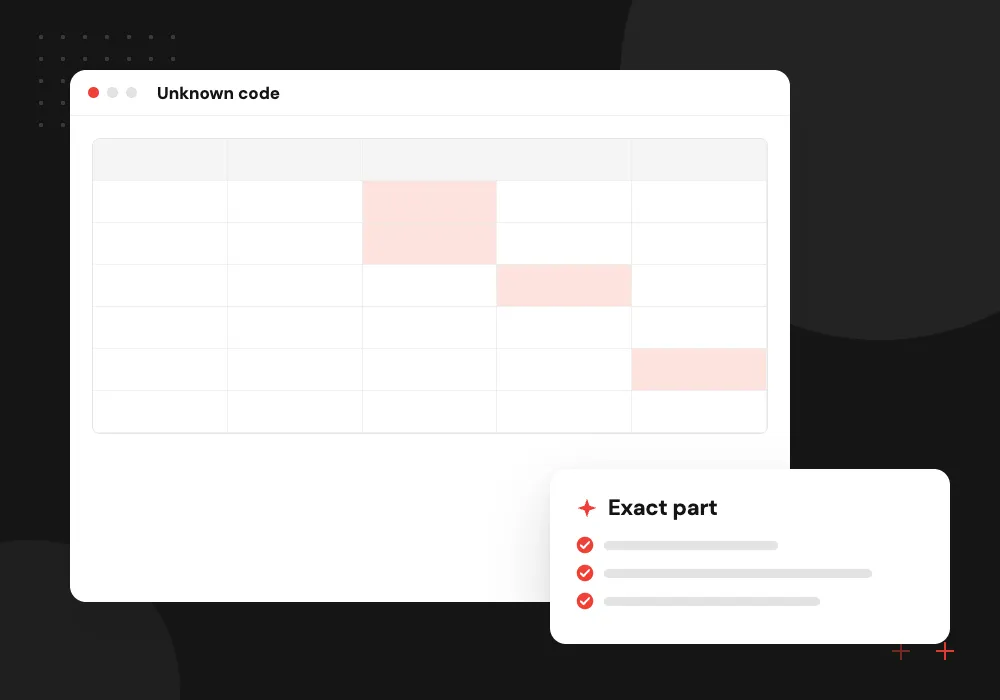
Part number and SKU search
Manufacturer numbers, retired SKUs, cross-references and partial codes resolve to the right item for trade buyers.
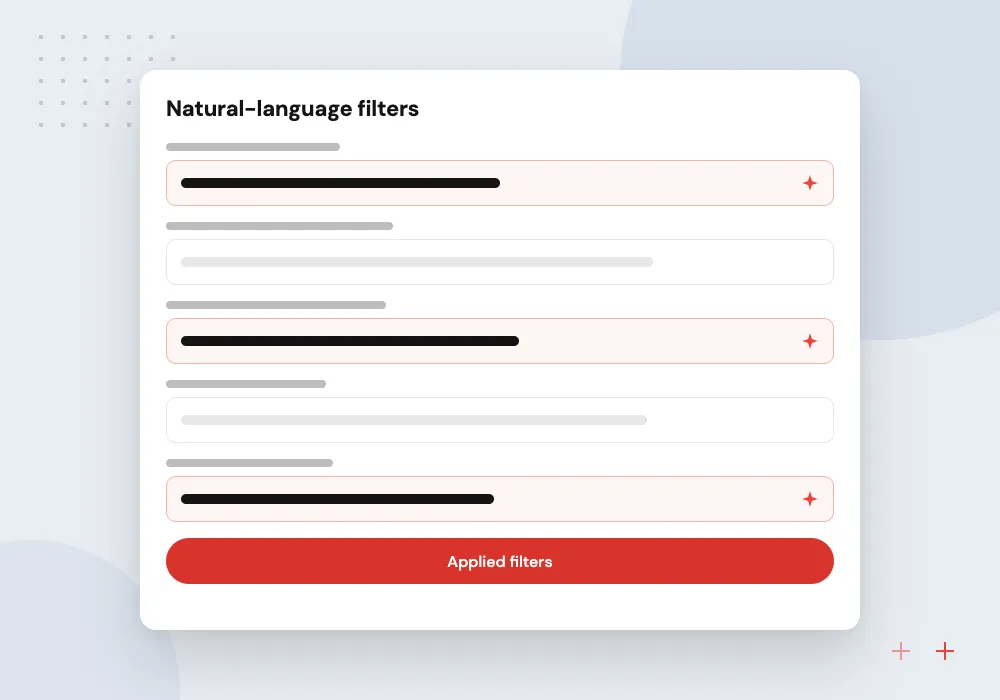
Natural-language filters
Phrases such as under fifty dollars or wide fit are turned into price, size and fit filters on the results page.

Search analytics for merchandisers
A report of top, failing and zero-result queries, with tools to add synonyms, redirects and boosts that fix them.
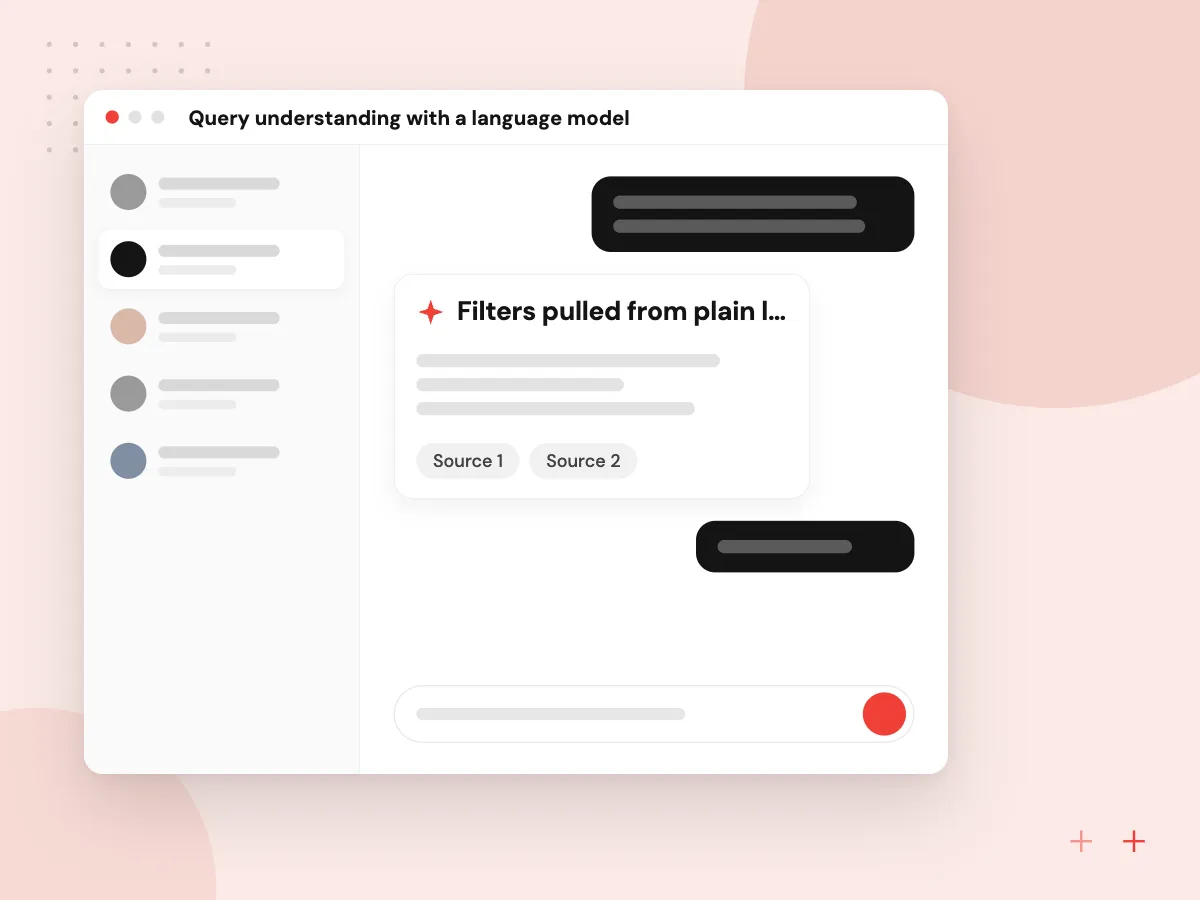
Query understanding with a language model
Longer queries carry structure: a product type, a size, a budget, a use. A language model turns that text into filters and a cleaner search phrase, under a strict time limit with a plain keyword fallback. Short queries and codes skip this step, so they stay fast.
What we do
- Filters pulled from plain language
- Spelling and unit normalization
- Synonyms learned from logs
- Time limit with keyword fallback
- Codes routed to exact match
Relevance testing and search analytics
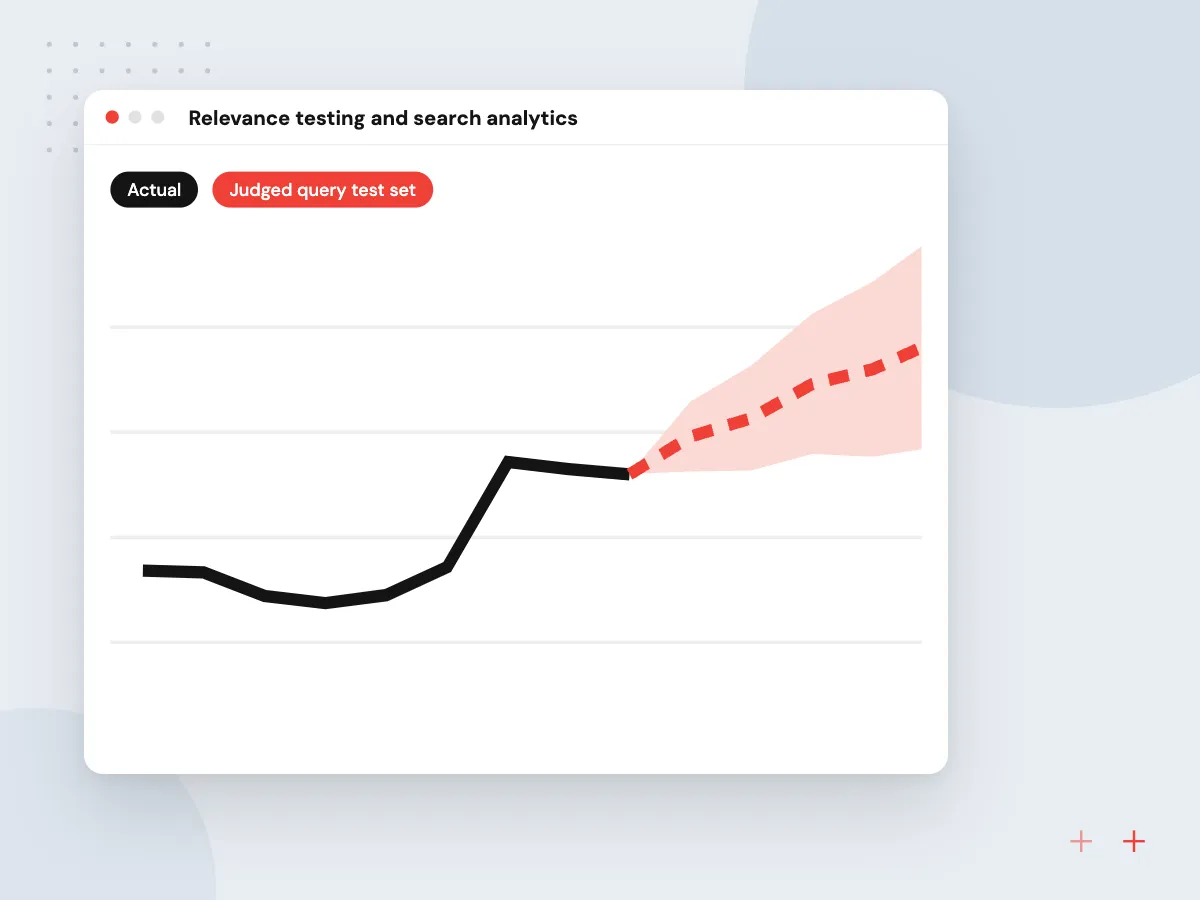
Every change to synonyms, weights or models is scored against the judged query set before release. After launch, a regular report lists failing and zero-result queries, and merchandisers fix them with synonyms, redirects and boosts in a screen they control, without waiting for a developer.
What we do
- Judged query test set
- Relevance scoring before release
- Zero-result query report
- Synonym and redirect manager
- Boosts by brand or margin

How we approach a project
A language model reads longer queries into structured filters, while the final ranking stays fast and predictable. Search plugs into Shopify, WooCommerce, Magento or a headless front end, and it is part of our wider AI for eCommerce work alongside the shopping assistant.
Trade catalogs full of part numbers, such as those of wholesale distributors and car dealerships selling parts online, gain the most. We are happy to look through a few months of your search logs in a 30-minute conversation; pick a time on the contact page.
How we work
- Exact part numbers always win
- Every zero-result query reviewed
- Relevance tested on real queries
Our Process
-

Read the search logs
We list top queries, failing queries and zero-result queries from recent months.
-

Build a judged test set
Merchandisers mark correct results for real queries, giving a fixed yardstick for relevance.
-

Tune hybrid ranking
Keyword, semantic and business signals are weighted and checked against the test set after every change.
-

Launch and keep tuning
New search runs beside the old one on split traffic, then regular reports guide synonyms and boosts.
Why Aranv for product search
Measured on your queries
Relevance is judged on real searches from your logs, marked by your merchandisers, so improvements are proven before shoppers see them.
Exact matches respected
Part numbers, SKUs and brand names are matched exactly first, which keeps trade buyers from wading through look-alike results.
Works with your platform
We add AI search to Shopify, WooCommerce, Magento, headless stores or B2B portals, keeping your existing catalog and checkout in place.
Merchandisers in control
Synonyms, redirects and boosts are managed by your team in plain screens, and each change is tested before it goes live.
Planning AI Product Search?
Book a 30-minute conversation with the team that would build it.
AI product search FAQs
-
What is the difference between semantic search and keyword search?
Keyword search matches the words typed, which works well for brand names and part numbers. Semantic search matches meaning, so it finds products described differently from the query. Hybrid search runs both and merges the results, which suits most stores.
-
Will AI search work for B2B part numbers and SKUs?
Yes, when it is set up for them. Exact and partial code matches are handled by keyword logic and ranked first, with cross-reference tables for superseded or other manufacturers’ numbers. Semantic matching is kept for descriptive queries.
-
Can we keep our current search provider?
Often, yes. We can add query understanding, semantic matching and re-ranking around an existing search service, or replace it if it cannot support vector search or the control your team needs.
-
How do you measure whether search got better?
Before launch, against a judged test set of real queries. After launch, with search conversion, zero-result rate, search exits and add-to-cart from results, comparing old and new search on split traffic.
-
Does AI product search slow down the results page?
It should not. The language model handles only longer queries and works under a time limit, and the merged ranking runs inside the search engine. Autocomplete uses a lighter path so suggestions keep up with typing.

Let’s talk about your next step
Contact Aranv to discuss your workflow, current tools, and goals. Meet with our team or send an inquiry.
Book a meeting with our team
Choose an available date and time for a 30-minute conversation about your project.
Tell us about your project
Share a few details so we can discuss a useful next step.
Prefer email? sales@aranv.com