


What a product description generator project includes
Aranv builds an AI product description generator connected to your catalog for small and midsize retailers, brands and distributors. It writes titles, descriptions and bullet points from your supplier data and spec sheets, fills missing attributes and sends drafts to a merchandiser before anything is published.
We start with your catalog data, not with prompts. Supplier feeds, ERP fields and spec sheets are mapped to one attribute set per category, because a description can only be as accurate as the facts behind it. The gaps found here often matter more than the copy.
Writing rules are set per category with your merchandising lead: tone, length, required details, banned claims and keyword targets. Feed copy follows each channel’s own rules, such as the Google Merchant Center description requirements. Health, safety and performance claims are blocked unless the source data states them.
From supplier data to a published listing
One SKU, from feed to storefront
- 01 Collect product data Supplier feeds, spec sheets, ERP fields and photos are joined for each SKU.
- 02 Fill missing attributes Size, material, compatibility and care details are extracted and checked against sources.
- 03 Write for each channel Store copy, marketplace bullets and feed text follow each channel’s own rules.
- 04 Review and publish Merchandisers approve samples and flagged items, then approved copy syncs to the store.
The model may only state facts present in the product data; anything else is flagged.
Product content automation for large catalogs
Copy backlogs grow when new SKUs arrive faster than anyone can write about them.
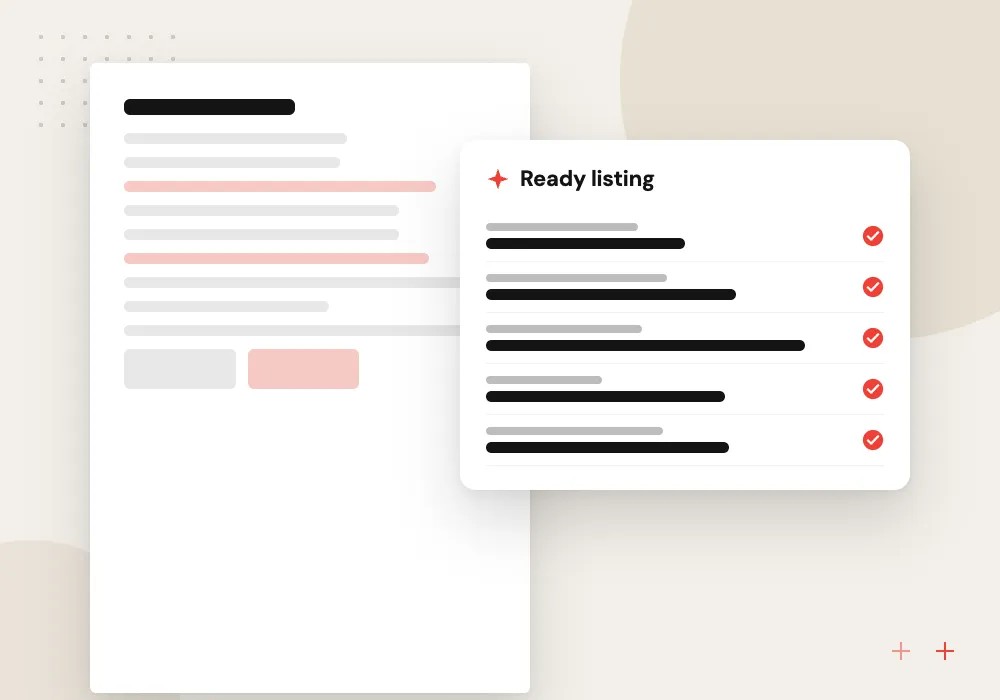
New SKU descriptions
Titles, descriptions and bullet points are written from the supplier sheet as items are created, in your brand’s tone.
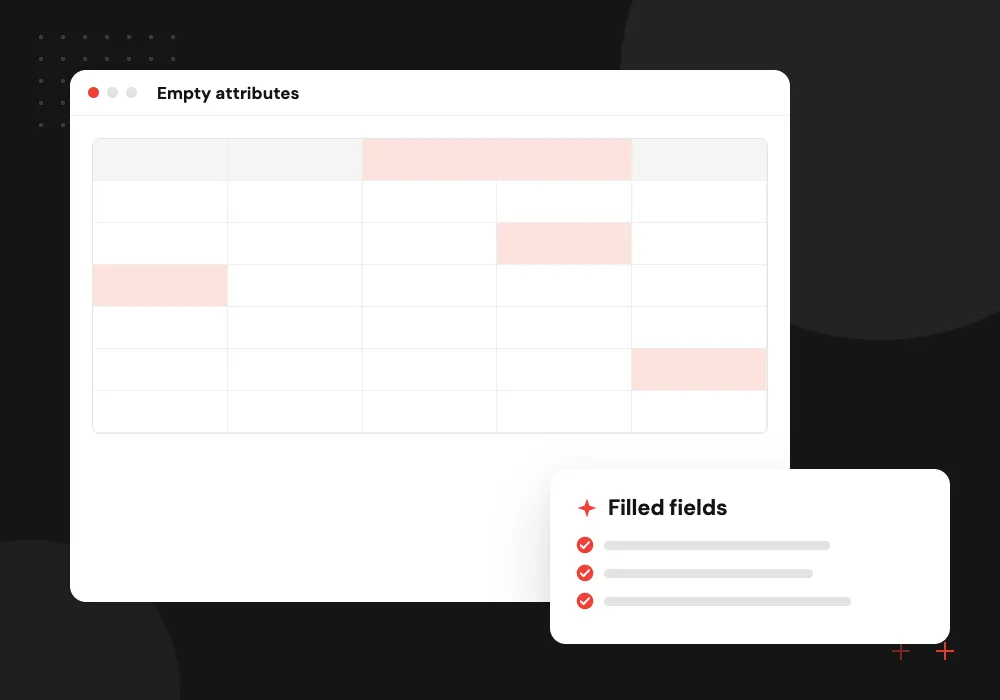
Catalog enrichment
Missing attributes such as material, dimensions and compatibility are pulled from spec sheets so filters and search work properly.
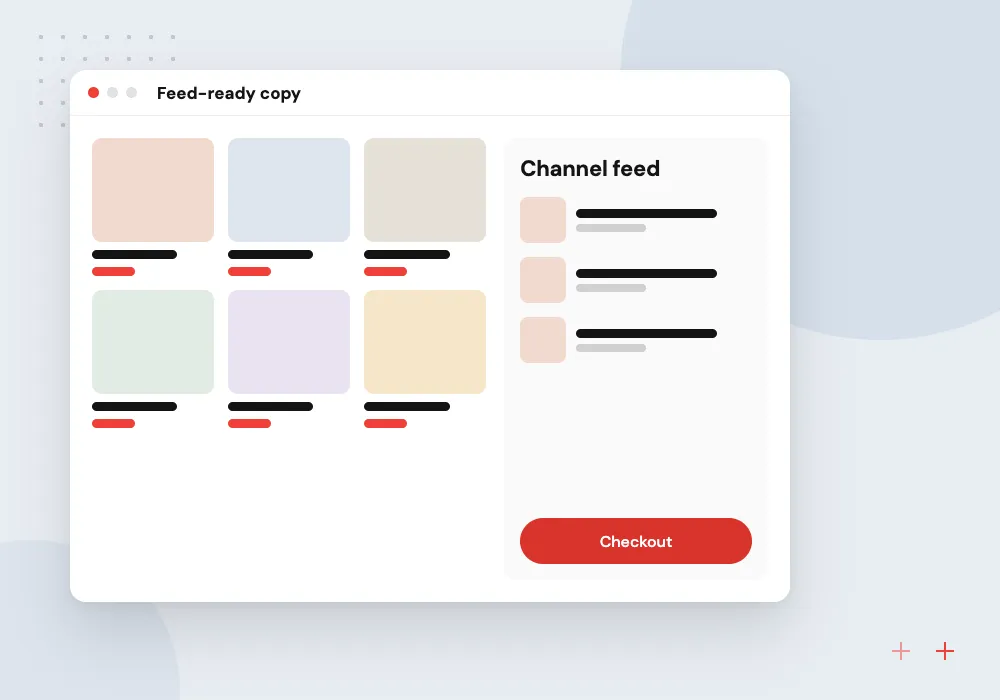
Feed-ready copy
Shopping feed titles and descriptions are written to each channel’s length and content rules, with promotional wording kept out.
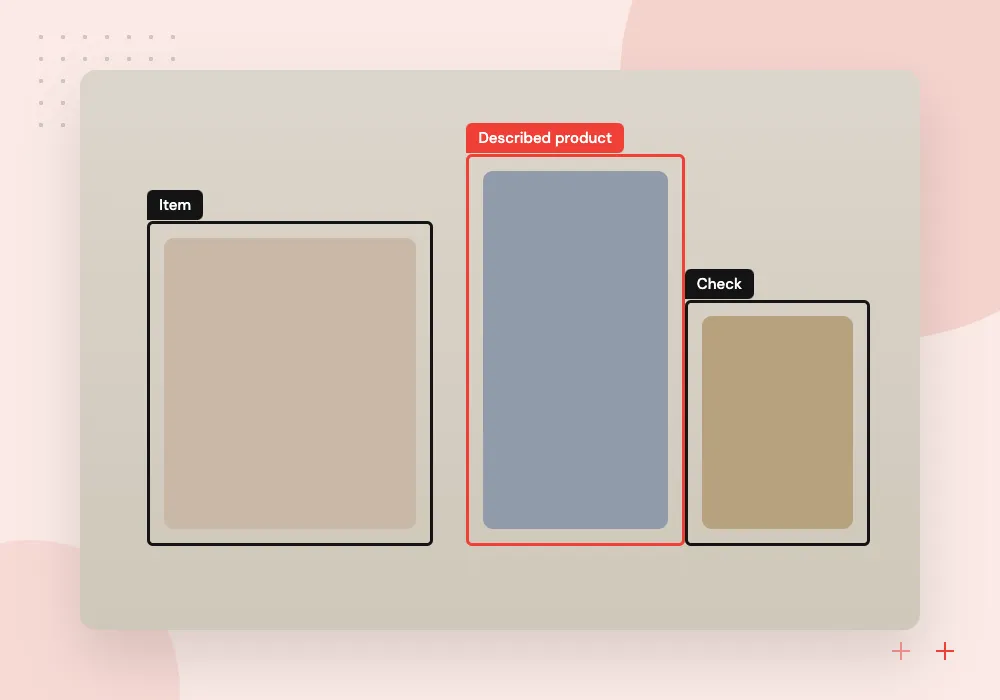
Image-assisted details
Product photos are read for color, pattern and visible features, and those details are offered to the writer for confirmation.
Attribute extraction and catalog cleanup
Descriptions fail when the data under them is thin. Before writing, the pipeline reads spec sheets and supplier PDFs to fill missing attributes, converts units, standardizes values such as color names and flags conflicts between sources. Your filters, comparison tables and search all benefit from the same cleanup.
What we do
- Spec sheet attribute extraction
- Unit and value standardization
- Conflict flags between sources
- Category attribute templates
- Missing-data reports by supplier
Review queue and publishing controls
Merchandisers work from a queue that shows each draft beside its source data, with unsupported claims highlighted. They approve, edit or reject in bulk, and each decision feeds back into the rules. Published copy keeps its version history, so any listing can be rolled back.
What we do
- Draft beside source data
- Highlighted unsupported claims
- Bulk approve and edit
- Version history per listing
- Scheduled sync to the store

How we approach a project
Approved text syncs to Shopify, WooCommerce, Magento or your PIM through their APIs, and the previous version is kept. This belongs to our AI for eCommerce work and feeds AI product search, since clean attributes improve search and filters. Stores selling abroad can add AI translation to the same pipeline.
Catalog work matters most to retailers and to wholesale distributors carrying large supplier catalogs. Send an export of one category before a 30-minute conversation, arranged through the contact page, and we will review it with you.
How we work
- Facts only from product data
- One voice across the catalog
- Merchandisers approve before publishing
Our Process
-

Audit one category
We review data quality, current copy and channel rules for a single category first.
-

Agree templates and rules
Your merchandiser approves tone, structure, required attributes and banned claims for that category.
-

Generate and sample
We write a batch, your team reviews a sample, and we adjust the rules until rejections are rare.
-

Scale and sync
Remaining categories follow, and approved copy syncs to the store with version history.
Why Aranv for product content
Data before copy
We fix the attribute data first, because accurate copy depends on it, and the same cleanup improves filters, search and shopping feeds.
Claims tied to sources
Every statement in a description can be traced to a supplier field or spec sheet, and anything without a source waits for a person.
Connected to your store
Drafts sync to your eCommerce platform or PIM through its API with version history, so nobody copies and pastes between browser tabs.
Rules your team can edit
Merchandisers adjust tone, length and banned words per category without asking a developer, and the changes apply to the next batch.
Planning AI Product Description Generator?
Book a 30-minute conversation with the team that would build it.
AI product description FAQs
-
Will AI product descriptions hurt our SEO?
Not when they are accurate, specific and different for each product. Thin, repeated text is the real risk, which is why we write from actual attributes and check for near-duplicates. Google’s public guidance focuses on whether content is helpful, not on whether AI helped produce it.
-
How do you stop the generator from inventing product features?
The model receives only the facts for that SKU and is told to use nothing else. A second check compares each claim in the draft with the source attributes, and any statement it cannot match is flagged for a person.
-
Can it match our brand voice?
Yes. We build a style guide from your best existing copy, covering words to use and avoid, sentence length and how to address the shopper. Merchandisers review samples until the drafts read like your own team wrote them.
-
Which platforms can the descriptions publish to?
Shopify, WooCommerce, Magento, BigCommerce and most PIM systems through their APIs, or a CSV import if you prefer. Marketplace and shopping feed copy can come out of the same run, within each channel’s limits.
-
How many products can it handle?
Batch size depends on your data and review capacity rather than the model. Most teams start with one category, check quality, then work through the catalog category by category, with new SKUs handled as they arrive.

Let’s talk about your next step
Contact Aranv to discuss your workflow, current tools, and goals. Meet with our team or send an inquiry.
Book a meeting with our team
Choose an available date and time for a 30-minute conversation about your project.
Tell us about your project
Share a few details so we can discuss a useful next step.
Prefer email? sales@aranv.com