


What an AI translation integration includes
Aranv builds AI translation integration for small and midsize companies that serve customers in more than one language. We connect machine translation to your CMS, store, helpdesk and documents, apply your glossary and style rules, check each segment automatically and send sensitive content to bilingual reviewers before it goes live.
We start with what must be translated, for which markets and with what level of care. Marketing pages, catalog data, help articles and contracts carry different risks, so each content type gets its own engine, review rule and turnaround. Legal and safety text stays with professional translators.
Engines include neural translation services and large language models, chosen per language pair by testing on your own content through our LLM integration work. A glossary, a do-not-translate list and a memory of approved translations keep names and terms consistent, and our NLP development team builds the automatic checks.
How content moves through translation
Changed text in, reviewed languages out
- 01 Detect changed content New or edited pages, products and articles are picked up from the source system.
- 02 Translate with your terms Engines apply your glossary, do-not-translate list and saved past translations.
- 03 Run automatic checks Tags, numbers, units, length limits and terminology are verified for every segment.
- 04 Review and publish Reviewers approve flagged or sensitive items, and approved text publishes per language.
Legal, safety and medical wording always goes to a qualified human translator.
Machine translation workflow uses
Many companies translate in bursts by email, which leaves some languages months behind the English site.
Website localization AI
Pages, menus and metadata are translated when the English content changes, with localized URLs and hreflang tags for search engines.
Catalog translation
Product titles, descriptions and attributes are translated in bulk, with units and sizes converted for each market.
Support message translation
Customer emails and chats are translated for agents, and replies are translated back, with the original kept on the ticket.
Manual and help translation
Manuals, help articles and training material are translated with your terminology, then checked by a bilingual staff member.
Glossary, memory and quality checks
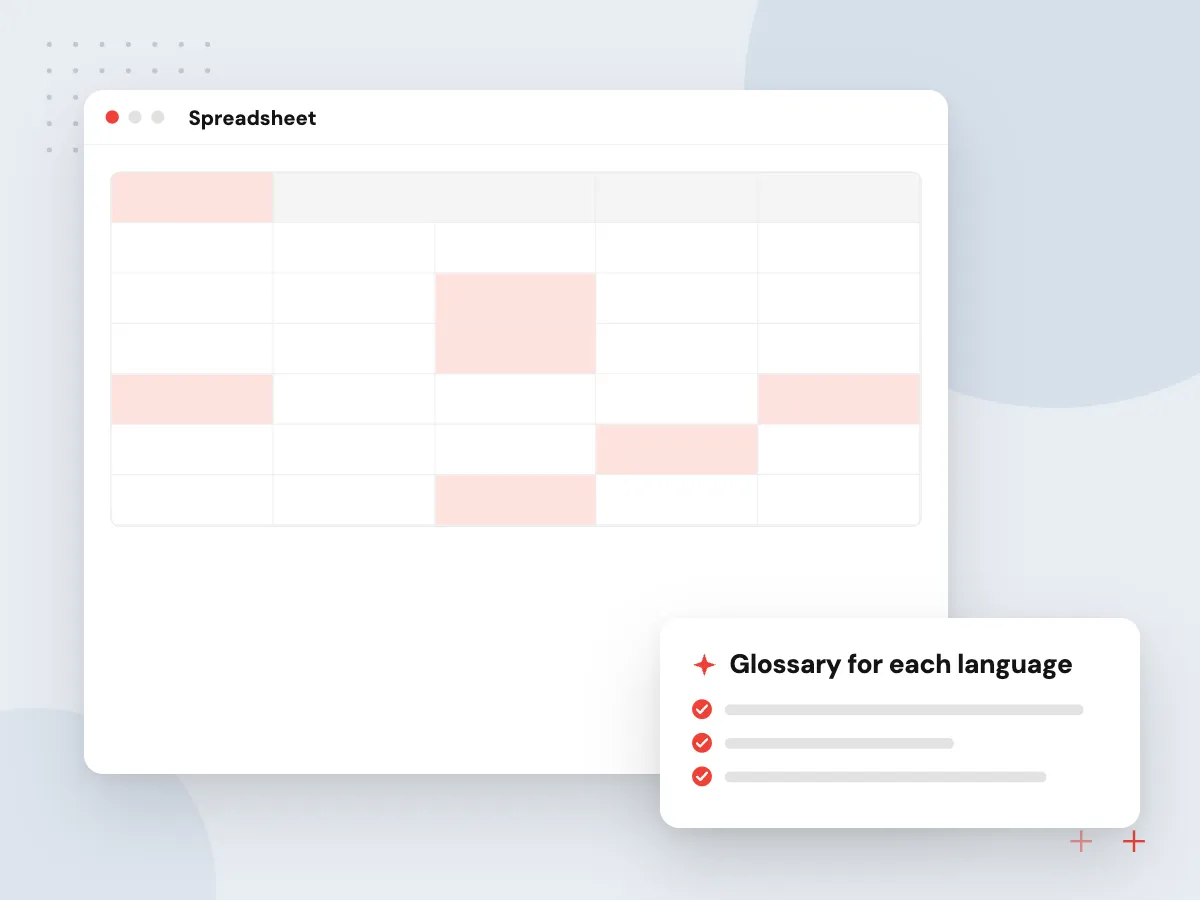
Consistency comes from data, not from the engine. Your glossary sets how each product name and technical term is translated, a do-not-translate list protects brand names, and approved translations are reused. Automatic checks catch broken tags, changed numbers, wrong units and text too long for its button.
What we do
- Glossary for each language
- Do-not-translate list
- Reuse of approved translations
- Tag, number and unit checks
- Length limits for interface text
Two-way support translation
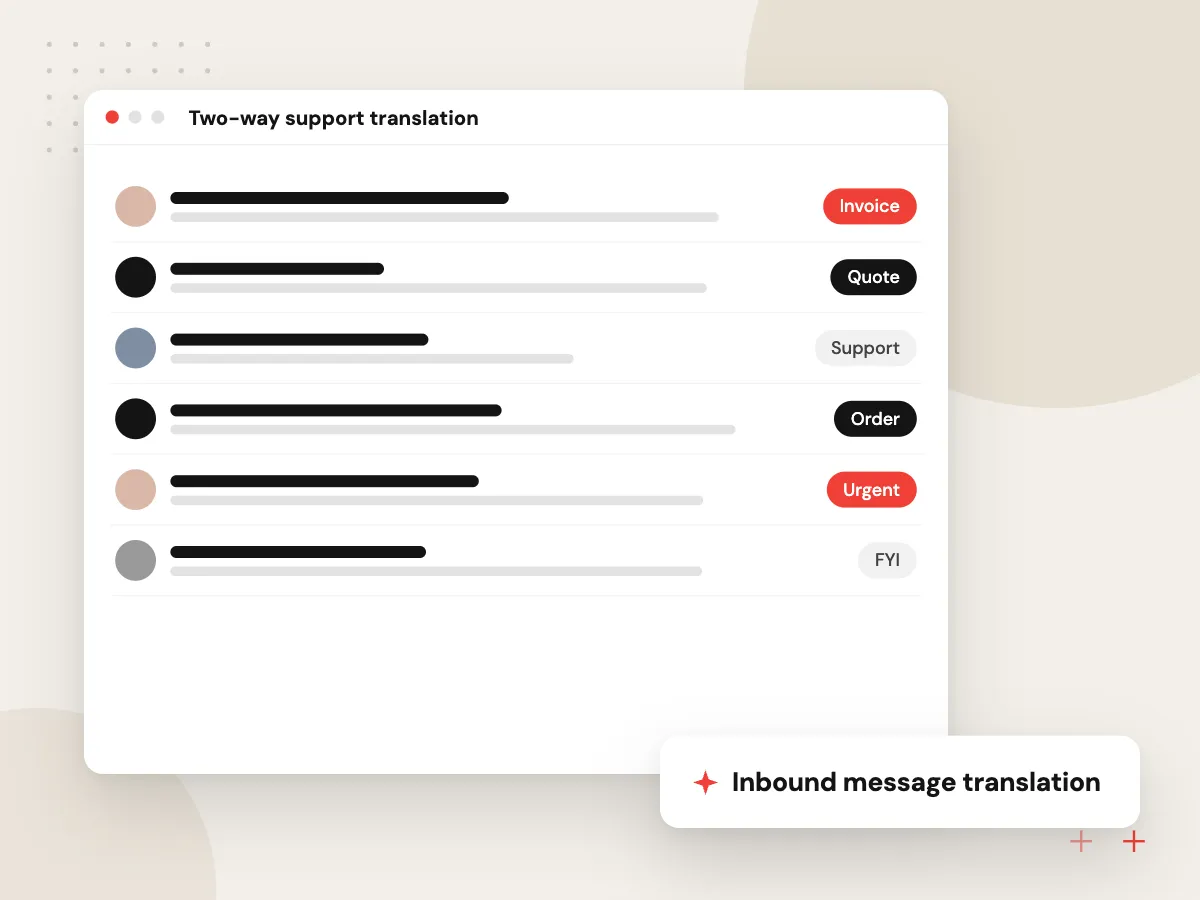
Agents read customer messages in English and reply in English, while the customer reads and writes in their own language. The original text stays on the ticket for reference, and replies about refunds, contracts or health topics can be held for a bilingual colleague before sending.
What we do
- Inbound message translation
- Outbound reply translation
- Original kept on the ticket
- Language detection per message
- Hold rules for sensitive replies

How we approach a project
The workflow connects to WordPress, headless CMSs, Shopify and helpdesks, translating only text that changed. Catalog copy can pass straight from AI product descriptions into translation, and support teams can answer customers in their own language through customer service automation.
Demand is broad: the Census Bureau reports that tens of millions of US residents speak a language other than English at home. Travel companies and hotels often feel it first. Pick the content type that matters most to your customers and we will scope it in a 30-minute conversation, scheduled from the contact page.
How we work
- Your glossary, applied every time
- Only changed text is retranslated
- Sensitive content gets human review
Our Process
-

Inventory content and markets
We list content types, target languages, volumes and the risk level of each.
-

Test engines on your text
Bilingual reviewers score sample translations from several engines for each language pair.
-

Build glossary and checks
Terms, banned translations, formatting rules and length limits are set for each language.
-

Connect and go live
Source systems are linked, review queues opened, and approved translations publish without manual copying.
Why Aranv for translation integration
Engines tested on your text
We choose an engine for each language by testing candidates on your own content with your reviewers, not by reputation or a public ranking.
Review rules matched to risk
Each content type has its own review rule, so routine catalog text moves quickly while contracts and safety text always reach a professional.
Connected to source systems
Translation runs directly from your CMS, store and helpdesk and covers only what changed, so nobody exports spreadsheets back and forth.
Terminology you control
Your glossary and approved translations belong to you, stay in your systems and carry over if you switch engines later.
Planning AI Translation Integration?
Book a 30-minute conversation with the team that would build it.
AI translation and localization FAQs
-
Is machine translation good enough for a business website?
For many pages, yes, when it uses your glossary and a bilingual person reviews the key pages. Quality varies by language pair and content type, so we test on your own text first. Legal terms, safety warnings and medical instructions should go to professionals.
-
Which translation engine do you use?
It depends on the language pair, the content and your data rules. We compare neural translation services and large language models on samples of your content, then route each language to the engine your reviewers scored best.
-
How do you keep product names and terms consistent?
A glossary and a do-not-translate list are applied on every request, and approved past translations are reused. Automatic checks flag any segment where a required term is missing or a protected name was translated.
-
Will translated pages help with search in other languages?
They can, when each language has its own URL, translated titles and descriptions, and hreflang tags telling search engines which version serves which audience. We set these up as part of website localization.
-
What does a human reviewer still do?
Reviewers approve sensitive content, check flagged segments, adjust tone and update the glossary when they spot a recurring issue. Their edits are saved, so the same correction never has to be made twice.

Let’s talk about your next step
Contact Aranv to discuss your workflow, current tools, and goals. Meet with our team or send an inquiry.
Book a meeting with our team
Choose an available date and time for a 30-minute conversation about your project.
Tell us about your project
Share a few details so we can discuss a useful next step.
Prefer email? sales@aranv.com