


What PostgreSQL development services include
Aranv provides PostgreSQL development services for small and midsize companies whose apps depend on Postgres: database design for new applications, Postgres performance tuning for slow ones, major version upgrades before support ends, moves to managed hosting, and pgvector search that lets AI features find relevant records.
New builds start with the data model. We define tables, foreign keys, check constraints and indexes from the screens and reports the app needs, and manage changes as versioned migrations so every environment has the same schema. JSONB columns hold the parts of the data that truly vary.
Postgres consulting on an existing database begins with measurement: query statistics, plans, table bloat, lock waits and connection counts. Frequent fixes are missing or unused indexes, autovacuum settings that lag behind write volume, N+1 query patterns in the app, and too many open connections, solved with PgBouncer or the host’s pooler.
Where a Postgres engagement usually starts
From slow queries to a planned database
- 01 Capture the slow queries pg_stat_statements shows which queries use the most total time.
- 02 Read the query plans EXPLAIN ANALYZE reveals missing indexes, poor estimates and wasted scans.
- 03 Fix schema and indexes Targeted indexes, rewritten queries and table changes, tested on a copy.
- 04 Schedule the upgrade A rehearsed path to a supported major version, with a rollback plan.
Every change is tried on a recent copy of production data first.
What we build and fix in PostgreSQL
PostgreSQL runs everything from small booking apps to large reporting systems, and most of the problems we see trace back to early schema choices.
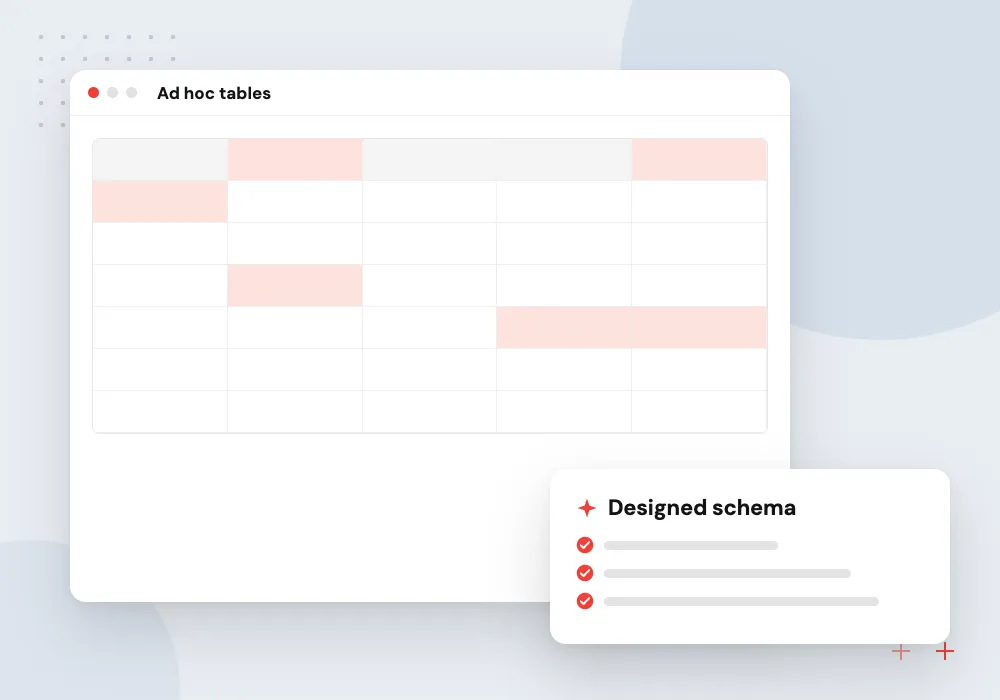
Schema design for new apps
Tables, keys, constraints and indexes designed around how the application reads and writes, with migrations versioned in the code repository.
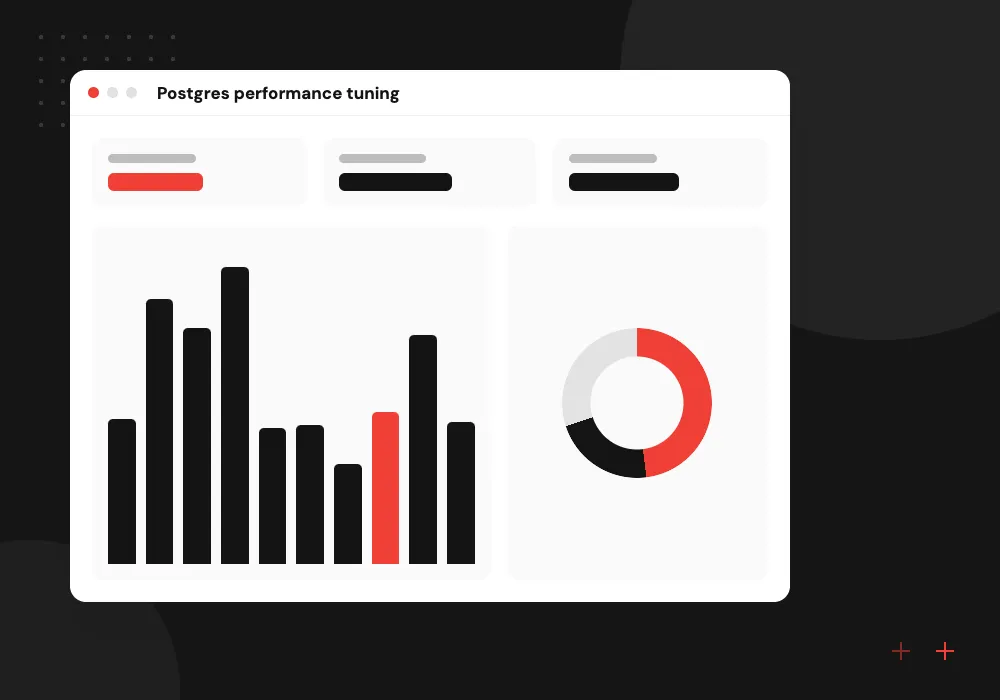
Postgres performance tuning
Slow pages and reports traced to their queries, then fixed with indexes, query rewrites, partitioning or connection pooling, timed before and after.
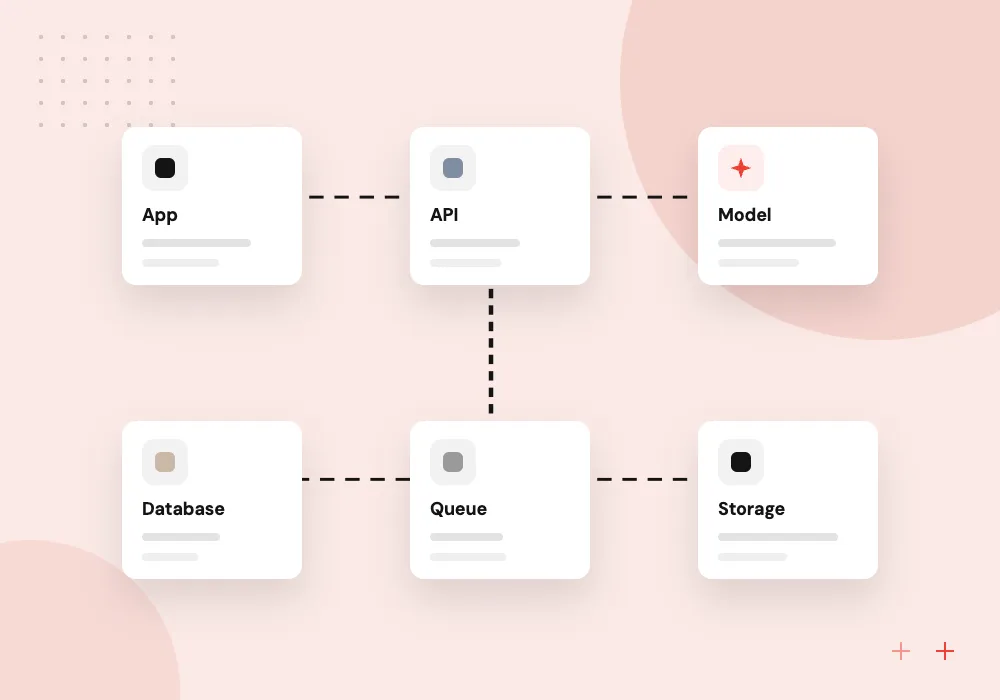
Version upgrades and moves
Databases on old major versions upgraded with pg_upgrade or logical replication, or moved to RDS, Azure Database for PostgreSQL or Cloud SQL.
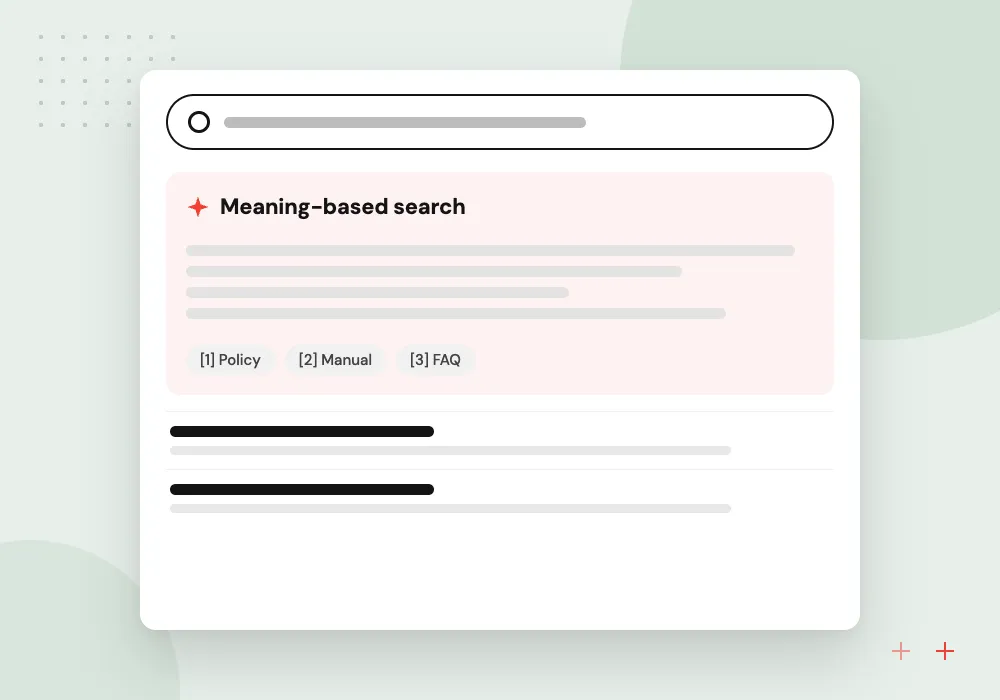
pgvector for AI search
Embeddings stored beside your existing records with the pgvector extension, so an assistant can find similar documents, products or tickets without a separate database.
Postgres performance reviews
A review starts with a week of query statistics from production, not guesses. We rank queries by total time, read their plans, and check indexes, vacuum health, memory settings and connection use. You receive a written list of changes with the expected effect of each, applied in order of risk.
What we do
- pg_stat_statements analysis
- Index and query plan review
- Autovacuum and bloat checks
- Connection pooling setup
- Before-and-after timing report
AI features on the database you have
Many AI features need little more than embeddings and good filters. We add pgvector, generate embeddings for documents or product records, index them with HNSW, and write queries that combine similarity with ordinary conditions such as customer, region or access rights. A language model can then cite the exact rows it used.
What we do
- pgvector on managed Postgres
- Embedding jobs that keep vectors current
- HNSW index tuning
- Hybrid keyword and vector queries
- Row-level access in AI searches

How we approach a project
Upgrades need a date on the calendar. The project’s versioning policy gives each major version five years of support and lists its final release. We rehearse upgrades on a copy, check extensions and application queries, then pick a cutover window. Moves between hosts follow our data migration services.
For AI, pgvector keeps embeddings in ordinary tables, so similarity search can join against customers, products or permissions in one query. That often goes a long way before a dedicated store is needed; vector database development and RAG and knowledge search cover the larger cases.
Postgres sits behind many stacks on our technologies page, including Python back ends, and it is the database under Supabase development.
How we work
- Measure before tuning anything
- Constraints in the database, not only code
- Upgrades planned before support ends
Our Process
-

Collect statistics and access
We get read access, enable query statistics and gather size, growth, slow queries and version details.
-

Diagnose and propose
Findings and proposed changes come in one document, ranked by impact and risk.
-

Test on a copy
Index, schema, setting and upgrade changes are rehearsed on a recent copy, with timings recorded.
-

Apply and monitor
Changes reach production in planned windows, and we track query times over the following weeks.
Why Aranv for PostgreSQL
Production data handled carefully
Tuning and upgrade tests run on copies with personal data masked where needed, and production changes go out in agreed windows with a written rollback step.
Fixes in app and database
Slow queries often start in application code, so our developers change ORM calls, caching or batch jobs as well as indexes, and the fix holds.
Plain reports, not jargon
Each review explains in business terms what is slow, why, what each change does and how long it takes, so owners can decide what to fund.
No lock-in to one host
We work with self-managed Postgres and with RDS, Aurora, Azure, Cloud SQL and Supabase, and keep the schema portable between them.
Planning PostgreSQL Development Services?
Book a 30-minute conversation with the team that would build it.
PostgreSQL development FAQs
-
What do PostgreSQL development services cost?
It varies with the job. A performance review of one database is a short piece of analysis, while a new application schema or an upgrade with many extensions takes longer. Database size, uptime needs and how much application code must change drive the estimate.
-
Why is our Postgres database slow?
Usually a few queries cause most of the load: missing indexes, queries fetching far more rows than needed, autovacuum falling behind, or too many connections. Bigger hardware is rarely the first fix. Query statistics from production show where the time goes.
-
When does our PostgreSQL version stop getting updates?
Each major version is supported for five years from its first release. PostgreSQL 14 is scheduled for its final release on November 12, 2026, and PostgreSQL 15 follows on November 11, 2027. Some cloud providers charge for extended support after those dates, so plan the move early.
-
Should we use PostgreSQL or MySQL for a new application?
Both are solid. We usually pick PostgreSQL for its strict data types, JSONB, partial indexes and extensions such as pgvector and PostGIS. MySQL remains a fine choice when your team or hosting already centers on it.
-
Can PostgreSQL handle vector search for AI?
Yes, through the pgvector extension, which the major managed Postgres services offer. With HNSW indexes it serves most business-sized document and product collections well. Very large collections or heavy query loads may justify a dedicated vector store later.

Let’s talk about your next step
Contact Aranv to discuss your workflow, current tools, and goals. Meet with our team or send an inquiry.
Book a meeting with our team
Choose an available date and time for a 30-minute conversation about your project.
Tell us about your project
Share a few details so we can discuss a useful next step.
Prefer email? sales@aranv.com