


What Supabase development includes
Aranv offers Supabase development for startups and small product teams: we design the Postgres schema and row-level security policies, set up Supabase Auth, Storage and Edge Functions, connect your web or mobile front end, and add pgvector search for AI features.
Every Supabase project is a full Postgres database, so we design it like one: normalized tables, foreign keys, check constraints and indexes, with changes kept as migration files in Git and applied through the Supabase CLI. Rules that belong to the data, such as no double bookings, live in the database.
Row-level security is the heart of a safe Supabase app, because the client libraries query the database directly. We enable it on every exposed table, write policies per role and tenant, and test them with real sessions. Supabase consulting on an existing project usually opens with a policy audit.
How a Supabase back end fits together
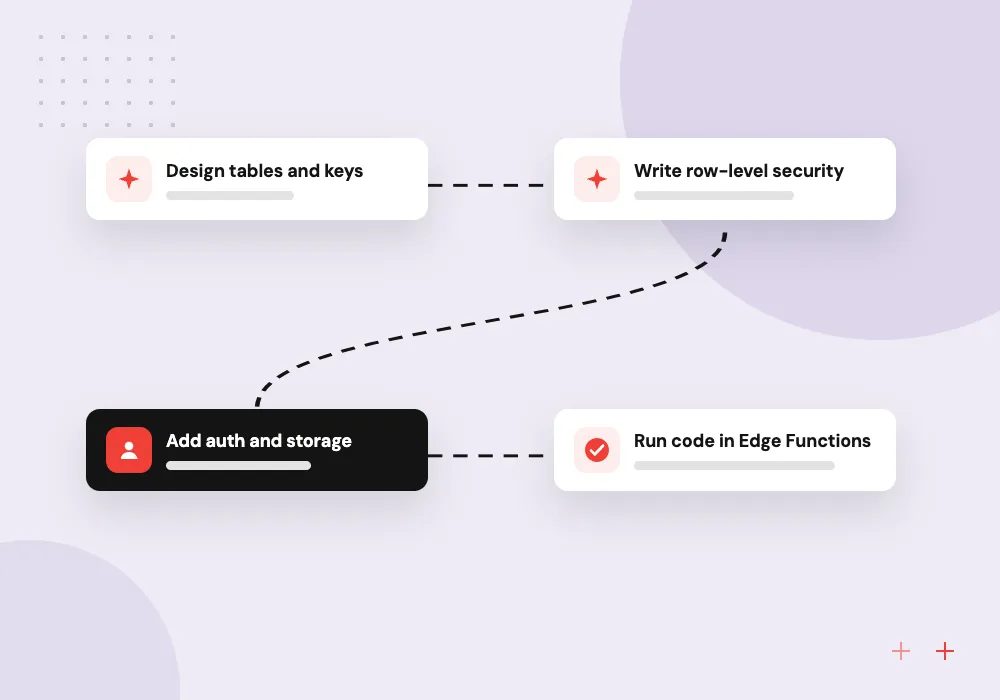
One Postgres database, several services
- 01 Design tables and keys A relational schema with constraints, managed through versioned migrations.
- 02 Write row-level security Postgres policies decide which rows each signed-in user can see.
- 03 Add auth and storage Supabase Auth issues sessions; Storage holds files under matching policies.
- 04 Run code in Edge Functions Webhooks, payments and calls to AI models run outside the browser.
Because it is plain Postgres underneath, your data can move to any Postgres host.
What we build with Supabase
Supabase suits products that want the speed of a hosted back end with the structure and SQL of a relational database.
SaaS and portal back ends
Multi-tenant apps where each customer sees only its own rows, enforced in the database by row-level security rather than in front-end code.
Postgres backend for mobile
Flutter, React Native or native apps using Supabase Auth, Postgres tables and Realtime updates for chats, bookings or order status.
Edge Functions and webhooks
TypeScript functions that receive payment events, send emails, call partner APIs and run short jobs close to your users.
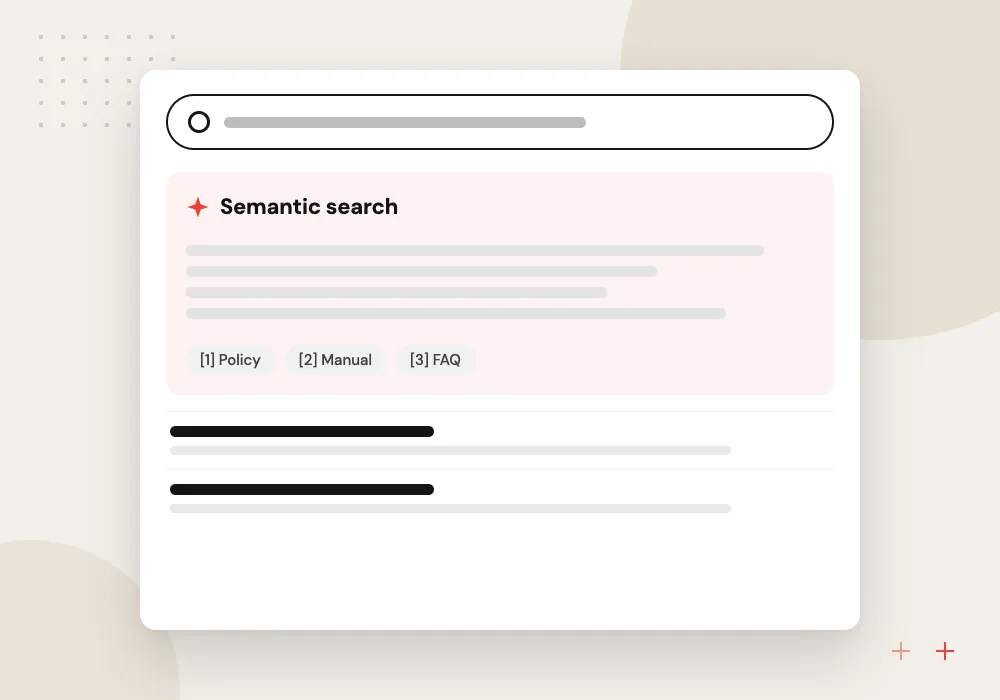
pgvector AI search
Embeddings stored in Postgres beside your records, so a chat or search feature finds similar content and obeys the same row-level security as the rest of the app.
Row-level security that holds up
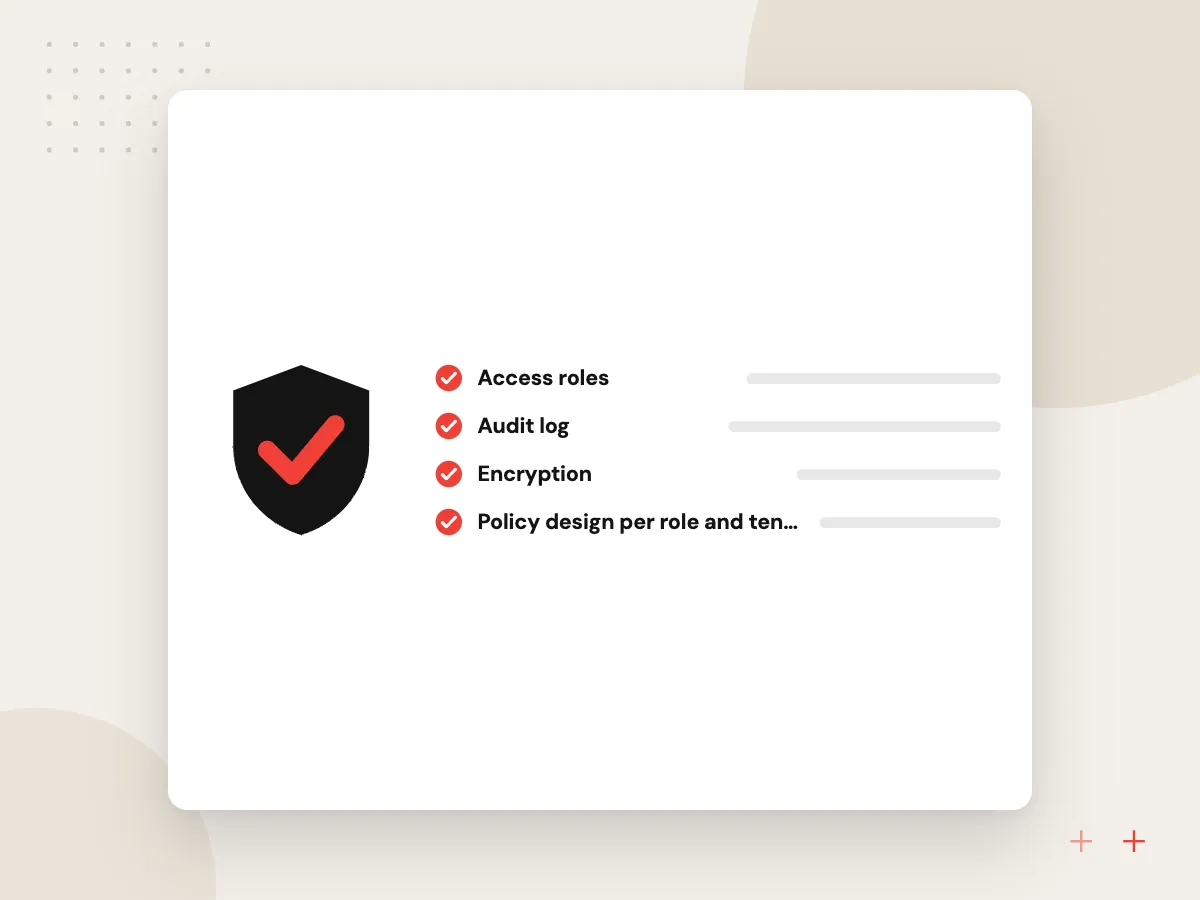
A Supabase app is only as safe as its policies, since a table without one, or a policy that trusts client input, can expose data. We turn row-level security on everywhere, base policies on the user’s ID and tenant, keep the service role key on the server, and run tests that try to read another tenant’s rows.
What we do
- Policy design per role and tenant
- Security Advisor review
- Service role key kept server-side
- Cross-tenant access tests
- Storage bucket policies
AI features on Supabase
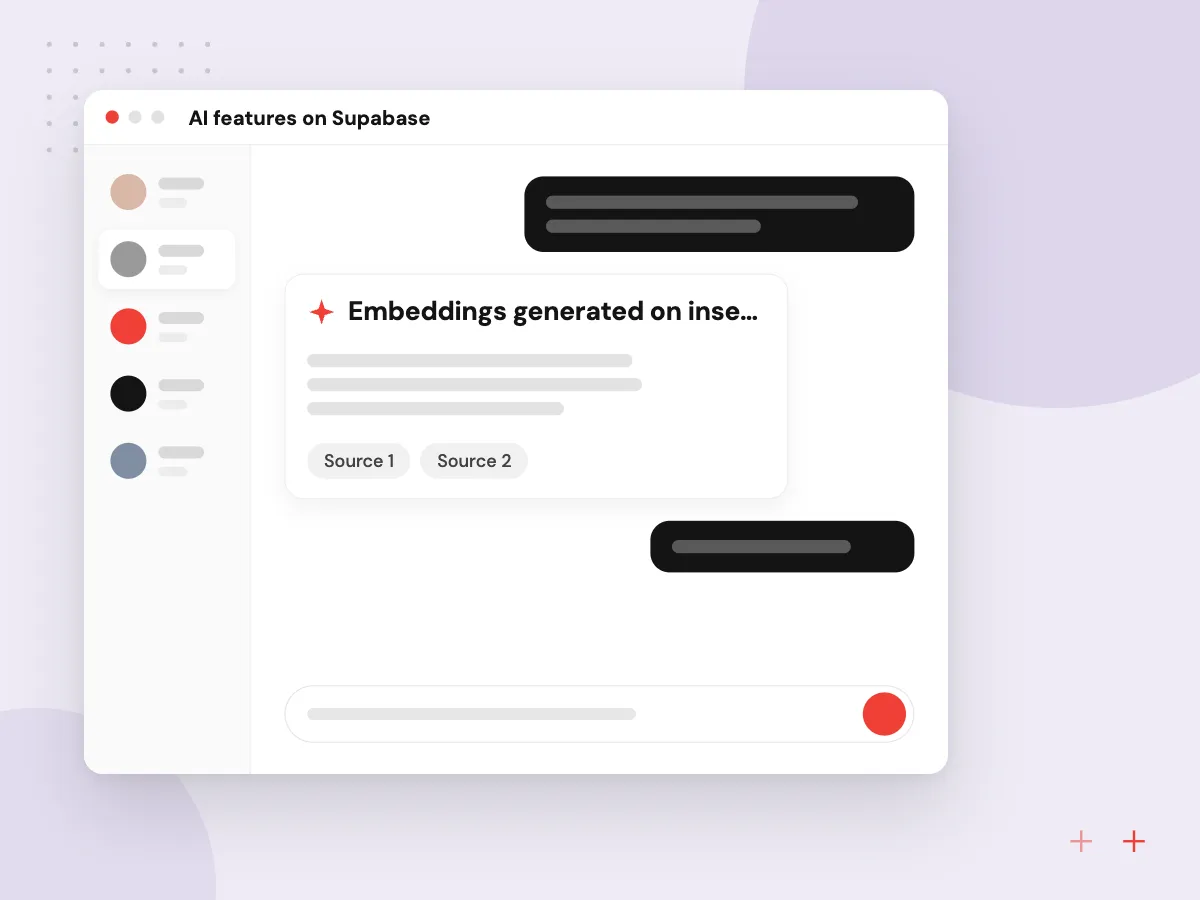
Supabase covers most of what a first AI feature needs in one place. We store document chunks and embeddings with pgvector, call a language model from an Edge Function, and return answers with links to the source rows. Because search runs under row-level security, each user only retrieves content they may already see.
What we do
- Embeddings generated on insert or update
- pgvector indexes and match functions
- Edge Function that calls the model
- Source links in every answer
- Token use logged per user

How we approach a project
Edge Functions handle work that should not run in the browser, within documented limits: a 150-second wall clock on the Free plan and 400 seconds on paid plans. Longer jobs go to a queue or a separate worker, often built by our Node.js development or FastAPI development teams.
For AI, pgvector stores embeddings in your tables, and row-level security applies to searches as well, keeping one customer’s documents out of another’s results. RAG and knowledge search covers retrieval design, and PostgreSQL development services covers tuning as data grows.
Supabase is one of the back ends on our technologies page. If the app is mobile-first and needs offline sync, compare it with Firebase development.
How we work
- Postgres first, platform features second
- Every exposed table protected by a policy
- Migrations in Git, never console edits
Our Process
-

Model data and roles
We map entities, tenants, roles and the actions each role takes, then draft tables and policies.
-

Set up local development
The Supabase CLI runs the stack locally, with migrations and seed data kept in the repository.
-

Build features with policy tests
Each feature ships with tests that try allowed and forbidden access, reviewed on a preview branch.
-

Launch with backups in place
Production gets backups, point-in-time recovery where the data warrants it, monitoring and a written runbook.
Why Aranv for Supabase
Real Postgres skills
We treat Supabase as Postgres with services around it, so query plans, indexes and migrations get the same care as any production database.
Security checked before launch
Every table, view, function and storage bucket is reviewed for policies, and we fix what Supabase’s Security Advisor reports before go-live.
Front end and back end together
The team that writes your policies also builds the web or mobile client, so queries, auth flows and policies line up from the start.
Portable by design
We avoid locking business logic into features that exist on only one host, so the database can move to another Postgres provider if needs change.
Planning Supabase Development Services?
Book a 30-minute conversation with the team that would build it.
Supabase development FAQs
-
How much does Supabase development cost?
Build cost rises with the number of tables, roles, integrations and AI features, and with whether we also build the front end. Supabase’s own plan fees depend on database size, compute and usage. We estimate both after mapping your data and users.
-
Is Supabase secure enough for business data?
It can be, provided row-level security is set correctly on every exposed table and secret keys stay on the server. We write and test those policies, review storage buckets and functions, and document who can access what.
-
Supabase or Firebase: which is better for us?
Supabase gives you SQL, joins, constraints and a database you can take to any Postgres host. Firebase gives mature offline sync and mobile tooling on Google Cloud. When the data is relational or reporting matters, Supabase usually fits better.
-
What does Supabase consulting cover for an existing project?
A review of the schema, indexes, row-level security policies, exposed functions, storage buckets, auth settings and plan usage, followed by a ranked list of fixes. Policy gaps and missing indexes are the findings we see most.
-
Can we leave Supabase later?
Yes. The database is standard Postgres, so a dump restores on another host. Auth, Storage and Edge Functions need equivalents, which is real work, so we keep that code separate and documented from the start.

Let’s talk about your next step
Contact Aranv to discuss your workflow, current tools, and goals. Meet with our team or send an inquiry.
Book a meeting with our team
Choose an available date and time for a 30-minute conversation about your project.
Tell us about your project
Share a few details so we can discuss a useful next step.
Prefer email? sales@aranv.com