


What FastAPI development includes
Aranv offers FastAPI development for US businesses that need typed Python APIs: back ends for web and mobile apps, endpoints that wrap language models and document retrieval, and services that give partners and internal tools documented, tested access to your data.
FastAPI builds on Python type hints and Pydantic, so one class validates incoming data, shapes the response and documents the API. Async support matters when an endpoint mostly waits on a database, a model provider or another API. There is no admin site or ORM included; when you need those, Django development fits better.
FastAPI for AI back ends. Most AI features need a service between your app and the model. It builds the prompt, fetches context from a vector database, calls the provider, checks the output against a schema and logs cost and latency. We build that layer in FastAPI and connect it to models through our LLM integration work.
How a FastAPI endpoint is built
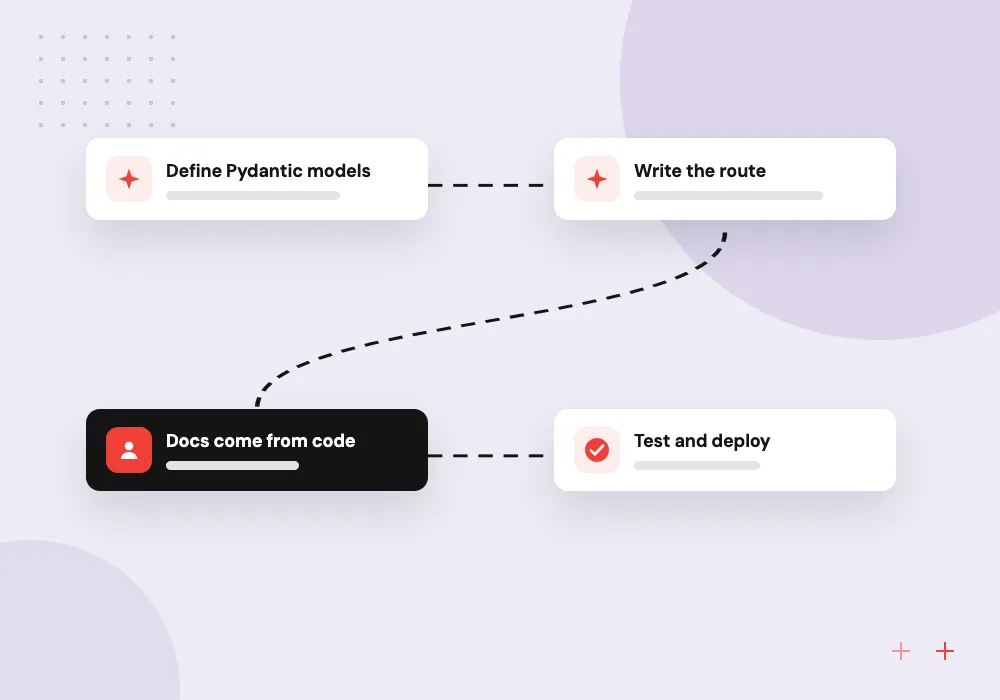
From a typed model to live docs
- 01 Define Pydantic models Request and response shapes are written as typed Python classes.
- 02 Write the route FastAPI validates input against those models before your code runs.
- 03 Docs come from code The OpenAPI schema and interactive docs update with each change.
- 04 Test and deploy Pytest suites and a container image pass through CI to staging.
Front-end and partner teams read the same contract the server enforces, because both come from one set of models.
What we build with FastAPI
FastAPI is our default for Python services where the API is the product: no admin site, clear inputs and outputs, and often a model or outside service behind it.
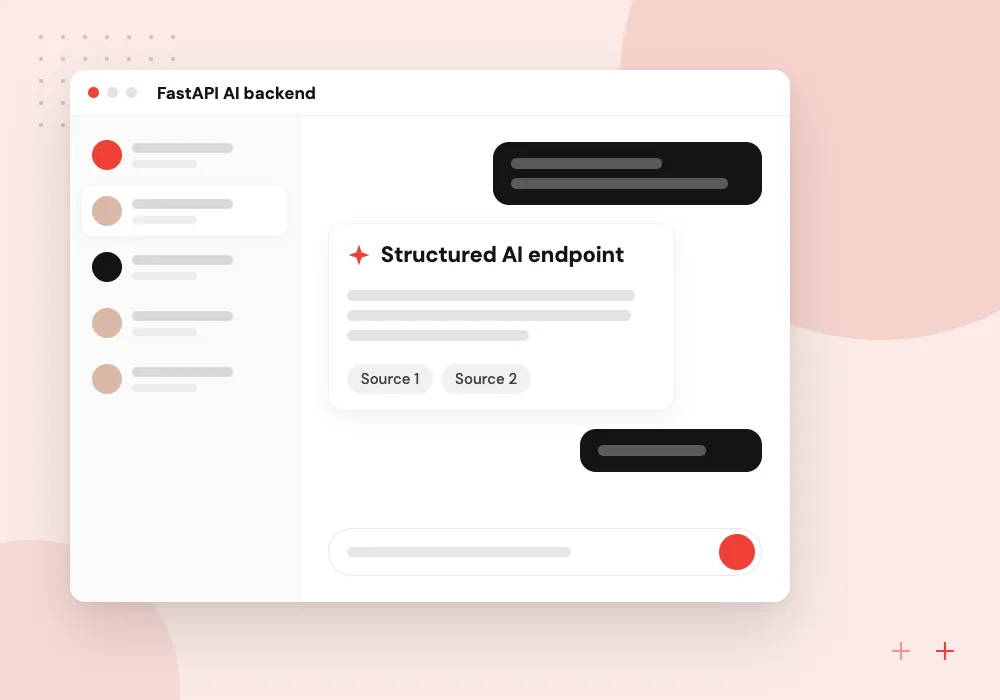
FastAPI AI backend
Endpoints that take a question or document, call a language model with retrieved context and stream back a checked, structured answer.
Python API development
Back ends for React or mobile apps with OAuth2 sign-in, pagination, filtering and versioned routes over PostgreSQL.
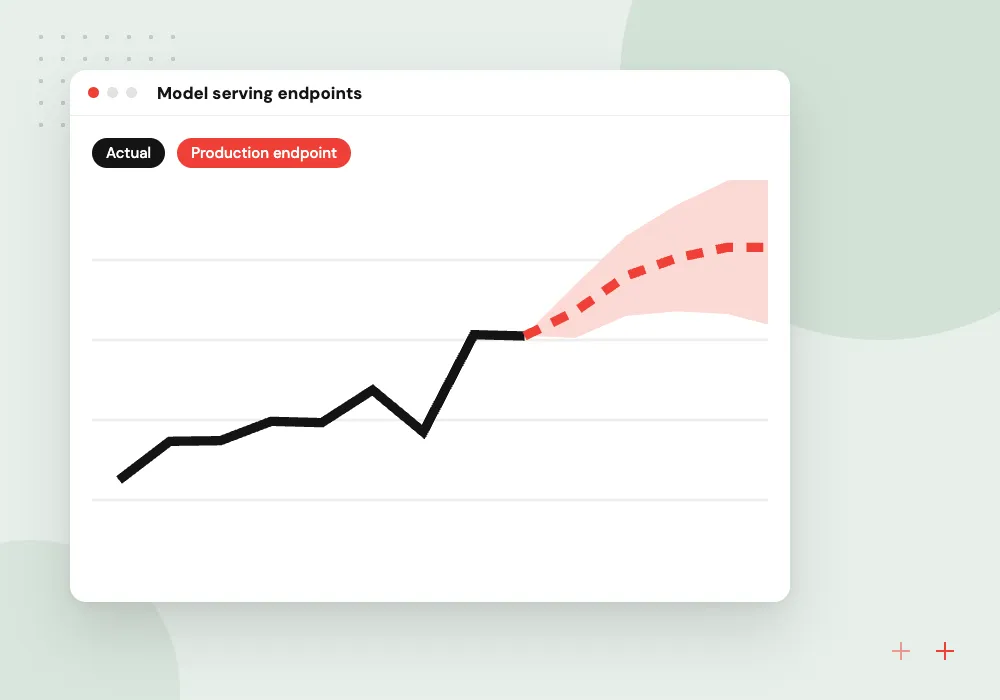
Model serving endpoints
Your own classification or forecasting model wrapped in an API with input checks, batching and response time metrics.
Webhook and event hubs
A small service that receives webhooks from Stripe, Shopify or your CRM, verifies them and passes clean events to other systems.
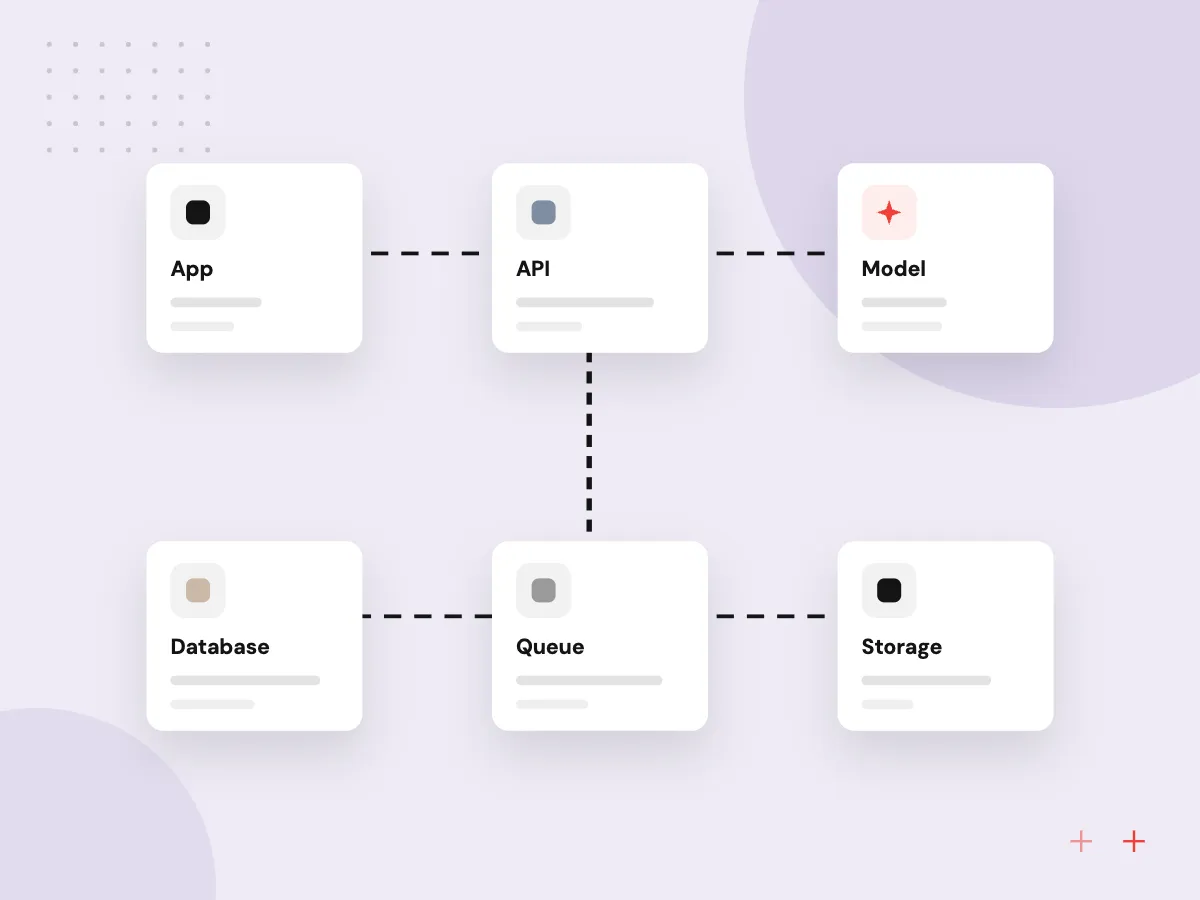
An AI back end between app and model
Calling a model straight from a browser or phone exposes keys and leaves you no control. We put a FastAPI service in between that checks the user, retrieves the right documents, calls the model with a timeout and retry, validates the answer against a schema and streams it back.
What we do
- Retrieval from your document store
- Pydantic-validated model output
- Streaming responses to the client
- Per-user rate limits
- Token cost logged per request
- Fallback provider on errors
Python API development for apps and partners
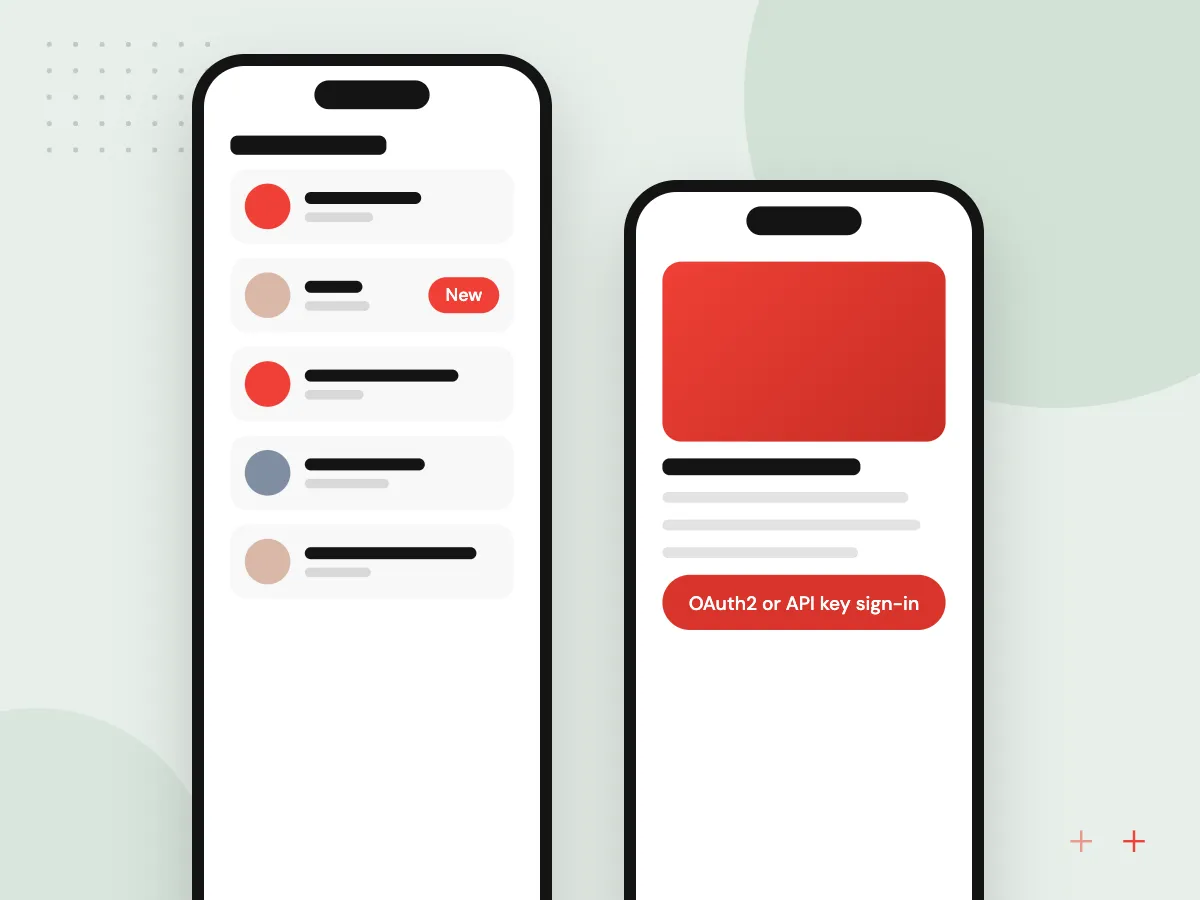
Mobile apps, React front ends and partner systems all need a stable API that states clearly what it accepts. We design routes around your business objects, version them, and publish the generated OpenAPI file so other teams can build clients without waiting on yours.
What we do
- OAuth2 or API key sign-in
- Versioned routes with deprecation notes
- Pagination, filtering and sorting
- Generated client SDKs
- Contract tests in CI

How we approach a project
A typical scope includes route and schema design, SQLAlchemy or SQLModel for data, auth through FastAPI dependencies, a queue for long jobs, pytest with an HTTPX test client, Docker images and deployment behind a reverse proxy. Python work beyond the API, such as pipelines and scripts, is covered under Python development.
When an endpoint answers from your documents, retrieval quality matters as much as code; see RAG development. The rest of our stack choices sit in the technology overview.
How we work
- Types define the contract
- Async only where I/O waits
- Every model call logged
Our Process
-

Write the API contract
Routes, Pydantic models and error codes are agreed with the teams that will call the API.
-

Build an evaluation set
For AI endpoints we gather real questions or documents with expected answers, so quality gets measured.
-

Implement with typed tests
Routes and model calls are built with pytest suites, type checks and mocked providers in CI.
-

Deploy and track usage
Containers ship with request logs, latency and token cost per route, and we tune the slow or costly ones.
Why Aranv for FastAPI
AI routes scored before launch
Each AI endpoint is tested against a set of real examples and you see the scores, so the rollout decision rests on evidence.
Contracts that stay honest
The generated OpenAPI file is versioned with the code and diffed in CI, so a breaking change is caught before it reaches a client.
Async used with judgment
Network-bound calls run async while CPU-heavy work goes to background workers, so one slow task does not hold up other requests.
Provider choice kept open
Model calls sit behind one interface in the code, so switching providers is a contained change, retested on the same evaluation set.
Planning FastAPI Development Services?
Book a 30-minute conversation with the team that would build it.
FastAPI development FAQs
-
Should we choose FastAPI or Django for our project?
Choose FastAPI when you mainly need an API, especially one that calls AI models or other services and gains from async I/O. Choose Django when you need an admin area, user accounts and many related tables ready to use. Some products run both against one database.
-
Is FastAPI ready for production use?
Yes. It runs on standard ASGI servers such as Uvicorn and is widely used for public APIs. Readiness depends more on what surrounds the code: tests, timeouts, retries, logging, rate limits and deployment, all of which we set up as part of the build.
-
Why is FastAPI popular for AI back ends?
Most AI libraries and provider SDKs are written for Python, and FastAPI adds typed validation, streaming responses and async calls on top. That makes it practical to wrap a model call with input checks, retrieval and structured output in one small service.
-
Can you move our Flask API to FastAPI?
Yes. Routes usually map closely, and adding Pydantic models documents the API as we go. We migrate route groups one at a time behind the same URLs and keep both versions running until their responses match.
-
What should we have ready before a FastAPI build begins?
A description of who will call the API and what they need, access to the systems behind it, sample requests and data, and for AI endpoints, a set of real questions or documents with known good answers.

Let’s talk about your next step
Contact Aranv to discuss your workflow, current tools, and goals. Meet with our team or send an inquiry.
Book a meeting with our team
Choose an available date and time for a 30-minute conversation about your project.
Tell us about your project
Share a few details so we can discuss a useful next step.
Prefer email? sales@aranv.com