


What OpenAI fine-tuning migration covers
Aranv handles fine-tuned model migration for companies running fine-tuned GPT models on OpenAI’s platform: we inventory your tuned models and the code that calls them, capture today’s behavior as a test set, choose a target, run both side by side, and switch with a rollback ready.
OpenAI’s deprecations page sets the dates. On May 7, 2026, OpenAI notified developers about its self-serve fine-tuning platform, and on January 6, 2027, the page says, “active existing customers” lose the ability to create new jobs. Tuned models can keep serving requests until their base models are deprecated. For certain GPT-4 series models, removal is January 14, 2027.
A date is a good moment to ask whether tuning is still needed. Retrieval supplies facts that change and a tuned model supplies behavior, so a current model given stronger prompts and retrieval may pass your saved test set. If it does, that simpler setup wins and we say so. If behavior is still the gap, large language model (LLM) fine-tuning on an open-weight model is the usual next step.
Moving a tuned model without losing its behavior
From tuned GPT to a tested target
- 01 Inventory models and callers Every tuned model, its base, training files, prompts and the code calling it.
- 02 Capture today’s behavior Real inputs and current outputs are saved as a test set before changes.
- 03 Test candidate targets A tuned open-weight model, managed tuning elsewhere, or a newer model with better prompts.
- 04 Run side by side, switch Both models see real requests, results are compared, and rollback stays ready.
Dates come from OpenAI’s deprecations page. Read it again before planning, because the list is updated over time.
What a move off tuned GPT models touches
A tuned model rarely stands alone. Four things around it need attention first.
-

Tuned model inventory
A list of each tuned model ID, its base model and published date, its owning team and the feature depending on it.
-

Training files and prompts
Original training files, system prompts and settings gathered in one place, rebuilt from logs and approved outputs where files are missing.
-
Calling code
Services, batch jobs and integrations that name a tuned model ID get mapped, so the switch becomes a configuration change.
-
Behavior baseline
Recorded inputs and outputs from the current tuned model become the test any replacement must match or beat.
Choosing a migration target
We test three kinds of target against the saved behavior. A tuned open-weight model gives you weights you hold, subject to its license. Managed tuning on another platform means less to operate, under that platform’s terms. A later model, helped by clearer prompts and retrieval, may need no tuning at all.
What we do
- Tuned open-weight model trial
- Managed tuning on another platform
- Newer model with stronger prompts
- Retrieval added for changing facts
- License and terms review
Side-by-side run and rollback
The candidate receives copies of real requests while the current model keeps answering users. We compare outputs, format errors and response time, then give the candidate a small share of live traffic and widen it. The old model stays available as a fallback until its own shutdown date.
What we do
- Shadow traffic comparison
- Format and schema checks
- Staged traffic shift
- One-setting rollback

How we approach a project
A migration is no reason to train from zero. We normally begin with open-weight base weights, and their licenses apply to anything built on them, so we check those first. Train your own AI model sets out the wider options, and our guide to OpenAI fine-tuning alternatives compares targets.
Staying with OpenAI is a fair result, and OpenAI API integration covers moving your callers to a current model. LLM evaluation and testing supplies the scoring for whichever target you pick. To start the inventory, book a 30-minute conversation.
How we work
- Capture behavior before changing anything
- The simplest target that passes wins
- Keep a rollback until traffic settles
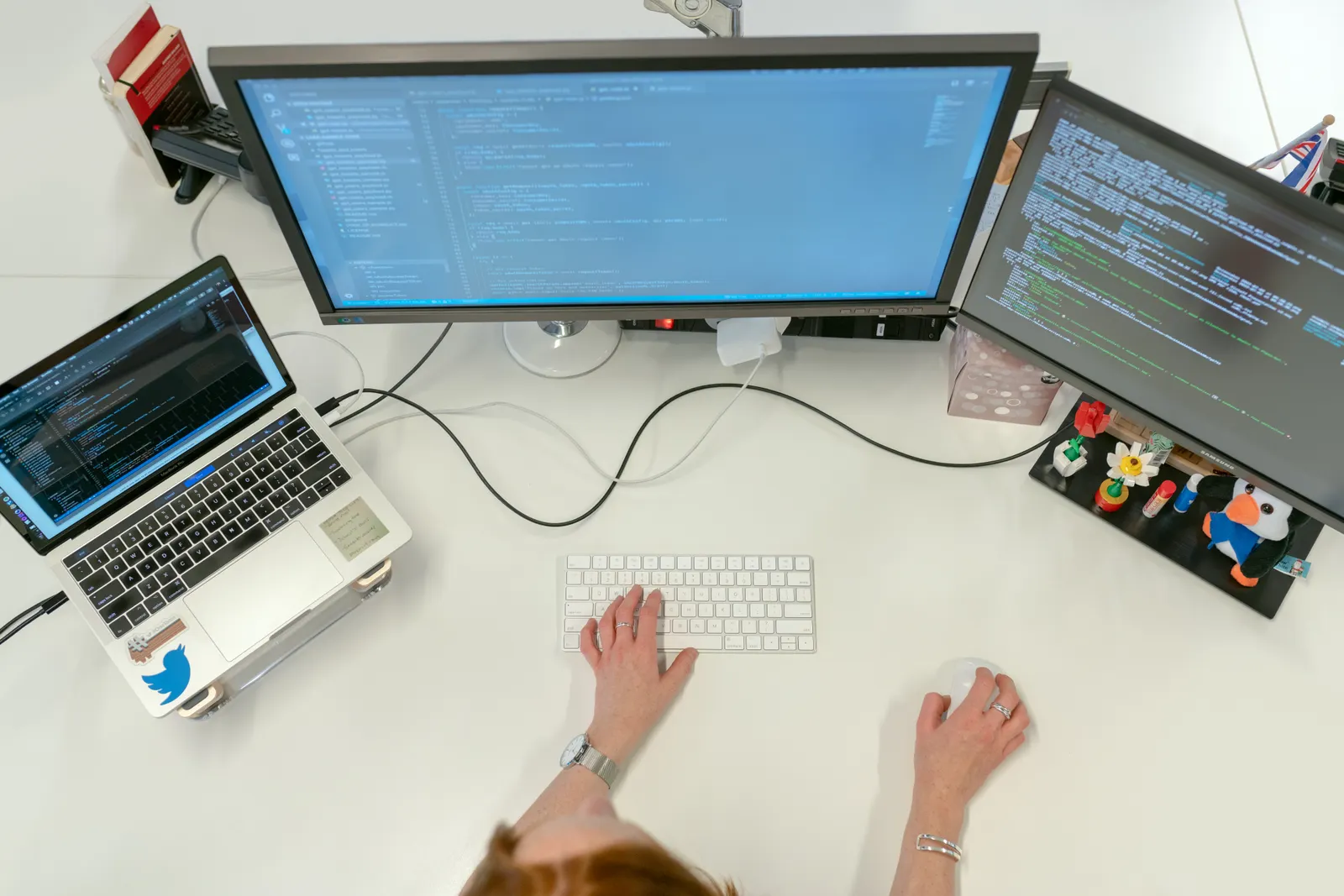
How a migration project runs
-

Date every dependency
We pair each tuned model with its base model’s published date, then set a test window.
-

Freeze a behavior record
Real requests and current answers are saved before anyone changes a prompt or calling code. Your data is used for your model.
-

Score the candidates
Each target runs the saved cases. Reviewers on your side judge the differences a format check cannot catch.
-

Shift traffic and retire
Traffic moves in stages with rollback ready, then the old model ID is removed from callers.
Why Aranv for this move
Working from the published schedule
Plans follow what OpenAI’s page says on the day, and we recheck it during the project because lists change.
Behavior recorded before changes
Tuned models often carry rules nobody wrote down. Saving real inputs and outputs first shows you what a replacement changes.
No favorite target
Open-weight, managed tuning and a newer hosted model each get the same test, and we report which one passed.
Terms next to test scores
Each target brings its own license or platform terms. We set them out beside the results, so the decision covers more than accuracy.
Planning Fine-Tuned Model Migration?
Book a 30-minute conversation with the team that would build it.
Fine-Tuned Model Migration FAQs
-
When is the fine-tuned model shutdown for GPT-4 series models?
January 14, 2027, for the models listed on OpenAI’s deprecations page: dated versions of GPT-4o, GPT-4o mini, GPT-4.1 and GPT-4.1 mini. OpenAI says fine-tuned versions follow the same schedule as their base models. Check your base model against the table, because other bases have other dates.
-
Do our tuned models stop working on January 6, 2027?
Not because of that date. January 6, 2027 is when active existing customers can no longer create new fine-tuning jobs. OpenAI says inference on fine-tuned models ends only when the underlying base model is deprecated, so a running model depends on its base model’s date.
-
How do we migrate fine-tuned GPT models without breaking our application?
Record current behavior first, then change one thing at a time. We save real requests and answers as a test set, try each target against it, run the best one alongside the current model and move traffic in stages.
-
Can we move our tuned weights to another platform?
Plan to retrain, not to copy. What normally carries across is your training files, prompts and saved test set. Those become the starting point for tuning an open-weight model or using managed tuning on another platform.
-
Should we just switch to the replacement model OpenAI recommends?
Try it first, because it may be enough. OpenAI’s table lists a recommended replacement for each model, but that is a general model with none of your tuning. Run it on your saved test set with improved prompts and retrieval.
-
Who owns the new model after a migration?
The contract says so, and it is signed before work starts. We recommend an agreement in which any new weights, adapters, training data, code and test sets pass to you once you have paid for the work. A base model’s license still applies, and a hosted target follows its platform’s terms.

Let’s talk about your next step
Contact Aranv to discuss your workflow, current tools, and goals. Meet with our team or send an inquiry.
Aranv at a glance
- 9Years in business
- 120+Clients served
- 300+Projects delivered
- 200+Team members
What happens next
- Pick a time, or send your project details.
- We review your goals, current tools and timeline.
- You get a clear next step: a scope, plan or estimate.
Book a meeting with our team
Choose an available date and time for a 30-minute conversation about your project.
- 30 minutes
- Online video call
- Times in your time zone
Tell us about your project
Share a few details so we can discuss a useful next step.
Prefer email? sales@aranv.com