


What our LLM fine-tuning work includes
Aranv provides LLM fine-tuning services for companies whose prompts and retrieval still get the format, tone or labels wrong. We turn your own records into reviewed training examples, tune an open-weight or hosted model, and prove the result on a held-out test set before it reaches production.
Many teams ask for fine-tuning when the real need is better context. If the model lacks facts, retrieval-augmented generation is cheaper and easier to keep current; our RAG vs fine-tuning guide sets out the trade-off. Tuning fits when the gap is behavior: format, labels, tone or length.
The work starts with data. Our AI data preparation step removes duplicates, masks personal details and keeps test cases out of training. Most projects use parameter-efficient methods such as LoRA, which train a small adapter instead of every weight.
From reviewed examples to a tuned model
One task, taught by example
- 01 Prove prompting falls short We test strong prompts and retrieval first and record where they fail.
- 02 Build the training set Reviewed input and output pairs drawn from your tickets, forms or reports.
- 03 Tune and compare Adapter or full tuning runs, each scored against the base model on held-out cases.
- 04 Serve and retrain The tuned model goes behind your API with logging and a refresh schedule.
Fine-tuning changes how a model answers. It is a poor way to teach it facts that change every week.
When fine-tuning earns its cost
Tuning pays off on narrow, repeated tasks where the output has to look the same every time.
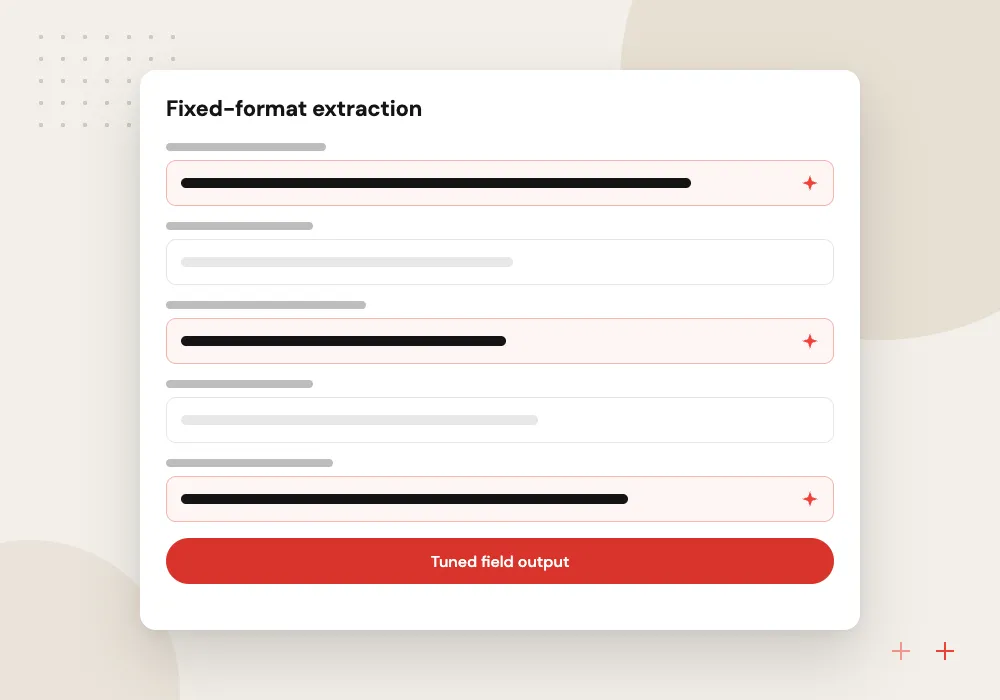
Fixed-format extraction
A model that turns messy supplier emails or inspection notes into the exact fields your ERP import expects, without pages of instructions in every call.
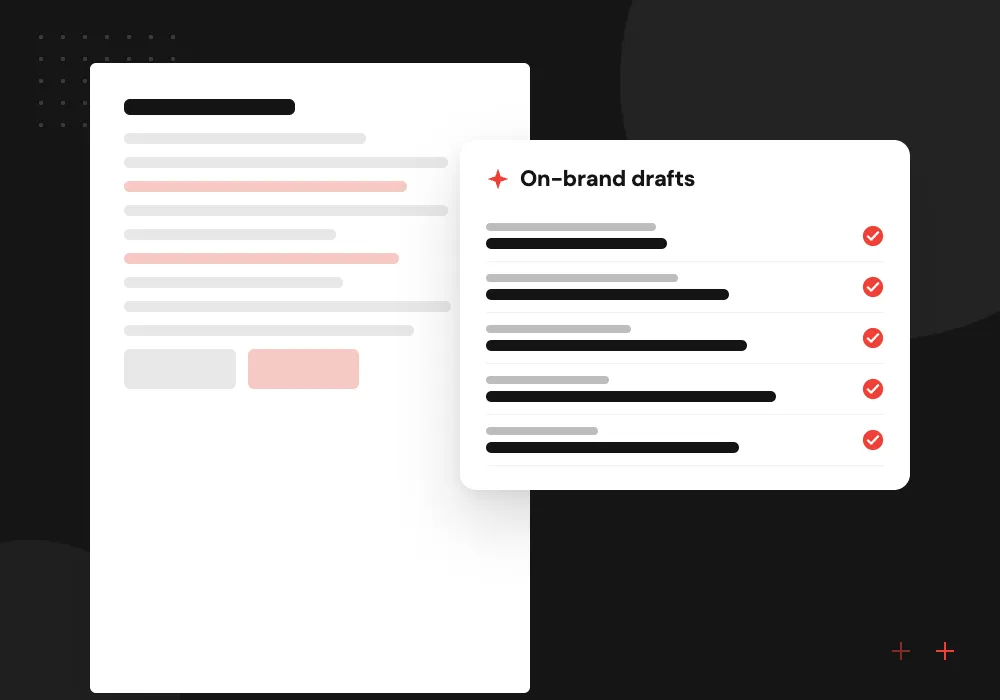
House style writing
Product listings, claim letters or job posts written in your approved voice, learned from past documents your editors already signed off.
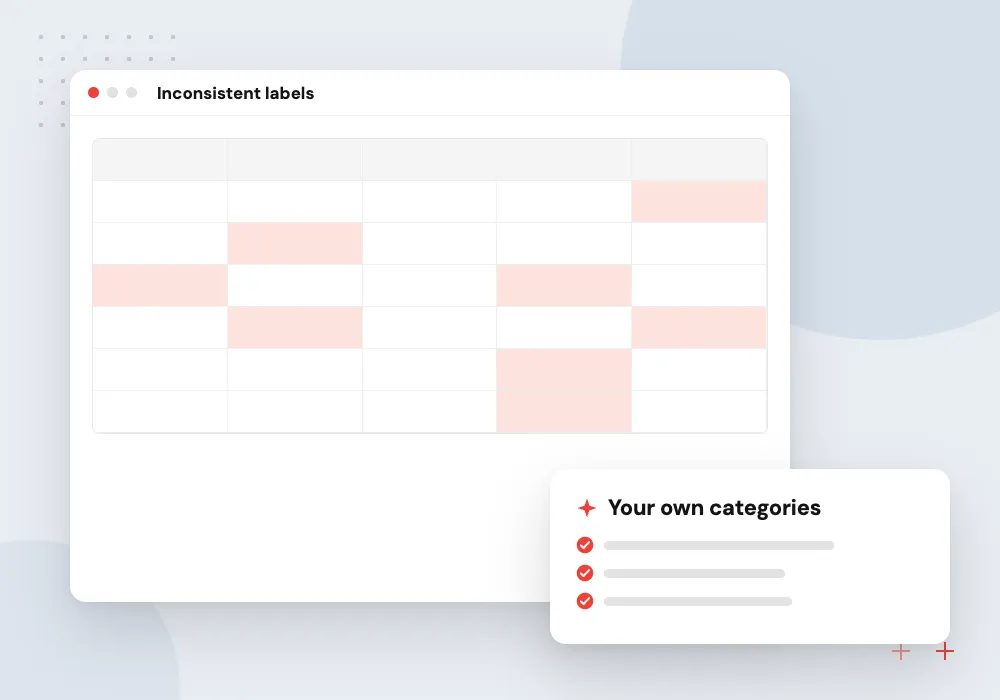
Domain classification
Labels for tickets, parts or contract clauses that follow your internal categories, including the rare ones a general model keeps confusing.
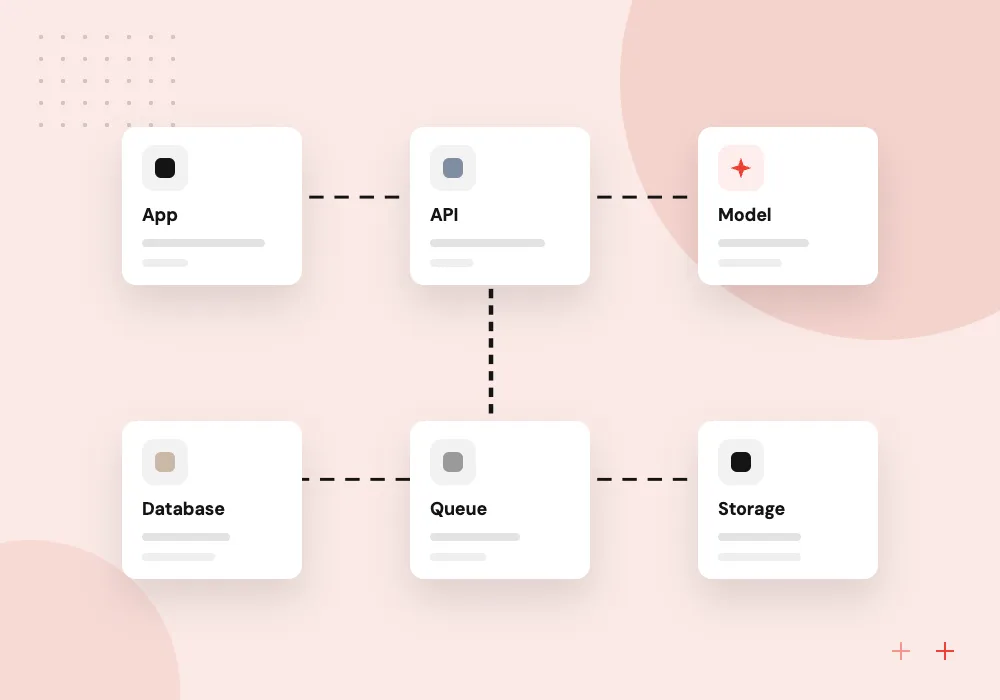
Smaller, cheaper models
A compact model tuned to match a larger one on a single job, so high-volume calls cost less and return faster.
Training data and expert review
A tuned model is only as consistent as its examples. We pull candidate pairs from your systems, have a subject expert approve a sample, and write labeling rules clear enough that two reviewers would mark a case the same way. Personal data is masked before training.
What we do
- Example extraction from tickets and documents
- Labeling guide your staff can follow
- Personal data masked before training
- Separate train, validation and test sets
- Versioned data sets
Adapter tuning and model hosting
Parameter-efficient methods train a small adapter on top of a base model, so one server can host several tuned behaviors and pick one per request. We choose the base model, run the jobs and package the result for your cloud account, a managed platform or your own GPUs.
What we do
- Base model shortlist and license check
- LoRA and QLoRA training runs
- Logged settings for every run
- Versioned endpoint with rollback
- Cost per call comparison

How we approach a project
Open-weight models can be tuned in your own cloud account or on your hardware, which suits records that must stay under your control; see open-source LLM development. Some cloud AI platforms offer managed tuning for selected models, and that list changes often, so we check current documentation first.
Every run goes through LLM evaluation against the base model with a good prompt. If tuning does not win clearly, we keep the simpler setup. A tuned model ships through the same LLM integration layer as any other model.
How we work
- Try prompting and retrieval first
- Held-out tests decide every release
- Training data you own and keep
Our Process
-

Agree what good looks like
We gather real cases where today’s model gets it wrong, and your subject expert writes or approves the correct output for each one.
-

Assemble and review data
Examples come from past tickets, documents or approved drafts. A reviewer on your side checks a sample before any training run starts.
-

Run and score experiments
We try a few base models and settings, then compare each with the prompted baseline on accuracy, format errors, speed and cost per call.
-

Deploy with a retraining plan
The winner is served behind a versioned endpoint. Corrections from staff are logged and folded into the next training round.
Why Aranv for fine-tuning
We say when not to tune
If a better prompt or a retrieval layer closes the gap, we recommend that instead. Tuning adds a training pipeline you must keep running, so it has to earn its place.
Baselines on every report
Each experiment is reported next to the prompted base model on the same test cases, so the decision to ship rests on results from your own data.
Weights and data you keep
Training sets, adapters and run logs are handed over with documentation, so another team could retrain the model without us.
Connected to your daily tools
The model is wired into the CRM, helpdesk or ERP screen where staff use it, with a button to flag a bad answer for the next round.
Planning LLM Fine-Tuning?
Book a 30-minute conversation with the team that would build it.
LLM fine-tuning FAQs
-
Should we fine-tune a model or use RAG?
Use RAG when the model needs facts from your documents, especially facts that change. Fine-tune when it already knows enough but answers in the wrong format, tone or category. Many systems combine both: retrieval supplies the facts and a tuned model writes the answer in your house style.
-
Can we still fine-tune GPT models through OpenAI?
OpenAI’s documentation says it is winding down its fine-tuning platform: new users can no longer access it, and existing tuned models stay available for inference until their base models are retired. If you run a tuned GPT model today, we can plan a move to a tunable open-weight model, or back to prompting and retrieval.
-
How much data does custom LLM training need?
Often a few hundred clean, consistent examples are enough to show whether tuning helps, and more help when the task has many edge cases. Quality matters more than volume, because contradictory examples teach the model to be inconsistent. We size the data set after the first experiment, not before.
-
What drives the cost of LLM fine-tuning services?
The main drivers are how much data needs collecting and cleaning, how many experiments it takes to beat the baseline, the size of the base model and where the tuned model is hosted afterward. Data work often takes the most time. We estimate after a short trial run on your data.
-
Who owns the fine-tuned model and the training data?
With open-weight models, the adapter or tuned weights and the training set are delivered to you under the contract, subject to the base model’s license. On a hosted platform, the tuned model lives in your account there and follows that platform’s terms. We document both before work starts.

Let’s talk about your next step
Contact Aranv to discuss your workflow, current tools, and goals. Meet with our team or send an inquiry.
Book a meeting with our team
Choose an available date and time for a 30-minute conversation about your project.
Tell us about your project
Share a few details so we can discuss a useful next step.
Prefer email? sales@aranv.com