


Comparing models without guesswork
Aranv’s short version of how to choose an LLM for business: test two or three candidate models on your own tasks, then weigh answer quality, data and hosting terms, speed, running cost and vendor stability. The right model is the one that passes your tests within your rules, not the leaderboard leader.
The model market shifts every few months, so any ranking published today will age quickly. A stable process works better: define the task, gather examples, set your data rules and test. Our LLM integration work starts with that comparison, run on your own material.
Hosted models from the large providers are the quickest start, and each comes with its own data terms. OpenAI, for example, states in its API data controls that API data is not used for training unless you opt in. Compare such terms across providers; our pages on OpenAI API integration, Claude API integration and Gemini API integration describe each one.
A model selection process in four steps
Your tests, not leaderboards
- 01 Define the task Write what the model must do, with real examples of input and good output.
- 02 Set the rules Note data limits, hosting needs, languages and the response time users will accept.
- 03 Test the shortlist Run two or three models on the same examples and score them blind.
- 04 Plan for change Keep the code model-agnostic so a newer or cheaper model can be swapped in.
Model versions change often, so repeat the test before each upgrade.
Four factors in an LLM comparison for business
Benchmarks give a rough ranking. These factors decide which model works for you.
Quality on your task
A model that tops public benchmarks may still misread your invoices or miss your tone. Score each candidate on examples from your own work.
Data and hosting terms
Find out whether prompts feed model training, the log retention period, the regions that process data and whether a private deployment is offered.
Speed and running cost
Larger models are often slower and cost more per request. A smaller model may handle routine steps well, with a larger one kept for hard cases.
Context and features
Check context window size, tool calling, structured output, image or audio input and support for the languages your customers use.
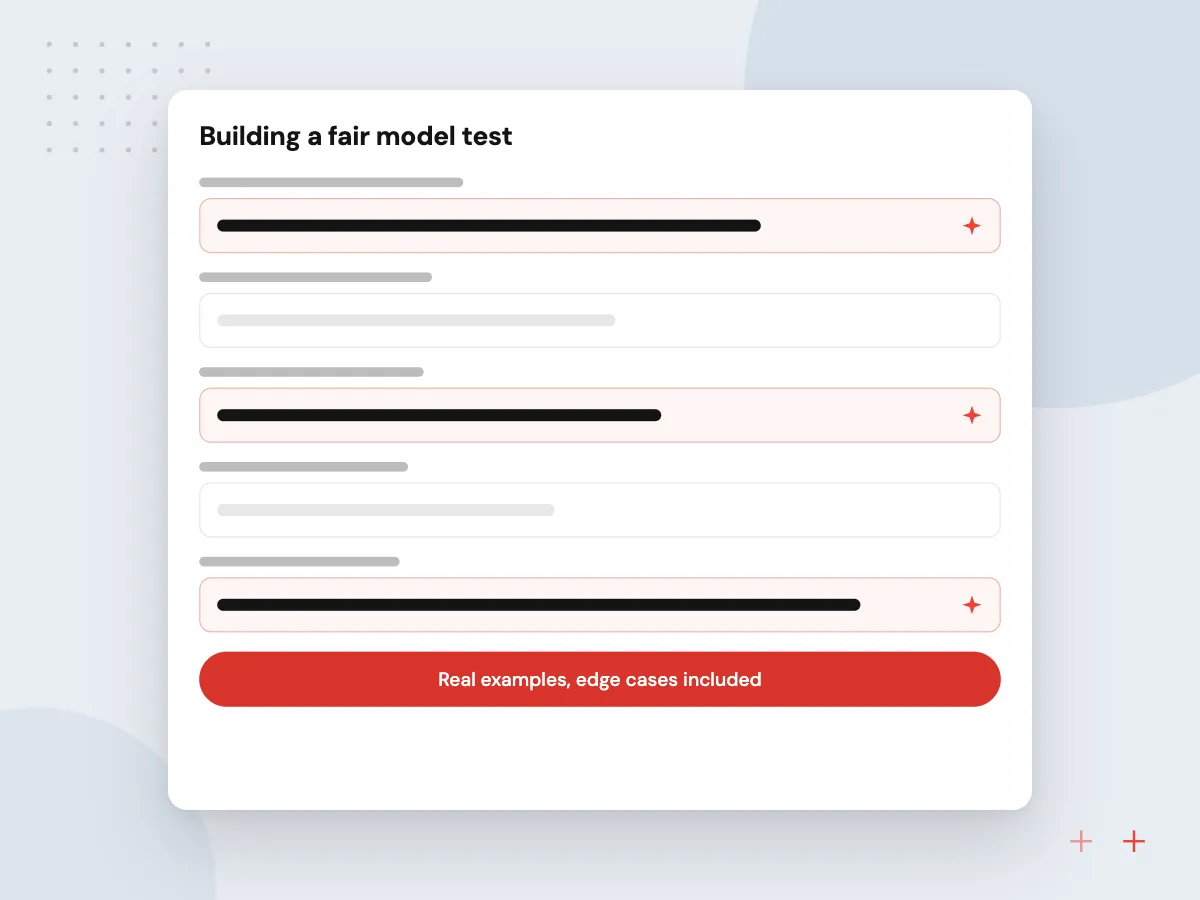
Building a fair model test
A fair test uses real examples from your work, awkward ones included, with an agreed idea of a good answer. Outputs are scored without showing which model wrote them, and the same set is kept for every future comparison, so results stay comparable over time.
What we do
- Real examples, edge cases included
- Agreed scoring guide
- Blind rating by staff
- Cost and speed logged per run
- Saved set for future tests
Where and how the model runs
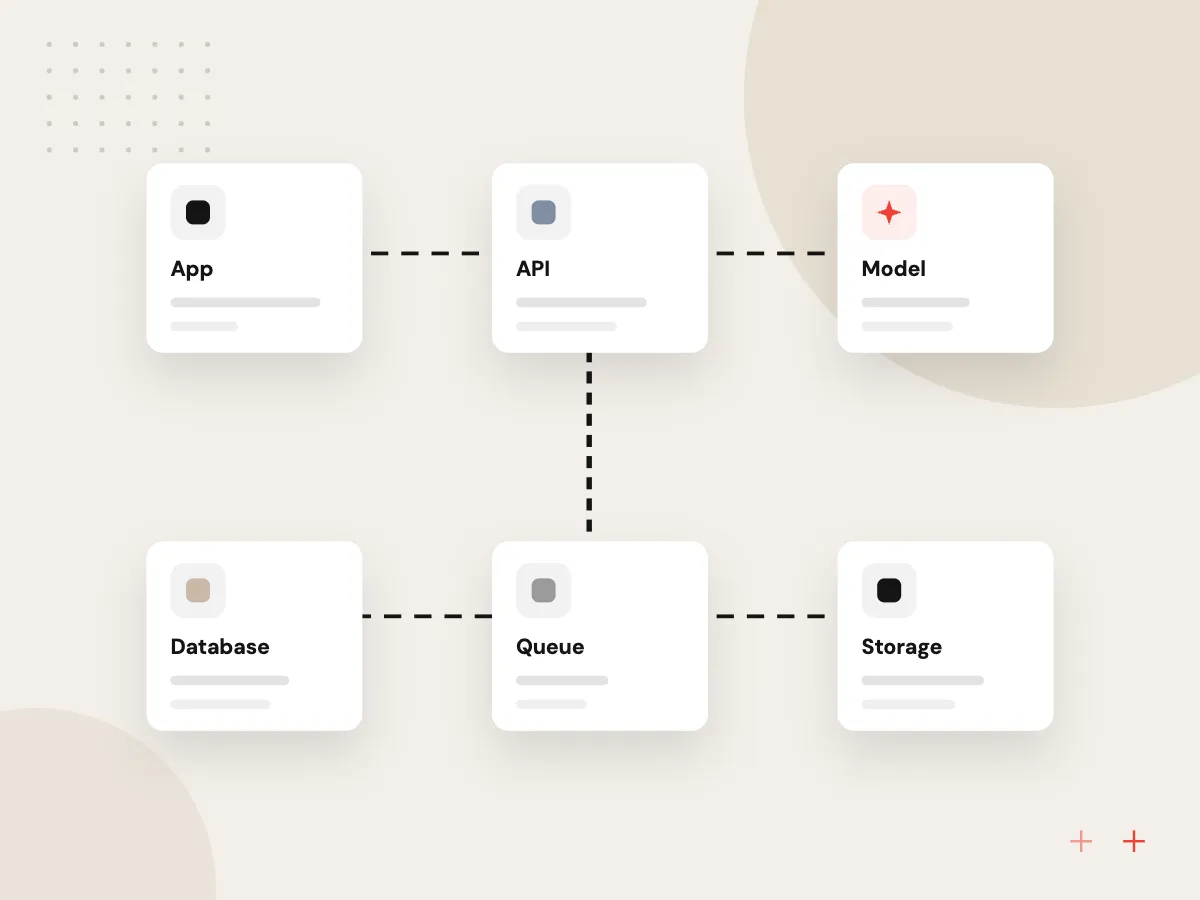
Hosting decides who can see your data and how much your team must maintain. Options run from a provider’s public API, through a cloud platform inside your own account, to an open-weight model on servers you control. Each step toward control adds operating work.
What we do
- Provider API with business terms
- Models inside your cloud account
- Open-weight models on your servers
- Region and retention settings
- Fallback model if one fails

How we approach a project
If data must stay in your own environment, look at cloud platforms that serve models inside your account, such as Azure OpenAI or Amazon Bedrock, or at open-weight models hosted on servers you run, through private LLM deployment. Open models give more control; hosted ones usually need less upkeep.
Whatever you pick, keep the model behind a thin layer in your code and keep your evaluation set. A price change, a retired model or a better release then becomes a test run and a configuration change, not a rebuild. LLM evaluation makes that repeatable.
How we work
- Test on your own examples
- Read the data terms first
- Design for switching models
Our Process
-

Write the task card
One page with the job, sample inputs, ideal outputs, data rules and acceptable response time.
-

Shortlist by constraints
Drop any model that fails your hosting, data or language needs before testing quality.
-

Score blind on real examples
Have staff rate anonymized outputs from each model on the same examples.
-

Decide and keep testing
Pick the model that passes at the lowest running cost, and rerun the tests before upgrades.
How Aranv helps pick a model
No fixed favorite
We work with models from several providers and with open-weight models, so the recommendation follows your test results rather than habit.
Tests built from your work
We assemble the evaluation set with your staff from real documents, tickets or emails and share every score with you.
Data terms checked up front
Before any test with real data, we review each provider’s training, retention and region terms with whoever approves vendors at your company.
Ready for the next model
We keep provider-specific code in one place, so switching models later means rerunning your tests and changing configuration.
Ready to act on this guide?
Ask our team in a 30-minute conversation.
Or see how we build it: Explore all services
LLM selection FAQs
-
What is the best LLM for enterprise use?
There is no single best model. Several providers offer models that handle common business tasks well, and the right one depends on your task, data terms, hosting rules, languages and budget. Test a shortlist on your own examples; the results often differ from public rankings.
-
Should we use an open-source LLM or a hosted model?
Hosted models are quicker to start and are maintained by the provider. Open-weight models can run in your own environment, which helps with strict data rules, but you take on hosting, updates and scaling. Choose by your data constraints and the team you have to run it.
-
Does the model provider train on our data?
It depends on the product and plan. Business API offerings from the major providers generally exclude customer data from training by default, and OpenAI states this for its API. Consumer chat apps can have different defaults. Read each provider’s current terms and record what you agreed to.
-
Can we switch LLMs later?
Yes, if the application is built for it. Keep prompts, tool definitions and evaluation sets apart from provider-specific code. Expect some prompt tuning after a switch, because models respond differently to the same instructions.
-
Do we need the largest model available?
Rarely for every step. Classification, extraction and routing often run well on smaller, faster models, while long reasoning or careful drafting may need a larger one. Many systems send each request to the smallest model that passes the tests for that step.

Let’s talk about your next step
Contact Aranv to discuss your workflow, current tools, and goals. Meet with our team or send an inquiry.
Book a meeting with our team
Choose an available date and time for a 30-minute conversation about your project.
Tell us about your project
Share a few details so we can discuss a useful next step.
Prefer email? sales@aranv.com