


What prompt engineering services include
Aranv offers prompt engineering services for companies whose AI features give uneven answers, break output formats or cost more per call than they should. We design and rewrite system prompts, examples and output schemas, test every change against your real cases, and hand over versioned prompts your team can maintain.
Good prompts are specific. We write a clear role and task, list the rules in priority order, put reference material in a consistent place, add a few worked examples and define the output format. Techniques such as step-by-step reasoning come from published research like the chain-of-thought paper, but we keep only what improves your scores.
Model families respond differently, so we follow each vendor’s guidance when working with OpenAI, Claude or open-weight models, and retest prompts when you switch. Where the provider supports it, a structured output mode enforces the schema instead of hoping the model follows it.
Prompts treated as tested code
Write, test, measure, keep
- 01 Collect failing examples Real inputs where the current prompt gives wrong, vague or badly formatted answers.
- 02 Redesign the prompt Clear role, rules, context order, examples and a strict output schema.
- 03 Test against the set Each version scored on the same cases for accuracy, format and cost.
- 04 Version and release The winning prompt ships with its test results and a changelog.
A prompt that works in a chat window can fail at volume. We test on a broad set of real inputs, not a few hand-picked ones.
Prompt design and optimization work
Most prompt problems show up as inconsistency: right on Monday, wrong on Wednesday, for no clear reason.
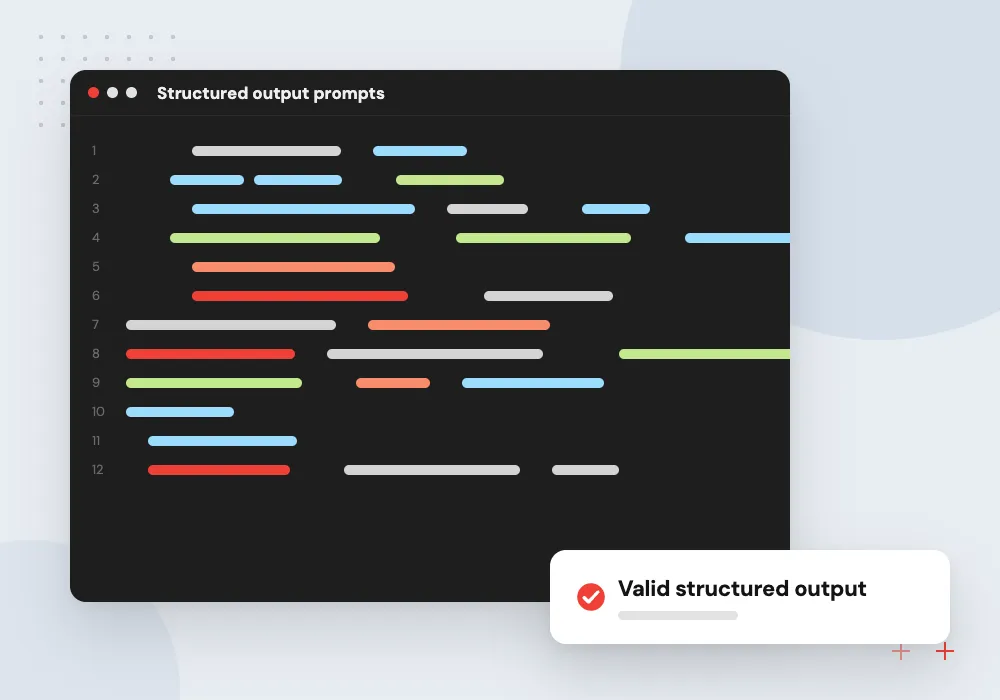
Structured output prompts
Prompts and JSON schemas that make the model return the exact fields your code expects, so parsing errors stop breaking downstream jobs.
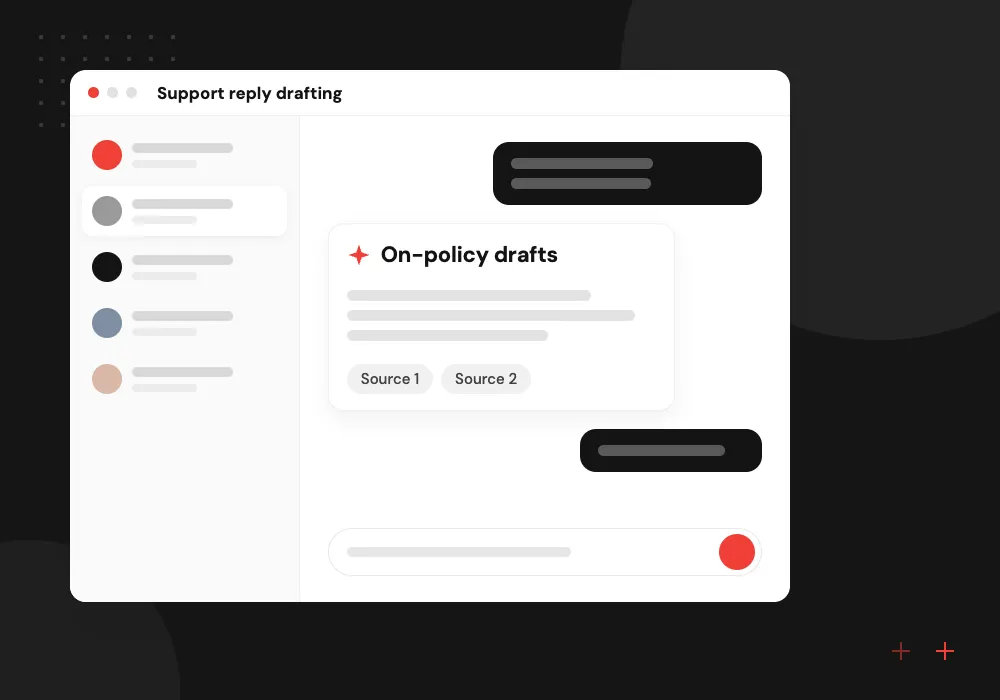
Support reply drafting
System prompts that keep drafted replies within policy, in your tone, and honest about what the knowledge base does not cover.
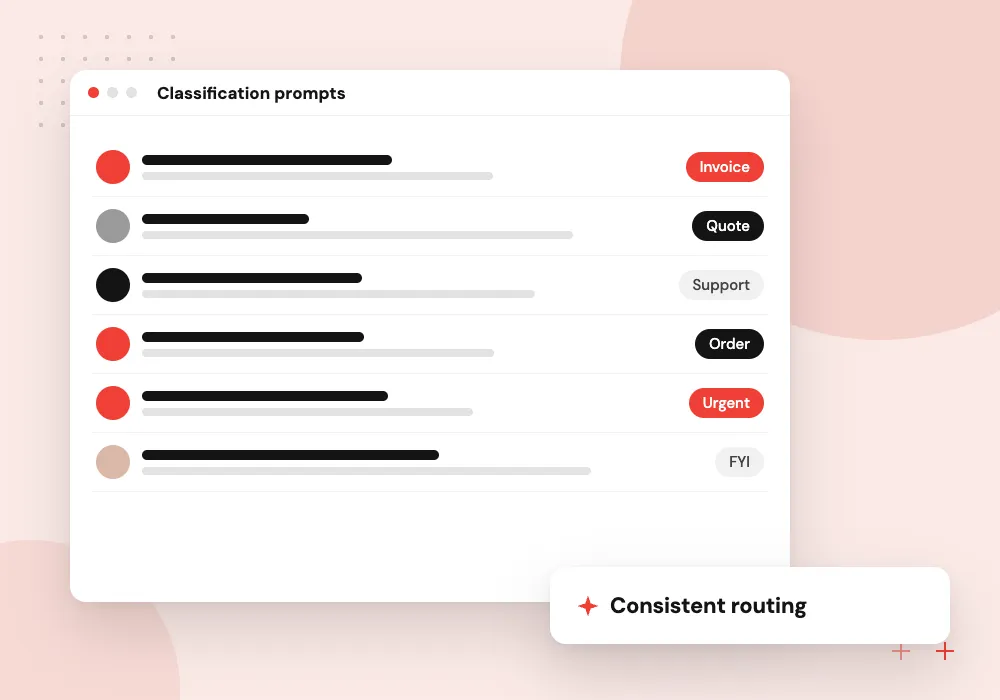
Classification prompts
Clear category definitions and worked examples that help a model sort emails, tickets or leads the way your best staff member would.
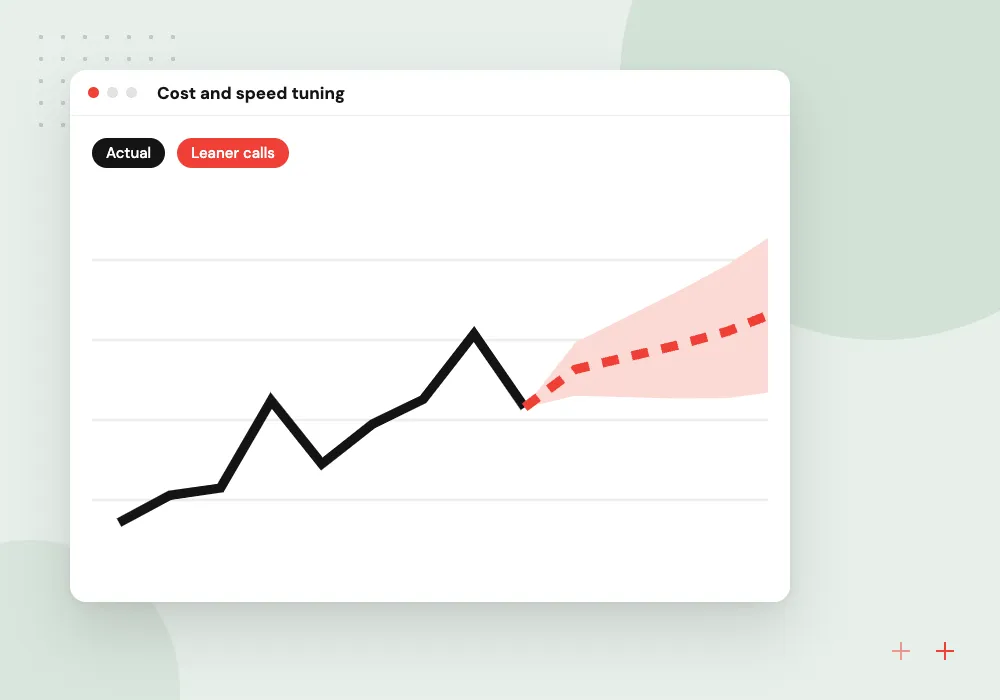
Cost and speed tuning
Shorter instructions, cached context and a smaller model where quality holds, measured so savings never come from quietly worse answers.
System prompts and output schemas
We rewrite the instructions behind each AI feature so rules are explicit, ranked and testable, and define a schema for every structured answer. Where the provider offers a structured output mode we use it; where it does not, we validate each response and retry once before flagging the case.
What we do
- Role, task and rule hierarchy
- Worked examples for hard cases
- JSON schema for every output
- Validation and retry logic
- Notes explaining each rule
Prompt test sets and versioning
Every prompt gets a test set of real inputs with expected answers, kept beside it in the repository. Changes are reviewed like code, scored automatically and released with a changelog, so anyone can see why a prompt says what it says and what happened when it last changed.
What we do
- Test set per prompt
- Automated scoring on each change
- Code review for prompt edits
- Changelog with score history
- Rollback to earlier versions

How we approach a project
Testing separates prompt engineering from guesswork. Every version runs against a test set built with our LLM evaluation process, and production changes are tracked through LLMOps so you know which prompt answered which request.
Prompting has limits. When a model lacks facts, RAG development helps more than longer instructions, and when format or style still drifts after careful prompting, LLM fine-tuning may be the next step.
How we work
- Every change measured on real cases
- Shorter prompts when they work
- Prompts kept in version control
Our Process
-

Gather prompts and failures
We collect the current prompts, sample inputs and outputs, and the complaints your staff or customers have raised about them.
-

Build the test set
Your subject expert marks the right answer for a set of real inputs, including the awkward ones that caused trouble.
-

Iterate with scores
We change one thing at a time, such as rules, examples or context order, and keep only changes that raise the scores.
-

Hand over and train
Prompts go into your repository with tests and notes on why each rule exists, and we show your team how to change them safely.
Why Aranv for prompt work
Measured, not guessed
Every prompt change is scored on your real cases before release, so improvements show up in numbers rather than in a few cherry-picked chats.
Prompts your team can own
Prompts live in your repository with tests and plain notes, so your developers can adjust them without calling us for every change.
Honest about the limits
When the problem is missing facts or a model that cannot do the task, we say so and suggest retrieval, tuning or a different model.
Inside the real product
We work on prompts as they run in your app, with its context, tools and users, not on a copy pasted into a chat window.
Planning Prompt Engineering?
Book a 30-minute conversation with the team that would build it.
Prompt engineering FAQs
-
What do prompt engineering services deliver?
Rewritten system prompts and templates, worked examples, output schemas, a test set with expected answers, scores for each version and notes explaining each rule. The prompts live in your code repository, so your developers can change them later and rerun the tests.
-
Is prompt engineering still needed with newer models?
Yes, though the work has shifted. Newer models follow instructions better, so less effort goes into tricks and more into clear rules, the right context, output formats and testing. A vague prompt still produces vague results, whatever the model.
-
Should we improve prompts or fine-tune a model?
Start with prompts. They are faster to change, cheaper to test and carry across model upgrades. Consider fine-tuning when a well-tested prompt still misses your format, labels or style on a narrow, high-volume task, and the test scores show a clear gap.
-
How do you know a new prompt is actually better?
We score old and new versions on the same test cases, using exact checks for format and facts and graded review for quality. A new prompt is released only if it wins overall and does not get worse on any case type marked critical.
-
Can prompt optimization cut our AI costs?
Often. Long prompts with repeated context, unneeded examples or rambling outputs use more tokens than necessary. We trim instructions, cap output length, use prompt caching where the provider supports it and test whether a smaller model holds quality, reporting cost and quality side by side.

Let’s talk about your next step
Contact Aranv to discuss your workflow, current tools, and goals. Meet with our team or send an inquiry.
Book a meeting with our team
Choose an available date and time for a 30-minute conversation about your project.
Tell us about your project
Share a few details so we can discuss a useful next step.
Prefer email? sales@aranv.com