


What AI predictive maintenance involves
Aranv builds AI predictive maintenance for manufacturers, utilities and equipment-heavy operators: models that read vibration, temperature and current data from PLCs, historians and add-on sensors, learn from past breakdowns in your CMMS, and open work requests for a planner before a motor, pump or compressor fails.
Most maintenance is either scheduled by the calendar or done after something breaks. AI predictive maintenance adds a third path: watch each asset’s condition and act when the data shows it changing. It suits equipment that is costly to stop, shows warning signs before failing, and already has sensors or could take them.
Failure prediction needs examples of failure. When a machine has broken only a handful of times, we begin with anomaly detection, which learns normal behavior and flags departures, and add failure models as history builds. Sensor gateways and edge devices come from our IoT development team; models come from our predictive analytics practice.
From fixed schedules to condition-based work
How an early warning reaches the shop floor
- 01 Stream machine data Sensor, PLC and historian readings arrive with run hours and operating load.
- 02 Learn normal behavior Each asset’s usual pattern is modeled for its load, speed and season.
- 03 Score failure risk Drift and known failure signatures raise a risk score with supporting readings.
- 04 Planner decides the action A work request opens in the CMMS; the planner schedules, defers or closes it.
The system recommends work; it never starts, stops or changes a machine by itself.
Predictive maintenance work we build
We usually begin with a short list of critical assets where an unplanned stop halts a line or a service.
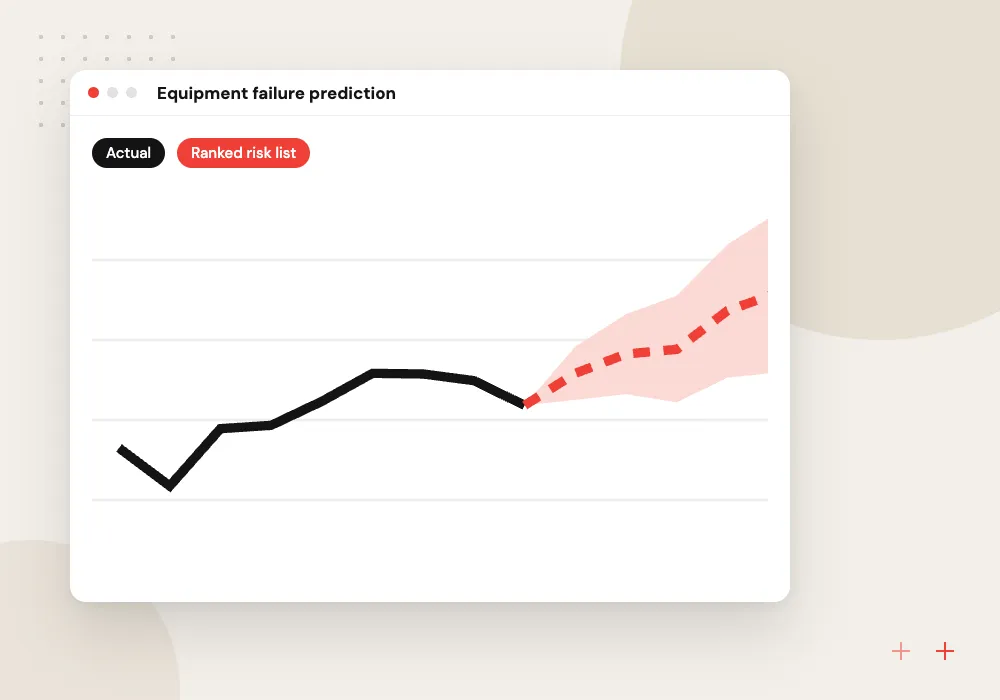
Equipment failure prediction
Models trained on sensor readings and past breakdowns estimate which motors, pumps, gearboxes or compressors are likely to fail in the coming weeks.
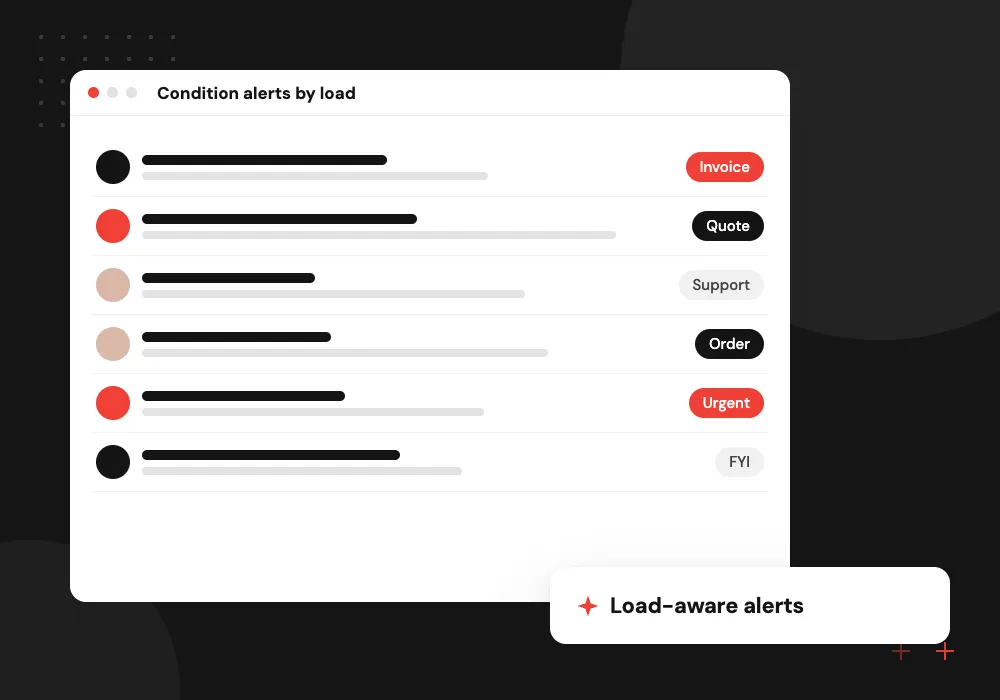
Condition alerts by load
Vibration, temperature and current compared with each machine’s normal pattern at its current load, with an alert when they drift away from it.
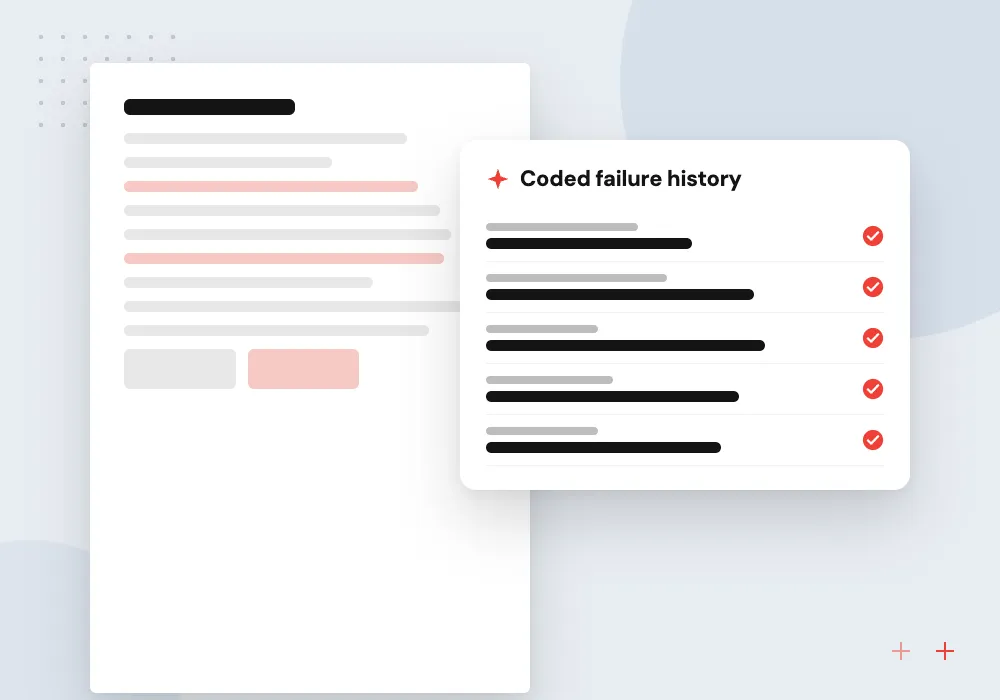
Work order text mining
A language model reads years of technician notes and assigns consistent failure modes and parts, turning free text into history a model can learn from.

Maintenance analytics views
Downtime, time between failures, repeat faults and planned versus reactive work by line and asset, refreshed from your CMMS each day.
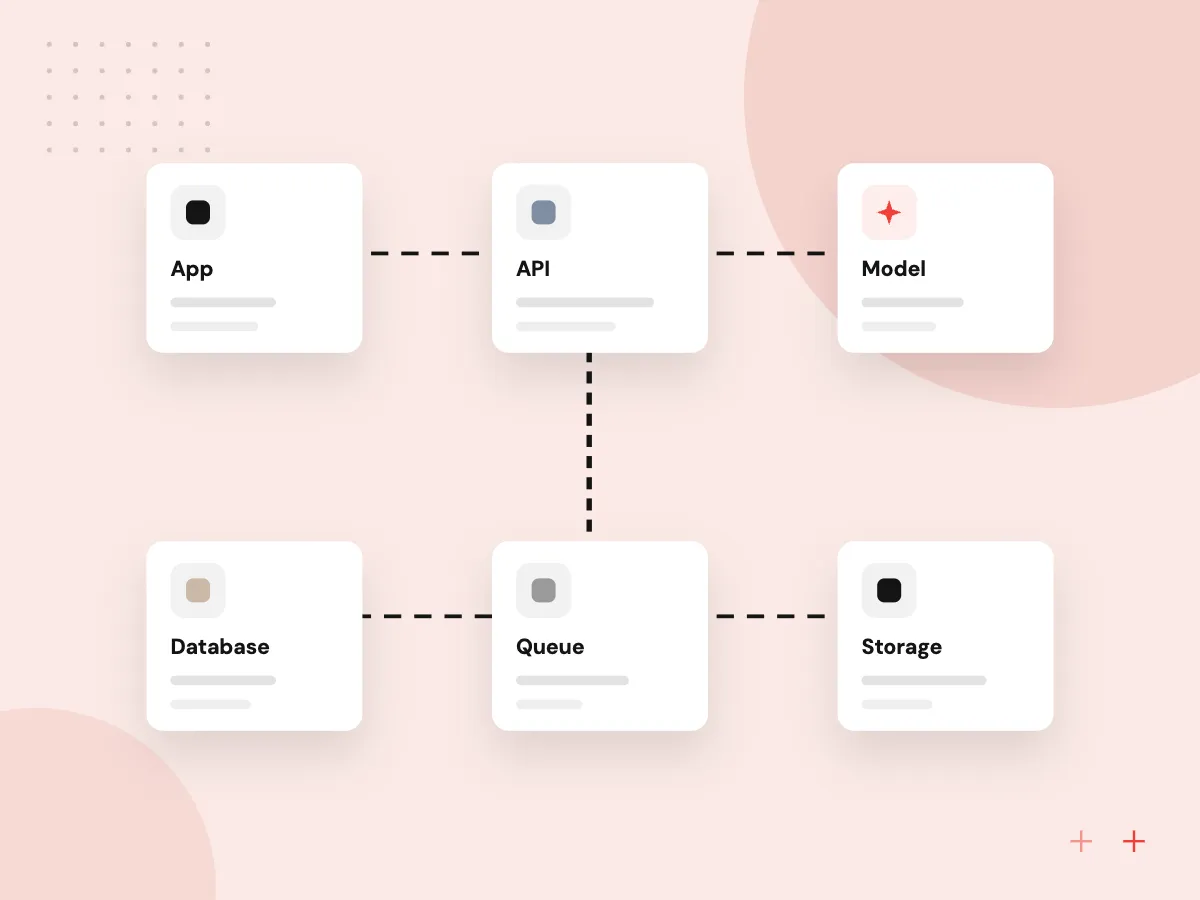
From sensor reading to work request
We connect to data you already collect, such as PLC tags, a plant historian or add-on vibration sensors, and score it at the edge or in the cloud. When risk passes an agreed level, a work request opens in your CMMS with the asset, the readings and a suggested check.
What we do
- PLC, SCADA and historian connectors
- Advice on add-on sensors
- Edge or cloud scoring
- CMMS work requests with evidence
- Thresholds set with planners
Getting failure history into shape
Prediction needs examples of failure, and most plants record them as short free-text notes. We match work orders to assets and sensor windows, code the failure mode and mark planned downtime, so the model does not mistake a scheduled shutdown for a fault.
What we do
- Asset register cleanup
- Failure mode coding from notes
- Shutdown and changeover tagging
- Sensor and work order alignment
- Report of missing data

How we approach a project
Alerts become work requests in your CMMS, such as Odoo Maintenance or IBM Maximo, where planners decide what happens next. A technician acting on an alert still follows the OSHA lockout/tagout standard; our software only advises. Manufacturers and utilities are the usual fit, as covered on AI for manufacturers and energy and utilities.
Pick one troublesome asset and bring its maintenance history to a 30-minute conversation. Book it on our contact page; we will tell you whether the data can support a model and what is missing.
How we work
- Start with assets that hurt most
- Alerts carry the readings behind them
- Planners and technicians decide the work
Our Process
-

Rank the critical assets
With maintenance and production leads we list assets by downtime cost, failure history and available sensor data.
-

Connect and clean data
We link sensor or historian feeds to CMMS work orders and mark planned shutdowns so they are not read as faults.
-

Run in silent mode
For several weeks the model scores assets without sending alerts, and we compare its warnings with what actually happened.
-

Switch on alerts
Thresholds are agreed with planners, work requests start flowing to the CMMS and every alert outcome is recorded.
Why Aranv for predictive maintenance
Silent pilot before alerts
Models score assets quietly for several weeks first, so you see real warning and miss counts before a single alert reaches a technician.
Advice, never machine control
Our software writes work requests and reports. It does not send commands to PLCs or change setpoints, which keeps control systems and safety procedures untouched.
Technician notes put to use
Years of free-text work orders are coded into failure modes and parts, so the history your team already wrote becomes training data.
Fits the CMMS you run
Alerts arrive as normal work requests with readings attached, so planners use the screens, priorities and approval steps they already know.
Planning AI Predictive Maintenance?
Book a 30-minute conversation with the team that would build it.
AI predictive maintenance FAQs
-
What data do we need for AI predictive maintenance?
Time-stamped condition readings, such as vibration, temperature, pressure or motor current, plus work order history that says when assets failed and why. Run hours and production load help the model tell a busy machine from a failing one. Gaps are common, and we report them early.
-
Do we have to buy new sensors?
Not always. Many plants already record useful tags in a PLC or historian. Where they do not, wireless vibration and temperature sensors can be added to critical assets without rewiring. We advise on placement after looking at the failure modes you want to catch.
-
How is predictive maintenance different from preventive maintenance?
Preventive maintenance follows the calendar or run hours, whether or not the part needs it. Predictive maintenance follows the condition of the asset, so work happens when readings show wear. Most plants keep both, using predictions to move or skip some scheduled tasks.
-
Will the system shut down equipment automatically?
No. We design it to recommend, not act. Control of machines stays with your operators and control systems, and a person decides whether to stop, inspect or keep running. That keeps safety procedures and production priorities in human hands.
-
How do you handle false alarms?
Every alert is marked by the planner as confirmed, not needed or unclear. Those outcomes tune thresholds and retrain the model. During the silent pilot we also measure how many warnings a technician would have checked for each real problem, and agree an acceptable level before alerts go live.

Let’s talk about your next step
Contact Aranv to discuss your workflow, current tools, and goals. Meet with our team or send an inquiry.
Book a meeting with our team
Choose an available date and time for a 30-minute conversation about your project.
Tell us about your project
Share a few details so we can discuss a useful next step.
Prefer email? sales@aranv.com