


Choosing between retrieval and training
Aranv’s answer on RAG vs fine-tuning: use RAG when the model needs to know your facts, such as policies or product specs that change, and fine-tune when it needs to behave a certain way, such as a fixed format or tone. Many business systems need only RAG.
Most requests we hear are about knowledge: answer staff from the handbook, answer customers from the catalog, draft replies that quote the right policy. That is retrieval work. Retrieval-augmented generation keeps the model general and adds your documents at question time, and our RAG development team builds the search, permissions and evaluation around it.
Fine-tuning changes the model itself by training it further on examples you supply. Methods such as LoRA, described in a 2021 research paper, made that training far lighter than updating every weight. It fits narrow, repeated tasks: labeling tickets into your categories, writing copy in a fixed voice, turning notes into a structured record. Provider options change, and open-weight models give the most control; our LLM fine-tuning services cover both routes.
Two ways to teach a model about your business
Knowledge versus behavior
- 01 Name the gap Decide whether the model lacks facts about your business or produces the wrong kind of output.
- 02 Missing facts: use RAG Search your documents at question time and pass the best passages to the model.
- 03 Wrong behavior: try prompts Clear instructions and worked examples fix many format and tone problems without training.
- 04 Still wrong: fine-tune Train on approved examples when prompts alone cannot hold the pattern.
The two can be combined: a fine-tuned model can still read retrieved passages.
Four points that decide RAG or fine-tuning
The question is less about which method is better and more about which problem you actually have.
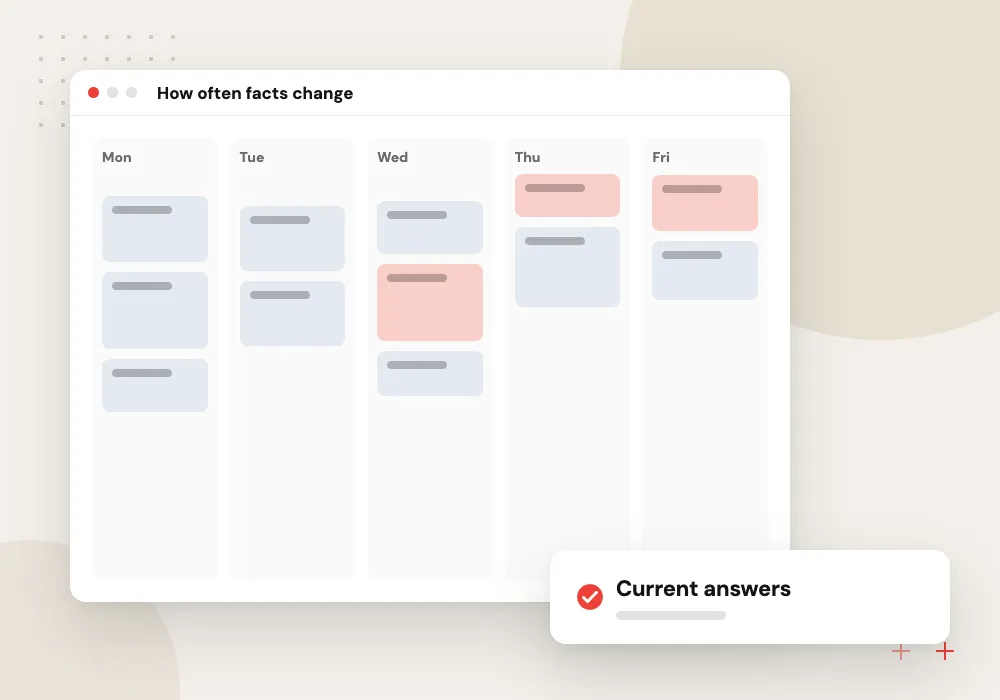
How often facts change
RAG picks up an edited document as soon as it is reindexed. A fine-tuned model keeps what it learned until someone trains it again.
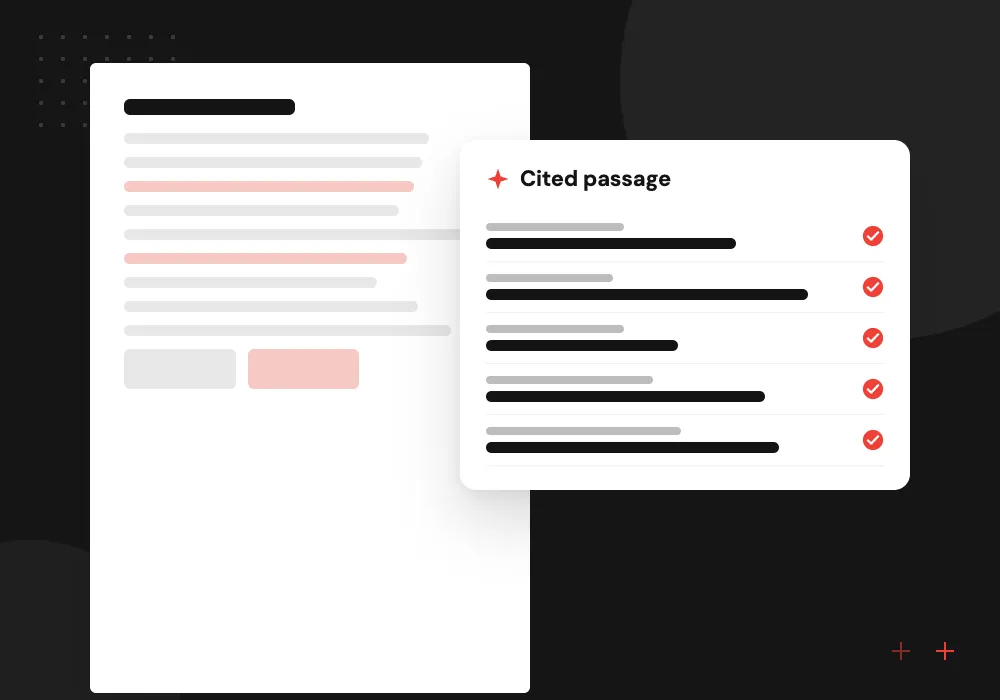
Citing the source
RAG can show the passage behind each answer, which helps staff check it. Fine-tuning folds learning into the model’s weights, so there is nothing to cite.
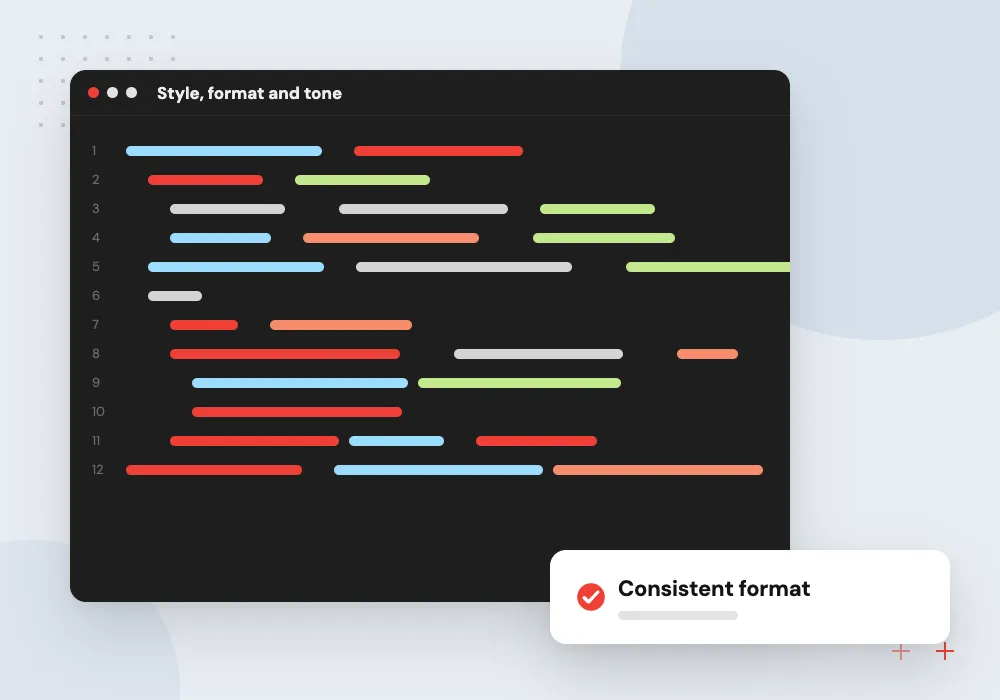
Style, format and tone
Fine-tuning suits fixed output patterns, such as a house writing style, a strict JSON shape or a narrow set of classification labels.
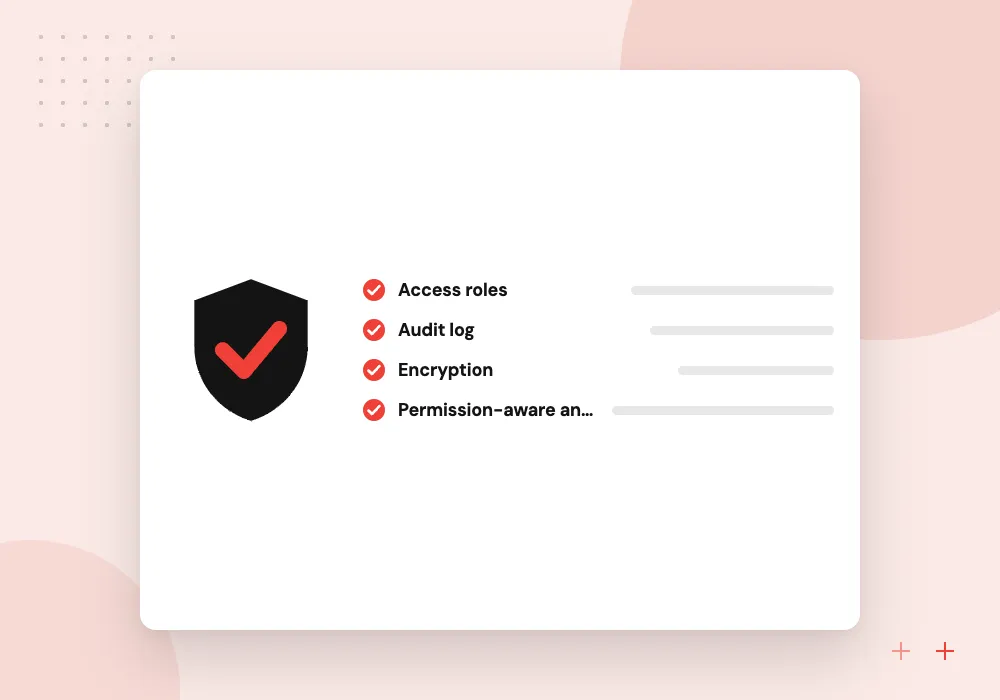
Who may see what
Retrieval can filter documents by the user’s role before the model reads them. A fine-tuned model may repeat what it learned to anyone who asks.
What a RAG build involves
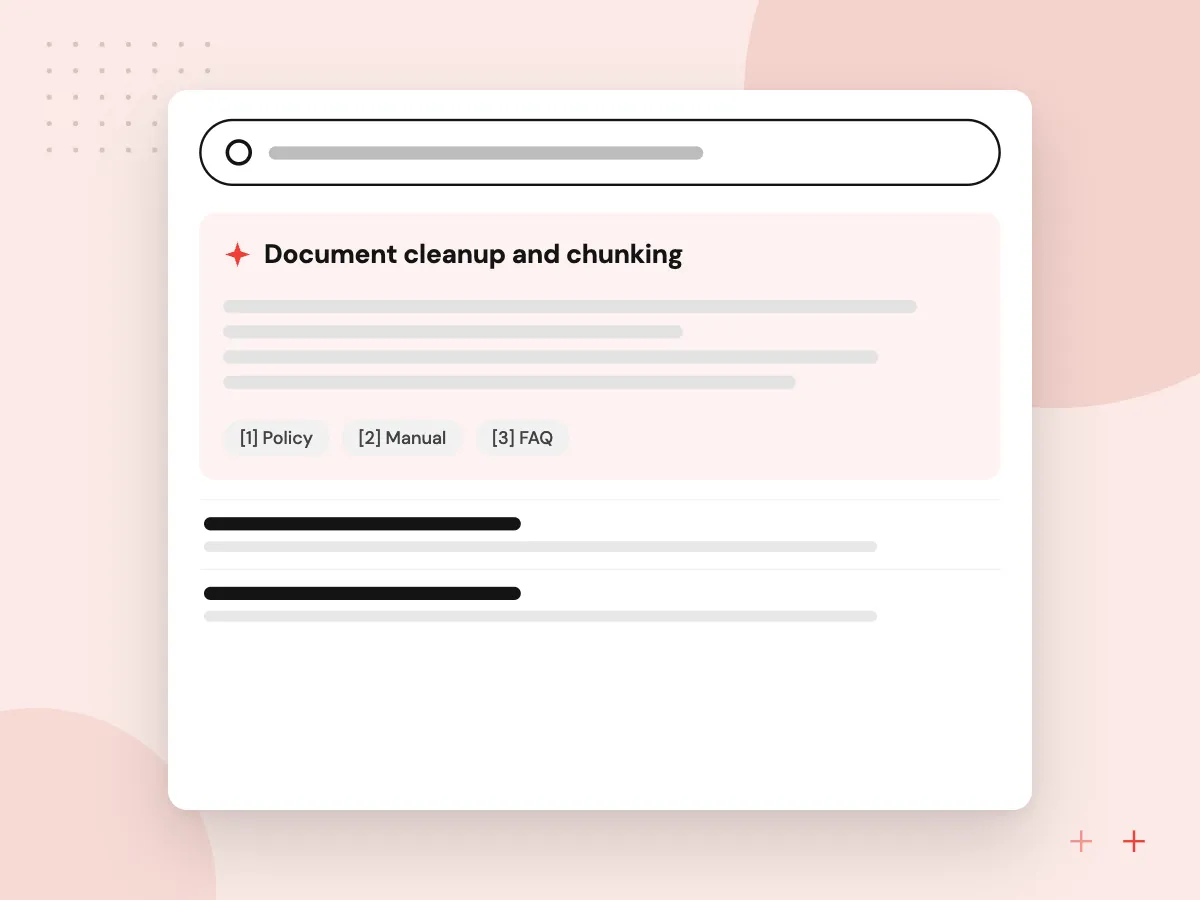
A RAG system has more parts than people expect. Documents are split into passages, turned into embeddings and stored in an index. At question time the system searches, filters by permissions, ranks the results and gives the best few to the model with instructions to answer only from them.
What we do
- Document cleanup and chunking
- Embeddings and a vector index
- Permission filters per user
- Reranking of search results
- Answers with cited sources
What a fine-tuning project involves
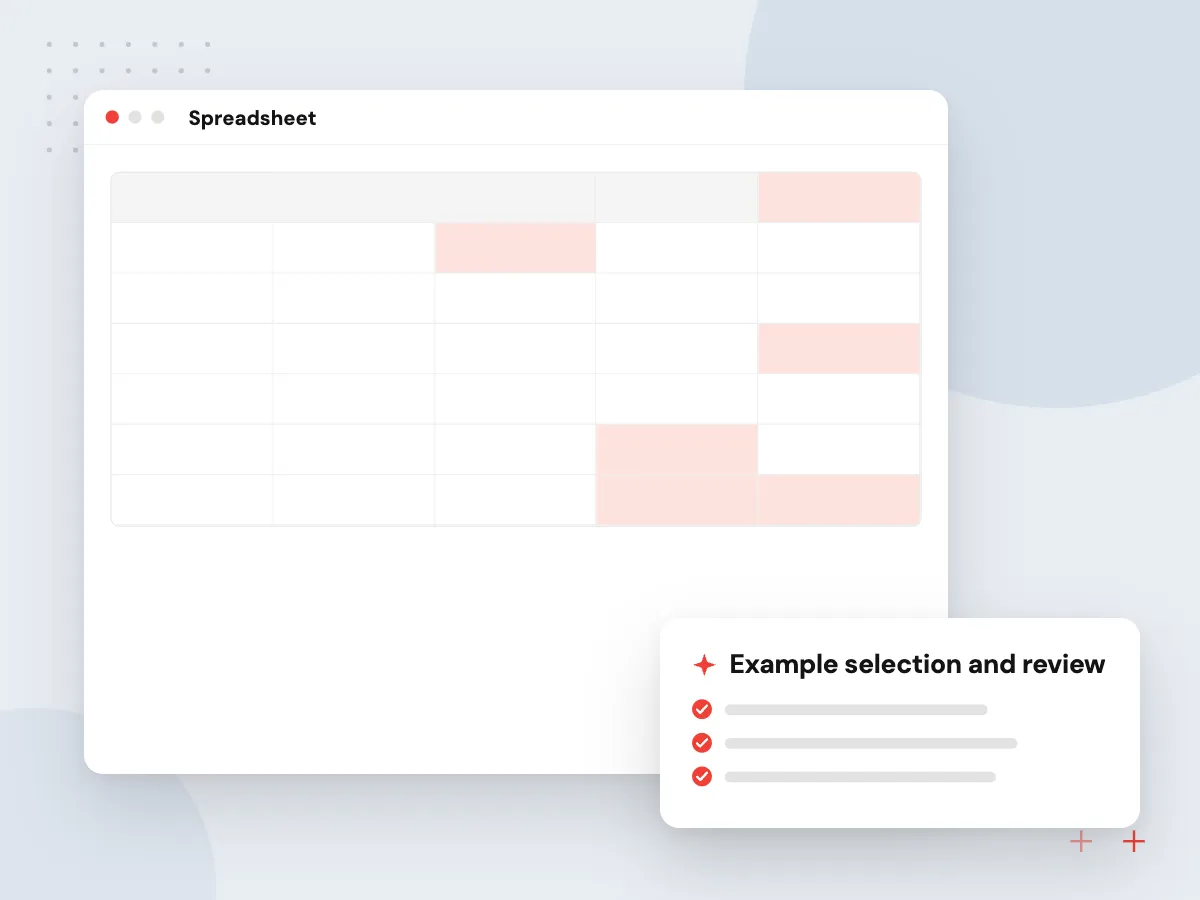
Most of the work is the dataset, not the training run. Someone who knows the task writes or approves example inputs and ideal outputs, edge cases included. After training, the new model is compared with the base model and a well-prompted version on examples it never saw.
What we do
- Example selection and review
- Training, validation and test splits
- Open-weight or hosted base model
- Comparison with a prompt-only baseline
- Retraining plan when tasks change

How we approach a project
Before either, try prompt changes. Clear instructions, a few worked examples and a defined output format solve many problems that look like they need training. Prompt engineering is the cheapest change to test, and an LLM evaluation set shows whether retrieval, training or a better prompt actually moved the score.
Mature systems sometimes combine both: a model tuned to your format, reading passages retrieved from current documents. That setup is harder to maintain, so we reach it only after RAG alone has been measured and found short on one specific behavior.
How we work
- Facts in documents, behavior in training
- Try prompts before any training run
- Score both on the same tests
Our Process
-

Collect real questions
Gather the questions and tasks the system must handle, with the answer a good employee would give.
-

Find the failure type
Run them through a general model and note whether answers lack facts or have the wrong form.
-

Fix facts with retrieval
Index the documents that hold the missing facts and rerun the same questions.
-

Train only if needed
If format or tone still fails, prepare approved examples and compare a fine-tuned model on the same set.
How Aranv helps you decide
Measured, not assumed
We build a small evaluation set from your real questions first, so the choice between retrieval, training and better prompts rests on scores rather than opinion.
Retrieval built for permissions
When RAG fits, we connect it to your document stores with access rules that match the ones your staff already have.
Examples checked by experts
When fine-tuning fits, we work with the people who do the task to write and check examples, because weak examples train weak behavior.
Clear ownership of the pieces
Indexes, prompts and training sets are listed as deliverables, along with tuned model files where the provider allows export, and a note on who maintains each.
Ready to act on this guide?
Ask our team in a 30-minute conversation.
Or see how we build it: Explore all services
RAG vs fine-tuning FAQs
-
When should you fine-tune an LLM?
When output must follow a pattern that prompts cannot hold reliably, such as a strict format, a narrow set of labels or a house style, and you have a solid set of approved examples. Do not fine-tune to add facts that change; retrieval handles those better.
-
Is RAG cheaper than fine-tuning?
Often at the start, because RAG needs no training run and stays current when documents change. It does add search infrastructure and longer prompts on every request. Fine-tuning has a training cost up front and again at each retraining. Volume, document count and how often content changes decide the total.
-
Can fine-tuning stop hallucinations?
Not on its own. A fine-tuned model can still state wrong facts with confidence, especially about anything outside its training examples. RAG reduces the problem by handing the model the source passage, and an evaluation set tells you how often answers still go wrong.
-
What data do we need for each approach?
RAG needs the documents themselves, kept current, with clear rules on who may see which ones. Fine-tuning needs pairs of input and ideal output, reviewed by someone who knows the work. Many companies have the first ready and need time to produce the second.
-
Does fine-tuning send our data to the model provider?
With a hosted model, the training examples go to that provider under its data terms, so read them first. Tuning an open-weight model on your own servers keeps the examples in your environment. We compare the options during discovery.

Let’s talk about your next step
Contact Aranv to discuss your workflow, current tools, and goals. Meet with our team or send an inquiry.
Book a meeting with our team
Choose an available date and time for a 30-minute conversation about your project.
Tell us about your project
Share a few details so we can discuss a useful next step.
Prefer email? sales@aranv.com