


What an AI fraud detection system includes
Aranv builds AI fraud detection for online sellers, lenders, payment firms and finance teams: models that score orders, payments, logins and vendor bank changes against normal behavior for that customer, device and amount, hold the risky few for review, and give analysts the reasons behind each score.
Fraud takes many shapes: stolen cards at an online store, fake bank details on a supplier invoice, a hijacked customer account, a refund claimed again and again. AI fraud detection scores each event against what is normal for that customer, device and amount, and sends the risky few to a person. The aim is lower losses without blocking good customers.
Payment processors already screen cards, so we build on their signals rather than replace them. Our models add what the processor cannot see: your order history, returns, account changes and links between accounts. Lenders, insurers and payment companies will find more on AI for fintech companies and claims processing.
From chargebacks after the fact to holds before shipping
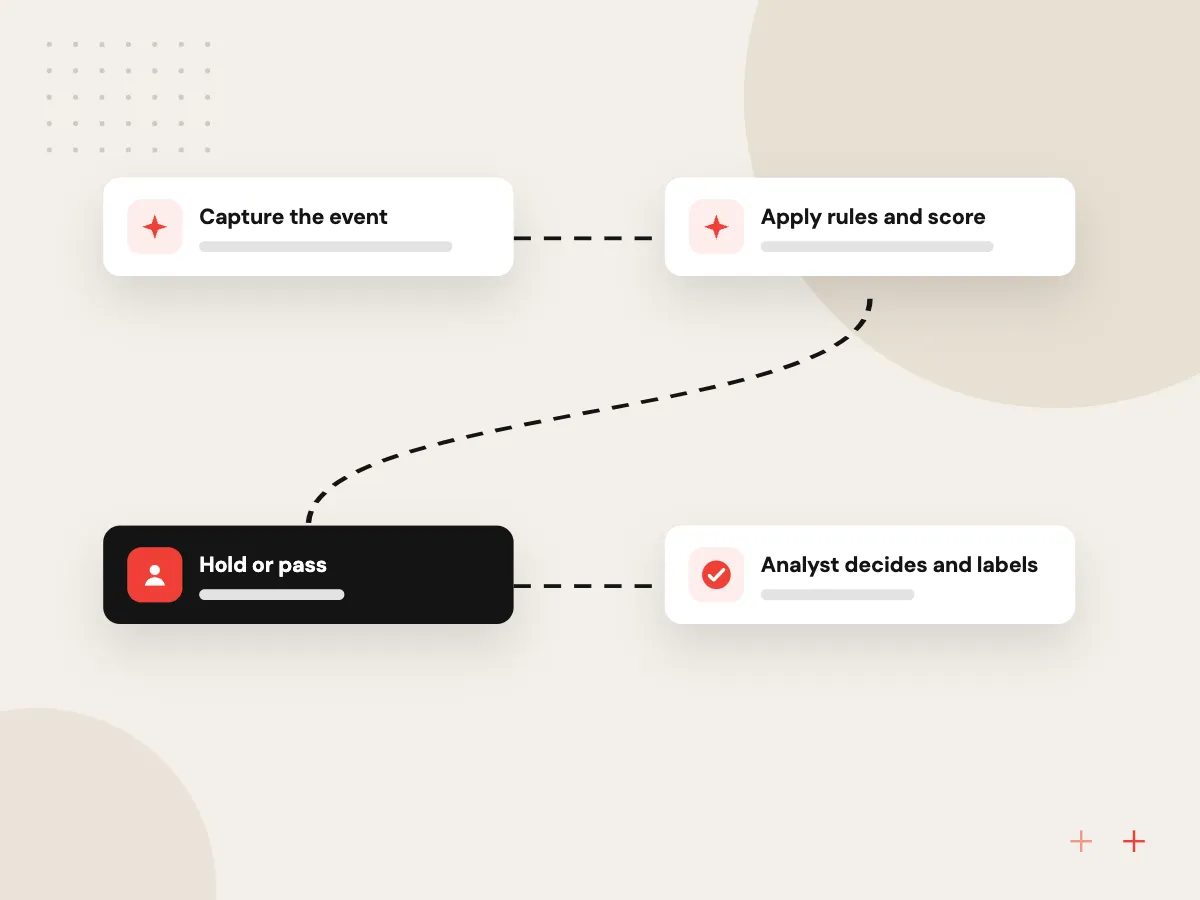
How a risky transaction gets caught
- 01 Capture the event An order, payment, login or bank detail change arrives with device and account data.
- 02 Apply rules and score Hard rules catch known bad cases; the model scores everything else in real time.
- 03 Hold or pass Low scores pass, high scores hold, and the middle band waits for a quick check.
- 04 Analyst decides and labels The reviewer approves, cancels or verifies, and the outcome trains the next model.
Thresholds are set from the cost of a missed fraud against the cost of turning away a good customer.
Fraud patterns we help catch
Fraud looks different in every business, so we start from the losses you actually see.
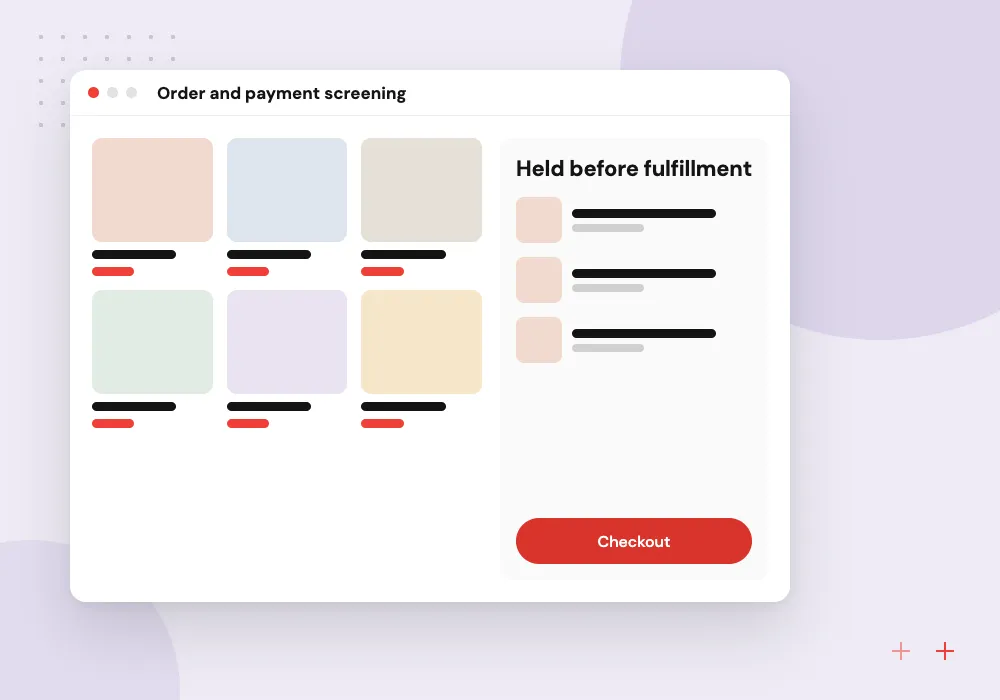
Order and payment screening
Each online order or payment scored before fulfillment from amount, device, address match, account age and order speed, with risky ones held for review.
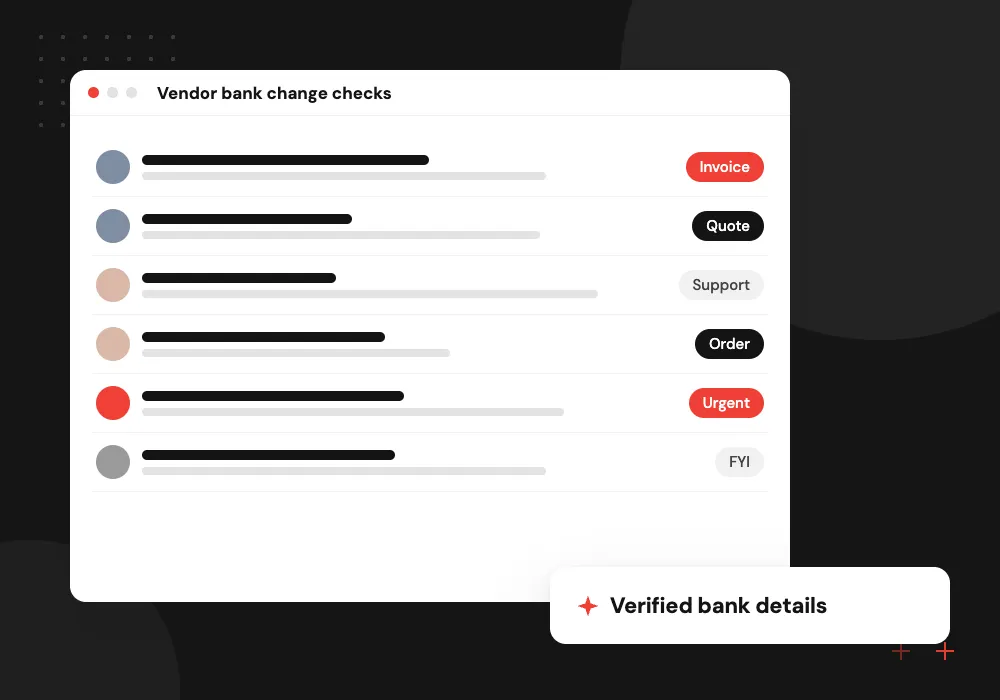
Vendor bank change checks
Requests to change a supplier’s bank details are checked against past behavior, sender domain and timing, and confirmed by phone before any payment runs.
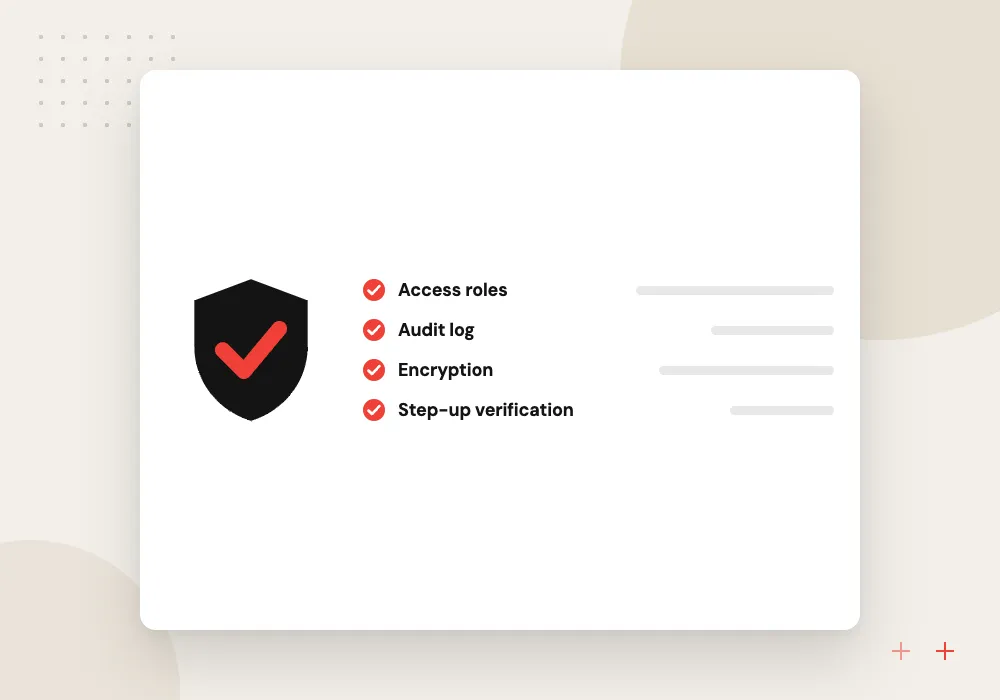
Account takeover alerts
Logins from new devices, password resets followed by address changes, and unusual withdrawal patterns trigger a step-up check or a hold.
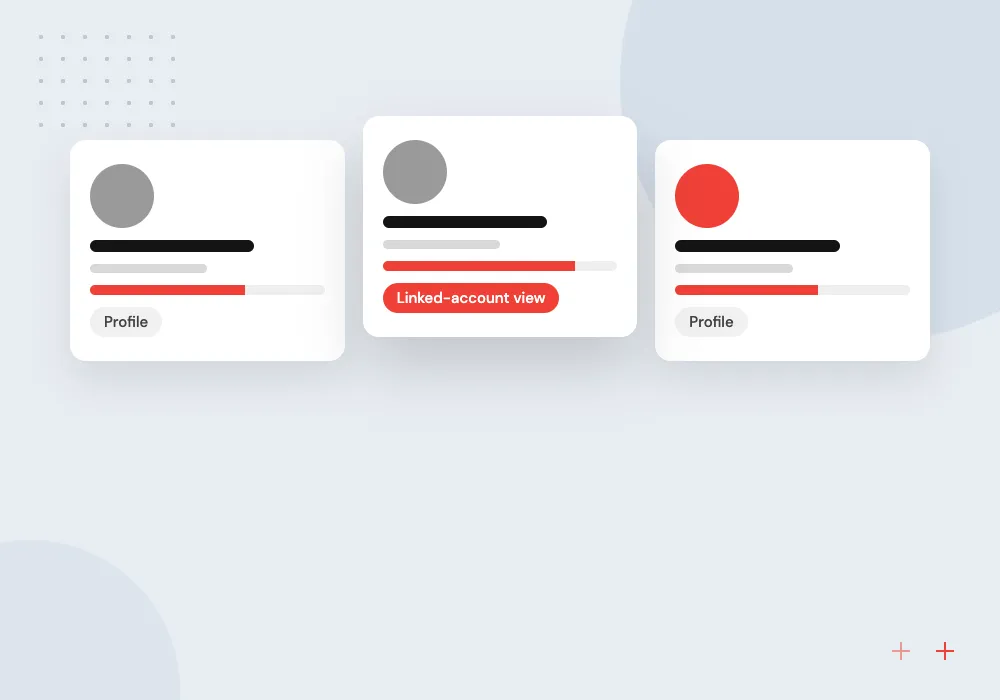
Refund and promo abuse
Accounts that share devices, cards or addresses are grouped, so repeat refund claims and coupon farming show up as one pattern instead of many small ones.
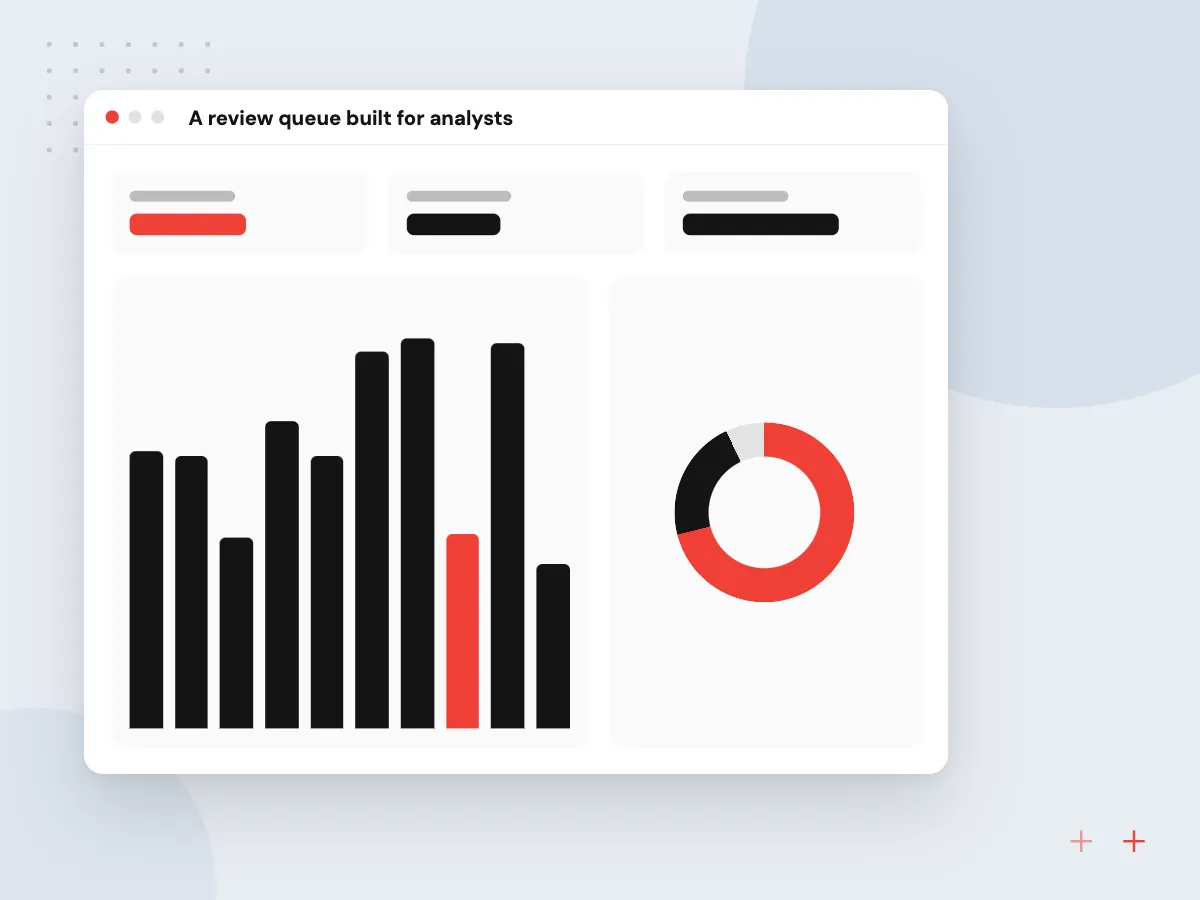
A review queue built for analysts
Scores do not stop fraud; people acting on them do. Analysts see the score, its reasons, linked accounts and order history on one screen, then approve, cancel or ask for verification. Each decision is stored as a label, so the next model version learns from your team’s judgment.
What we do
- Queue ranked by risk and value
- Reason codes for each score
- Linked account and device view
- One-click approve, hold or cancel
- Decisions saved as training labels
Rules and models working together
A transaction fraud model is good at spotting new patterns, while rules are easy to explain and quick to change. We run both: hard rules for known bad cases, a model score for the rest, and thresholds tuned to the cost of a missed fraud against a lost sale.
What we do
- Rule library your team can edit
- Model score with set thresholds
- Cost-based threshold tuning
- Shadow testing before go-live
- Monthly drift and pattern review
How we approach a project
Businesses that send ACH payments now have a rule to meet. Nacha’s fraud monitoring rule expects originators and the banks and processors serving them to run risk-based checks for fraudulent entries and review them each year. We build those checks through our machine learning development team, with anomaly detection covering cases where confirmed fraud examples are scarce.
Bring a month of orders or payments with known fraud cases marked to a 30-minute conversation. You can book one through our contact page.
How we work
- Rules and models used together
- People decide the blocked cases
- Every decision becomes a label
Our Process
-

Size the losses
We go through chargebacks, write-offs and confirmed cases to see where money is lost and what each type costs.
-

Assemble the labels
Confirmed fraud is matched to the original events, with the delay between a sale and its chargeback handled carefully.
-

Shadow score live traffic
The model scores real events without holding any, so we can count catches and false alarms before it affects customers.
-

Turn on holds by band
Holds start with the highest-risk band, analysts work the queue, and thresholds move as their decisions come in.
Why Aranv for fraud detection
Built on your loss data
We start from your chargebacks, write-offs and confirmed cases, so the system targets the fraud that actually costs you, not a generic list of threats.
Shadow mode before holds
Live traffic is scored silently first, and you see catches and false alarms before a single genuine customer is delayed.
Reasons with every score
Analysts and support staff see why an order was held, which speeds up reviews and gives them something concrete to tell a customer.
Sensitive data kept narrow
Card numbers stay with your processor. Our models use tokens, device signals and account history, with access limited to the roles that review cases.
Planning AI Fraud Detection?
Book a 30-minute conversation with the team that would build it.
AI fraud detection FAQs
-
How does AI fraud detection work for a small online store?
Each order is scored before it ships, using signals such as billing and shipping mismatch, new account with a large basket, many cards tried, and device history. Most orders pass untouched. A small share wait for a quick review, and confirmed fraud is canceled before goods leave the warehouse.
-
What is a transaction fraud model trained on?
Past events labeled as fraud or genuine: chargebacks, confirmed cases, analyst decisions and refunds marked as abuse. Because a chargeback can arrive weeks after the sale, we wait for labels to mature before training and testing, so the model is not taught that recent fraud was genuine.
-
Will it block good customers?
Any fraud system will stop some genuine customers; the question is how many. We set thresholds from the cost of each mistake, send the uncertain middle to people rather than blocking it, and report the false positive rate every month so you can adjust the balance.
-
Do we still need our payment processor’s fraud tools?
Yes. Keep them. Processor tools see patterns across many merchants that you cannot. Our model adds your own history and business rules on top, and the two scores together give reviewers a better picture than either alone.
-
Can a model deny a loan or close an account on its own?
We do not recommend it. In lending, US rules under the Equal Credit Opportunity Act require specific reasons when credit is denied, and account closures affect real customers. Models should rank and explain; people decide. This is general information, not legal advice.

Let’s talk about your next step
Contact Aranv to discuss your workflow, current tools, and goals. Meet with our team or send an inquiry.
Book a meeting with our team
Choose an available date and time for a 30-minute conversation about your project.
Tell us about your project
Share a few details so we can discuss a useful next step.
Prefer email? sales@aranv.com