


What payment gateway integration includes
Aranv offers payment gateway integration for US businesses adding payments to websites, portals, mobile apps and internal systems: Stripe and other processors, one-time and recurring billing, refunds and payouts, with card entry kept in the provider’s hosted fields so card numbers stay off your servers.
The key decision in a payment project is where card data goes, whether the payment sits in a web application, a mobile app or an internal tool. We use the provider’s hosted payment page or embedded fields, so card numbers travel from the customer’s device straight to the processor, and your systems store only tokens, the last four digits and status.
That choice also shapes your PCI DSS obligations. The standard applies to businesses that accept cards, and the way card data flows decides how much of your environment is in scope. Your acquiring bank or processor tells you which self-assessment applies. We do not certify compliance; we design so the card data environment stays small. The standard itself and its supporting documents are on the PCI Security Standards Council website.
From checkout to reconciled payment
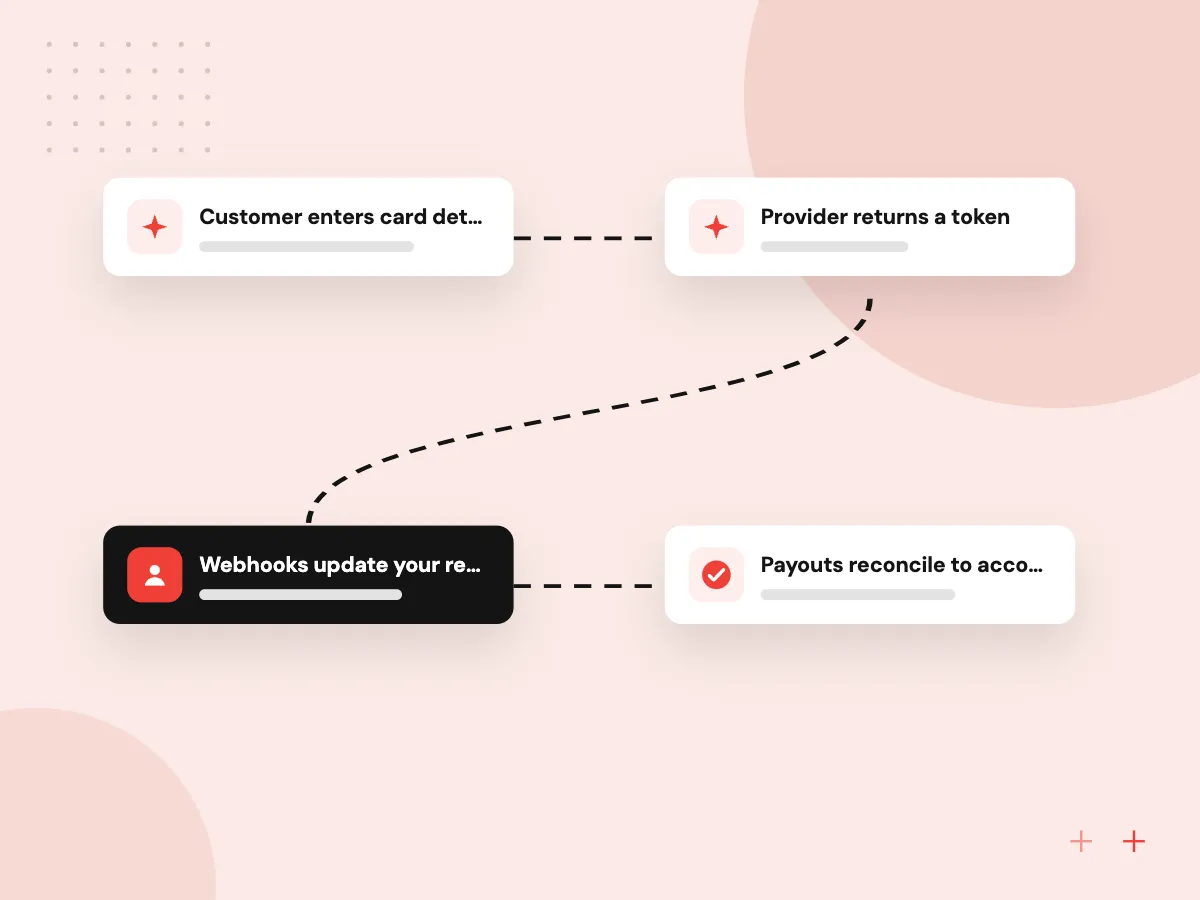
How a payment flows through your app
- 01 Customer enters card details Card fields load from the payment provider, not from your own servers.
- 02 Provider returns a token Your app receives a token and the charge result, never the full card number.
- 03 Webhooks update your records Paid, failed, refunded and disputed events update orders and invoices automatically.
- 04 Payouts reconcile to accounting Deposits, fees and refunds are matched to your ledger every day.
Keeping card data with the provider shapes every other design choice, from logging to support screens.
Payment processing integration we build
The right setup depends on how you charge: once, on a schedule, by invoice or on behalf of others.
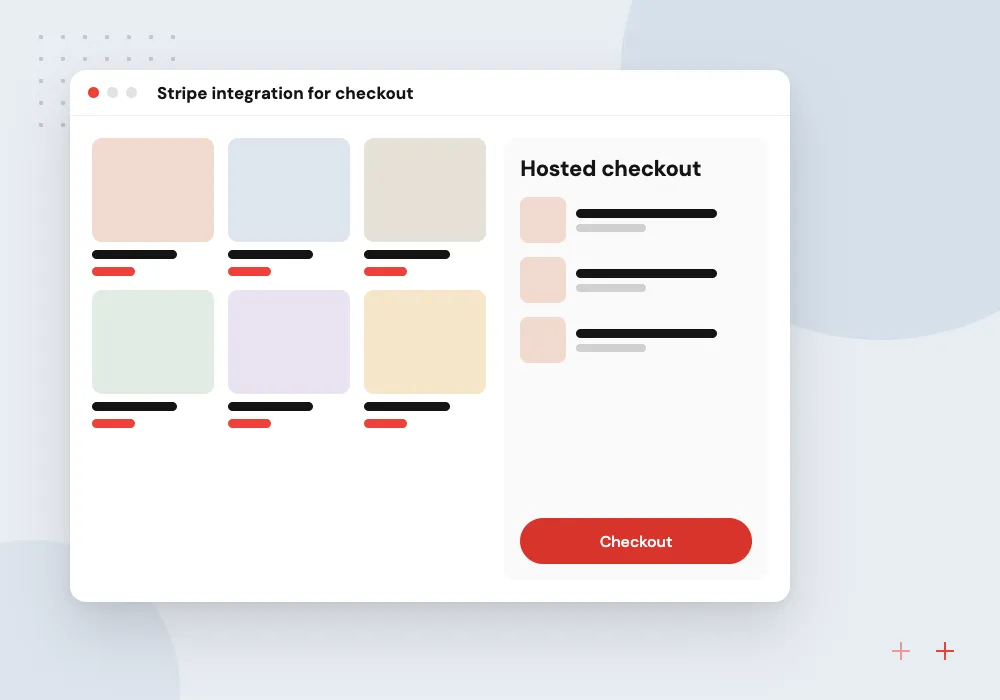
Stripe integration for checkout
Card, wallet and bank payments on your website or app through Stripe Checkout or Elements, with saved payment methods and receipts handled by the provider.
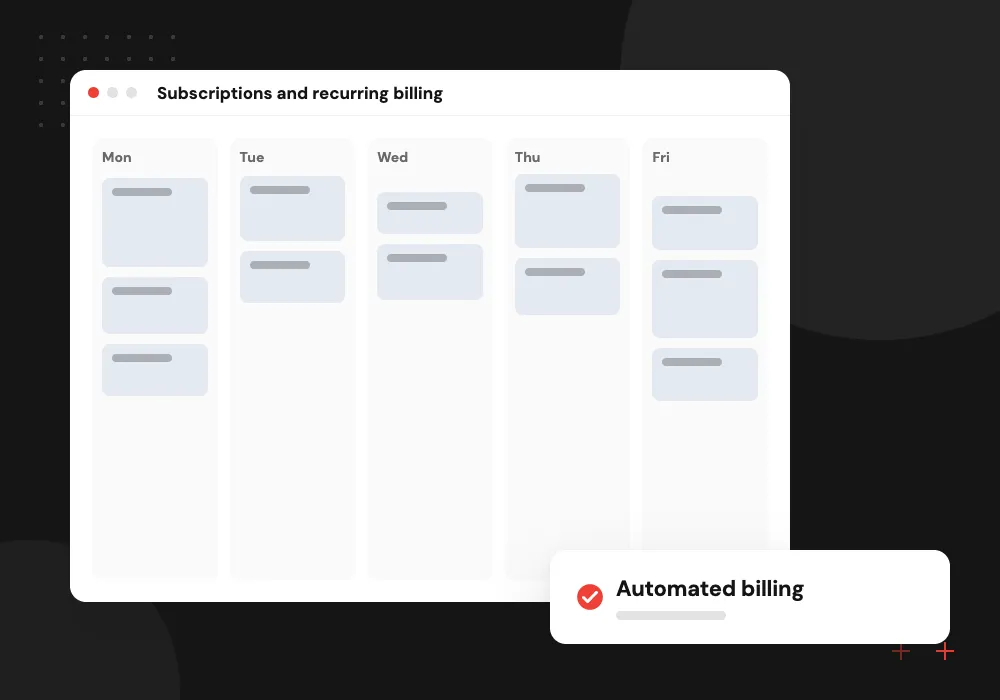
Subscriptions and recurring billing
Plans, trials, upgrades, proration, failed-payment retries and reminder emails managed in the provider’s billing tools and reflected in your app’s accounts.
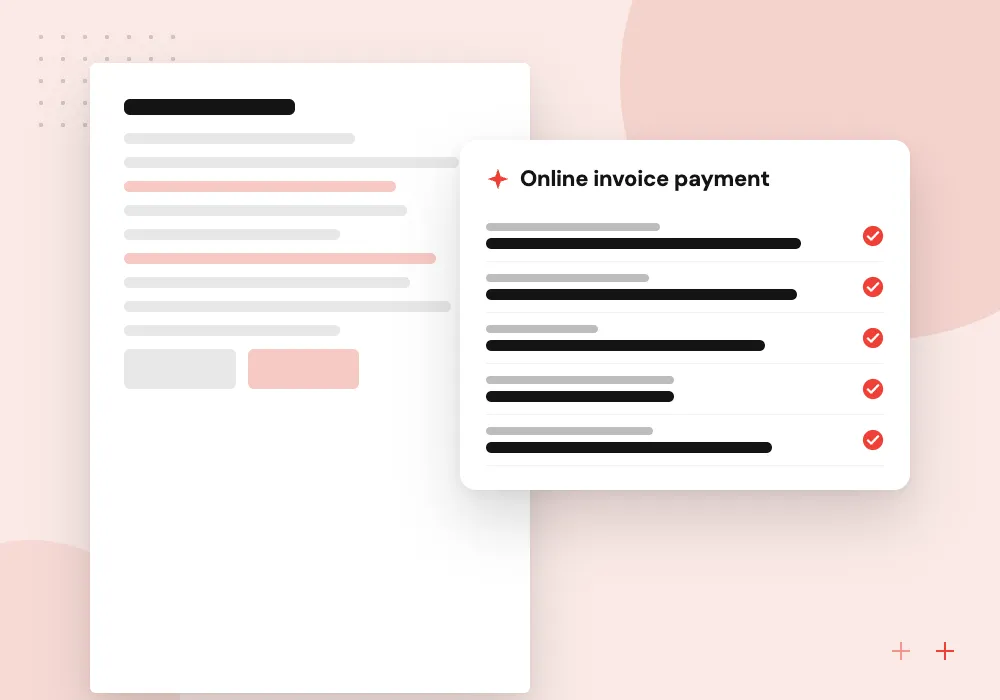
Invoice and portal payments
Customers pay open invoices by card or ACH from a link or portal, and the payment posts back to QuickBooks or your ERP without re-keying.
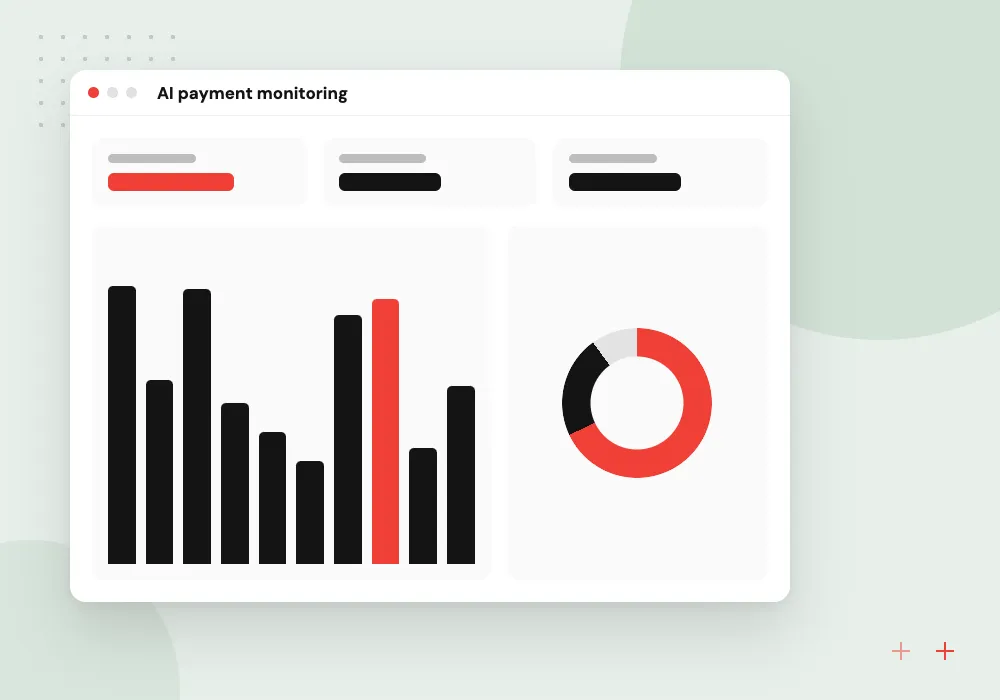
AI payment monitoring
AI reviews payment events for patterns such as card testing or unusual refund activity, drafts dispute evidence from order records, and flags reconciliation gaps for finance staff.
How card data handling shapes the design
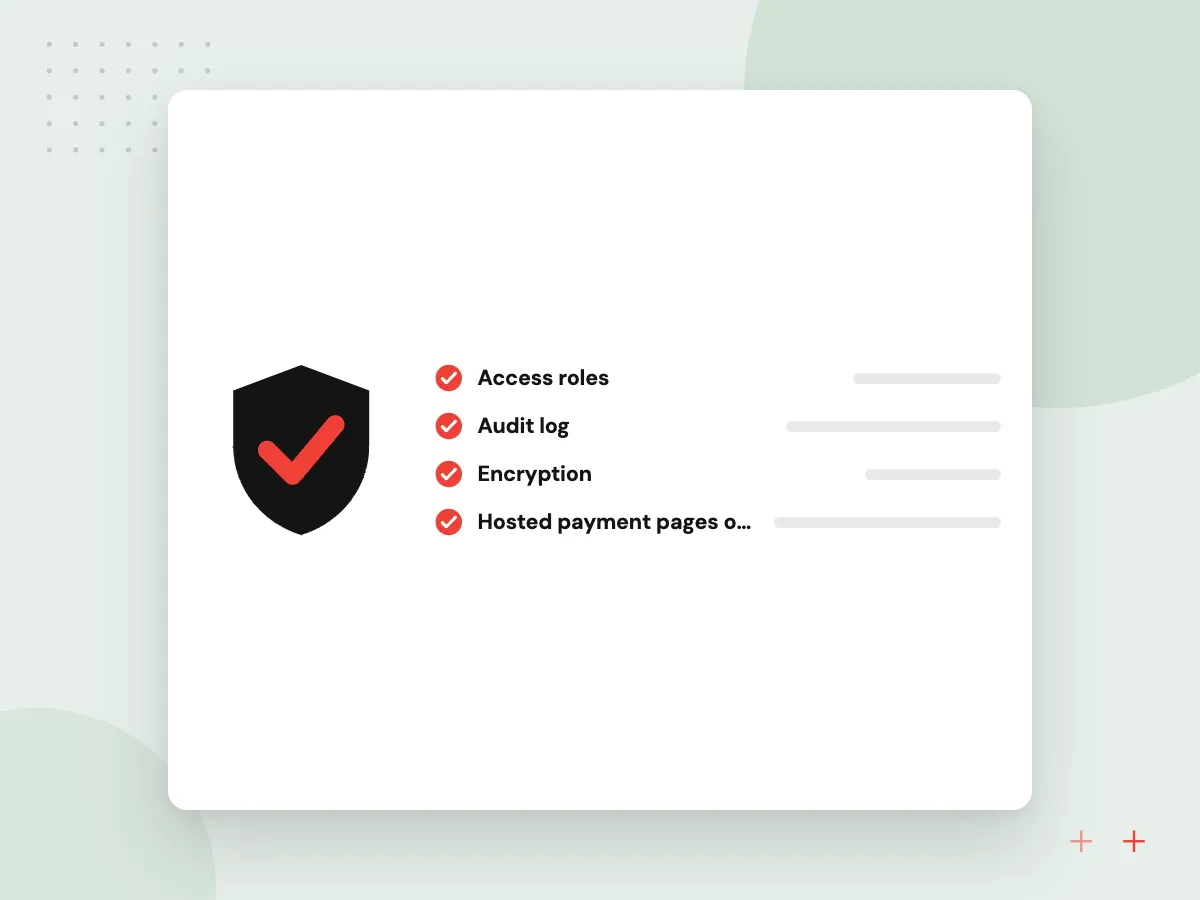
We design every payment flow so your systems never receive a full card number. Card entry happens in the provider’s hosted page or fields, webhooks carry status rather than card data, and logs, support screens and exports show only tokens and the last four digits. The aim is a PCI DSS scope as small as your business model allows.
What we do
- Hosted payment pages or fields
- Tokens instead of card numbers
- Signed webhook verification
- Card data kept out of logs
- Role-based access to refunds
AI for payment operations
AI can match payouts to invoices when references are messy, flag unusual refund or decline patterns, and draft dispute evidence from order, delivery and message records. Staff approve each match and submission, and every AI suggestion is logged with the data it used.
What we do
- Payout to invoice matching
- Decline and refund pattern alerts
- Dispute evidence drafts
- Replies to payment questions
- Logs of every suggestion

How we approach a project
Payments rarely live alone. Through API integration, provider webhooks update orders, subscriptions and invoices, and payouts reconcile into your books through QuickBooks integration or your ERP. Platforms that pay sellers or providers will find split payments and payouts on our marketplace development page.
AI helps on the operations side. Providers already screen for fraud, and our AI fraud detection work adds checks based on your own order and customer history. AI can also draft dispute responses from order, shipping and message records for staff to review and submit.
How we work
- Card data stays with the provider
- Every payment event recorded once
- Reconciliation built in from the start
Our Process
-

Map how you charge
We list every way money comes in and goes out: one-time sales, deposits, subscriptions, invoices, refunds, credits and payouts.
-

Choose provider and flow
Provider, hosted page or embedded fields, and webhook events are picked with your finance lead, with PCI scope in mind.
-

Build against the sandbox
Flows are coded in the provider’s test mode and run through declines, authentication challenges, partial refunds and disputes.
-

Go live and reconcile
After a small live test, we compare provider payouts with your accounting records daily until finance signs off.
Why Aranv for payment work
Card data kept away
Our integrations use hosted fields or pages, so card numbers go to the processor while your app, logs and backups hold tokens only.
Tested against failure cases
Declines, expired cards, duplicate webhooks, partial refunds and disputes are all run in the provider’s sandbox before any real charge.
Finance signs off
Provider payouts are reconciled to your accounting records during launch, and finance approves the numbers before the old process is retired.
Clear about our role
We do not certify PCI compliance or set processor fees. We design the integration, document the card data flow and support your assessor or processor review.
Planning Payment Gateway Integration?
Book a 30-minute conversation with the team that would build it.
Payment integration questions
-
What affects the cost of payment gateway integration?
The number of payment flows, the platforms involved (web, iOS, Android), the systems that webhooks must update, and reconciliation with accounting. Processor fees are separate and set by the provider; our own estimate is split into stages.
-
Which payment gateway should we use?
It depends on your model. Stripe is common for online businesses and platforms, Square for businesses that also sell in person, and PayPal for buyers who prefer wallets. An existing merchant account may point you to others. We compare fees, features, payout timing and fit with your systems first.
-
Are you PCI certified?
We do not hold a PCI certification and do not claim one. Validation applies to the business accepting cards and to service providers that store, process or transmit card data for it. Our integrations send card data straight to the processor, and your acquirer or a qualified assessor confirms what you must validate.
-
Can we save customer cards for future charges?
Yes, through the provider. The card is stored in the provider’s vault and your app keeps a reference to it, so subscriptions, deposits or balances can be charged later without your systems holding card numbers. We also record the customer’s consent to future charges.
-
What happens when a customer disputes a charge?
The provider notifies your system by webhook, the order is flagged, and staff see the dispute alongside the order, delivery and message history. An AI-drafted evidence summary saves time, but a person reviews and submits it before the provider’s deadline.

Let’s talk about your next step
Contact Aranv to discuss your workflow, current tools, and goals. Meet with our team or send an inquiry.
Book a meeting with our team
Choose an available date and time for a 30-minute conversation about your project.
Tell us about your project
Share a few details so we can discuss a useful next step.
Prefer email? sales@aranv.com