


What AI call analytics includes
Aranv builds AI call analytics for sales teams, support centers and service businesses: recorded calls are transcribed, summarized, tagged by reason and outcome and checked against your script and disclosure rules, with results written to your CRM and a weekly report managers can act on.
Most phone systems and contact center platforms can export recordings with call details, or send each one as the call ends. We connect to that feed, run transcription through a service chosen for your audio and languages, and keep transcripts in your own cloud account. Our speech-to-text development page covers the transcription choices.
Summaries, tags and scores come from a language model working from your list of call reasons and your QA checklist, built through our NLP development services. Results are written to the caller’s CRM or helpdesk record, and trends feed a dashboard, including Power BI if that is what your managers already open.
How recorded calls become call analytics
From recording to weekly report
- 01 Collect recordings and details Audio, agent, queue, direction and duration arrive from your phone or contact center system.
- 02 Transcribe and mask Speech-to-text separates the speakers, then card numbers and similar details are masked.
- 03 Summarize and score Each call gets a summary, a reason tag, an outcome and a checklist score.
- 04 Report and follow up Summaries reach the CRM; trends and flagged calls reach managers every week.
Scores point to calls worth hearing; a manager listens before any call is used to judge an agent.
What call center AI reports on
Managers usually hear a handful of calls a week. Call analytics reads every one and points to the few that need a listen.
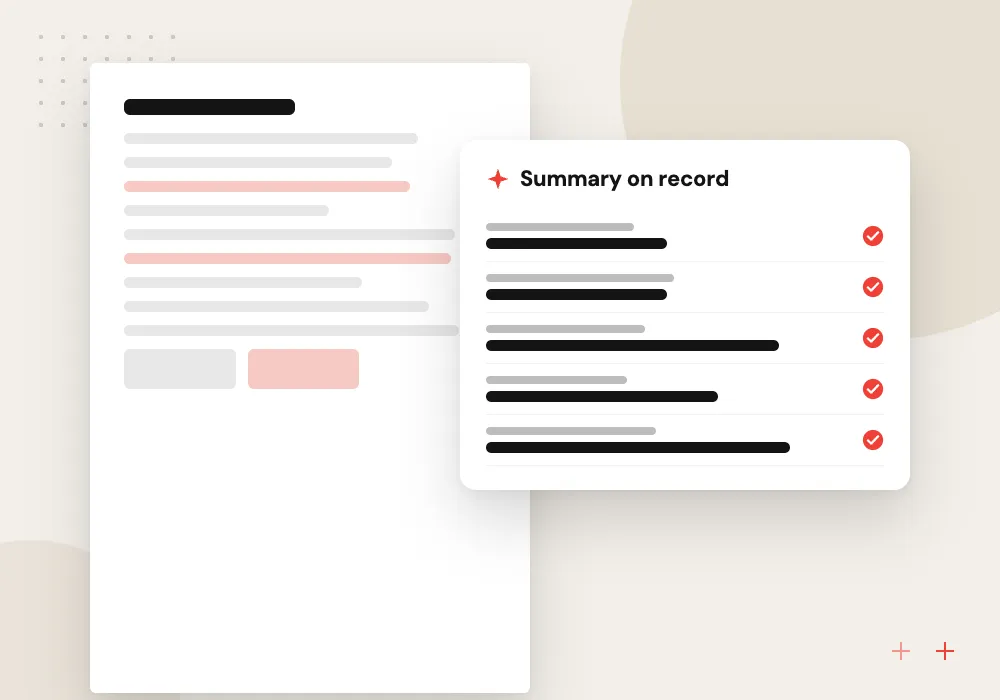
Call summarization
A short summary of every call, with the reason, what was promised and the next step, saved to the customer’s record in your CRM.
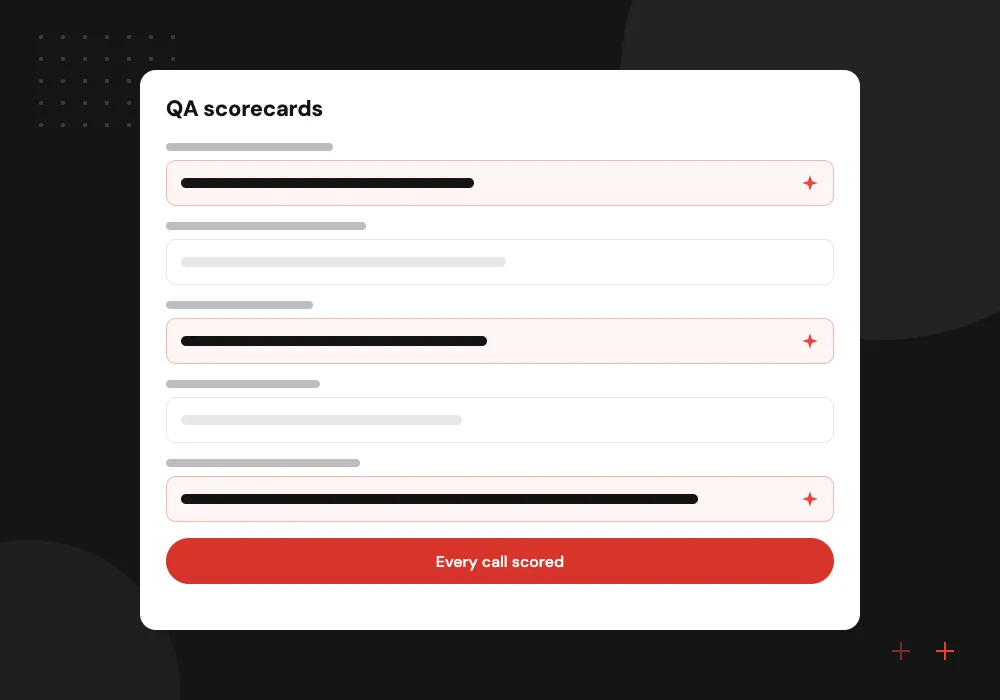
QA scorecards
Your checklist, such as greeting, identity check, required disclosure and recap, is applied to each call with the quote behind each mark.
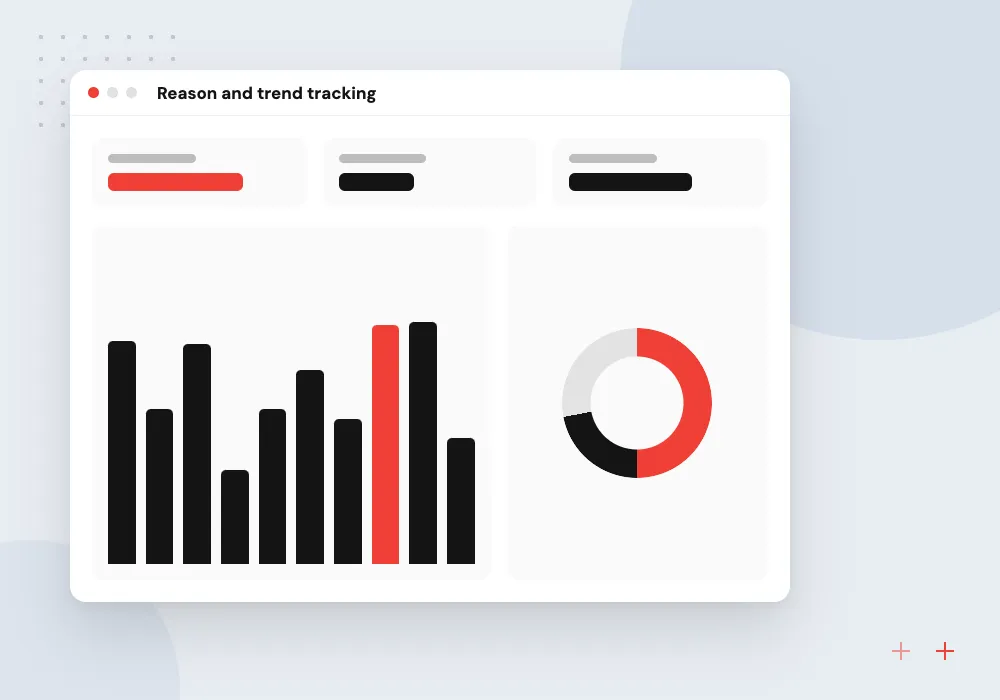
Reason and trend tracking
Calls are tagged by reason, product and outcome, so a jump in billing complaints or a broken feature shows up within days, not at quarter end.
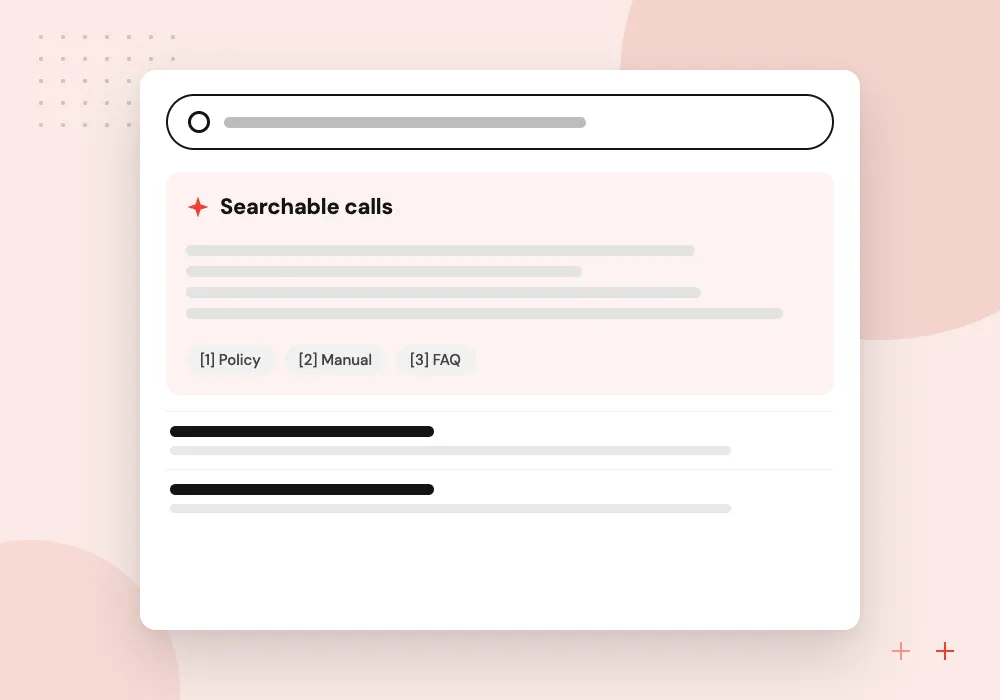
Sales call insights
Find calls where pricing came up, objections were raised or a booking slipped away, and see which lead sources bring calls that convert.
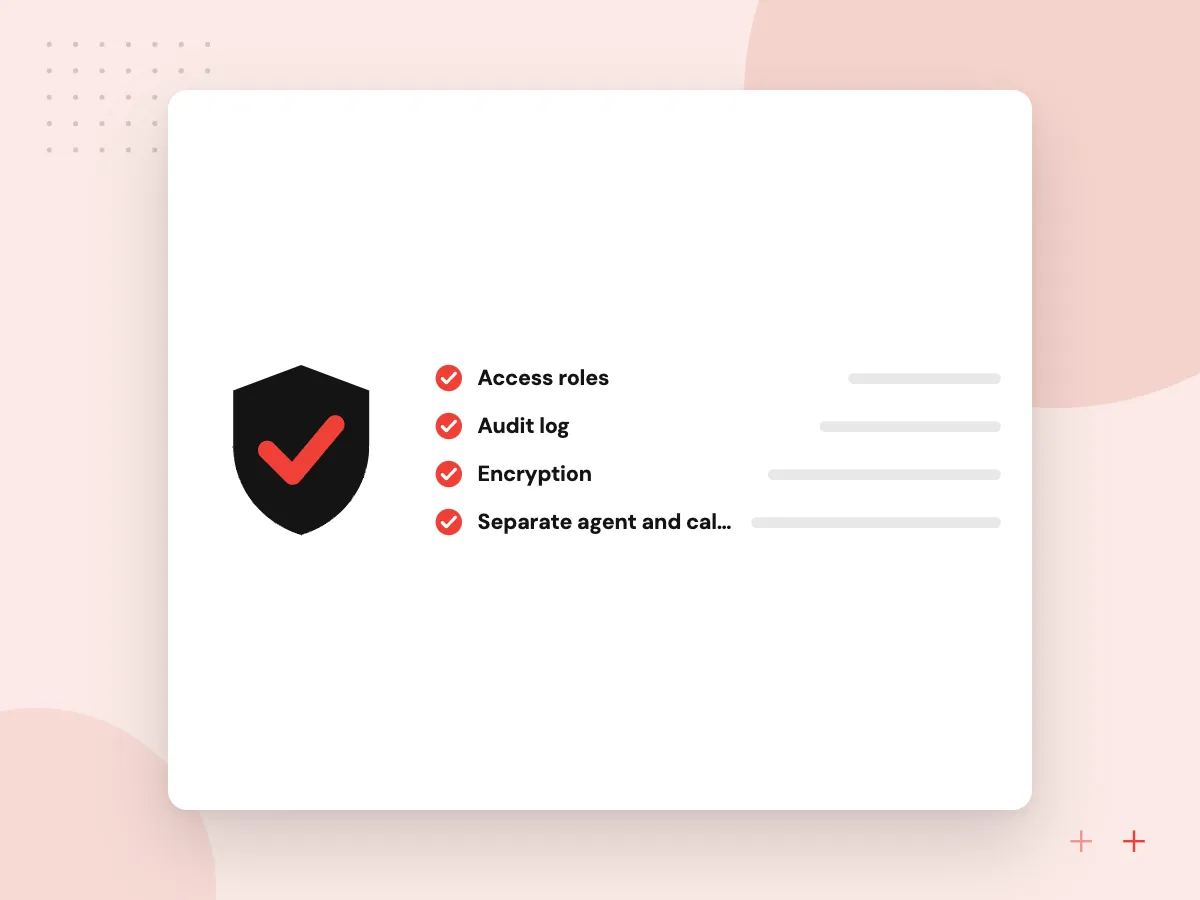
Audio quality and privacy come first
Analysis is only as good as the audio. We check whether your system records agent and caller on separate channels, how files are named and where they are stored. Card numbers, Social Security numbers and similar details are masked in transcripts, and access is limited by role.
What we do
- Separate agent and caller channels
- Masking of card and ID numbers
- Role-based access to recordings
- Retention rules for audio and text
- Recording notice at call start
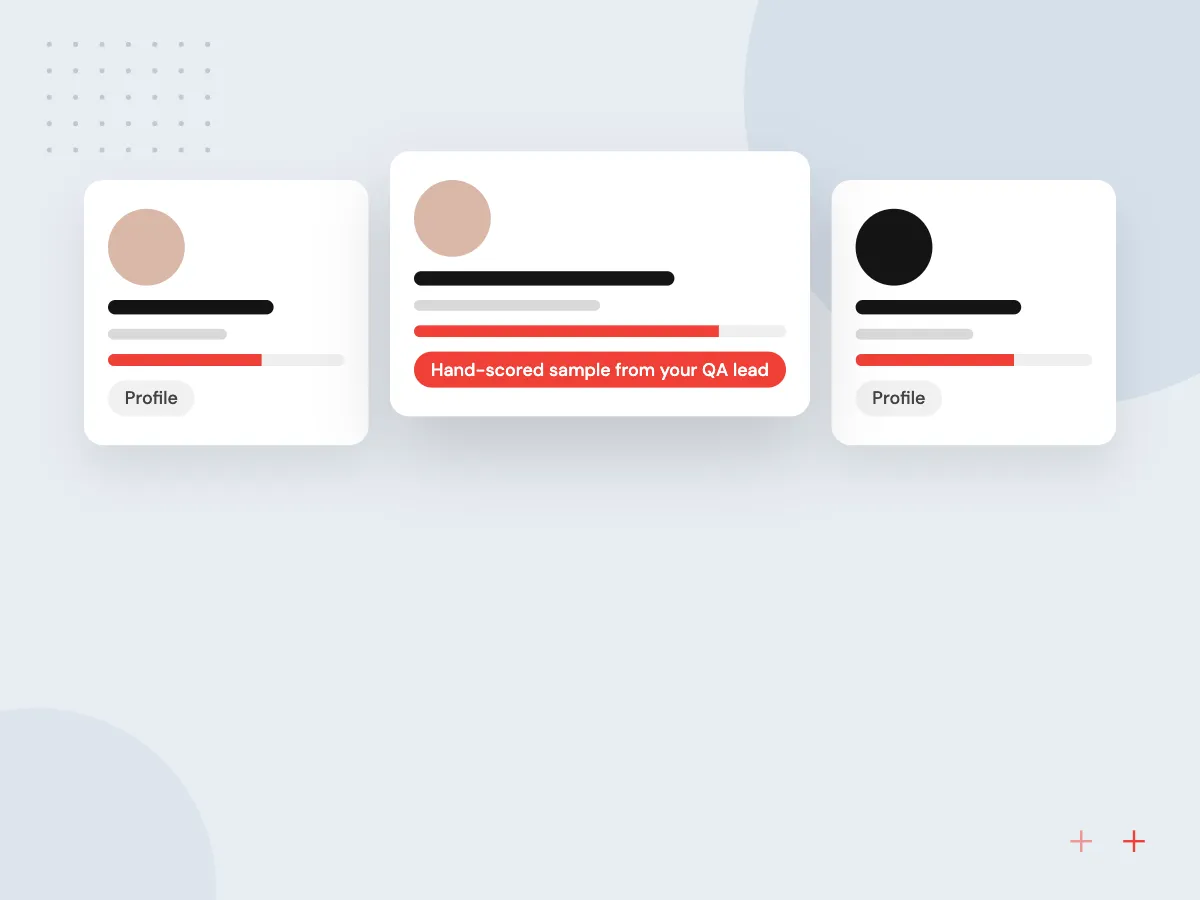
Calibrating scores with your QA lead
A model can apply your checklist to every call, but its marks have to agree with the people who wrote the checklist. Your QA lead scores a sample by hand, we compare their marks with the model’s, and we revise the checklist wording until the remaining disagreements are few and explainable.
What we do
- Hand-scored sample from your QA lead
- Side-by-side score comparison
- Checklist wording revised
- Dispute option for agents
- Recalibration when scripts change

How we approach a project
Call analytics pairs with customer sentiment analysis across email and reviews, and with an AI receptionist whose calls you want to audit. Insurance agencies and banks often add disclosure checks to it; see AI for insurance.
Recording laws differ by state, and some states require consent from everyone on the call, so the notice and retention settings follow what your legal advisor approves. If you want to compare notes on call volume and goals, the contact page books a 30-minute conversation with our team.
How we work
- Every score traceable to a quote
- Sensitive details masked before analysis
- Coaching decisions stay with managers
Our Process
-

Agree what to measure
Managers pick the call reasons, outcomes and checklist items that matter, using calls they already know well.
-

Connect the recordings
We link the phone or contact center system, confirm channel separation and masking, and load recent weeks of calls.
-

Calibrate on a sample
Your QA lead and the model score the same calls, and we tune wording and tags until the results line up.
-

Report weekly and refine
Summaries flow to the CRM, a weekly report goes to managers, and new call reasons are added as they appear.
Why Aranv for call analytics
Quotes behind every score
Each tag and checklist mark links to the moment in the transcript that supports it, so managers and agents can check the evidence themselves.
Recordings kept in your account
Audio and transcripts stay in a cloud account you control whenever your setup allows, and masking plus role-based access are switched on before the first call is analyzed.
Measures you defined
We do not bring a generic scorecard. Call reasons, outcomes and checklist items come from your managers and scripts, and they can change them later.
Results where people work
Summaries land on the CRM or helpdesk record and trends in a dashboard, so nobody has to open a separate tool to use the analysis.
Planning AI Call Analytics?
Book a 30-minute conversation with the team that would build it.
AI call analytics FAQs
-
What is the difference between call recording and AI call analytics?
Recording stores the audio. Call analytics turns each recording into text, a summary, tags and scores you can search, count and act on. Without it, recordings mostly sit unheard until a complaint forces someone to dig one out.
-
How accurate are AI call summaries?
Accuracy depends on audio quality, accents, crosstalk and how clearly your reasons and outcomes are defined. We measure it on your own calls during calibration, with a person checking summaries against the audio, and show you where the model slips before you rely on it.
-
Can call center AI score agents automatically?
It can score each call against your checklist, but we advise using scores to choose calls for coaching, not to rate people on their own. Every mark links to its quote, agents can dispute a score, and managers decide on any performance conversation.
-
Do we need consent to analyze recorded calls?
That depends on the states your callers are in and what your recording notice says. Your legal advisor should approve the notice and how long audio and transcripts are kept, and we configure the system to match. This is general information, not legal advice.
-
Which phone systems can you connect to?
Most cloud phone systems, contact center platforms and call tracking tools export recordings with agent, queue and duration through an API or a storage export. During discovery we confirm the format and whether calls are recorded with each speaker on a separate channel.

Let’s talk about your next step
Contact Aranv to discuss your workflow, current tools, and goals. Meet with our team or send an inquiry.
Book a meeting with our team
Choose an available date and time for a 30-minute conversation about your project.
Tell us about your project
Share a few details so we can discuss a useful next step.
Prefer email? sales@aranv.com