


What media software development covers
Aranv offers media software development for US publishers, local newsrooms, magazine groups and content businesses: publishing platforms and CMS builds, subscription and paywall systems, archive search with rights tracking, and AI that tags, summarizes and transcribes under editorial review, so each story reaches readers on every channel.
Publishing software starts with the content model: what a story, gallery, recipe or book chapter is made of, and who may touch it at each stage. We build on WordPress when the desk already knows it, through our WordPress development team, or on a headless CMS when one story feeds a site, apps and partners. The CMS development page explains how we choose.
Revenue tools sit beside the CMS: subscription billing, paywall rules, ad tags, sponsor tracking and newsletter sign-ups. We connect them so a reader’s plan, payment status and reading history sit on one record, and keep tags from slowing the page.
How a story moves through a connected publishing platform
Pitch to every channel
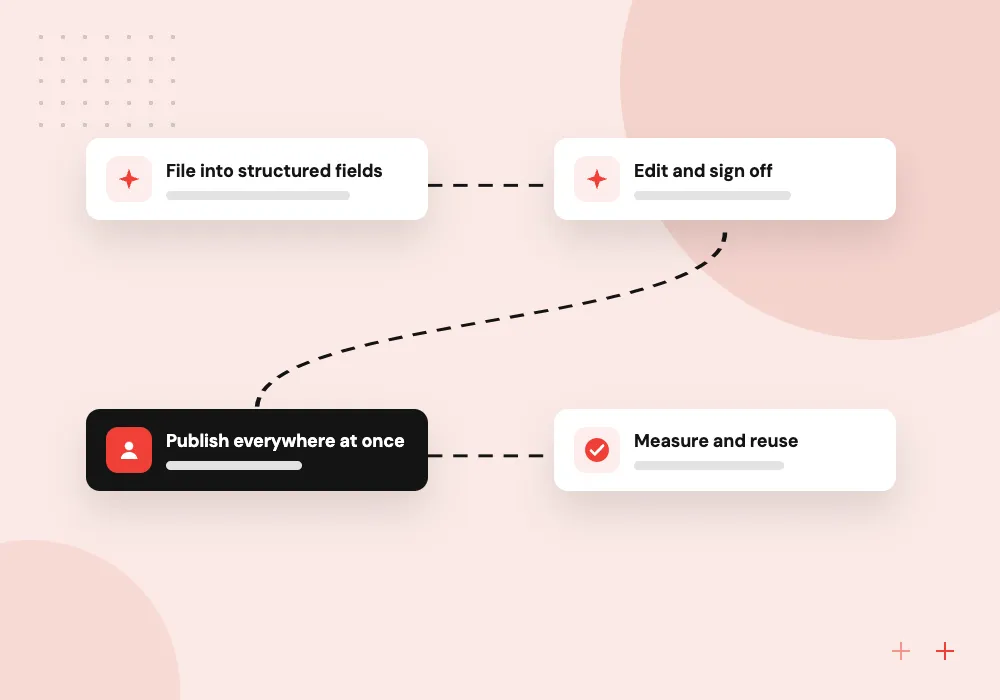
- 01 File into structured fields Writers draft in the CMS while AI suggests tags, a summary and alt text.
- 02 Edit and sign off Editors, and legal where needed, approve before the embargo lifts.
- 03 Publish everywhere at once The same story feeds the site, app, newsletter and partner feeds.
- 04 Measure and reuse Reading data and archive search show what to update, package or syndicate.
Roles and approvals follow how your desk already works.
Publishing platform development and content tools
Media businesses often run a CMS, a separate subscription tool, an ad server, an email platform and a shared drive of old PDFs. These projects make them act as one content platform.
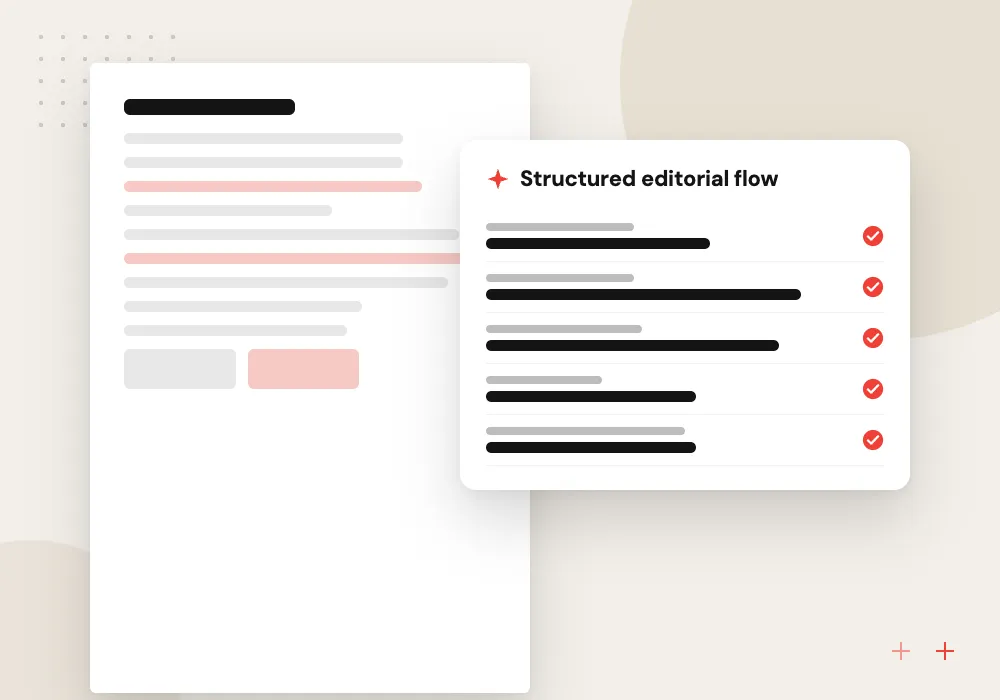
Publishing platforms and CMS
Drafts, embargoes, scheduled posts and separate roles for writers, editors and legal, built on WordPress or a headless CMS.
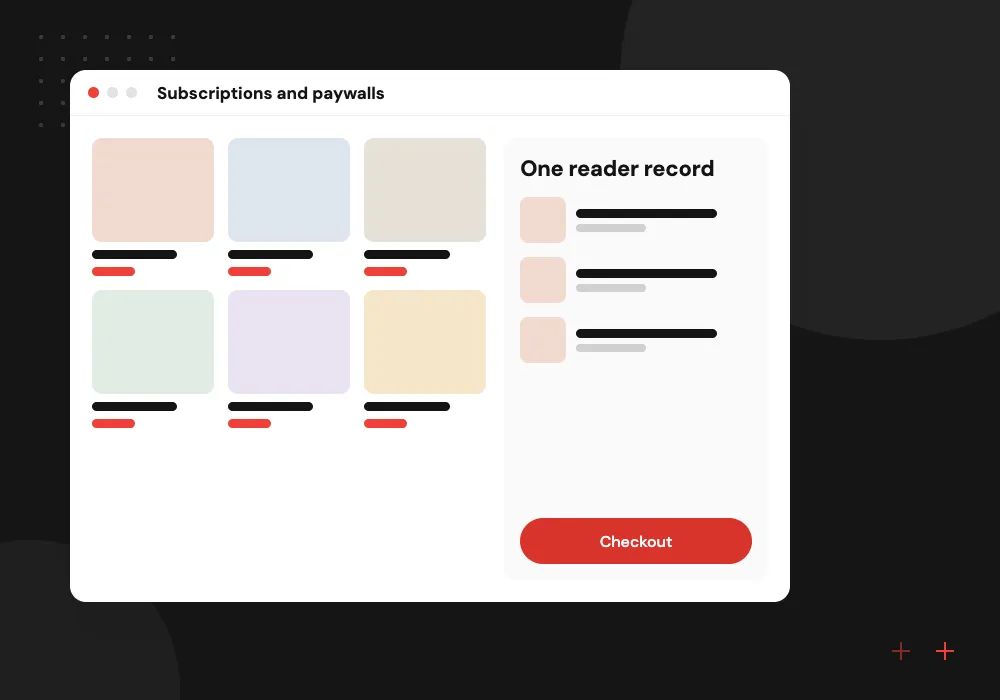
Subscriptions and paywalls
Metered access, registration walls, plans and renewals tied to one subscriber record that marketing and customer service both see.
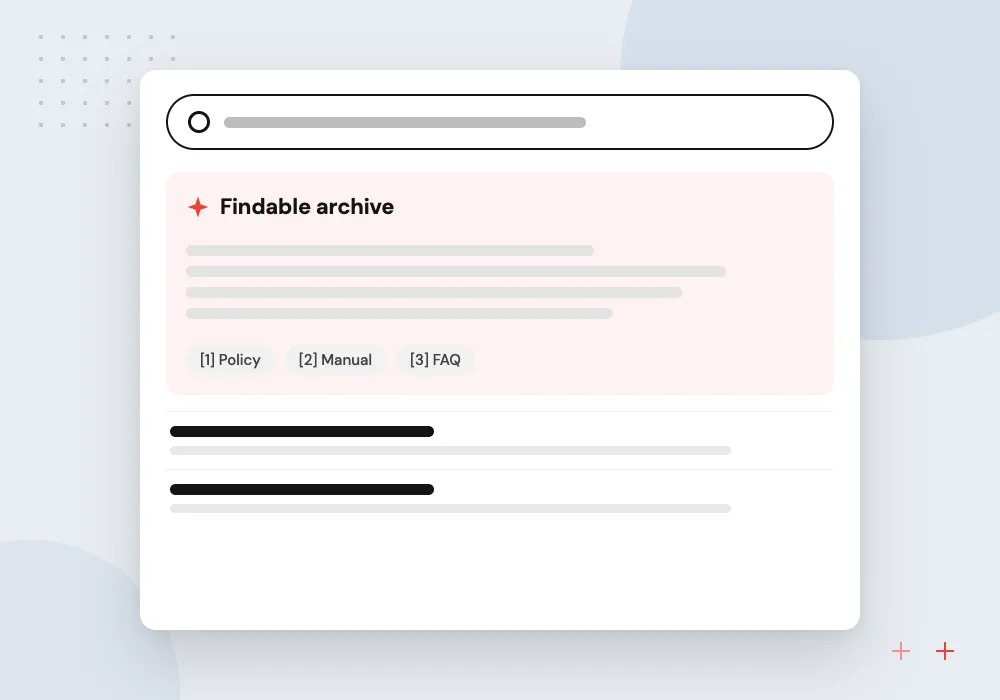
Archive and rights search
Years of articles, photos and video searchable by topic, person and license terms, so editors reuse only what they may.
AI editorial assistants
Headline options, summaries, tags and transcripts drafted by AI and shown to an editor, who accepts, changes or rejects each one.
Headless content platforms for many channels
One content store can feed the website, mobile apps, newsletters, smart TV apps and syndication partners. We design structured content so each channel takes the fields it needs, and front ends in Next.js or native apps fetch it through an API.
What we do
- Content model and migration plan
- Next.js or app front ends
- Newsletter and RSS feeds
- Partner and syndication APIs
- Structured data for search results
AI that follows your editorial standards
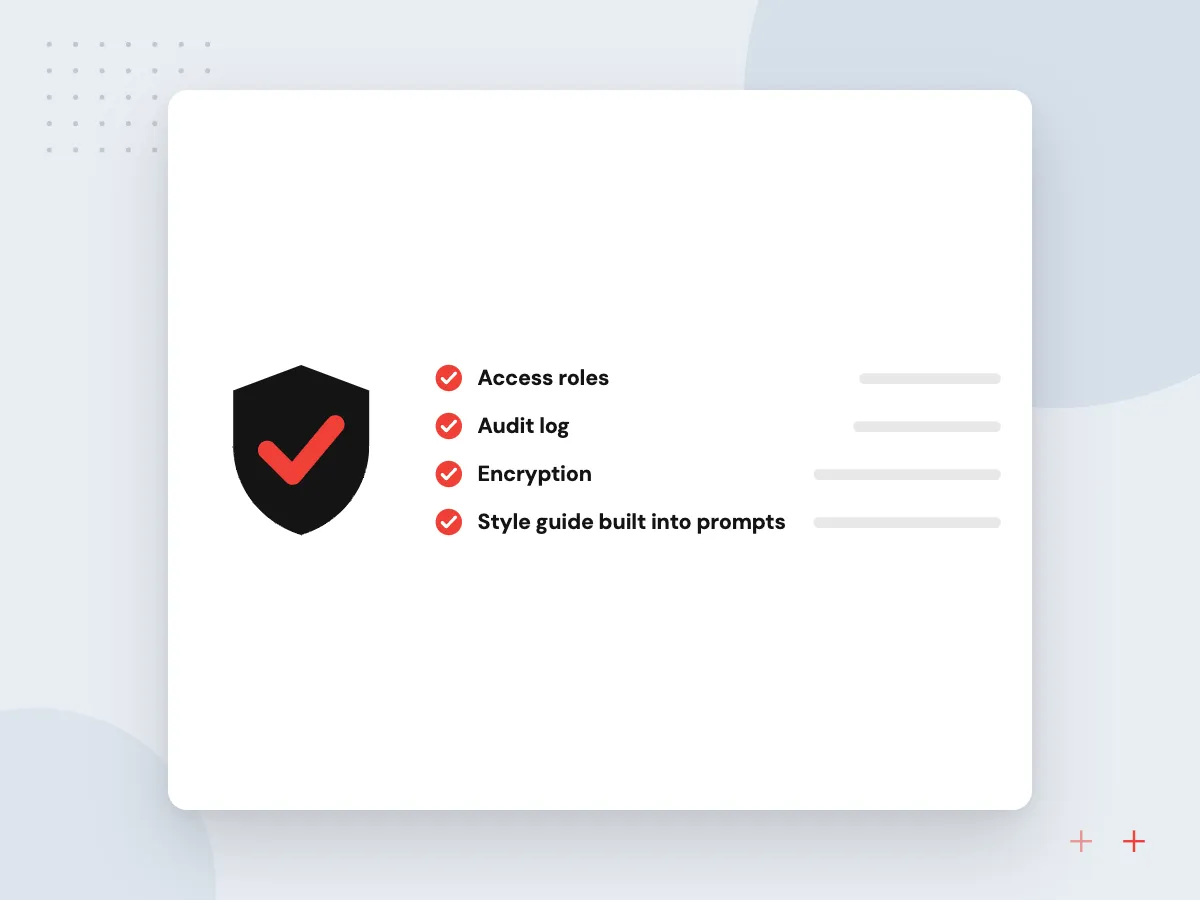
Editorial AI should sound like your publication and show where every claim came from. We write your style guide into the instructions, ground summaries in the source article and keep a log of who approved each AI-assisted piece.
What we do
- Style guide built into prompts
- Source link on every summary
- Review queue before publishing
- Labels for AI-assisted content
- Approval log for corrections

How we approach a project
Many publishers carry an archive in an old CMS or as scanned back issues. Moving it means mapping fields, carrying over bylines and dates and redirecting every old URL; our data migration work runs this in batches, and the website migration SEO checklist lists what to test before the switch.
AI suits the repetitive side of editorial work: tags, newsletter summaries, transcripts of interviews and podcasts, and translation for a second-language edition. We build these with generative AI development and search over your archive that cites the source article. The US Copyright Office’s reports on copyright and artificial intelligence are worth reading before you publish AI-assisted work.
Ad scripts, video players and analytics tags can slow a story page badly, so we set a weight budget for each template and load what can wait later. Our contact page books a 30-minute conversation where you walk us through the tools your desk uses.
How we work
- Editors approve what goes out
- Old URLs keep working
- One record for every reader
Our Process
-

Map the newsroom workflow
We follow one story from pitch to publication, including legal checks, corrections and syndication.
-

Model content, test the archive
Content types and tags are agreed, then a sample of old articles is migrated to find surprises early.
-

Run one section in parallel
Editors publish a single section on the new platform while the old site still serves everything else.
-

Switch over and watch traffic
Redirects go live with launch, and we track crawl errors, page speed and subscriber sign-ups afterward.
Why publishers work with Aranv
We respect the editorial chain
Roles, approvals and embargoes in the platform mirror how your desk works, so a story cannot go live without the sign-off it needs.
AI output stays reviewable
Each AI suggestion shows its source and waits for an editor, and the approval log helps with corrections and disclosure policies.
Archives come along intact
Bylines, dates, images and old URLs move with the content, and redirects are tested before launch rather than patched after it.
Planned for traffic spikes
Caching, image resizing and CDN settings are set up for breaking-news surges as well as an ordinary day.
Planning Media Software Development?
Book a 30-minute conversation with the team that would build it.
Media and publishing software FAQs
-
What does it cost to build a publishing platform?
It depends on the number of content types, the archive size, the billing, ad and email tools to connect, your channels and any AI features. Discovery ends with a written estimate, split so the core platform launches before the extras.
-
Should we stay on WordPress or move to a headless CMS?
Stay on WordPress if your team publishes mainly to one website and likes the editor. A headless CMS makes more sense when the same content feeds apps, newsletters and partner sites, or when front-end speed matters most. Both can work well; the choice follows your channels and staff.
-
Can AI write articles for our site?
It can draft, but we do not recommend publishing AI text without an editor. The US Copyright Office’s January 2025 report ties protection of AI output to a human author deciding enough of its expressive elements, and says prompts alone do not count. We build AI as an assistant inside the editor’s workflow.
-
How do you migrate a large archive without losing search traffic?
We map every old URL to its new one, keep publication dates and bylines, test redirects in staging and publish updated sitemaps at launch. Search Console and server logs are watched closely in the following weeks so broken links are fixed quickly.
-
Can you connect our paywall to our CRM and email platform?
Usually, yes, through the APIs most billing, paywall and email tools provide. We map events such as sign-up, renewal and cancellation so each system updates the same subscriber record without manual exports.

Let’s talk about your next step
Contact Aranv to discuss your workflow, current tools, and goals. Meet with our team or send an inquiry.
Book a meeting with our team
Choose an available date and time for a 30-minute conversation about your project.
Tell us about your project
Share a few details so we can discuss a useful next step.
Prefer email? sales@aranv.com