


What an AI proposal writing build includes
Aranv builds AI proposal writing tools for small and midsize service firms. The tool turns discovery call notes, CRM details and your strongest past proposals into a first draft of the proposal or statement of work, with prices from your approved rate card and terms from your clause library.
We start with your proposals: the ones that won, the ones that lost and the template in use today. With a partner or sales lead we mark which sections are standard, which change per client and which must never change without review, such as liability terms.
The tool retrieves similar past proposals using the approach of our RAG and knowledge search builds, then writes each section with a model chosen through our generative AI development work. Call notes can come straight from AI meeting summaries, and the draft opens in Word or Google Docs.
From discovery call to proposal draft
Notes in, reviewable draft out
- 01 Gather the inputs Call transcript, CRM opportunity fields and the buyer’s own brief are collected.
- 02 Find similar past work Earlier proposals with similar scope and industry are retrieved as reference.
- 03 Draft each section Need, scope, deliverables, assumptions and phases are written in your house style.
- 04 Review and send A deal owner edits, approves the pricing and sends it for e-signature.
Prices come from your rate card and legal terms from approved clauses; the model writes neither.
Proposal automation that fits service work
Proposals drag when each one is rebuilt from an old file while someone hunts for the right paragraphs.
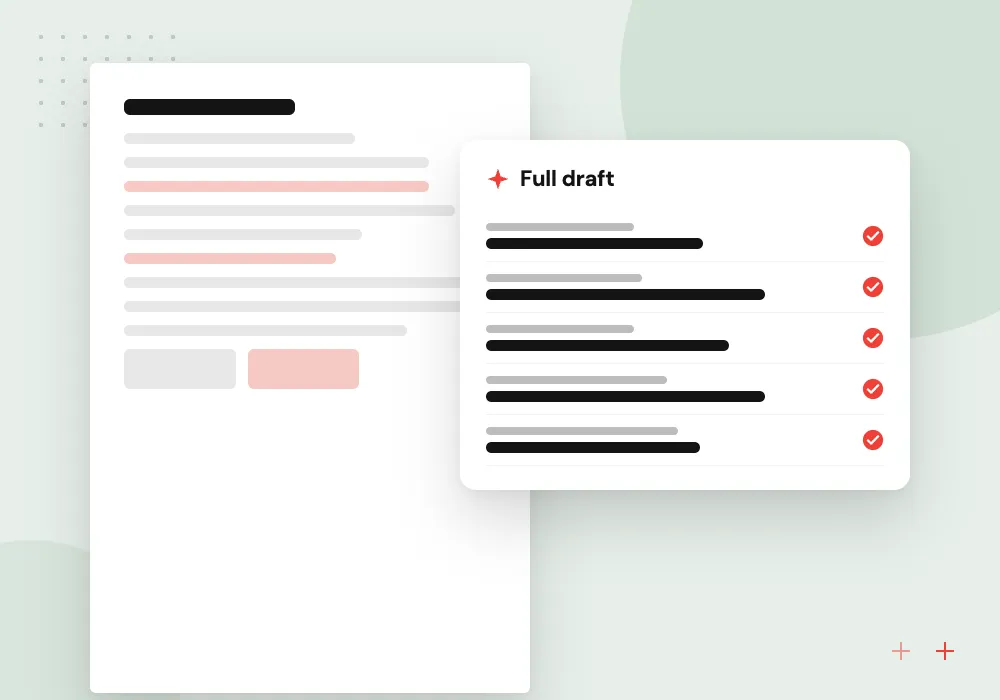
Proposal first drafts
A complete draft in your template, written from the call notes and your closest past proposals instead of a blank page.
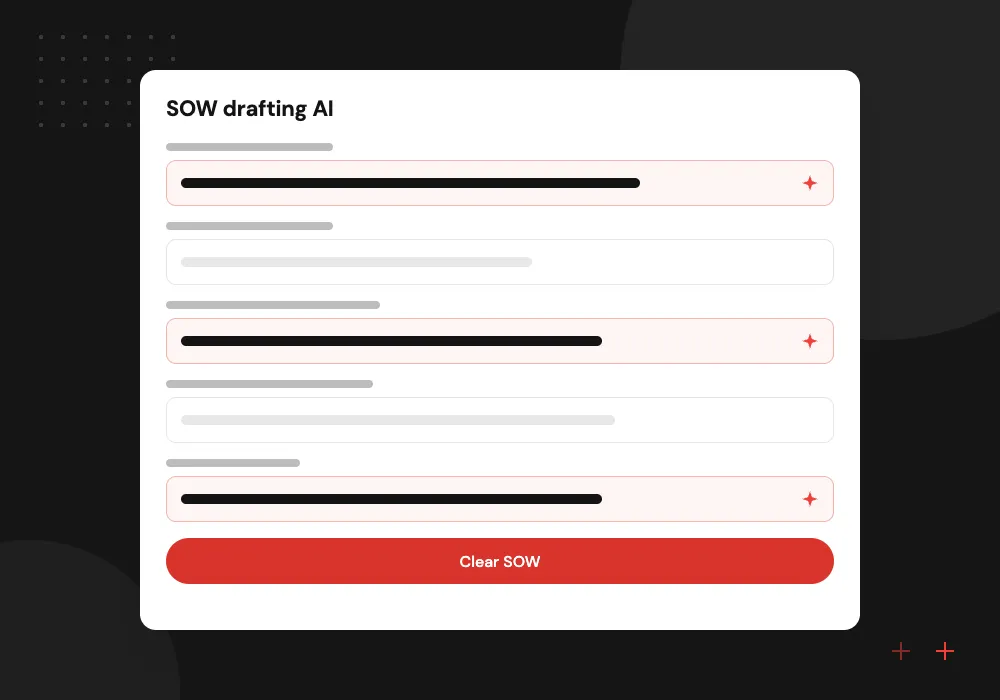
SOW drafting AI
Deliverables, acceptance criteria, assumptions, exclusions and change-control wording are drafted so the statement of work matches what was sold.
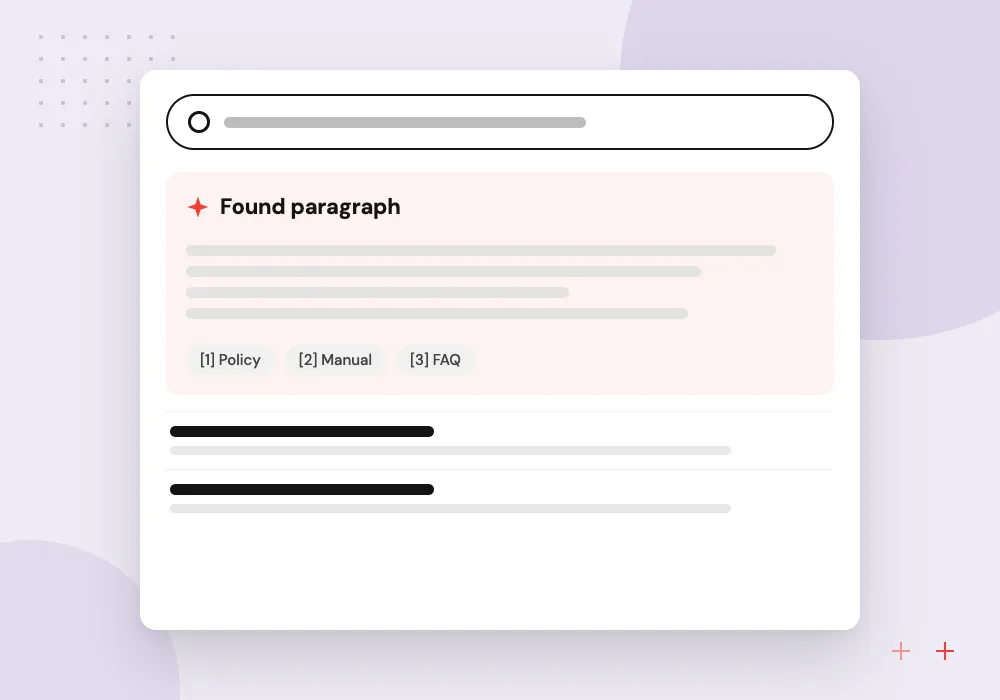
Content library search
Staff search past proposals, bios and project summaries by meaning, then pull an approved paragraph into the draft with its source.
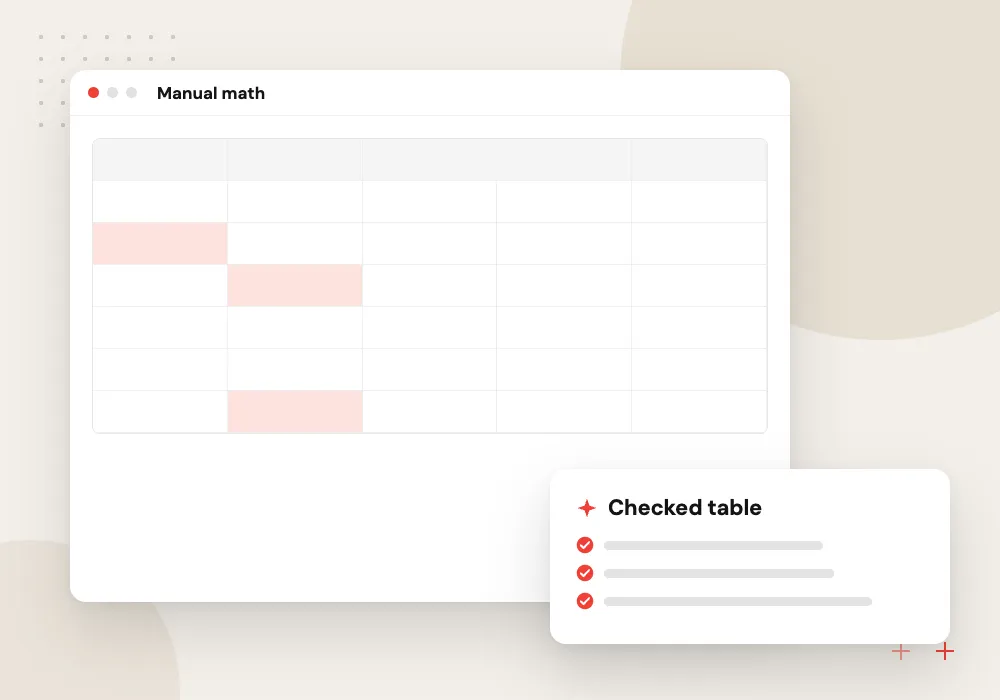
Pricing tables from rates
Roles, hours and phases chosen by the deal owner are priced from your approved rate card, and any discount needs sign-off.
A library of approved proposal content
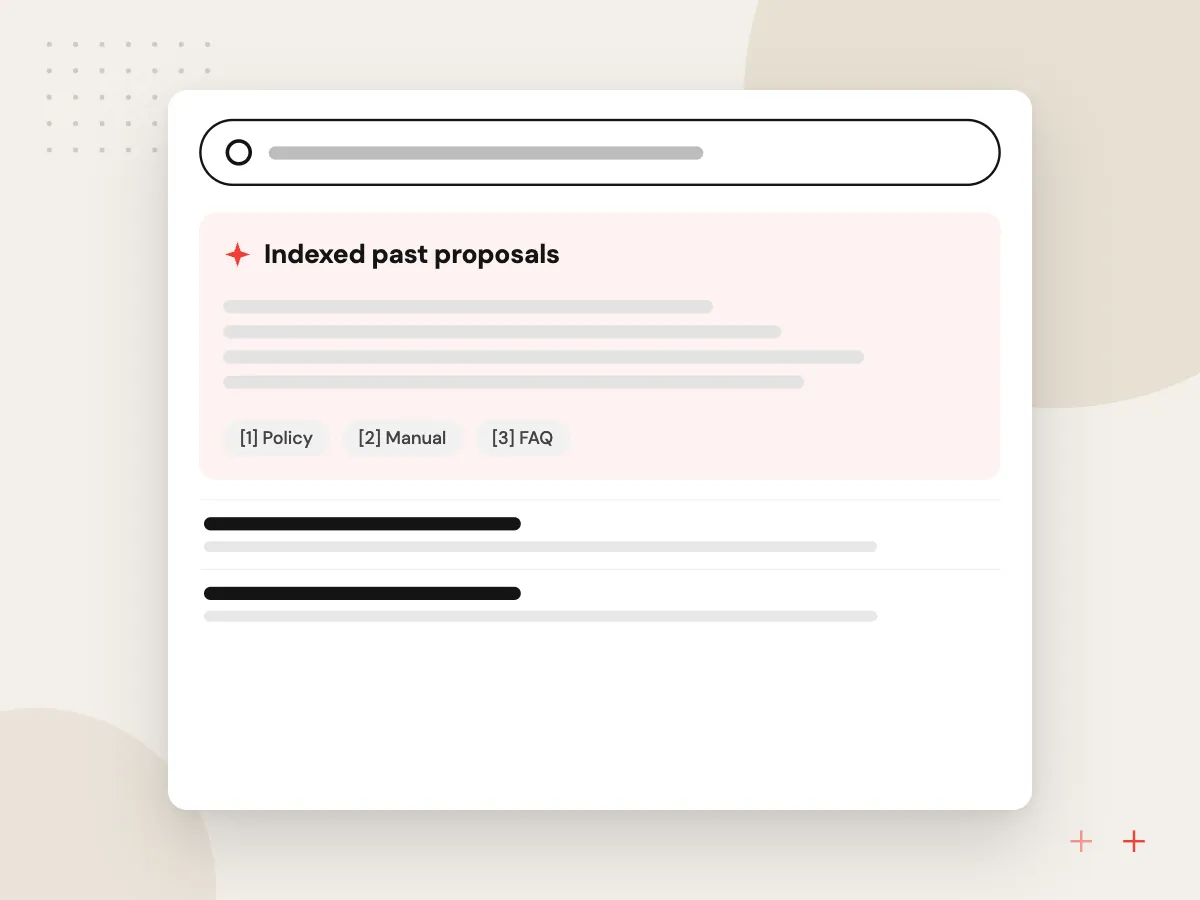
Your best paragraphs are scattered across years of files. We gather them into a searchable library of service descriptions, team bios, method write-ups and project summaries, each tagged by service, industry and approval date. Drafts pull from approved items first, and stale content is flagged for an owner to refresh.
What we do
- Indexed past proposals
- Approved boilerplate blocks
- Bios and project summaries
- Tags by service and industry
- Review dates on each item
Checks before a draft reaches you
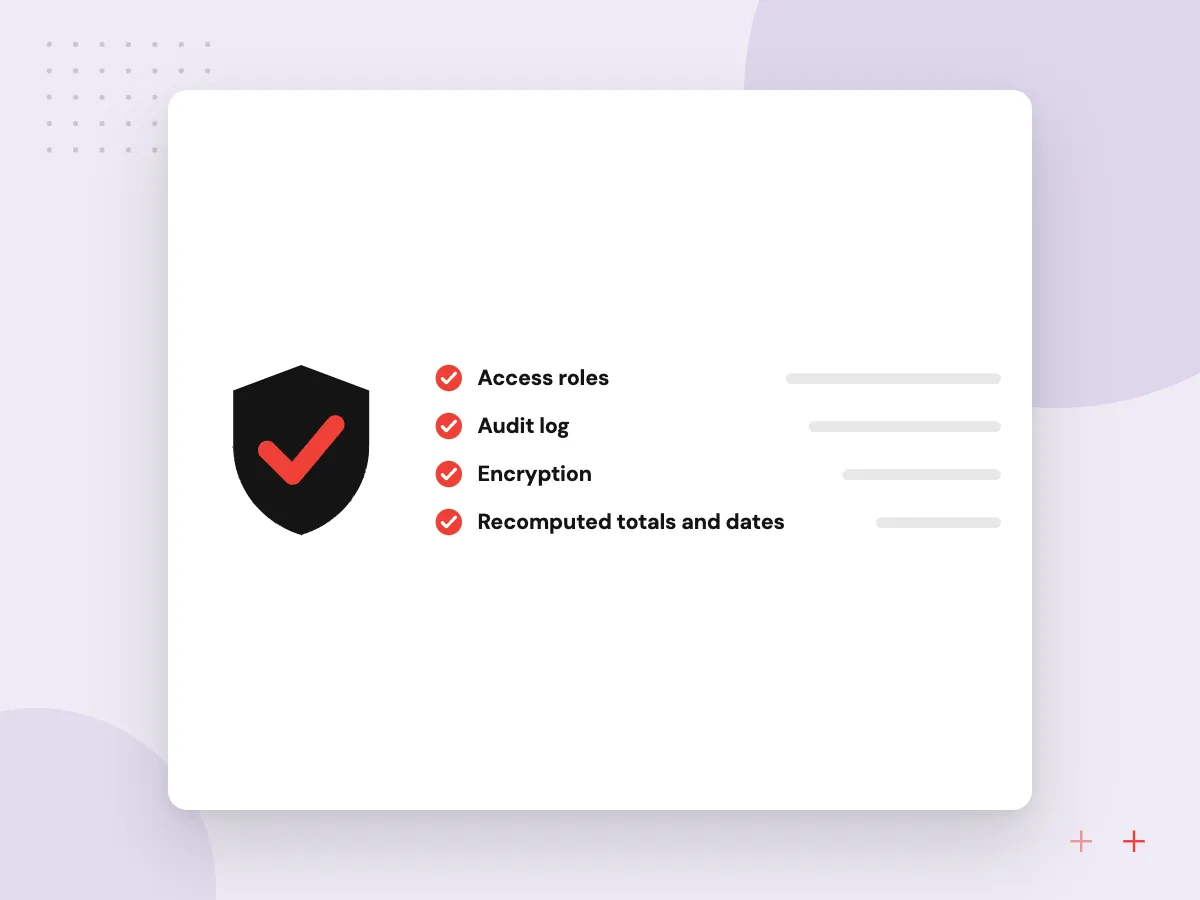
The tool checks its own draft before anyone opens it. Totals and dates are recomputed, every claim about past work needs a source, other clients’ names are blocked, and sections that differ from the approved template are highlighted so the reviewer reads those first.
What we do
- Recomputed totals and dates
- Source required for claims
- Cross-client name blocking
- Template drift highlighted
- Reviewer checklist and sign-off

How we approach a project
Accuracy checks run before anyone reads the draft. Each claim about past work must point to a source document, names from other clients’ proposals are blocked, and dates, totals and phase lengths are recalculated by code. A reviewer checklist sits beside the draft.
Firms that sell time and expertise, like professional services firms and marketing agencies, write the most proposals. When a buyer sends a formal RFP instead, see our AI RFP response page. Either way, a 30-minute conversation set up through our contact page is a sensible place to begin.
How we work
- Drafts start from your best proposals
- Rate card and clauses stay locked
- A named owner signs off
Our Process
-

Study winning proposals
We review recent wins and losses with your sales lead to learn what your best proposals do differently.
-

Lock the fixed parts
Rate cards, legal clauses and boilerplate become approved blocks the model can insert but not rewrite.
-

Draft from real deals
We generate proposals for recent opportunities and compare them with what your team actually sent.
-

Hand over with a checklist
Deal owners get a review checklist, version history and a quick way to report weak sections.
Why Aranv for proposal automation
Starts from your wins
Drafts are modeled on the proposals that actually won you work, so the tool writes the way your partners sell rather than in a generic voice.
Fixed parts stay fixed
Rate cards, legal clauses and approved boilerplate go in as locked blocks, which keeps the model away from terms that need legal review.
Fits your document tools
Drafts open in Word or Google Docs with your own template, so people edit in the tools they already know and nothing new needs training.
Your library, your property
The content library, prompts and code belong to you under the contract, and they stay usable if you change model providers later.
Planning AI Proposal Writing?
Book a 30-minute conversation with the team that would build it.
AI proposal writing FAQs
-
Will AI-written proposals sound generic?
Not when drafts are built from your own winning proposals and the client’s words from the discovery call. The model follows your template and house style, and an owner edits every draft before it goes out. Generic text usually means the inputs were thin.
-
Can the AI price the proposal?
It lays out the pricing table, but rates come from your approved rate card and totals are calculated by code. Discounts, fixed fees and payment terms are set by the person who owns the deal.
-
How do you stop AI from inventing past projects or results?
Claims about past work are allowed only when they point to a source document in your library, and a check flags any sentence without one. Names and details from one client’s proposal are blocked from appearing in another’s.
-
Can it draft statements of work as well as proposals?
Yes. SOW drafting uses the same inputs with more attention to deliverables, acceptance criteria, assumptions, exclusions and change control. Many firms generate the SOW from the accepted proposal so the two documents agree.
-
Which tools does a proposal assistant work with?
Word, Google Docs, your CRM for opportunity details and your e-signature tool for sending. Past proposals can stay in SharePoint, Google Drive or a document system, and we index them where they are.

Let’s talk about your next step
Contact Aranv to discuss your workflow, current tools, and goals. Meet with our team or send an inquiry.
Book a meeting with our team
Choose an available date and time for a 30-minute conversation about your project.
Tell us about your project
Share a few details so we can discuss a useful next step.
Prefer email? sales@aranv.com