


What AI for marketing agencies includes
Aranv builds AI for marketing agencies and in-house creative teams: client reports drafted from your ad and analytics data, brief intake that turns a rambling kickoff call into a structured brief, and content workflows where an editor approves every piece before it reaches a client or goes live.
Agencies run on ad platforms, analytics, a CRM, a project management tool and shared drives, with each client in its own accounts. We connect AI through those tools’ APIs and keep every client’s data in its own workspace. Reporting front ends come from our dashboard development services, and repeat steps between tools run as AI workflow automation.
Content work needs the review step designed in from the start. Our AI content generation for marketing setup drafts from a brand voice guide and an approved claims list, and every piece passes an editor before a client sees it. New business teams can reuse past pitches through AI proposal writing.
How a monthly client report gets drafted
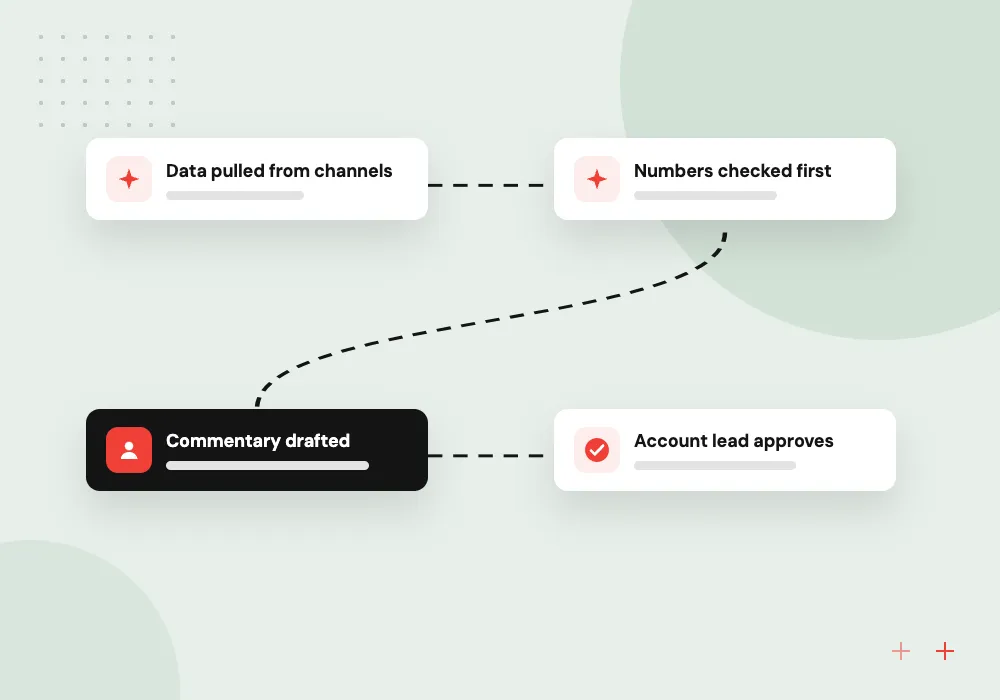
From raw channel data to an approved report
- 01 Data pulled from channels Ad platform, analytics and CRM figures for the month are collected into one table.
- 02 Numbers checked first Totals are compared with each platform’s own figures, and gaps are flagged.
- 03 Commentary drafted The model writes the summary, highlights, concerns and next steps from the checked figures.
- 04 Account lead approves The account lead edits the story, adds context the data misses and sends it.
The model writes from numbers it is given. It does not calculate or invent metrics.
Agency AI automation for delivery teams
Agencies sell strategy and ideas, yet much of the week goes to pulling reports, chasing briefs and resizing copy. These four jobs are common starting points.
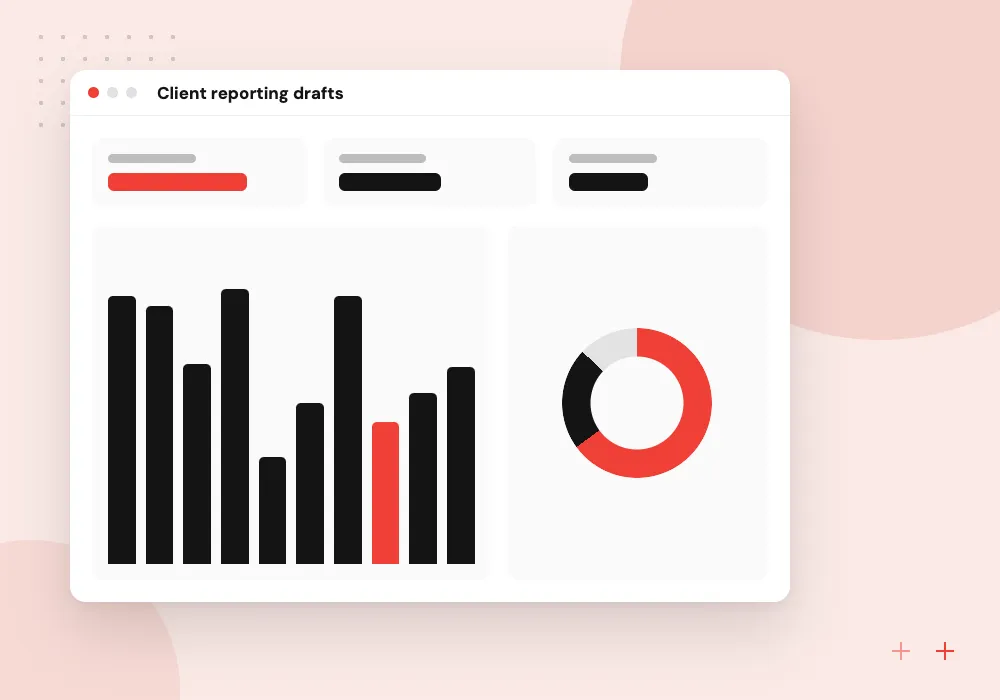
Client reporting drafts
Pulls monthly figures from ad, analytics and CRM platforms, reconciles them with the source and drafts commentary for the account lead to edit.
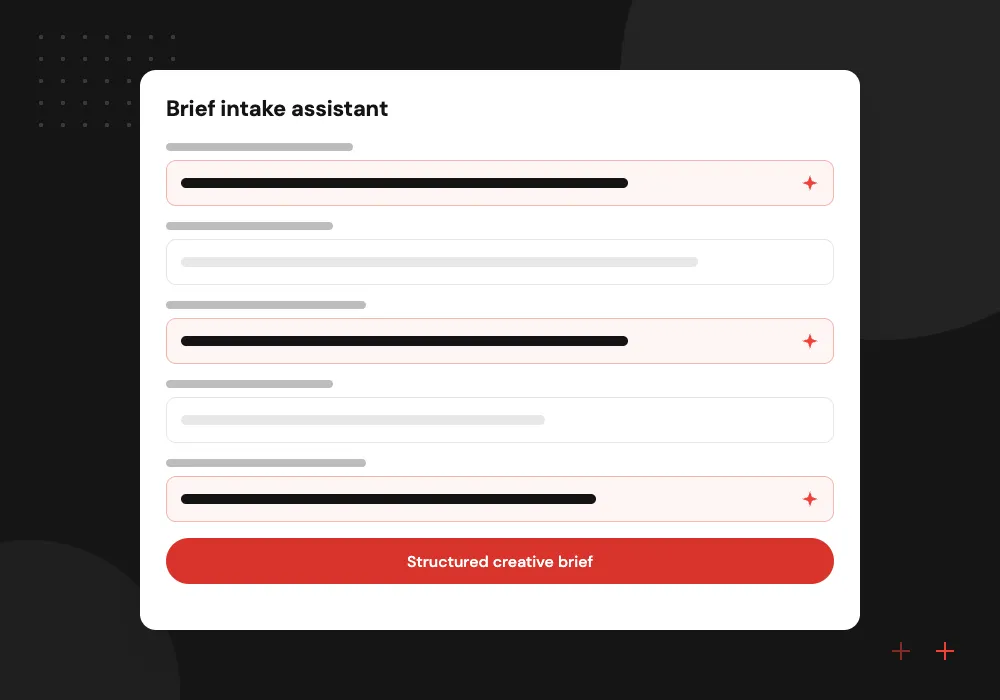
Brief intake assistant
Turns a kickoff call transcript or a client email into a structured brief with goals, audience, deliverables, deadlines and open questions.
Content workflow with review
Drafts channel and format variations of approved copy, then routes each piece through editor, legal and client approval steps.
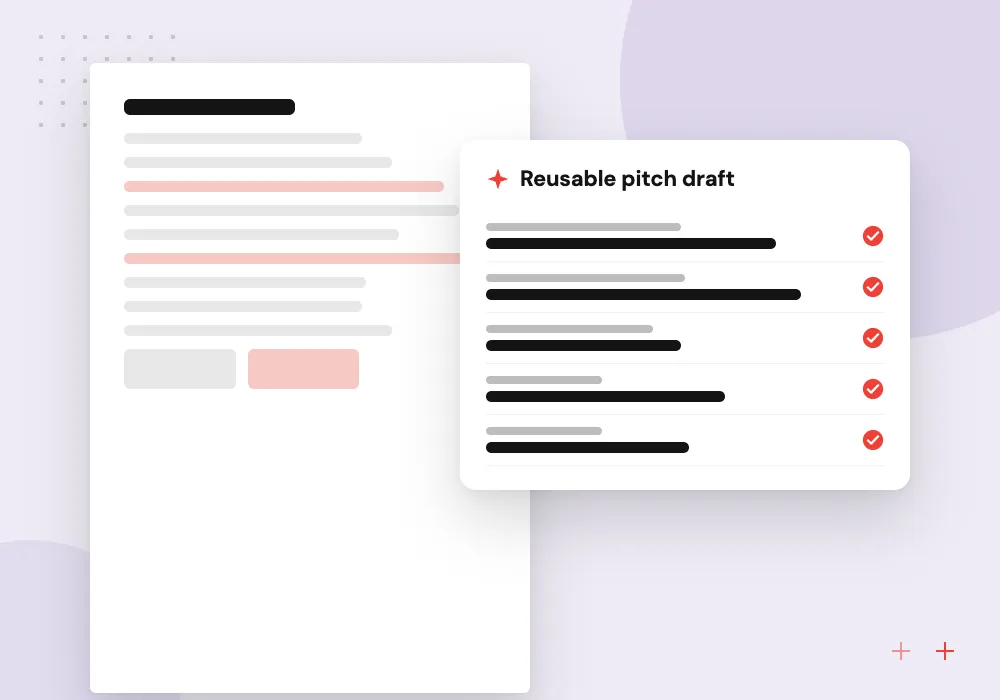
Pitch and proposal prep
Searches past proposals, credentials decks and rate cards you approve to assemble a first pitch draft for a new prospect.
Client reporting that checks its numbers
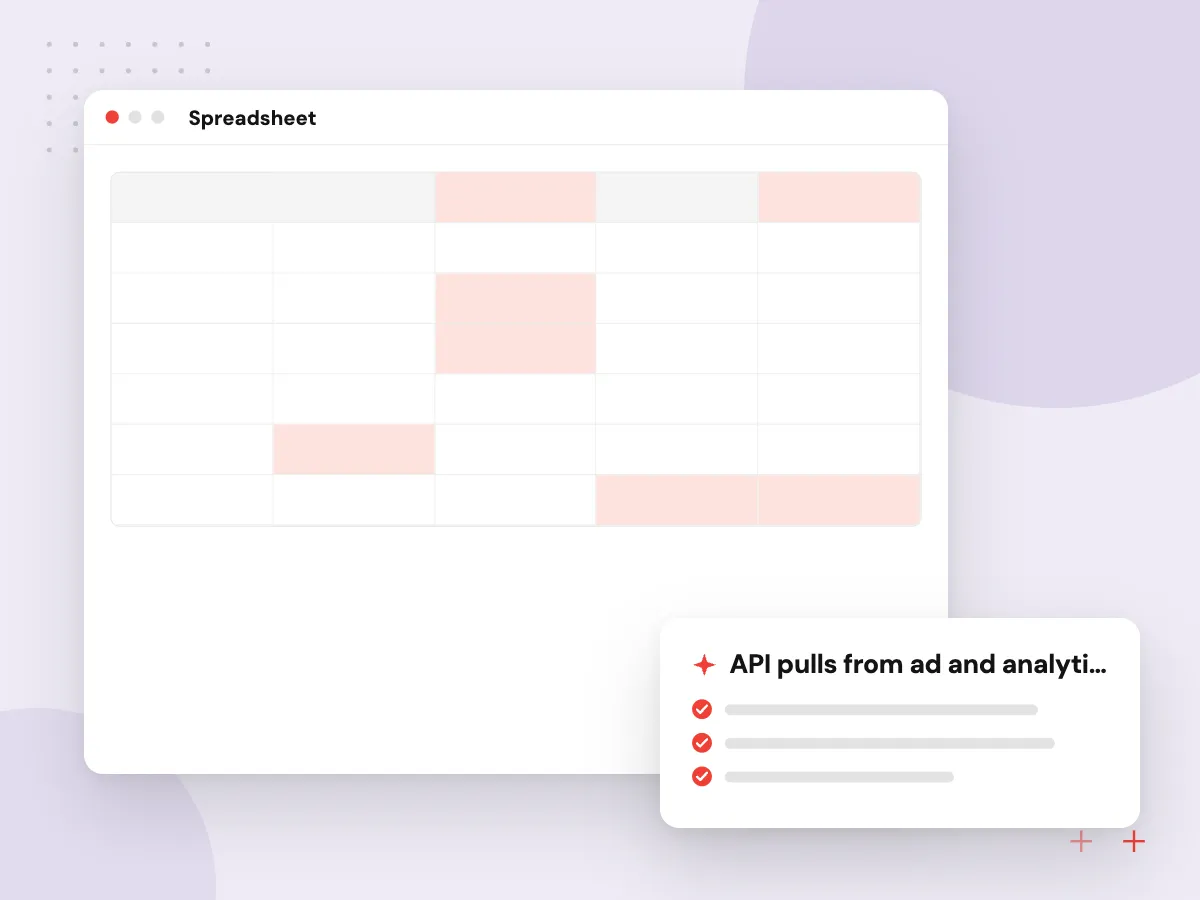
Each month the system collects spend, conversions and traffic from the platforms a client uses, reconciles totals with each platform’s own figures and drafts a short narrative per channel. Gaps such as a broken tracking tag or a missing conversion import are flagged for the analyst before any commentary is written.
What we do
- API pulls from ad and analytics tools
- Reconciliation with platform totals
- Tracking gap alerts
- Commentary drafts per channel
- Branded report templates
Editorial review and client data rules
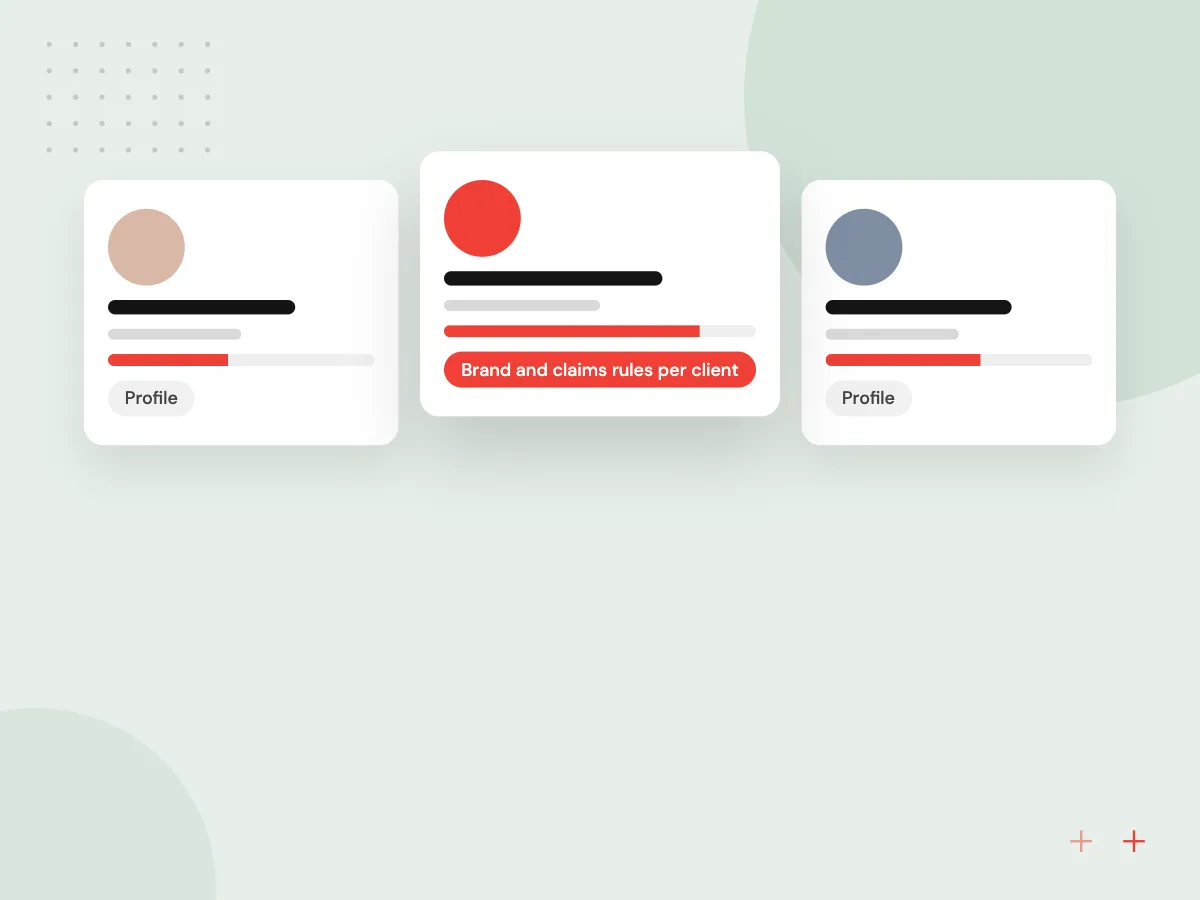
Agency AI work fails when nobody owns the review. We build approval stages into the workflow: editor, then any legal check, then client approval, with each version stored. Client data stays in its own workspace, prompts carry only that client’s guidelines, and each draft records who approved it.
What we do
- Brand and claims rules per client
- Required editor approval stage
- Version history for each draft
- Separate workspace for each client
- Approval log for audits

How we approach a project
Some limits apply to every account. We never use AI to write reviews or testimonials, and the FTC’s 2024 rule on fake reviews names AI-generated fakes directly. Product claims need support whoever drafts them, which is why the approved claims list is part of the setup.
Agencies on HubSpot can extend this to lead and deal data through our HubSpot AI integration work. To scope a first workflow, agency leaders can request a 30-minute call on our contact page.
How we work
- Editors approve everything clients see
- Figures come from source platforms
- Each client’s data kept apart
Our Process
-

Pick one repeat deliverable
We start with a service such as paid search reporting, where the inputs change little each month.
-

Write the house style
Brand voice notes, banned phrases and approved claims are captured for each client before any drafting.
-

Run beside the team
For a couple of reporting cycles, AI drafts sit next to human versions so leads can compare.
-

Roll out by service line
Social, SEO or creative teams join once the first service line is stable and trusted.
Why agencies work with Aranv
Review built into workflows
Approval steps are part of the software, so a draft cannot reach a client or a channel until the right editor or lead signs it off.
Numbers before narrative
Reports reconcile data with each platform before commentary is drafted, which keeps tracking errors from becoming confident but wrong client stories.
Client data kept apart
Each client gets its own data space and style rules, so one account’s figures or messaging never slip into another account’s drafts.
Prompts and code you own
Prompt libraries, templates and integrations belong to the agency under the contract, so the know-how stays put when staff or vendors change.
Planning AI for Marketing Agencies?
Book a 30-minute conversation with the team that would build it.
Marketing agency AI FAQs
-
How can a marketing agency use AI without hurting quality?
Give AI the data gathering and first drafts, and keep people on judgment. We set it up to pull figures, draft commentary or copy variations and assemble briefs, while editors and account leads approve every piece. The workflow makes review a required stage rather than an optional one.
-
Can AI automate client reporting for an agency?
Largely, for the repeat parts. The system pulls figures from ad and analytics platforms, checks totals against the source and drafts commentary. The account lead adds context the data cannot show, such as a client’s stock problem or a launch delay, and sends the report.
-
Will client data be used to train AI models?
Not in the setups we build. We pick model providers whose business terms rule out training on customer inputs, keep each client’s data in a separate workspace and restrict who can query it. Many client contracts include data clauses, so we review those with you first.
-
Should we tell clients we use AI?
We recommend it. Some client contracts and procurement questionnaires ask about AI use, and some clients restrict it for certain work. A short statement of which tasks use AI, which tools and what review happens keeps trust intact at renewal time.
-
What tools do you connect for agency AI automation?
Commonly the ad platforms, Google Analytics, a CRM such as HubSpot, a project management tool and shared drives. We use official APIs where they exist and scheduled exports where they do not, so reports and briefs draw on the records your team already uses.

Let’s talk about your next step
Contact Aranv to discuss your workflow, current tools, and goals. Meet with our team or send an inquiry.
Book a meeting with our team
Choose an available date and time for a 30-minute conversation about your project.
Tell us about your project
Share a few details so we can discuss a useful next step.
Prefer email? sales@aranv.com