


What AI compliance monitoring includes
Aranv builds AI compliance monitoring for regulated small and midsize firms: the system watches regulators’ publications and your own documents, summarizes what changed, maps each item to the policies and controls it affects and sends it to the named owner, while compliance staff make every judgment.
We build three parts: a collector that pulls new items from the sources you choose, a review step where a language model filters, summarizes and maps each item, and a tracker where owners record decisions. The tracker can be a small web app or tasks in tools you already use, such as Jira or Microsoft Planner.
Policy mapping uses the retrieval methods on our RAG development page, and reading certificates or contracts uses our AI document processing work. Governing the AI system itself, with testing, access rules and records, falls under AI governance consulting.
How a regulatory change reaches the right owner
From new rule to assigned review
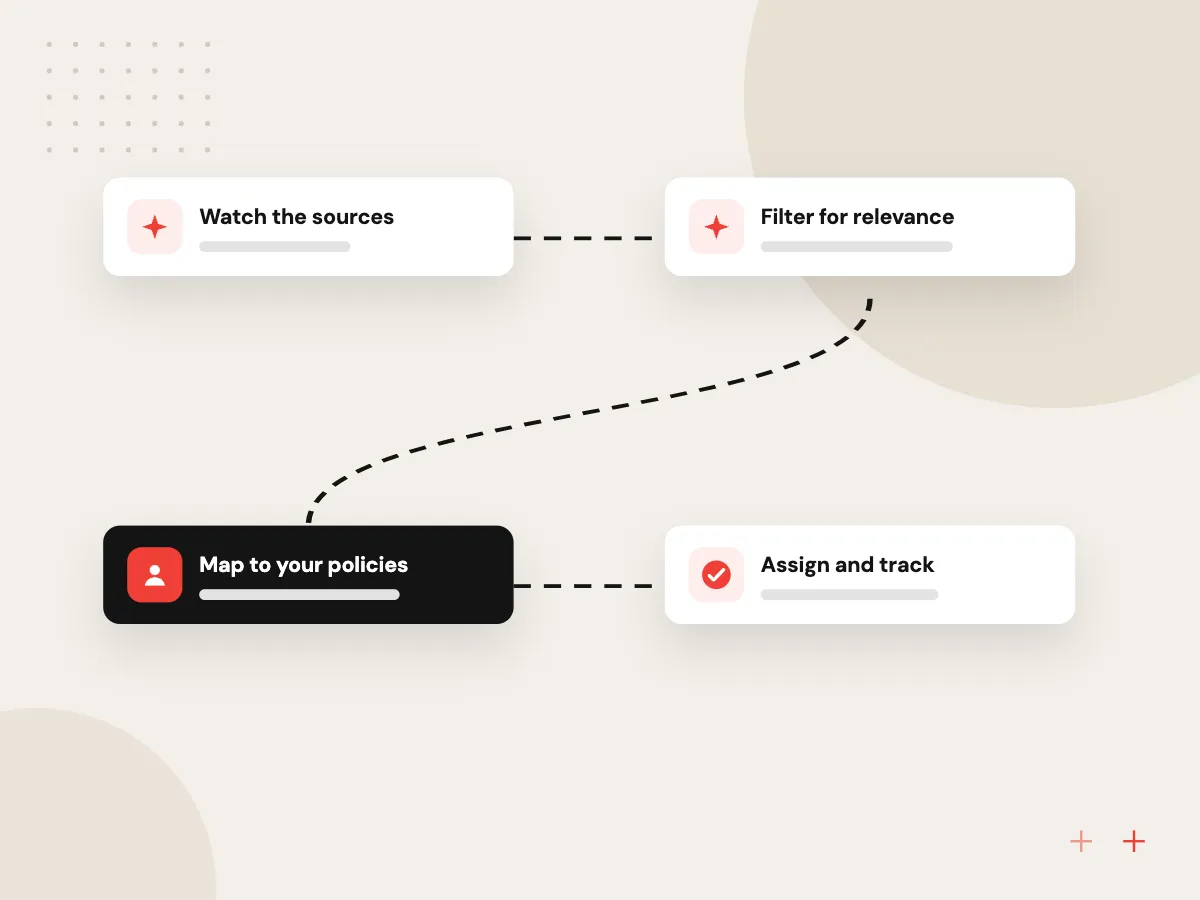
- 01 Watch the sources Agency publications, rule dockets and guidance pages you choose are checked on a schedule.
- 02 Filter for relevance The model sets aside items outside your industries, states and products, noting why.
- 03 Map to your policies Relevant items are summarized and linked to the policies and controls they may affect.
- 04 Assign and track Each item reaches its owner with a due date; decisions are stored with the source.
The system flags and drafts; your compliance officer decides what a change means for the business.
Policy compliance AI for everyday checks
Monitoring covers both what regulators publish and what your own staff produce.
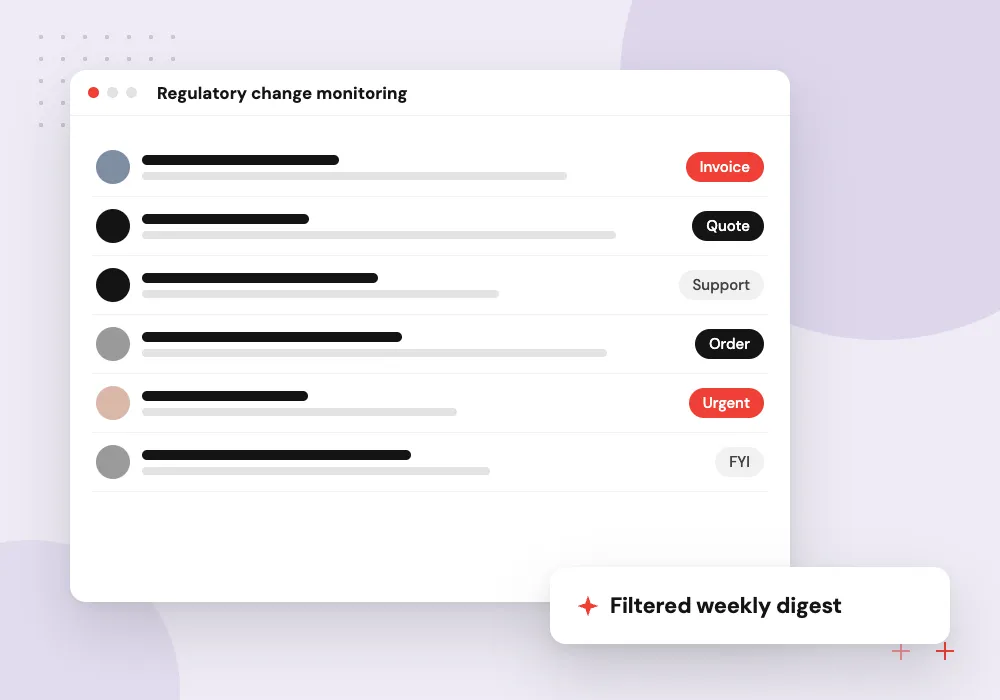
Regulatory change monitoring
New rules, proposed rules and guidance from the agencies and states you choose, summarized each week with links and a note on relevance.
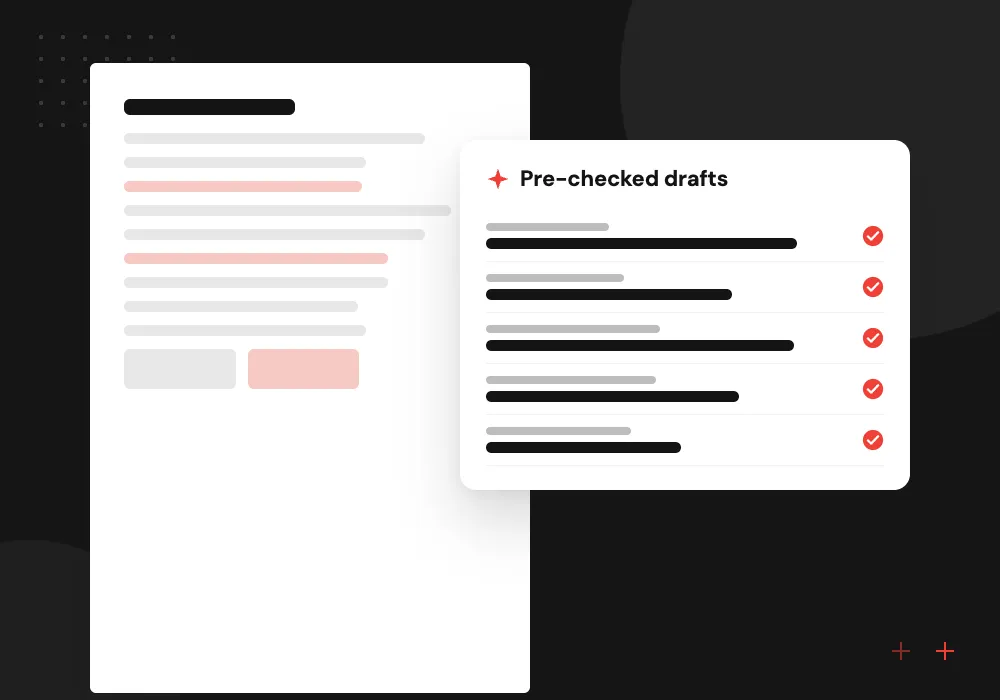
Marketing and disclosure review
Ads, web pages and email campaigns are checked against your approved claims list and required disclosures before they go out.
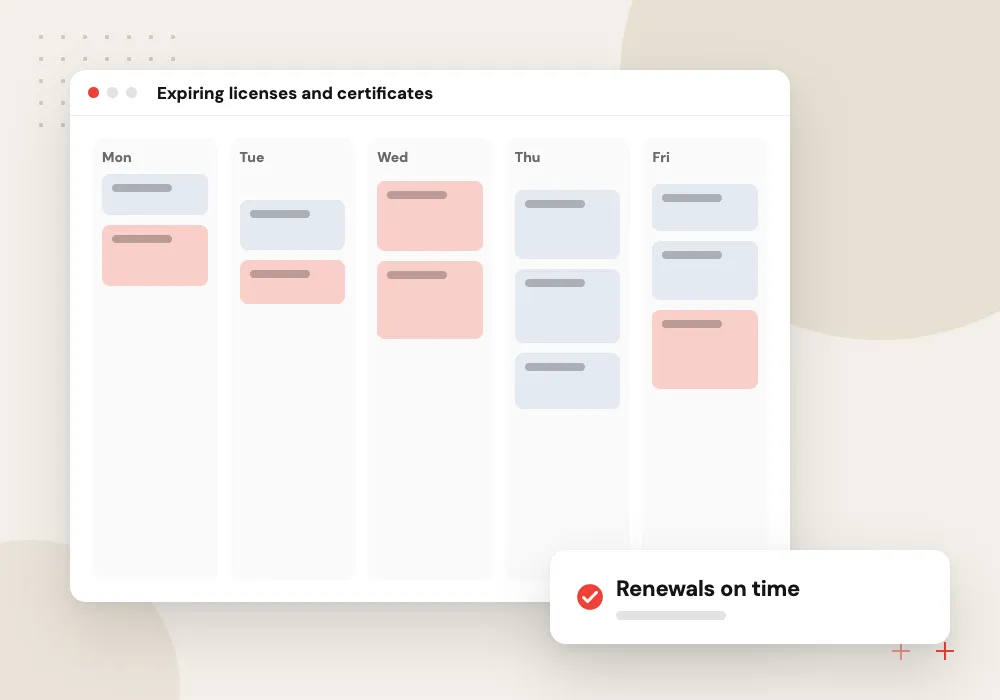
Expiring licenses and certificates
Vendor insurance certificates, staff licenses and contractor registrations are read, their expiry dates tracked and their owners reminded well ahead.
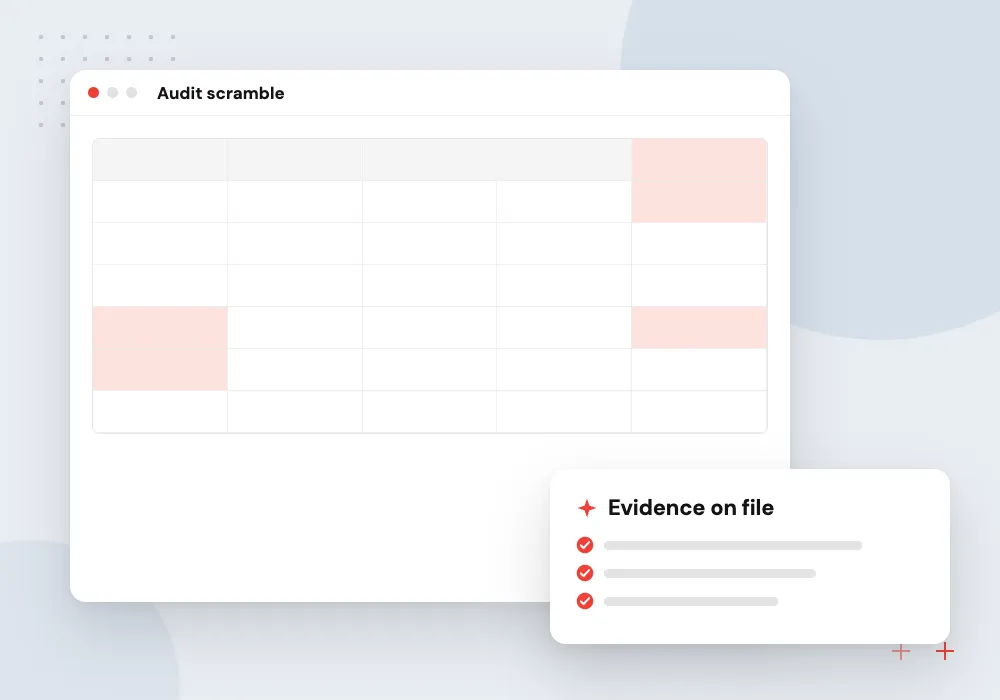
Control evidence collection
Reports, screenshots and sign-offs that prove a control ran are gathered on schedule and filed against that control for the next audit.
Source list and relevance rules
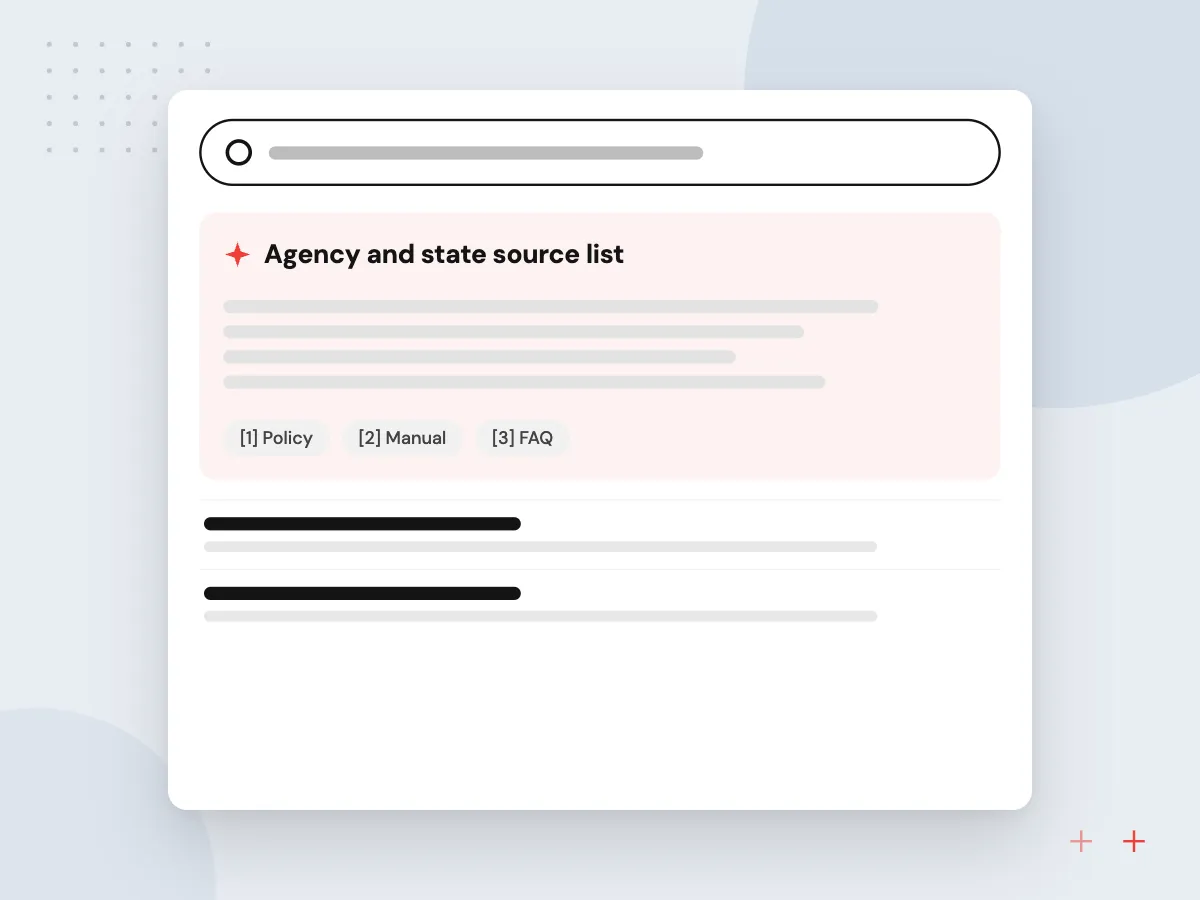
Monitoring is only useful if it ignores most of what gets published. With your compliance lead we choose the sources, such as specific agencies, state regulators and industry bodies, and write relevance rules from your licenses, products and locations. Items the model sets aside stay in a log, so nothing disappears silently.
What we do
- Agency and state source list
- Relevance rules from your licenses
- Weekly digest with summaries
- Log of set-aside items
- Links to the original text
Mapping changes to policies and controls
Each relevant item is compared with your policy library and control list using retrieval over your own documents. The draft says which policies may need edits and why, quoting both texts side by side. The owner accepts, edits or rejects the mapping, and that decision joins the audit trail.
What we do
- Indexed policy and control library
- Rule and policy quoted side by side
- Owner decision with comments
- Due dates and reminders
- Exportable audit history

How we approach a project
Banks, credit unions, fintech firms and insurers answer to several regulators at once; see AI for banks and credit unions and AI for fintech. One example of a change such firms track is the FTC’s 2023 amendment to its Safeguards Rule on breach reporting.
The system supports your compliance team; it does not give legal advice or decide what a rule requires. Scoping a monitoring setup takes one 30-minute conversation with your compliance lead, and you can propose a time on our contact page.
How we work
- Every flag links to its source
- Compliance staff make the judgment
- Audit trail from rule to action
Our Process
-

Agree sources and scope
Your compliance lead names the regulators, states, products and policy areas in scope, and who owns each one.
-

Index your policies
We load the policy library and control list, remove duplicates and tag each document with its owner.
-

Run a back-test
The system processes recent months of publications, and your team checks what it flagged and what it missed.
-

Go live with a digest
A weekly digest and owner tasks begin, with a monthly review of missed items and noise.
Why Aranv for compliance monitoring
Nothing dropped silently
Every item the model sets aside is logged with a reason, and your team can sample that log, so filtering never hides a change without a record.
Original wording beside summaries
Summaries show the rule text next to the affected policy text, so reviewers check the original wording instead of trusting a paraphrase.
Decisions stay with you
The system drafts and assigns. Your compliance officer accepts or rejects each mapping, and that decision, with its date and owner, forms the audit trail.
Hosted in your environment
Policies, contracts and findings sit in your cloud account with role-based access, and every summary records the model version that produced it.
Planning AI Compliance Monitoring?
Book a 30-minute conversation with the team that would build it.
AI compliance monitoring FAQs
-
Can AI compliance monitoring replace a compliance officer?
No. It reads and sorts far more material than a person can, but deciding whether a rule applies, how to change a policy and what to tell a regulator stays with your compliance staff and counsel. Its job is to make sure nothing relevant goes unread.
-
Which sources can regulatory change monitoring cover?
Public sources such as the Federal Register, agency releases and guidance pages, state regulator bulletins and industry body updates. Paid legal feeds can be added if your license allows automated use. We agree the list with your compliance lead and review it each quarter.
-
How do you stop the model from missing an important change?
We tune relevance rules on a back-test against months of real publications, keep a log of everything set aside and sample that log regularly. Items from your most important sources can skip filtering and go straight to a person.
-
Can it check our marketing for compliance problems?
Yes. Drafts are compared with your approved claims and required disclosures, and the system flags missing disclosures or wording outside the approved list. A compliance reviewer still approves each piece, starting from a marked-up draft.
-
Where is our policy data stored?
In your own cloud account or a private environment we set up for you, with access limited to named roles. We pick model providers whose terms rule out training on customer data, and we record which model version produced each summary.

Let’s talk about your next step
Contact Aranv to discuss your workflow, current tools, and goals. Meet with our team or send an inquiry.
Book a meeting with our team
Choose an available date and time for a 30-minute conversation about your project.
Tell us about your project
Share a few details so we can discuss a useful next step.
Prefer email? sales@aranv.com